
 English
 Chinese
 Dutch
 Arabic
 Spanish
 Portuguese
 Russian
 French
 Italian
 German
 Japanese
Yes. Markus is the German and Scandinavian form of Mark, and German and Swedish Bibles spell the name Markus. John Mark appears in Acts and in Paul’s letters, and Christian tradition names him as the author of the second Gospel. The name comes from the Latin Marcus.
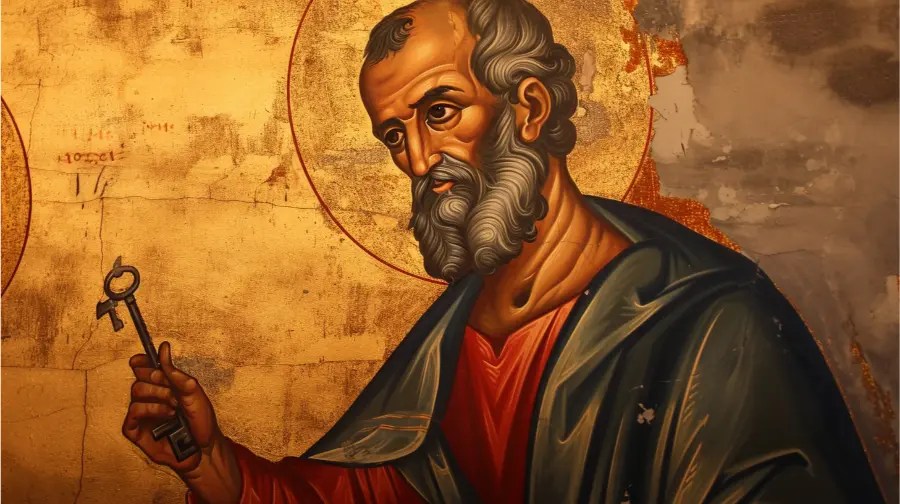
Where is Markus in the Bible?
The man called Markus in German Bibles and Mark in English ones first appears in Acts 12. After an angel led Peter out of prison, Peter “went to the house of Mary, the mother of John whose other name was Mark, where many were gathered together and were praying” (Acts 12:12). Luther’s German Bible of 1545 gives the phrase as Johannes, der mit dem Zunamen Markus hieß, “John, whose surname was Markus.” He carried two names: John, which is Hebrew, and Mark, which is Latin.
Barnabas and Saul, as Paul was still called, took him with them when they left Jerusalem (Acts 12:25), and on their first missionary journey he went with them to Cyprus as their assistant (Acts 13:5). At Perga in Pamphylia he “left them and returned to Jerusalem” (Acts 13:13). Acts gives no reason. When Barnabas later wanted to take him on a second journey, Paul “thought best not to take with them one who had withdrawn from them in Pamphylia,” and “there arose a sharp disagreement, so that they separated from each other. Barnabas took Mark with him and sailed away to Cyprus” (Acts 15:37–39).
Paul’s later letters speak well of him. Paul sends greetings from “Mark the cousin of Barnabas” and tells the Colossians to welcome him if he comes (Colossians 4:10), and he names Mark among his “fellow workers” in Philemon 24. To Timothy he wrote, “Get Mark and bring him with you, for he is very useful to me for ministry” (2 Timothy 4:11). The First Letter of Peter also sends greetings from “Mark, my son” (1 Peter 5:13). Christian tradition has usually read all of these passages as describing one man, John Mark.
A blessing card for Markus
Markus
means probably from Mars
Latin, from Marcus
In the Bible in another formAs Mark (John Mark) in Acts and Paul's letters; German and Swedish Bibles spell it Markus
Only Luke is with me. Get Mark and bring him with you, because he is useful to me in the ministry.
2 Timothy 4:11 Berean Standard Bible
Markus, may the LORD bless you and keep you. Numbers 6:24
The card is on its way
Look for an email from Christian Pure in the next few minutes.

Did Mark write the Gospel of Mark?
The Gospel does not name its author. The oldest statement about it comes from Papias, an early bishop of Hierapolis in Asia Minor, whose words the historian Eusebius preserved. Papias repeats what “the presbyter” told him: “Mark, having become the interpreter of Peter, wrote down accurately, though not in order, whatsoever he remembered of the things said or done by Christ” (Church History 3.39.15). Irenaeus of Lyons, later in the second century, also calls Mark “the disciple and interpreter of Peter.”
The Church came to identify this Mark with the John Mark of Acts. Many modern scholars regard the Gospel as anonymous and doubt the link; others accept that a man named Mark wrote it but cannot say which Mark he was. Most scholars think it was the first of the four Gospels to be written, and it is the shortest.
Only Mark’s Gospel tells of a young man at Jesus’ arrest who “followed him, with nothing but a linen cloth about his body. And they seized him, but he left the linen cloth and ran away naked” (Mark 14:51–52). Since ancient times some readers have guessed that the young man was Mark himself. The Gospel does not name him.
What does Markus mean?
Markus comes from Marcus, one of the most common Roman first names. It probably comes from Mars, the Roman god of war, though it may instead come from an Etruscan name of unknown meaning. Meanings such as “warlike” or “dedicated to Mars” rest on the first explanation. The Greek of the New Testament writes the name Markos.
Mark is not a Hebrew name, but the Mark of the New Testament was a Jew. Paul counts him among “the only men of the circumcision among my fellow workers” (Colossians 4:11), and his other name, John, is the Hebrew Yohanan.
Mark is the English form of Marcus, not a short form of it. Markus is the form used in German, Swedish, Norwegian, Danish, Finnish and Estonian; Marcus is the Latin spelling, also used in English and the Scandinavian languages. Other forms include Marc in French, Marco in Italian, Marcos in Spanish and Portuguese, and Marek in Polish and Czech. The Roman feminine was Marcia.
In Germany, Markus was one of the 20 most common names for boys every year from 1966 to 1987, and it ranked second in 1973 and 1975.

Saint Mark in Alexandria and Venice
Eusebius records the tradition that Mark “was the first that was sent to Egypt, and that he proclaimed the Gospel which he had written, and first established churches in Alexandria” (Church History 2.16). The Coptic Orthodox Church and the Greek Orthodox Church of Alexandria trace their origins to that community, and Coptic tradition holds that Mark was martyred in Alexandria in 68.
In 828 or 829 two Venetian merchants carried his body from Alexandria to Venice. The city built St Mark’s Basilica to hold the relics and took him as its patron saint, and in 1968 part of the relics was returned to the Coptic Church. Catholics, Orthodox and Anglicans keep his feast on 25 April. His emblem is a winged lion.

Related reading
- Is Mark a Biblical Name? Yes, and a Gospel Carries It
- Unveiling John Mark: The Man Behind the Bible’s Lesser-Known Figure
- Is Your Name in the Bible? A Directory of 231 Names


Leave a Reply