
 English
 Chinese
 Dutch
 Arabic
 Spanish
 Portuguese
 Russian
 French
 Italian
 German
 Japanese
The Bible treats waiting for God as a form of hope. The psalmists wait for God to answer them (Psalm 27:14; Psalm 130:5), Habakkuk waits for a revelation with “an appointed time” (Habakkuk 2:3), and the church waits for Christ to be revealed (1 Corinthians 1:7; James 5:7-8).
In Psalm 27:14, Psalm 40:1, Psalm 130:5 and Isaiah 40:31 the Hebrew verb is qavah, to wait for or look for. The NIV translates it “wait for” in the psalms and “hope in” at Isaiah 40:31, where the King James Version has “they that wait upon the LORD.”
Waiting for God to answer
Psalm 27:14
“Wait for the Lord; be strong and take heart and wait for the Lord.”
Reflection: The psalm ends with this command, and the verse before it gives the reason to keep waiting: “I will see the goodness of the Lord in the land of the living.” The Hebrew has qavah both times the line says “wait for the Lord,” with the call to be strong and take heart between them.

Psalm 40:1
“I waited patiently for the Lord; he turned to me and heard my cry.”
Reflection: Here the waiting is told in the past tense, after the answer has come. God “turned to me and heard my cry,” lifted the psalmist “out of the slimy pit” and “put a new song in my mouth” (Psalm 40:2-3). The verb is qavah, the same one Psalm 27:14 uses.

Psalm 130:5
“I wait for the Lord, my whole being waits, and in his word I put my hope.”
Reflection: Psalm 130 begins “Out of the depths I cry to you, Lord” and asks, “If you, Lord, kept a record of sins, Lord, who could stand?” Verse 6 compares the waiting to watchmen waiting for the morning. The psalm then turns to the nation and names what Israel waits for: with the Lord is “full redemption,” and he will redeem Israel “from all their sins.”

Micah 7:7
“But as for me, I watch in hope for the Lord, I wait for God my Savior; my God will hear me.”
Reflection: The verses before this one describe a society where no one can be trusted and “a man’s enemies are the members of his own household” (Micah 7:6). Against that the speaker sets a personal resolve to watch and wait for God. The next verse is addressed to an enemy: “Though I have fallen, I will rise. Though I sit in darkness, the Lord will be my light.”
Psalm 33:20
“We wait in hope for the Lord; he is our help and our shield.”
Reflection: Here the waiting is spoken in the plural, by a congregation. Two verses earlier the psalm says the eyes of the Lord are “on those whose hope is in his unfailing love, to deliver them from death and keep them alive in famine,” and it closes with a request that his unfailing love be with them “even as we put our hope in you.”
Waiting quietly instead of fretting

Psalm 37:7
“Be still before the Lord and wait patiently for him; do not fret when people succeed in their ways, when they carry out their wicked schemes.”
Reflection: Psalm 37 opens “Do not fret because of those who are evil,” and verse 7 repeats the warning for the case where they “succeed in their ways.” Being still and waiting is the alternative the psalm offers, and verse 9 gives the outcome: “those who hope in the Lord will inherit the land.” The verb behind “hope” in verse 9 is qavah.
Lamentations 3:26
“It is good to wait quietly for the salvation of the Lord.”
Reflection: In the middle of a lament, the speaker recalls that the Lord’s compassions “are new every morning” and says, “The Lord is my portion; therefore I will wait for him” (Lamentations 3:23-24). Verses 25 and 26 follow as two statements of what is good: the Lord is good to those whose hope is in him, and it is good to wait quietly for his salvation.
Psalm 62:5
“Yes, my soul, find rest in God; my hope comes from him.”
Reflection: The NIV reads “find rest”; the King James Version has “My soul, wait thou only upon God; for my expectation is from him.” The psalmist says this to his own soul while enemies plan “to topple me from my lofty place” (Psalm 62:4). Verse 1 makes the same point as a statement, “Truly my soul finds rest in God,” and verse 5 repeats it as a command.
What God does for those who wait
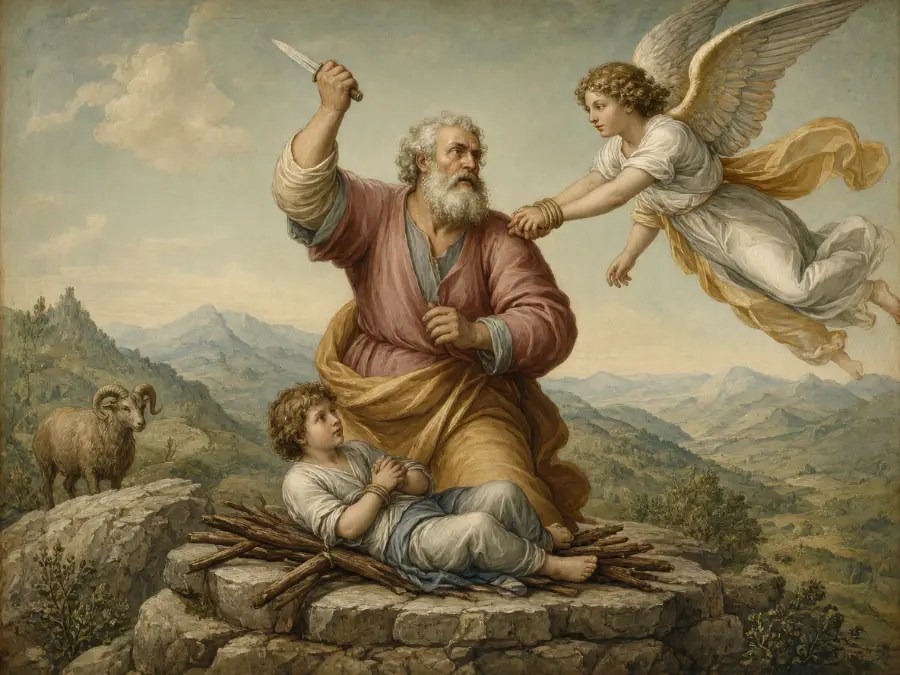
Isaiah 40:31
“But those who hope in the Lord will renew their strength. They will soar on wings like eagles; they will run and not grow weary, they will walk and not be faint.”
Reflection: Isaiah answers Israel’s complaint, “My way is hidden from the Lord” (Isaiah 40:27), with a Creator who “will not grow tired or weary” and “gives strength to the weary.” Even young men stumble and fall, the passage says, but those who hope in the Lord renew their strength. The Hebrew for “hope in” is qavah, which the King James Version translates “they that wait upon the LORD.”

Isaiah 30:18
“Yet the Lord longs to be gracious to you; therefore he will rise up to show you compassion. For the Lord is a God of justice. Blessed are all who wait for him!”
Reflection: The verse follows a rebuke. God had offered salvation “in repentance and rest” and strength “in quietness and trust,” and the people answered, “No, we will flee on horses” (Isaiah 30:15-16). The word “Yet” turns from that refusal to the Lord who “longs to be gracious,” and the verse ends by blessing all who wait for him.

Isaiah 64:4
“Since ancient times no one has heard, no ear has perceived, no eye has seen any God besides you, who acts on behalf of those who wait for him.”
Reflection: The chapter opens with a prayer that God would “rend the heavens and come down,” as he did when he did “awesome things that we did not expect” (Isaiah 64:1-3). Verse 4 continues with what no ear or eye has perceived: any other God who acts on behalf of those who wait for him.

Habakkuk 2:3
“For the revelation awaits an appointed time; it speaks of the end and will not prove false. Though it linger, wait for it; it will certainly come and will not delay.”
Reflection: Habakkuk had stationed himself “on the ramparts” to see how God would answer his complaint (Habakkuk 2:1). The answer is a revelation to be written plainly on tablets, one with an appointed time that may seem to linger. The next verse sets the proud enemy against the righteous person, who “will live by his faithfulness,” and Hebrews 10:37-38 quotes both verses.
Waiting for the Spirit and for Christ’s return
Acts 1:4
“On one occasion, while he was eating with them, he gave them this command: ‘Do not leave Jerusalem, but wait for the gift my Father promised, which you have heard me speak about.’”
Reflection: After the resurrection, Jesus tells the apostles to stay in Jerusalem and wait for “the gift my Father promised,” which the next verse names: “in a few days you will be baptized with the Holy Spirit.” This wait has a place and a length, and Acts 2:1-4 records that on “the day of Pentecost” all of them “were filled with the Holy Spirit.”

1 Corinthians 1:7
“Therefore you do not lack any spiritual gift as you eagerly wait for our Lord Jesus Christ to be revealed.”
Reflection: Paul thanks God that the church in Corinth lacks no spiritual gift, and he describes it as waiting eagerly for Jesus Christ “to be revealed.” Verse 8 says what God does during the wait, that he “will also keep you firm to the end,” and verse 9 rests the promise on the statement “God is faithful.”

Romans 8:25
“But if we hope for what we do not yet have, we wait for it patiently.”
Reflection: Paul sets this verse in a groaning creation: creation groans “as in the pains of childbirth,” and believers “groan inwardly as we wait eagerly for our adoption to sonship, the redemption of our bodies” (Romans 8:22-23). Verse 24 says that “hope that is seen is no hope at all,” and verse 25 draws the consequence for hope in what is not yet seen: patient waiting.
James 5:7-8
“Be patient, then, brothers and sisters, until the Lord’s coming. See how the farmer waits for the land to yield its valuable crop, patiently waiting for the autumn and spring rains. You too, be patient and stand firm, because the Lord’s coming is near.”
Reflection: James compares the church to a farmer waiting for “the autumn and spring rains,” and ties the command to “the Lord’s coming.” Verse 9 follows with a warning, “Don’t grumble against one another,” and verses 10 and 11 offer the prophets and Job as examples of patience, pointing to “what the Lord finally brought about” for Job.
Hebrews 10:36
“You need to persevere so that when you have done the will of God, you will receive what he has promised.”
Reflection: The letter urges its readers not to “throw away your confidence” and to persevere until they receive what was promised. Hebrews 10:37-38 then quotes Habakkuk 2:3-4, and in the Hebrews wording the revelation that “will not delay” becomes “he who is coming,” and the chapter ends by contrasting those who shrink back with “those who have faith and are saved.”
A verse for how you feel
Choose how you feel today and read a verse from Scripture.
Wait patiently for the LORD; be strong and courageous. Wait patiently for the LORD!
Get a verse each week
Thank you. Your first verse is on its way.
If nothing arrives in a few minutes, look in your spam or promotions folder.
Keep this for another day. A verse for how you feel has a page of its own, with our verses for each feeling.
Each verse is quoted from the Berean Standard Bible.
How long the waiting lasts
Only a few of these passages give a time. Acts 1:5 says “in a few days.” Habakkuk 2:3 says the revelation has “an appointed time” without naming it, and allows that it may linger. James 5:8 says “the Lord’s coming is near,” and Hebrews 10:37 says “in just a little while.” The psalms ask for waiting and name no date.


Leave a Reply