
 English
 Chinese
 Dutch
 Arabic
 Spanish
 Portuguese
 Russian
 French
 Italian
 German
 Japanese
Category 1: The Call to Return (Repentance & Humility)
This is the starting point of Lent—an honest acknowledgment of our need for redirection and a humble turning back toward the source of life and love.

Joel 2:12-13
“‘Even now,’ declares the Lord, ‘return to me with all your heart, with fasting and weeping and mourning.’ Rend your heart and not your garments. Return to the Lord your God, for he is gracious and compassionate, slow to anger and abounding in love.”
Reflection: This is a call to authentic emotional and spiritual change, not mere outward performance. Tearing one’s clothes is a public display, but God invites us to the much braver act of tearing open our hearts—exposing our pain, our fears, and our failures in the safe presence of His compassion. It’s a movement from shame-based hiding to courageous vulnerability.

Psalm 51:10
“Create in me a pure heart, O God, and renew a steadfast spirit within me.”
Reflection: This is the prayer of a soul who understands that willpower alone is insufficient. We cannot simply scrub our own hearts clean. This requires a creative act from God, a fundamental reordering of our deepest affections and motivations. It is a humble surrender, admitting our own inadequacy and asking for a spiritual transplant that brings stability and integrity to our inner world.

1 John 1:9
“If we confess our sins, he is faithful and just and will forgive us our sins and purify us from all unrighteousness.”
Reflection: Confession is the profound act of speaking truth about ourselves. It aligns our self-perception with reality, dismantling the exhausting work of denial and self-justification. The promise here is not just pardon but purification—a cleansing peace that eases the moral burden of guilt and allows us to feel whole and integrated once more.

Isaiah 1:18
“‘Come now, let us settle the matter,’ says the Lord. ‘Though your sins are like scarlet, they shall be as white as snow; though they are red as crimson, they shall be like wool.’”
Reflection: This verse speaks to the deep-seated feeling that some parts of us are irrevocably stained. Guilt can become part of our identity. God’s invitation is to “settle the matter”—to bring our deepest shames into the light, not for condemnation, but for a transformation so complete it feels impossible. It offers freedom from the tyranny of our past and a new, clean emotional landscape.

Luke 15:20
“So he got up and went to his father. But while he was still a long way off, his father saw him and was filled with compassion for him; he ran to his son, threw his arms around him and kissed him.”
Reflection: This captures the emotional core of repentance. The journey back is often filled with anxiety and fear of rejection. Yet, the image here is of a God whose compassion outpaces our return. He doesn’t wait for us to perfect our apology; He runs to close the distance, meeting our hesitant steps with an overwhelming embrace that dissolves shame in an instant.
Category 2: The Disciplines of the Journey (Prayer, Fasting, & Almsgiving)
These are the traditional Lenten practices, viewed not as rules to be followed, but as tools to re-calibrate our hearts and focus our attention away from the self and toward God and neighbor.

Matthew 6:6
“But when you pray, go into your room, close the door and pray to your Father, who is unseen. Then your Father, who sees what is done in secret, will reward you.”
Reflection: This is an invitation to intimacy over performance. So much of our lives are lived for an audience, real or imagined. Secret prayer strips away the ego’s need for validation. It is in this quiet, unobserved space that we can be our most honest, unvarnished selves, building a relationship with God that is not a presentation but a true connection.

Matthew 6:16-18
“When you fast, do not look somber as the hypocrites do… But when you fast, put oil on your head and wash your face, so that it will not be obvious to others that you are fasting, but only to your Father, who is unseen.”
Reflection: True spiritual discipline strengthens our inner resolve, it doesn’t advertise our piety. By fasting in secret, we disentangle the practice from the ego’s desire for praise. The focus shifts from what others think of us to our internal state—our hunger for God, our mastery over impulse, and the health of our soul.

Isaiah 58:6-7
“Is not this the kind of fasting I have chosen: to loose the chains of injustice… to share your food with the hungry and to provide the poor wanderer with shelter…?”
Reflection: This is a crucial corrective, preventing our Lenten practices from collapsing into self-centered navel-gazing. The verse reminds us that an authentic inner life always bears outward fruit. The true test of spiritual discipline is not how much we can deny ourselves, but how much that denial empowers us to love and serve others. It connects our personal well-being to communal justice and compassion.

Philippians 4:6
“Do not be anxious about anything, but in every situation, by prayer and petition, with thanksgiving, present your requests to God.”
Reflection: Prayer is presented here as a direct antidote to the corrosive state of anxiety. It is the active process of taking our swirling, chaotic worries and externalizing them, handing them over to a trustworthy recipient. The addition of “with thanksgiving” reframes our perspective, grounding us in what is good and true even amidst uncertainty, and calming our nervous system.

2 Corinthians 9:7
“Each of you should give what you have decided in your heart to give, not reluctantly or under compulsion, for God loves a cheerful giver.”
Reflection: This speaks to the emotional quality of our generosity. Giving out of guilt or obligation can breed resentment. But “cheerful” giving flows from a heart that feels secure, grateful, and aligned with its own values. Lent is an opportunity to examine our attachments to resources and to cultivate a joyful, free posture of sharing that enriches both the giver and the receiver.
Category 3: Confronting the Inner Wilderness (Temptation & Self-Examination)
Lent mirrors Jesus’ 40 days in the desert, a time of facing temptation and clarifying purpose. This is the inner work of confronting our own “demons”—our compulsions, our fears, and our attachments.
Matthew 4:1
“Then Jesus was led by the Spirit into the wilderness to be tempted by the devil.”
Reflection: It is profoundly comforting that Jesus’ journey into testing was not a misstep but a Spirit-led part of his path. This reframes our own periods of trial and temptation. They are not necessarily signs of failure, but are often the very arenas where our character is forged, our resilience is built, and our dependence on God is most deeply realized.
Psalm 139:23-24
“Search me, God, and know my heart; test me and know my anxious thoughts. See if there is any offensive way in me, and lead me in the way everlasting.”
Reflection: This is a prayer of radical self-awareness and courageous vulnerability. It is an invitation for God to illuminate our blind spots—the hidden anxieties and harmful patterns we cannot see ourselves. It requires profound trust to ask for such a search, believing that the one who searches does so not to condemn, but to heal and lead us toward wholeness.

Hebrews 4:15
“For we do not have a high priest who is unable to empathize with our weaknesses, but we have one who has been tempted in every way, just as we are—yet he did not sin.”
Reflection: This demolishes the sense of isolation that often accompanies our struggles. The feeling that “no one understands” is a lie. We have a God who not only knows our weaknesses intellectually but has felt their pull experientially. This shared experience creates a bond of trust, making it safe to be honest about our temptations without fearing judgment.
1 Corinthians 10:13
“No temptation has overtaken you except what is common to mankind. And God is faithful; he will not let you be tempted beyond what you can bear. But when you are tempted, he will also provide a way out so that you can endure it.”
Reflection: This verse is a powerful anchor against despair and hopelessness in the face of persistent temptation. It normalizes our struggles (“common to mankind”) and provides a double promise: our limits will be honored, and there is always a path toward freedom. It fosters a sense of resilience and empowers us to look for the “way out” rather than surrendering to the impulse.
James 1:14-15
“…but each person is tempted when they are dragged away and enticed by their own evil desire. Then, after desire has conceived, it gives birth to sin; and sin, when it is full-grown, gives birth to death.”
Reflection: This offers a clear psychological map of how a fleeting thought becomes a destructive action. It begins with an internal “desire” that lures us away from our centered selves. The verse empowers us by revealing the process; if we can recognize the “enticement” stage, we have a chance to intervene before the destructive progression gains momentum and leads to spiritual and emotional “death.”
Category 4: The Heart of the Matter (True Sacrifice & Inner Renewal)
This category moves beyond the what of Lent to the why. The goal isn’t just to give things up, but to be fundamentally changed from the inside out, offering our whole selves to be reshaped by God.

Romans 12:1-2
“Therefore, I urge you, brothers and sisters, in view of God’s mercy, to offer your bodies as a living sacrifice… Do not conform to the pattern of this world, but be transformed by the renewing of your mind.”
Reflection: This is the thesis statement for a transformed life. A “living sacrifice” is not about ending something, but about dedicating everything—our daily thoughts, habits, and actions—to God. The key is the “renewing of your mind,” a deep cognitive and emotional restructuring. Lent is a focused time to intentionally break from the world’s automatic patterns of consumption and anxiety and choose a new way of thinking and being.

Hosea 6:6
“For I desire mercy, not sacrifice, and acknowledgment of God rather than burnt offerings.”
Reflection: This verse cuts through religious performance straight to the heart. God is not interested in a checklist of deprivations. He is interested in the posture of our hearts. Does our Lenten journey soften us? Does it make us more merciful to others? Does it lead us to a more authentic, knowing relationship with Him? If not, our sacrifices, no matter how great, miss the point entirely.
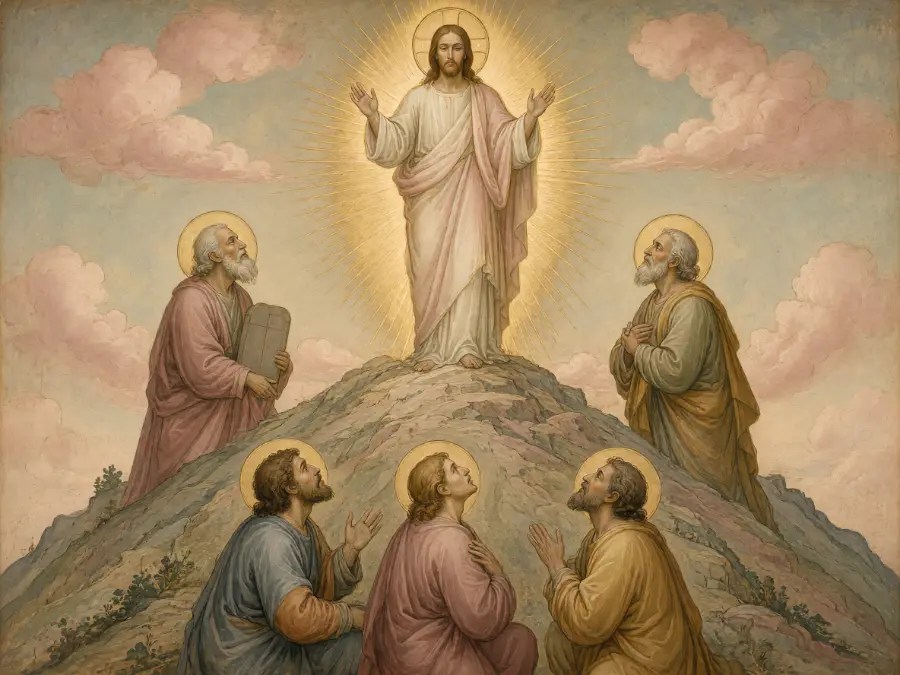
Ezekiel 36:26
“I will give you a new heart and put a new spirit in you; I will remove from you your heart of stone and give you a heart of flesh.”
Reflection: This is a beautiful depiction of profound psychological and spiritual healing. A “heart of stone” is a defensive heart—numb, rigid, and unable to feel deeply for oneself or others. God’s promise is to replace this protective shell with a “heart of flesh”—one that is alive, responsive, tender, and capable of true connection and empathy. Lent is a time to ask for this divine surgery.

Galatians 2:20
“I have been crucified with Christ and I no longer live, but Christ lives in me.”
Reflection: This verse describes the deepest level of identity transformation. The “I” that is driven by ego, fear, and selfish ambition is surrendered—put to death. In its place, a new self emerges, animated by the loving, sacrificial spirit of Christ. This is the ultimate goal of Lenten self-denial: to create space for a more beautiful, divine life to take root within us.
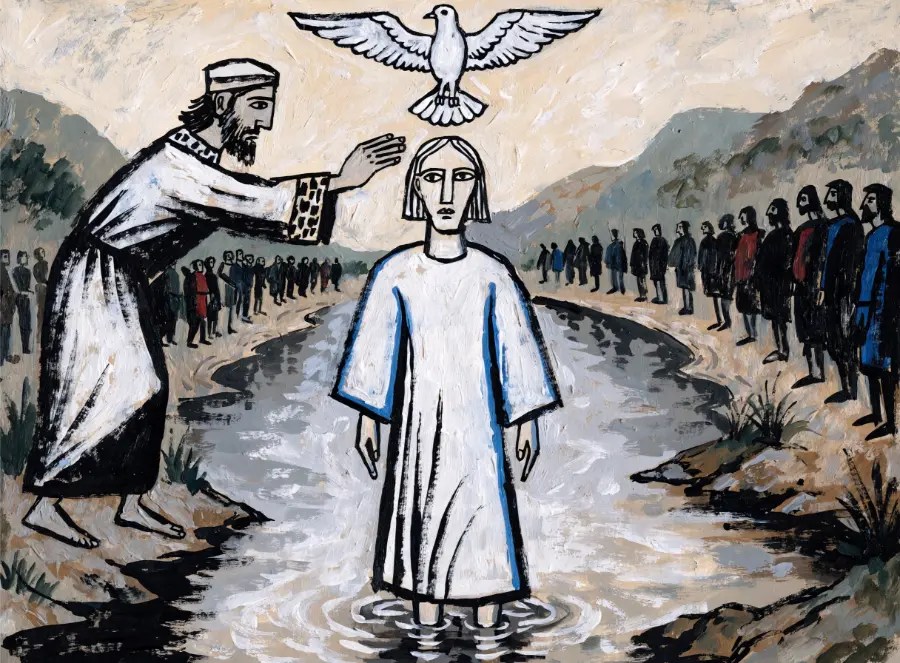
2 Corinthians 5:17
“Therefore, if anyone is in Christ, the new creation has come: The old has gone, the new is here!”
Reflection: This is a declaration of radical possibility. It insists that we are not slaves to our past or our old patterns of being. Through faith, a genuine “new creation” is possible—not just a slightly improved version of the old self, but a fundamentally new identity. Lent is the process of intentionally clearing out “the old” to make way for the joyful reality of “the new.”
Category 5: The Hope of Renewal (Looking Toward Easter)
Lent is not a season of darkness for its own sake. It is a journey through the shadows with the confident expectation of the dawn of Easter.
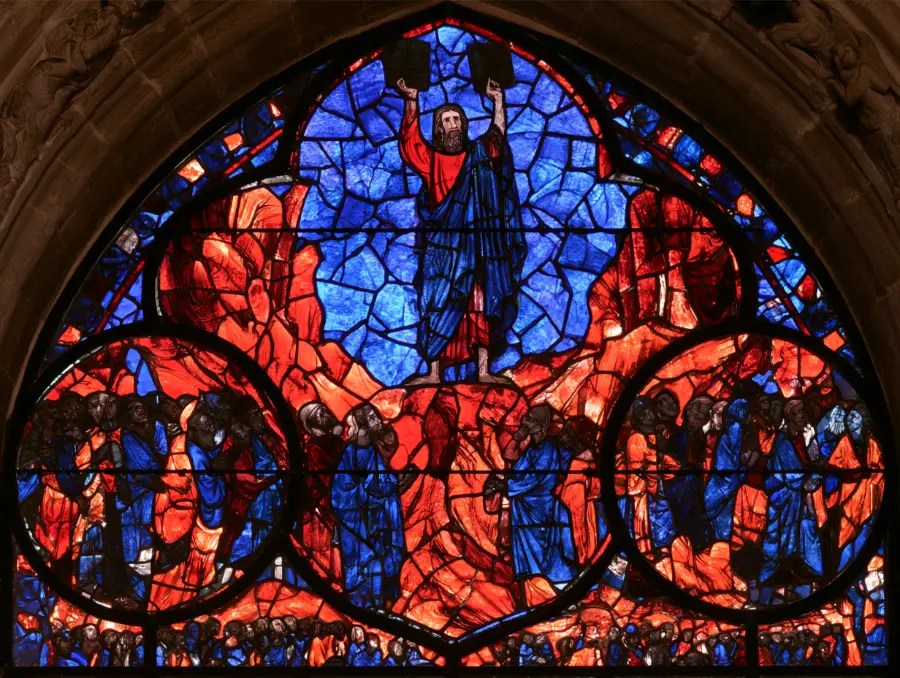
Psalm 30:5
“For his anger lasts only a moment, but his favor lasts a lifetime; weeping may stay for the night, but rejoicing comes in the morning.”
Reflection: This verse perfectly captures the emotional rhythm of the Lent-to-Easter journey. It gives us permission to “weep”—to fully inhabit the sorrow and repentance of Lent. Yet it does so within a framework of unshakable hope, assuring us that this state is temporary. Joy is not just a possibility; it is an inevitability, as certain as the sunrise.
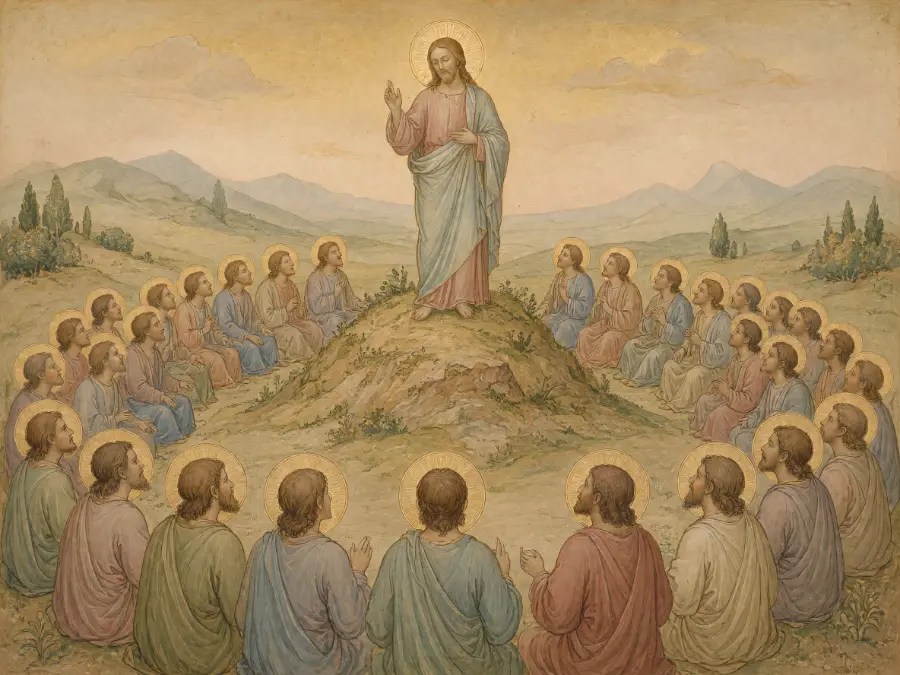
John 12:24
“Very truly I tell you, unless a kernel of wheat falls to the ground and dies, it remains only a single seed. But if it dies, it produces many seeds.”
Reflection: Jesus provides a natural metaphor for the painful but necessary process of Lenten sacrifice. To cling to our old self, our comforts, and our ego is to “remain only a single seed”—isolated and unproductive. The “death” of these things feels like a loss, but it is the absolute prerequisite for new life, for growth, for a fruitful existence that blesses the world.

Lamentations 3:22-23
“Because of the Lord’s great love we are not consumed, for his compassions never fail. They are new every morning; great is your faithfulness.”
Reflection: Spoken from a place of deep sorrow, this is a powerful testament to emotional resilience grounded in faith. Even when everything feels lost, we can anchor ourselves to a single truth: God’s compassionate love is a constant, renewable resource. Each day—even the hardest Lenten days—offers a fresh start, a “new morning” to experience His steadfast care.

1 Peter 1:3
“Praise be to the God and Father of our Lord Jesus Christ! In his great mercy he has given us new birth into a living hope through the resurrection of Jesus Christ from the dead.”
Reflection: This is the final destination of the Lenten road. All the repentance, discipline, and self-examination are aimed at this: a “new birth.” And this isn’t just wishful thinking; it is a “living hope” grounded in a historical event. The resurrection of Jesus demonstrates that death, despair, and failure do not have the final word. Life, renewal, and joy do. This is the promise that pulls us through Lent and into the celebration of Easter.


Leave a Reply