Exploring the Biblical Symbolism of Fat


  • Fat in the Bible symbolizes celestial blessings, holiness, and delight in God’s presence.
  • The Lord asks for fat as an offering, highlighting its immense significance.
  • Fat represents triumph and prosperity over God’s people, the fruitfulness of the land, and abundance that comes from God.
  • It is a pleasing offering that teaches profound lessons to our souls.
  • Fat embodies God’s goodness and a powerful biblical motif.

รƒยขรขโ€šยฌรขโ‚ฌยน

What does fat symbolize in the Bible?

As we explore the symbolism of fat in the Holy Scriptures, we must approach this topic with both scholarly rigor and spiritual sensitivity. In the biblical context, fat carries a rich and layered symbolism that speaks to the very heart of the relationship between God and His people.

In the ancient Near Eastern world, including the cultural milieu of the Bible, fat was often associated with abundance, prosperity, and the best of what creation had to offer. This understanding forms the foundation for its symbolic use in Scripture. When we encounter references to fat in the Bible, we are often witnessing a powerful expression of value and significance.

Primarily, fat symbolizes the choicest or best part of something. This is evident in numerous passages where โ€œfatโ€ is used metaphorically to describe richness, abundance, or the finest quality. For instance, in Genesis 45:18, when Pharaoh invites Josephโ€™s family to Egypt, he promises them โ€œthe fat of the land,โ€ meaning the best that Egypt has to offer.

Psychologically this symbolism taps into our innate human desire for the best in life. It speaks to our aspirations and our understanding of what is most valuable. I note how this concept aligns with ancient Near Eastern cultural values, where fatness in livestock and abundance in crops were seen as signs of divine favor and blessing.

In the context of sacrificial offerings, which we will explore more deeply in our next question, fat takes on an even more powerful symbolic meaning. The fat portions of sacrificial animals were considered the most valuable part and were reserved exclusively for God. This practice underscores the biblical principle of giving oneโ€™s best to the Lord.

But we must also consider the occasional negative connotations of fat in Scripture. In some contexts, it symbolizes excess, indulgence, or insensitivity. For example, in Psalm 119:70, the psalmist describes the hearts of the wicked as being โ€œfat as grease,โ€ implying a spiritual insensitivity or hardness.

I encourage you to reflect on how this symbolism might apply to our lives today. Are we offering our best to God? Are we sensitive to His voice, or have our hearts become โ€œfatโ€ with the excesses of this world?

Let us remember that these symbolic uses of fat in Scripture are meant to deepen our understanding of our relationship with God and our fellow human beings. They remind us of the importance of giving our best in service to the Lord and maintaining a heart that is sensitive to His guidance.

In our modern context, where attitudes towards fat have changed significantly, we must be careful not to project our contemporary biases onto the biblical text. Instead, let us seek to understand these symbols in their original context, allowing them to enrich our faith and guide our actions in ways that honor God and serve our neighbors.

How is fat used in Biblical sacrifices and offerings?

In the sacrificial system described in the Old Testament, particularly in the books of Leviticus and Numbers, fat played a crucial and highly symbolic role. The fat of sacrificial animals was considered the most valuable part of the offering and was reserved exclusively for God. This practice reflects the ancient Near Eastern understanding of fat as representing the best and most desirable portion.

Leviticus 3:16-17 states, โ€œAll the fat is the Lordโ€™s. It shall be a perpetual statute throughout your generations, in all your dwelling places, that you eat neither fat nor blood.โ€ This commandment underscores the sacred nature of fat in the sacrificial context. The fat was to be burned on the altar as a โ€œfood offeringโ€ to the Lord, creating a โ€œpleasing aromaโ€ (Leviticus 3:5).

Psychologically this practice of offering the fat to God served multiple purposes. It reinforced the concept of giving oneโ€™s best to the Divine, fostering an attitude of generosity and devotion among the people. It also served as a tangible reminder of the covenant relationship between God and His people, with the smoke of the burning fat symbolically rising to heaven.

Historically, we must understand these practices within the broader context of ancient Near Eastern sacrificial systems. Many cultures in the region had similar practices of offering the fat of animals to their deities. The Israelite system, But was unique in its monotheistic focus and its emphasis on moral and ethical behavior alongside ritual practices.

Not all fat was burned on the altar. The fat surrounding organs like the kidneys and liver was specifically designated for this purpose. This selective use of fat in sacrifices points to a nuanced understanding of the animalโ€™s anatomy and a careful system of ritual practice.

The use of fat in sacrifices also had practical implications. Fat burns at a high temperature and produces a lot of smoke, which would have created a visually and olfactorily impressive display during sacrificial rituals. This sensory experience likely contributed to the solemnity and impact of these sacred ceremonies.

From a pastoral perspective, I encourage you to consider how we can apply this principle in our modern context. How can we offer our โ€œfatโ€ โ€“ our best efforts, resources, and talents โ€“ to God and in service of others? How can we cultivate an attitude of generosity and devotion in our daily lives?

Are there any positive mentions of fat in the Bible?

One of the most striking positive references to fat in the Bible is found in the context of Godโ€™s blessings. In Deuteronomy 32:13-14, as part of the Song of Moses, we read: โ€œHe made him ride on the high places of the land, and he ate the produce of the field, and he suckled him with honey out of the rock, and oil out of the flinty rock. Curds from the herd, and milk from the flock, with fat of lambs, rams of Bashan and goats, with the very finest of the wheatโ€”and you drank foaming wine made from the blood of the grape.โ€ Here, fat is listed among the choicest blessings God provides for His people.

Psychologically these images of abundance and richness speak to our deepest desires for fulfillment and satisfaction. They paint a picture of God as a generous provider, offering not just sustenance, but the very best of His creation.

In the Psalms, we find fat used metaphorically to describe spiritual satisfaction and abundance. Psalm 63:5 declares, โ€œMy soul will be satisfied as with fat and rich food, and my mouth will praise you with joyful lips.โ€ This beautiful imagery equates spiritual fulfillment with the satisfaction of eating rich, fatty foods โ€“ a powerful analogy in an ancient context where such foods were rare and highly prized.

Historically, we must remember that in the agrarian societies of biblical times, fat animals were a sign of health and prosperity. This context helps us understand why fat is often associated with Godโ€™s blessings and favor. For instance, in Genesis 45:18, Pharaoh promises Josephโ€™s family โ€œthe fat of the land,โ€ meaning the best and most prosperous parts of Egypt.

Even in the context of sacrifices, which we discussed earlier, the use of fat carries positive connotations. The fact that the fat was reserved for God underscores its value and desirability. It was considered the best part, worthy of being offered to the Divine.

In the New Testament, while direct references to fat are less common, we find the concept of abundance and richness still present. In the parable of the Prodigal Son (Luke 15:11-32), the father orders the โ€œfattened calfโ€ to be killed for the celebration of his sonโ€™s return. Here, the fattened calf represents the best that the household has to offer, symbolizing the extravagance of the fatherโ€™s love and forgiveness.

I encourage you to reflect on these positive mentions of fat in Scripture. How might they challenge our modern preconceptions? How can they enrich our understanding of Godโ€™s blessings and provision?

Let us remember that these biblical references to fat are not about promoting overindulgence or unhealthy lifestyles. Rather, they speak to the abundance of Godโ€™s creation, the richness of His blessings, and the satisfaction found in a right relationship with Him. They remind us of Godโ€™s generosity and His desire to give us not just what we need, but to lavish us with the very best of His love and grace.

In our modern context, where attitudes towards fat have changed significantly, these positive biblical mentions can serve as a reminder to appreciate the goodness of Godโ€™s creation in all its forms. They can also inspire us to offer our very best back to God and to share generously with others from the abundance we have received.

What does the Bible say about being overweight?

We must remember that the Bible consistently affirms the inherent dignity and worth of every human being, regardless of their physical appearance or condition. In Genesis 1:27, we read that God created humankind in His own image. This fundamental truth should shape our understanding of human value and worth, including our own and that of others, regardless of body size or shape.

The Bible does warn against gluttony and overindulgence, which can lead to health issues, including excess weight. Proverbs 23:20-21 cautions, โ€œDo not join those who drink too much wine or gorge themselves on meat, for drunkards and gluttons become poor, and drowsiness clothes them in rags.โ€ Psychologically this warning recognizes the potential for food and drink to become unhealthy coping mechanisms or addictions.

But itโ€™s crucial to understand that these warnings against gluttony are not solely or even primarily about physical appearance or weight. Rather, they are concerned with the spiritual dangers of excess and the potential for physical appetites to control us, rather than us controlling them. As Paul writes in 1 Corinthians 6:12, โ€œโ€˜All things are lawful for me,โ€™ but not all things are helpful. โ€˜All things are lawful for me,โ€™ but I will not be dominated by anything.โ€

Historically, we must remember that in biblical times, being somewhat overweight was often seen as a sign of prosperity and good health, quite different from our modern perspective. The cultural context of the Bible was one where food scarcity was common, and the ability to eat well was a blessing.

The New Testament emphasizes the importance of caring for our bodies as โ€œtemples of the Holy Spiritโ€ (1 Corinthians 6:19-20). This principle encourages us to treat our bodies with respect and care, which includes maintaining good health. But this should be balanced with the understanding that our ultimate worth comes from our identity in Christ, not our physical appearance.

I urge you to approach this topic with great sensitivity. Many people struggle with weight issues due to various factors, including genetics, medical conditions, medications, socioeconomic circumstances, and mental health challenges. Judgment and shame are never helpful and can often be harmful.

Instead, let us focus on promoting overall health and well-being โ€“ physical, mental, and spiritual. The biblical concept of โ€œshalomโ€ or wholeness encompasses all aspects of our being. As we strive for this wholeness, we should encourage healthy habits, including balanced nutrition and regular physical activity, not for the sake of appearance, but for the sake of honoring God with our bodies and being better equipped to serve Him and others.

Remember, too, the words of Jesus in Matthew 6:25: โ€œTherefore I tell you, do not worry about your life, what you will eat or drink; or about your body, what you will wear. Is not life more than food, and the body more than clothes?โ€ This reminds us to keep our focus on spiritual matters while maintaining a balanced approach to physical concerns.

Although the Bible does not directly address being overweight in modern terms, it provides principles for holistic health, self-control, and the inherent dignity of all people. Let us approach this topic with love, understanding, and a focus on overall well-being in service to God and others.

How did Jesus talk about food and eating in his teachings?

We see Jesus using meals as occasions for teaching and fellowship. The Gospels frequently depict Him sharing meals with various groups, including tax collectors and sinners (Mark 2:15-17), demonstrating that the act of eating together was not merely about physical nourishment but also about spiritual and social inclusion. Psychologically this use of shared meals speaks to our deep human need for connection and community.

Jesus also used food metaphorically in His teachings. In the Sermon on the Mount, He encourages His followers not to worry about what they will eat or drink, but to โ€œseek first the kingdom of God and his righteousnessโ€ (Matthew 6:31-33). This teaching invites us to trust in Godโ€™s provision and to prioritize spiritual nourishment over material concerns.

One of the most powerful ways Jesus spoke about food was in relation to Himself. In John 6:35, He declares, โ€œI am the bread of life. Whoever comes to me will never go hungry, and whoever believes in me will never be thirsty.โ€ This powerful metaphor presents Jesus as the source of true spiritual sustenance, satisfying our deepest hunger for meaning and connection with God.

Historically, we must understand these teachings in the context of first-century Palestine, where food security was a daily concern for many. Jesusโ€™ words about Godโ€™s provision and spiritual nourishment would have resonated deeply with His audience.

Jesus also used the imagery of feasts and banquets to describe the kingdom of God. In Luke 14:15-24, He tells the parable of the great banquet, using the invitation to a feast as a metaphor for the invitation to Godโ€™s kingdom. This imagery emphasizes the abundance and joy of life in communion with God.

Itโ€™s crucial to note that Jesusโ€™ teachings about food were not just metaphorical. He demonstrated a practical concern for feeding people, as seen in the miraculous feeding of the five thousand (Matthew 14:13-21). This event not only showcased Jesusโ€™ power but also His compassion for peopleโ€™s physical needs.

In the context of religious practices, Jesus challenged some of the traditional understandings about food and purity. In Mark 7:14-23, He teaches that itโ€™s not what goes into a person that defiles them, but what comes out of their heart. This teaching shifted the focus from external dietary regulations to internal moral and spiritual conditions.

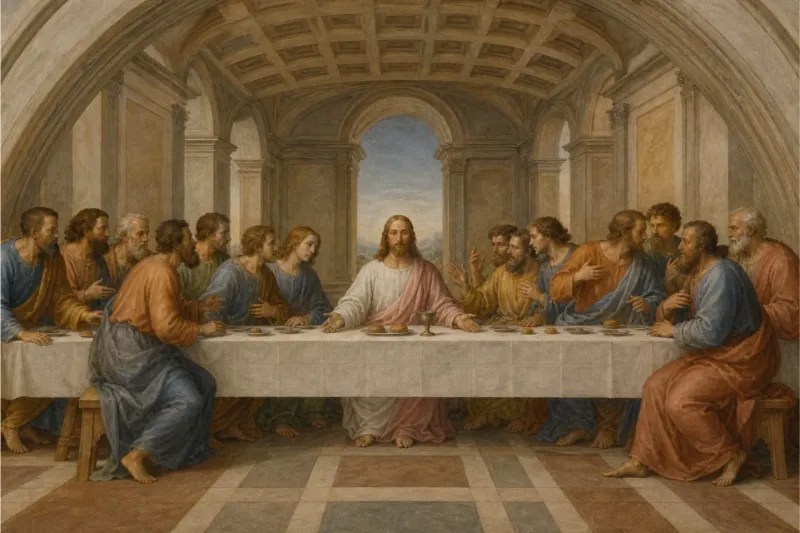
Perhaps the most major way Jesus spoke about food was in the institution of the Eucharist at the Last Supper. By associating the bread and wine with His body and blood, Jesus gave new meaning to the act of eating and drinking in the context of worship and remembrance.

I encourage you to reflect on how Jesusโ€™ teachings about food and eating might apply to our lives today. How can we use our meals as opportunities for fellowship and inclusion? How can we balance our physical needs with our spiritual priorities? How can we see Christ as our true source of nourishment?

What does โ€œthe fat is the Lordโ€™sโ€ mean in Scripture?

This phrase from Scripture speaks to us of sacrifice, offering, and the recognition of Godโ€™s sovereignty over all creation. In the Old Testament, particularly in Leviticus, we find numerous references to โ€œthe fat is the Lordโ€™sโ€ in the context of animal sacrifices.

The fat of sacrificial animals was considered the choicest part, symbolizing abundance and the best of what one could offer. When the Israelites were instructed to give โ€œthe fat to the Lord,โ€ it was a call to offer their very best to God, holding nothing back. This practice reminded the people that all good things come from God and belong to Him.

Psychologically, this concept touches on our human tendency to want to keep the best for ourselves. Yet, by offering the fat โ€“ the prime portion โ€“ to God, the Israelites were practicing trust and generosity. They were acknowledging that their sustenance and prosperity came from divine providence.

Historically, we must understand this practice within its cultural context. In ancient Near Eastern societies, fat was highly valued. It represented wealth, abundance, and the choicest food. By dedicating the fat to God, the Israelites were symbolically offering the best of their livelihood and sustenance.

But we must be cautious not to interpret this literally for our modern context. The essence of this teaching is not about physical fat, but about the attitude of our hearts. Today, โ€œoffering the fat to the Lordโ€ might mean dedicating our best efforts, our prime time, or our most valuable resources to Godโ€™s service.

I see in this ancient practice a powerful spiritual lesson. It calls us to examine: What is our โ€œfatโ€ โ€“ our best, our most prized possessions or abilities? Are we willing to offer these to God? This teaching challenges us to move beyond a mentality of scarcity or self-preservation to one of abundance and trust in Godโ€™s provision.

This concept reminds us of the holistic nature of our faith. Our spiritual lives are not separate from our physical lives. What we do with our bodies, our resources, our time โ€“ all of this is part of our worship. When we offer our best to God, we are living out our faith in a tangible way.

In our modern world, where we often struggle with materialism and overconsumption, the principle behind โ€œthe fat is the Lordโ€™sโ€ calls us to reassess our priorities. It invites us to consider: Are we offering God our leftovers, or are we giving Him our very best?

Are there any notable fat people mentioned in the Bible?

When we approach this question, we must do so with sensitivity and wisdom, recognizing that our modern preoccupations with body image often differ from those of biblical times. The Bible, in its vast web of human stories, does mention individuals who could be considered corpulent, though we must be cautious in our interpretations.

One of the most notable examples is Eglon, king of Moab, described in the Book of Judges. The Scripture tells us that Eglon was a โ€œvery fat manโ€ (Judges 3:17). This description is not merely incidental but plays a role in the narrative of his assassination by Ehud. The text suggests that Eglonโ€™s size contributed to his vulnerability, as it made it difficult for him to defend himself.

Psychologically itโ€™s interesting to note how this physical characteristic is used in the narrative. It may reflect cultural attitudes of the time, where excessive weight could be seen as a sign of indulgence or even moral laxity in a ruler. But we must be careful not to project our modern biases onto ancient texts.

Another figure often associated with being overweight is Eli, the high priest mentioned in 1 Samuel. While not explicitly described as fat, the text notes that he was heavy and fell backwards off his chair, breaking his neck (1 Samuel 4:18). This detail has led some interpreters to assume he was overweight, though this is not definitively stated.

Itโ€™s crucial to remember, that these descriptions are not meant to stigmatize or mock. Rather, they are part of the honest and sometimes stark portrayals of human beings in Scripture โ€“ with all their flaws and physical characteristics.

In the New Testament, we find fewer explicit references to body size. But some have speculated about the apostle Paulโ€™s physical appearance based on his own words in 2 Corinthians 10:10, where he refers to his physical presence as โ€œweak.โ€ This has led to various interpretations, including the possibility that he may have been short or stout, though this remains speculative.

I must emphasize that our understanding of what constituted โ€œfatnessโ€ in biblical times may differ significantly from our modern conception. In many ancient cultures, including those of the Bible, a certain degree of corpulence could be seen as a sign of prosperity and well-being, rather than a health concern as it is often viewed today.

We must remember that the Bibleโ€™s primary concern is not with physical appearance but with the state of oneโ€™s heart and oneโ€™s relationship with God. When Scripture does mention physical characteristics, it is often to make a broader point about character, circumstances, or Godโ€™s work in human lives.

As Christians today, we are called to look beyond outward appearances and to see the inherent dignity in every human being, regardless of their physical form. The examples in Scripture remind us that God uses people of all shapes and sizes to accomplish His purposes.

What did the Church Fathers teach about fat and gluttony?

The teachings of the Church Fathers on fat and gluttony offer us powerful insights into the spiritual life, challenging us to consider our relationship with food and the body in light of our faith. Their wisdom, rooted in Scripture and early Christian experience, continues to guide us today.

The Church Fathers generally viewed gluttony as a serious spiritual problem, one of the seven deadly sins. They saw it not merely as overeating, but as an inordinate preoccupation with food that distracts from spiritual matters. St. John Cassian, for instance, wrote extensively on gluttony, considering it the first vice to be conquered in the spiritual life.

Psychologically the Fathers understood that our relationship with food often reflects deeper spiritual and emotional issues. They recognized that excessive eating could be a form of self-medication, an attempt to fill a spiritual void with physical sustenance. St. Gregory the Great, in his insightful analysis, identified five forms of gluttony, including eating too soon, too expensively, too much, too eagerly, and too daintily. This nuanced view helps us understand that gluttony is not just about quantity, but about our overall attitude towards food.

Regarding fat specifically, the Fathersโ€™ views were complex. They did not condemn fatness itself as sinful, recognizing that body types vary. But they did see excessive indulgence leading to obesity as a potential sign of spiritual imbalance. St. Basil the Great, for example, advocated for moderation in eating, seeing it as a way to keep the body healthy for Godโ€™s service.

The Fathersโ€™ primary concern was not with body image as we often conceive it today, but with the spiritual implications of our eating habits. They saw fasting and moderation not as ways to achieve a certain body type, but as spiritual disciplines to cultivate self-control and focus on God.

St. Augustine, in his โ€œConfessions,โ€ offers a poignant reflection on his own struggles with gluttony, showing that even great saints grappled with these issues. His honesty invites us to examine our own relationships with food without shame, but with a desire for spiritual growth.

Historically, we must understand these teachings in the context of a world where food scarcity was common for many. The ability to indulge in excess food was often a sign of wealth and privilege. The Fathersโ€™ teachings on moderation, therefore, also had a social justice component, encouraging the sharing of resources with those in need.

In our modern context, where eating disorders and body image issues are prevalent, we must interpret these teachings with great care and compassion. The essence of their message is not about achieving a certain body type, but about cultivating a healthy relationship with food that supports our spiritual life.

How should Christians view their bodies and weight today?

In addressing how Christians should view their bodies and weight today, we must navigate a path that honors both the sacredness of our physical selves and the primacy of our spiritual lives. This is a complex issue that touches on faith, health, culture, and personal identity.

We must affirm that our bodies are temples of the Holy Spirit, as St. Paul teaches us (1 Corinthians 6:19-20). This fundamental truth calls us to treat our bodies with respect and care, not out of vanity, but out of reverence for Godโ€™s creation and the indwelling of His Spirit. This perspective invites us to consider how we nourish, exercise, and rest our bodies as part of our spiritual stewardship.

At the same time, we must be vigilant against the idolatry of physical appearance that is so prevalent in our culture. As Christians, our worth is not determined by our weight or our conformity to societal beauty standards, but by our identity as beloved children of God. We must resist the temptation to judge ourselves or others based on physical appearance, remembering that God looks at the heart (1 Samuel 16:7).

Psychologically itโ€™s crucial to recognize the complex relationship many people have with their bodies and weight. Eating disorders, body dysmorphia, and chronic dieting can all be manifestations of deeper emotional and spiritual issues. As a community of faith, we are called to create environments of acceptance and support, where people can heal from these wounds and discover their true worth in Christ.

Historically, attitudes towards body weight have varied greatly across cultures and time periods. What is considered ideal in one context may be viewed differently in another. As Christians, we should be aware of these cultural influences while seeking to align our views with biblical principles rather than societal norms.

Health and weight are not always directly correlated. While maintaining a healthy lifestyle is important, we must be careful not to equate thinness with health or moral virtue. Each personโ€™s body is unique, and health can manifest in diverse ways.

As we consider how to care for our bodies, let us remember the principle of stewardship. Just as we are called to be good stewards of our time, talents, and resources, we are also called to be good stewards of our physical selves. This involves making informed choices about nutrition, exercise, and medical care, always in the context of our overall well-being and our ability to serve God and others.

We must approach this issue with compassion โ€“ both for ourselves and for others. Many people struggle with weight and body image issues, often carrying deep emotional and spiritual burdens. As followers of Christ, we are called to create communities of love and acceptance where people of all shapes and sizes feel valued and welcomed.

Let us also consider the global dimension of this issue. In a world where many suffer from hunger and malnutrition, our approach to food and body weight should be informed by a commitment to justice and equitable distribution of resources.

In practical terms, I encourage you to cultivate a balanced approach to physical health. Engage in regular physical activity not primarily for aesthetic reasons, but as a way of honoring the gift of your body and maintaining your ability to serve. Approach food with gratitude and mindfulness, recognizing it as Godโ€™s provision for our nourishment and enjoyment.

Above all, let us keep our focus on Christ and the transforming power of His love. As we grow in our relationship with Him, may we increasingly see ourselves and others through His eyes, valuing the whole person โ€“ body, mind, and spirit โ€“ as a precious creation of God.

What does craving certain foods mean spiritually?

The question of what food cravings might mean spiritually is a fascinating one that touches on the deep connection between our physical and spiritual natures. Although we must be cautious about over-spiritualizing every bodily sensation, there are spiritual insights we can glean from our relationship with food, including our cravings.

Food cravings are complex phenomena with physiological, psychological, and potentially spiritual components. From a scientific perspective, cravings can be triggered by nutritional deficiencies, hormonal changes, or learned associations. But as people of faith, we also understand that our physical experiences can often mirror or signal deeper spiritual realities.

In the Scriptures, we see food used as a powerful metaphor for spiritual truths. Jesus refers to himself as the โ€œbread of lifeโ€ (John 6:35), and the Psalmist encourages us to โ€œtaste and see that the Lord is goodโ€ (Psalm 34:8). These images suggest that our physical hunger and taste can be understood as echoes of our deeper spiritual longings.

Psychologically food cravings can sometimes be attempts to fill emotional or spiritual voids. Just as we might turn to comfort food when weโ€™re feeling low, we might also find ourselves craving certain foods when weโ€™re spiritually malnourished. This invites us to examine our cravings with curiosity and compassion, asking ourselves: What deeper need might this craving be pointing to?

Historically, many spiritual traditions have recognized connections between specific foods and spiritual states. For instance, in some monastic traditions, certain foods were avoided not just for ascetic reasons, but because they were believed to inflame passions or dull spiritual sensitivity. Although we should be cautious about making simplistic connections, this tradition invites us to be mindful of how what we eat might affect our spiritual lives.

Cravings can sometimes be a form of temptation. Just as Eve was tempted by the forbidden fruit, we too might find ourselves craving foods that we know are not good for us. In these moments, our cravings can become opportunities to practice self-discipline and to rely on Godโ€™s grace.

But let us be careful not to fall into a dualistic mindset that sees the body and its desires as inherently sinful. God created us as whole beings โ€“ body, mind, and spirit โ€“ and declared this creation good. Our cravings, even when they need to be moderated, are part of our embodied existence and can be pathways to understanding ourselves and God more deeply.

In practical terms, when we experience food cravings, we might use them as prompts for spiritual reflection. We could ask ourselves: Am I truly hungry, or am I seeking comfort? What might this craving be telling me about my emotional or spiritual state? Is there a deeper hunger โ€“ for love, for meaning, for connection with God โ€“ that Iโ€™m trying to satisfy with food?

We can view our cravings as invitations to practice mindfulness and gratitude. When we crave a certain food, can we pause to thank God for the gift of taste and the abundance of His provision? Can we eat with full attention, savoring each bite as a gift from our Creator?

For those struggling with persistent or problematic food cravings, it may be helpful to seek both spiritual and professional guidance. A spiritual director can help explore the deeper meanings behind our relationship with food, while healthcare professionals can address any underlying physical or psychological issues.

Our food cravings, like all aspects of our lives, can be brought into our relationship with God. Whether we choose to indulge a craving mindfully or to fast from it as a spiritual discipline, we can do so in a way that deepens our awareness of Godโ€™s presence and our dependence on His grace.

Let us approach our cravings, then, not with fear or judgment, but with curiosity, compassion, and an openness to what God might be teaching us through these very human experiences. May our relationship with food, in all its complexity, become another avenue through which we grow in love for God and for one another.


Discover more from Christian Pure

Subscribe now to keep reading and get access to the full archive.

Continue reading

Share to...