
 English
 Chinese
 Dutch
 Arabic
 Spanish
 Portuguese
 Russian
 French
 Italian
 German
 Japanese
Eight is one of the few numbers in Scripture that genuinely means something, and what it means is the day after the last day.
Seven completes a cycle. Eight is what comes next — and the early church built a great deal on that.
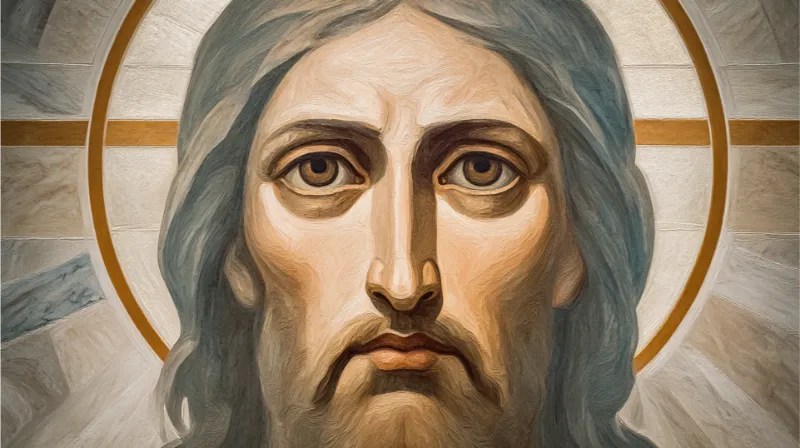
The eighth day in the law
The pattern starts with a body.
For the generations to come every male among you who is eight days old must be circumcised. (Genesis 17:12)
The instruction is repeated in Leviticus 12:3, and it is exact. Not at birth, not at a month. The eighth day, after a full week of life has passed.
The same rhythm governs the offerings. A newborn animal stayed with its mother seven days and could be offered from the eighth (Leviticus 22:27). A priest’s ordination ran seven days, and on the eighth he began to serve (Leviticus 9:1). The Feast of Tabernacles lasted seven days, and then on the eighth day hold a sacred assembly (Leviticus 23:36).
Seven is the week. Eight is the morning after it, when something begins.
Eight people
The other clear appearance is a headcount, and the New Testament draws attention to it.
Noah, his wife, his three sons and their wives — in it only a few people, eight in all, were saved through water (1 Peter 3:20). Peter then makes the connection to baptism explicit in the next verse.
Genesis gives the same list without the total (Genesis 7:13). Peter counts them, which is what makes the number visible.
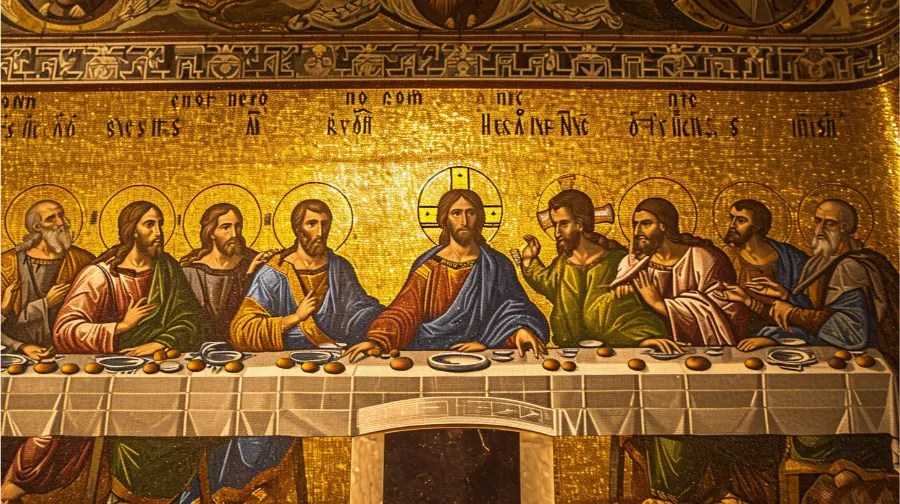
What the early church did with it
This is where eight acquires most of its weight, and honesty requires saying that the development is post-biblical.
The resurrection happened on the day after the sabbath. Counting inclusively from the previous Sunday, that is the eighth day — and Christian writers seized on it within a century.
The Epistle of Barnabas, from the early second century, speaks of keeping the eighth day with joy, the day Jesus rose. Justin Martyr makes the same point to Trypho, tying it to circumcision on the eighth day as a sign pointing forward.
The architecture followed. Baptisteries across the ancient world were built with eight sides, and many still stand. The reasoning is in the buildings: a person goes down into the water on the eighth day, as Noah’s eight came through it, into a week that has no end.
That is a rich and coherent tradition. It is not, however, stated in Scripture, and a reader should know which part is which.
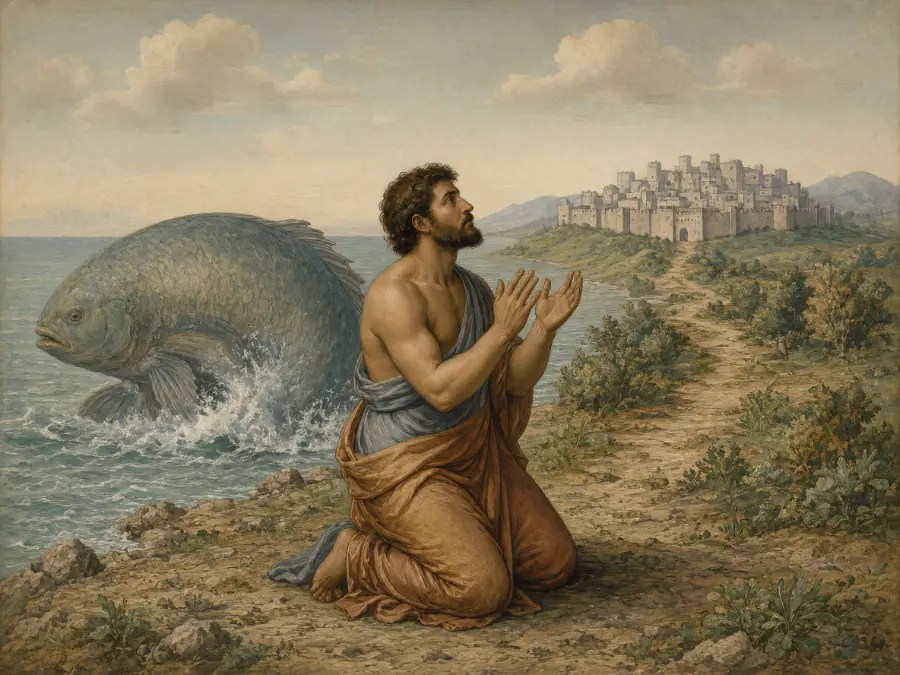
What eight does not mean
It does not mean “new beginnings” in the way the phrase is usually offered — as a promise attached to a number, available to anyone who keeps seeing it.
The biblical eighth day is always the eighth day of something specific: a life, a feast, an ordination, a week. It is a position in a sequence, not a standalone property.
And the sequence matters more than the number. What the eighth day says is that the seven came first.
How to tell a real biblical number from an invented one
Eight is a useful test case, because it passes the test that most numbers fail.
Its meaning is built inside the text by repeated, deliberate use — circumcision, offerings, ordination, the closing assembly of a feast — and the pattern is visible to anyone reading without a chart. That is exactly how seven, forty, twelve and three acquire their weight.
Numbers that require a system to decode, or that are factored and multiplied until a meaning appears, are not doing what eight does. A method that produces significance for every number is not testing anything.
Frequently asked
What does the number 8 mean in the Bible?
The day after a completed week. Circumcision on the eighth day (Genesis 17:12), an animal offered from the eighth day (Leviticus 22:27), a priest serving from the eighth (Leviticus 9:1), and the assembly after Tabernacles (Leviticus 23:36).
Why were eight people on the ark?
Noah, his wife, his three sons and their wives. 1 Peter 3:20 counts them — “eight in all, were saved through water” — and connects it to baptism.
Is Sunday the eighth day?
Early Christian writers called it that, counting inclusively from the previous Sunday. The Epistle of Barnabas and Justin Martyr both do so, and baptisteries were built with eight sides because of it. The reading is post-biblical.
Does 8 mean new beginnings?
Not as a free-standing promise. In Scripture the eighth day is always the eighth day of something — a life, a feast, an ordination. The sequence is the meaning.
More from this seriesBiblical NumerologySee all 53 articles

Leave a Reply