
 English
 Chinese
 Dutch
 Arabic
 Spanish
 Portuguese
 Russian
 French
 Italian
 German
 Japanese
Holy thursday symbols and their meanings
What are the main symbols of Holy Thursday in Christian tradition?
Holy Thursday, also known as Maundy Thursday, stands as a powerful threshold to the Paschal Mystery, rich with symbols that speak to the very heart of our faith. As we gather to commemorate the evening when our Lord instituted the Eucharist, several sacred symbols illuminate this solemn celebration.
The Eucharist itself stands as the central and most powerful symbol of Holy Thursday. The bread and wine, transformed into Christ’s Body and Blood, represent not only His sacrifice but also His enduring presence among us. When Jesus said, “This is my body… This is my blood,” He established the sacrament that would nourish the Church throughout the ages. The Eucharist embodies Christ’s total self-gift—His love poured out completely for humanity’s salvation.
The altar, adorned more elaborately than usual, symbolizes both the table of the Last Supper and the sacrificial altar of Calvary. After the Mass, the altar is stripped bare in a solemn ritual that visually represents Christ’s abandonment and the stripping of His garments before crucifixion. This stark transformation of the sanctuary speaks powerfully to our hearts about the desolation that follows the intimacy of the Last Supper.
The holy oils, blessed earlier that day at the Chrism Mass, represent the healing and strengthening power of the Holy Spirit working through the Church’s sacramental ministry. These oils—the Oil of Catechumens, the Oil of the Sick, and Sacred Chrism—connect us to Christ as Priest, Prophet, and King.
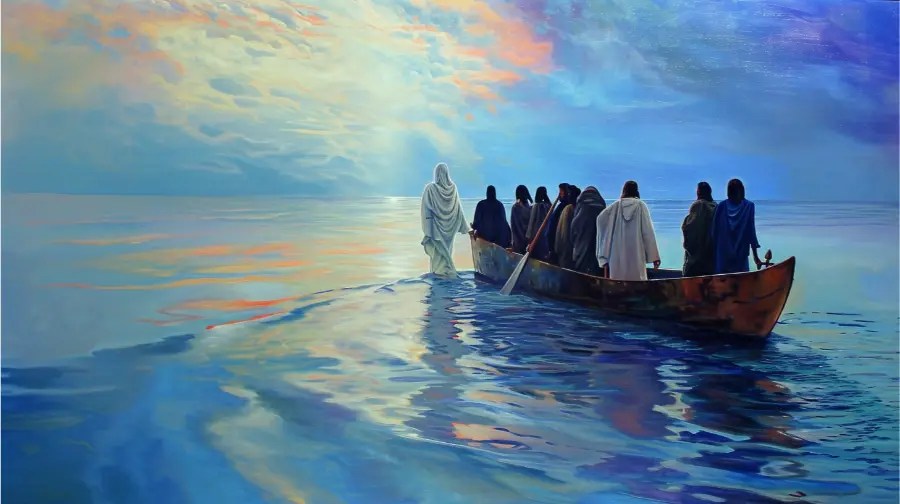
The washing of feet, perhaps the most distinctive ritual of Holy Thursday, dramatically reenacts Christ’s humble service to His disciples. This gesture challenges our human tendency toward pride and self-importance, inviting us to embrace Christ’s model of servant leadership.
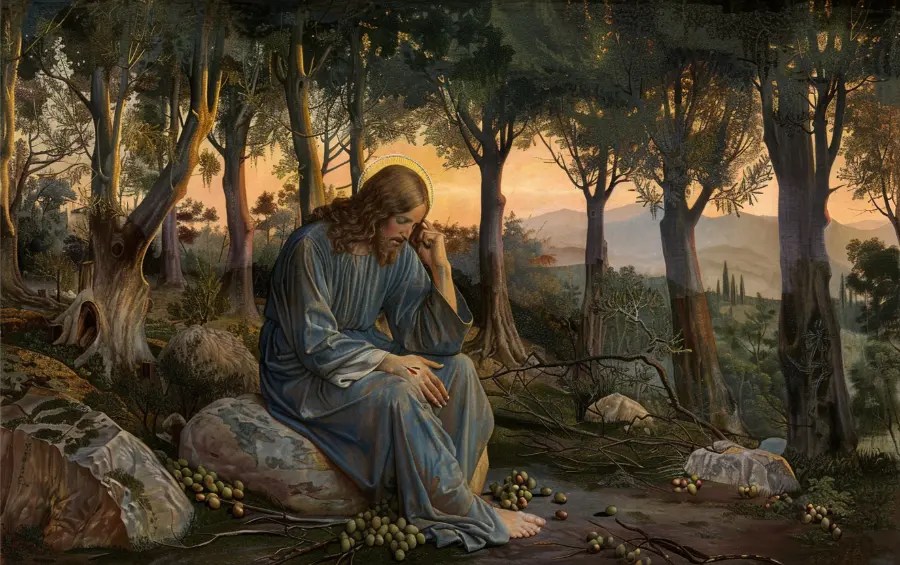
The tabernacle, emptied after Mass with the Blessed Sacrament transferred to an altar of repose, symbolizes Christ’s movement from the Upper Room to the Garden of Gethsemane. The faithful are invited to “watch and pray” with the Lord, responding to His question, “Could you not watch with me one hour?”
The white vestments worn during the Mass reflect the joy of the Eucharist’s institution, while the procession with incense and candles to the altar of repose evokes our accompaniment of Christ into His agony.
These symbols speak not only to our intellect but to our hearts and souls, inviting us into deeper communion with the mysteries they represent. Through them, we do not merely recall past events but participate in the timeless reality of Christ’s redemptive love.
What does the washing of feet symbolize on Holy Thursday?
The washing of feet on Holy Thursday stands as one of the most powerful and countercultural symbols in our liturgical tradition. This powerful gesture reaches beyond mere ritual to touch the very essence of Christian identity and mission.
In the Gospel of John, we read how Jesus, “having loved his own who were in the world, he loved them to the end” (John 13:1). This love manifested itself in an astonishing act: the Master and Lord knelt before His disciples to perform the task of a servant or slave. In the ancient world, washing feet was considered so menial that Jewish servants were exempt from this duty; it was reserved for non-Jewish slaves or performed by the lowest household members.
When Jesus removed His outer garments, tied a towel around His waist, and knelt with a basin of water, He dramatically inverted the social hierarchy. Peter’s resistance—”You will never wash my feet” (John 13:8)—reveals how shocking this action was. The disciples could not comprehend their Master assuming such a lowly position. Yet Jesus insisted, teaching that this washing was essential to having “part with me.”
This ritual washing symbolizes, Christ’s self-emptying love. The Greek word “kenosis” captures this reality—God emptying Himself, taking the form of a servant. In washing feet, Jesus embodied the complete self-gift that would find its ultimate expression on the cross the following day.
This washing represents purification and preparation for the Eucharist. Before receiving Christ’s Body and Blood, the disciples needed this cleansing gesture. Similarly, we are reminded that approaching the altar requires spiritual preparation and purification.
And perhaps most challengingly, the foot washing establishes the pattern for Christian leadership and community. “I have given you an example,” Jesus declared, “that you also should do as I have done to you” (John 13:15). This mandate (from which we get the term “Maundy Thursday”) establishes service as the defining characteristic of Christian authority.
Psychologically this ritual addresses our deep human resistance to vulnerability and service. By participating in this washing—whether giving or receiving—we confront our pride, our desire for status, and our reluctance to be truly seen and touched in our humanity.
I remind you that this symbolic action is not merely a yearly ritual but a blueprint for Christian living. When we wash one another’s feet—literally or figuratively—we participate in Christ’s redemptive inversion of worldly values. We proclaim that in God’s kingdom, greatness is measured by service, and leadership by self-giving love.
What is the biblical basis for Holy Thursday symbols?
The rich symbolism of Holy Thursday finds its foundation directly in Sacred Scripture, particularly in the Gospel accounts of the Last Supper and the events of that momentous evening before our Lord’s Passion. These biblical narratives provide not only historical documentation but also theological depth to our Holy Thursday observances.
The Eucharist, the central symbol of Holy Thursday, draws its meaning from Matthew 26:26-28, Mark 14:22-24, Luke 22:19-20, and 1 Corinthians 11:23-26. In these passages, Jesus takes bread, blesses it, breaks it, and gives it to His disciples saying, “This is my body.” Similarly, He takes the cup of wine, gives thanks, and declares, “This is my blood of the covenant, which is poured out for many.” Luke and Paul add the crucial instruction: “Do this in remembrance of me.” These words form the scriptural heart of our Eucharistic celebration and establish the biblical mandate for the Church’s most sacred ritual.
The washing of feet finds its biblical basis exclusively in John’s Gospel (13:1-17). Although the Synoptic Gospels focus on the institution of the Eucharist, John presents this powerful act of humble service. Jesus rises from the table, removes His outer garments, ties a towel around His waist, and washes His disciples’ feet. This narrative concludes with Christ’s explicit command: “If I then, your Lord and Teacher, have washed your feet, you also ought to wash one another’s feet. For I have given you an example, that you also should do as I have done to you.”
The stripping of the altar after the Holy Thursday liturgy reflects Jesus’ own experience described in Matthew 27:28-31 and John 19:23-24, where His garments were taken from Him before crucifixion. This connection helps us understand how the liturgical action symbolically anticipates Good Friday’s events.
The transfer of the Blessed Sacrament to an altar of repose and the subsequent prayer vigil find their biblical basis in Jesus’ agony in the Garden of Gethsemane (Matthew 26:36-46, Mark 14:32-42, Luke 22:39-46). Christ’s invitation to Peter, James, and John—”Remain here, and watch with me”—becomes our invitation to spend time in adoration and prayer.
Even the use of white vestments for Holy Thursday has biblical resonance, reflecting the heavenly garments described in Revelation and symbolizing the joy and glory of the Eucharistic gift amid the solemnity of the Triduum.
These scriptural foundations remind us that our liturgical symbols are not arbitrary human inventions but divinely inspired means of entering into the sacred mysteries they represent. Through them, we do not merely commemorate past events but participate in their saving reality. The biblical narratives become present and active in our midst, allowing each generation of believers to enter into the Upper Room, to receive Christ’s body and blood, to experience His humble service, and to accompany Him into the Garden of His agony. In this way, we discover the richness of our faith as we engage with the deep meanings woven into our traditions. For instance, the significance of the Christmas sacred symbols explained illuminates how they connect us to the incarnation and the mystery of God’s love made flesh. Each symbol brings forth reflections that guide our hearts and minds to a deeper understanding of the divine narrative unfolding in our lives.
What did the early Church Fathers teach about Holy Thursday symbols and rituals?
The early Church Fathers approached the sacred mysteries of Holy Thursday with powerful reverence, recognizing in these rituals the very foundation of our Christian life. Their writings reveal how the symbols and practices of this holy day were understood in the formative years of our faith.
Saint Augustine, whose theological insights continue to illuminate our understanding of the sacraments, wrote extensively about the washing of the feet. For Augustine, this act represented not merely an example of humility but a powerful cleansing that prepares us for full communion with Christ. He saw in this ritual a symbol of our ongoing need for purification, even after Baptism. In his sermons, Augustine emphasized that when Christ knelt to wash the disciples’ feet, He was teaching us that true greatness lies in service to others.
The Eucharistic symbolism of Holy Thursday received particular attention from the Fathers. Saint John Chrysostom, with his characteristic eloquence, spoke of the Last Supper as the moment when Christ transformed the ancient Passover into the new covenant. Chrysostom emphasized that in the bread and wine, we receive not merely symbols but the very Body and Blood of our Lord. His homilies remind us that when we celebrate the Eucharist, we are not merely commemorating a past event but participating in the eternal sacrifice.
Saint Ambrose of Milan, in his catechetical instructions, taught that the institution of the Eucharist on Holy Thursday established a pattern of divine self-giving that continues in every celebration of the Mass. For Ambrose, the bread and wine transformed into Christ’s Body and Blood represented the ultimate expression of God’s love for humanity.
The early Fathers also recognized in Holy Thursday the institution of the priesthood. Saint Cyprian wrote movingly about how Christ, in commanding the apostles to “do this in memory of me,” established the sacred order that would continue His presence through the ages.
Historically we can appreciate how these early teachings recognized the power of ritual to connect us with the divine. The Fathers understood that in the symbols of Holy Thursday—the basin and towel, the bread and wine—we encounter not mere objects but vehicles of grace that transform our interior lives.
What does the stripping of the altar symbolize on Holy Thursday?
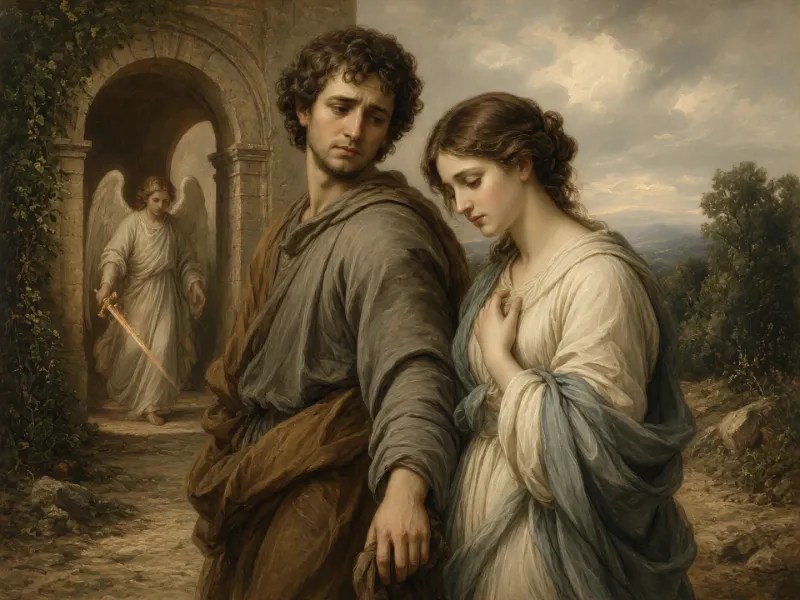
The solemn ritual of stripping the altar, which takes place at the conclusion of the Holy Thursday liturgy, speaks to us with a powerful eloquence that words alone cannot match. In this powerful symbolic action, we witness the beginning of the Church’s journey into the Paschal Mystery—Christ’s passage through suffering and death to resurrection.
As the altar is stripped of its cloths, candles, and decorations, we are confronted with a visual representation of Christ being stripped of his garments before his crucifixion. The altar itself, which symbolizes Christ at the heart of our liturgical life, stands bare and vulnerable, just as our Lord was exposed to mockery and violence. This ritual enacts before our eyes the words of Psalm 22, which Jesus himself quoted from the cross: “They divide my garments among them, and for my clothing they cast lots.”
The stark, unadorned altar also evokes the abandonment that Jesus experienced in Gethsemane and on Calvary. As the disciples fled and even Peter denied him, Jesus faced his suffering in powerful isolation. The bare altar stands as a silent witness to this abandonment, inviting us to remain faithful where others have fled.
Psychologically this ritual creates a powerful sensory experience that helps us enter more deeply into the Passion narrative. The visual emptiness of the sanctuary, often accompanied by the recitation of Psalm 22, engages our emotions and imagination in ways that mere intellectual understanding cannot. We are invited not merely to know about Christ’s suffering but to enter into it with our whole being.
The stripping of the altar also symbolizes the transition from the Last Supper to the events that followed. The Eucharistic table, where we have just celebrated the institution of the Blessed Sacrament, is now emptied, signifying that we are moving from the upper room to the Garden of Gethsemane, from communion to betrayal.
In this ritual, we also see a powerful connection between the Eucharist and the Cross. The altar, which moments before held the Body and Blood of Christ in sacramental form, now stands bare as a symbol of the Cross on which that same Body was sacrificed. This reminds us that every Eucharist is a participation in Christ’s sacrifice.
How do different Christian denominations use and interpret Holy Thursday symbols?
The observance of Holy Thursday across the diverse tapestry of Christian traditions reveals both our shared heritage and the distinctive ways in which different communities express their faith. As we examine these various approaches, we can appreciate how the same fundamental symbols speak in different accents across the body of Christ.
In the Roman Catholic tradition, which I serve as pastor, Holy Thursday is marked by the Mass of the Lord’s Supper, which emphasizes three central symbols: the Eucharist, the priesthood, and the washing of feet. The Eucharist is understood as the real presence of Christ—Body, Blood, Soul, and Divinity—under the appearances of bread and wine. The ritual washing of feet, or Mandatum, recalls Christ’s example of humble service and connects the Eucharist to its ethical implications.
Our Orthodox brothers and sisters celebrate what they call “Great and Holy Thursday” with particular emphasis on the mystical dimension of these events. Their Divine Liturgy of Saint Basil includes a special preparation of the Holy Chrism, connecting the Last Supper with the sacrament of Chrismation (Confirmation). The foot-washing ceremony in Orthodox traditions is often performed by bishops washing the feet of priests, emphasizing the apostolic succession.
Anglican and Episcopal communities maintain many Catholic elements while interpreting them through their distinctive theological lens. The Eucharist is treated with great reverence, though theological understandings of Christ’s presence may vary. Many Anglican parishes practice the stripping of the altar and the washing of feet, emphasizing both the historical continuity with ancient practice and the call to servant leadership.
Lutheran churches typically celebrate Holy Thursday with a focus on the institution of the Lord’s Supper. While maintaining the centrality of the Eucharist, Lutheran theology emphasizes Christ’s presence “in, with, and under” the elements rather than transubstantiation. Many Lutheran communities also practice foot washing and the stripping of the altar.
Methodist, Reformed, and many evangelical traditions tend to place greater emphasis on the memorial aspect of the Last Supper, understanding it primarily as an act of remembrance and thanksgiving rather than a sacramental presence. Nevertheless, many of these communities have in recent decades recovered ancient practices like foot washing as expressions of Christ’s call to servant ministry.
Historically these different approaches reflect how communities balance the need for continuity with tradition and the imperative to make faith meaningful in their particular contexts. Each tradition, in its own way, seeks to connect believers with the transformative power of Christ’s self-giving love.

The Significance of Holy Thursday Symbols
What does the consecration of holy oils symbolize on Holy Thursday?
The holy oils consecrated on this day are the Oil of Catechumens, the Oil of the Sick, and the Sacred Chrism. Each of these oils serves a distinct purpose in the life of the Church and the faithful. (Larysa et al., 2024)
The Oil of Catechumens is used to anoint those preparing for baptism. This oil symbolizes the strengthening of the catechumens as they renounce Satan and prepare to be reborn through the waters of baptism. It represents the grace and power of the Holy Spirit that will empower them for their new life in Christ. (Malanyak, 2024)
The Oil of the Sick is used to anoint those who are gravely ill or near the end of their earthly life. This oil is a tangible sign of God’s healing presence and the Church’s care for the suffering. It reminds the sick that they are not alone, but are united to Christ in his own suffering on the cross. (Warriors, 2017)
The Sacred Chrism is used for the sacraments of baptism, confirmation, and holy orders. This oil, mixed with fragrant balsam, symbolizes the outpouring of the Holy Spirit and the anointing of the faithful as priests, prophets, and kings – sharing in the threefold ministry of Christ himself. (Al-Kilani, 2023)
The consecration of these holy oils on Holy Thursday is a powerful reminder that Christ’s sacrifice on the cross is the source of all grace and healing for the Church. As the faithful receive these oils throughout the year, they are connected to the events of that final night when Jesus celebrated the Passover with his disciples and instituted the Eucharist. (Gerami & Aghagolizadeh, 2025)
How do Holy Thursday symbols help Christians connect with Jesus’s final night?
The symbols and rituals of Holy Thursday help Christians around the world enter into the mystery of Jesus’s final night on earth. By participating in these sacred observances, believers are able to more deeply encounter the love, humility, and suffering of our Lord.
The washing of the feet, for example, powerfully recalls Jesus’s act of humble service as he washed the feet of his disciples. This gesture reminds us that we are called to serve one another in love, following the example of our Savior. (Bria, 2025)
The celebration of the Eucharist on Holy Thursday also connects us to that pivotal moment when Jesus instituted the sacrament, saying “This is my body” and “This is my blood.” As we receive Holy Communion, we are united to Christ and to one another in a powerful way, becoming the living Body of Christ in the world. (Ramazanov, 2021, pp. 52–69)
The stripping of the altar after the Mass on Holy Thursday evokes the abandonment and loneliness Jesus experienced in the Garden of Gethsemane. This stark ritual helps us enter into the sorrow and desolation of that night, as our Lord faced his impending passion and death. (Kruger, 2018)
Through these and other Holy Thursday symbols, Christians are able to walk alongside Jesus during his final hours, sharing in his suffering and anticipating the joy of the Resurrection to come. These sacred observances invite us to deepen our love, faith, and commitment to the One who gave his life for our salvation. (Kruger, 2019, pp. 43–57)

The Meaning of the Altar of Repose
One of the most powerful symbols of Holy Thursday is the “altar of repose” – a temporary altar where the consecrated Eucharist is placed after the Mass. This altar, often elaborately decorated, represents the Garden of Gethsemane where Jesus went to pray before his arrest.
The altar of repose symbolizes the loneliness and abandonment Jesus experienced in the garden, as his disciples fell asleep while he agonized in prayer. (Isaev & Rumyantseva, 2022) It reminds us that even in his darkest hour, Jesus remained faithful to the Father’s will, accepting the cup of suffering that was set before him.
As the faithful keep vigil at the altar of repose, they are invited to accompany Jesus in his hour of need, staying awake and praying with him. This act of spiritual companionship connects us to the disciples who failed to stay awake, and challenges us to remain vigilant and attentive to Christ’s presence in our own lives. (South American Contributions to World Archaeology. MARIANO BONOMO and SONIA ARCHILA, Editors. 2021. Springer, Cham, Switzerland. Xii + 461 Pp., 101 b/w Illustrations. $149.99 (Hardback), ISBN 9783030739973., n.d.)
The altar of repose also foreshadows the empty tomb on Easter morning. Just as the Eucharist is “entombed” at this temporary altar, so too will Christ’s body be laid in the tomb after his crucifixion. Yet we know that, like the Eucharist, Jesus will rise again, conquering sin and death for our sake. (Sagovsky, 2014, pp. 240–242)
Through this powerful symbol, Holy Thursday invites us to enter into the mystery of Christ’s passion and death, while also keeping our eyes fixed on the hope of the Resurrection. As we kneel before the altar of repose, we are called to remain vigilant, to pray, and to trust in the saving power of our Lord. (Zarcone, 2021, pp. 124–137)
—
More from this seriesEaster in ChristianitySee all 21 articles

Leave a Reply