
 English
  Chinese
  Dutch
Dutch  Arabic
  Spanish
  Portuguese
  Russian
  French
  Italian
  German
  Japanese
 No. The Bible does not teach reincarnation. The Letter to the Hebrews says people “die once, and after that comes judgment,” and the New Testament’s hope is resurrection: the raising of the same person, body and soul, at the end of time, rather than rebirth into another life on earth.
What is reincarnation?
Reincarnation is the belief that some part of a person, whether the soul, the mind or consciousness, survives death and is born again in another body, often many times. Encyclopaedia Britannica describes it as most characteristic of the religions of South and East Asia. Hinduism, Buddhism, Jainism and Sikhism tie the cycle of rebirth to karma, the law by which a person’s good and bad actions shape future existences. The idea also appears among some ancient Greeks, including Pythagoras and Plato, in gnosticism and Manichaeism, and in modern movements such as theosophy.

What does the Bible say about reincarnation?
The Bible never names reincarnation, but several passages exclude it. The clearest is Hebrews 9:27–28: “just as it is appointed for man to die once, and after that comes judgment, so Christ, having been offered once to bear the sins of many, will appear a second time.” The letter sets the single death of each person beside the single sacrifice of Christ.
The Old Testament speaks of death as the end of a person’s life on earth. Job says that “he who goes down to Sheol does not come up; he returns no more to his house” (Job 7:9–10). When David’s infant son died, David said, “I shall go to him, but he will not return to me” (2 Samuel 12:23). The Bible does record people brought back from death, such as the widow’s son whom Elijah raised and Lazarus, whom Jesus called out of the tomb. Each came back to the same life in the same body: “the life of the child came into him again, and he revived” (1 Kings 17:22), and Lazarus came out with “his hands and feet bound with linen strips” (John 11:44).
The New Testament places the dead with God or apart from him as soon as they die, and it describes no rebirth into another body. In Jesus’ story of the rich man and Lazarus, the poor man dies and is “carried by the angels to Abraham’s side,” the rich man is in torment in Hades, and between them “a great chasm has been fixed” (Luke 16:22–26). Jesus told the criminal crucified beside him, “today you will be with me in paradise” (Luke 23:43), and Paul wrote that he would “rather be away from the body and at home with the Lord” (2 Corinthians 5:8).
Was John the Baptist Elijah reincarnated?
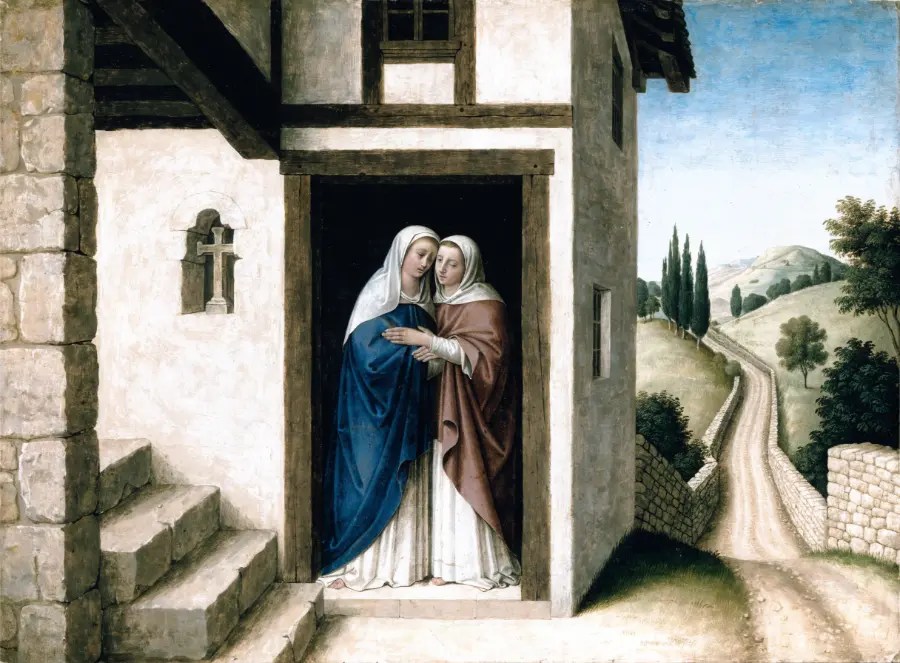
Some readers find reincarnation in what Jesus said about John the Baptist. The prophet Malachi foretold, “Behold, I will send you Elijah the prophet before the great and awesome day of the Lord comes” (Malachi 4:5). Jesus said of John, “if you are willing to accept it, he is Elijah who is to come” (Matthew 11:14), and after the Transfiguration he told the disciples that “Elijah has already come, and they did not recognize him.” Matthew adds, “Then the disciples understood that he was speaking to them of John the Baptist” (Matthew 17:12–13).
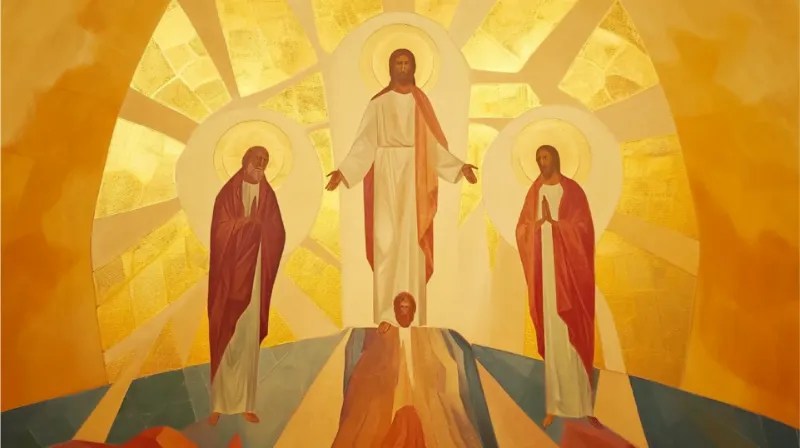
Other passages show the sense in which John was Elijah. Before John’s birth, the angel Gabriel told his father, Zechariah, that John would go before the Lord “in the spirit and power of Elijah” (Luke 1:17). When priests and Levites asked John directly, “Are you Elijah?”, he answered, “I am not” (John 1:21). Elijah, moreover, did not die: he “went up by a whirlwind into heaven” (2 Kings 2:11). And at the Transfiguration, after John had been beheaded (Matthew 14:10), Elijah appeared beside Moses as himself (Matthew 17:3).

What about the man born blind, and being born again?
Two other passages raise the question. When Jesus’ disciples met a man blind from birth, they asked, “Rabbi, who sinned, this man or his parents, that he was born blind?” The question assumes the man might have sinned before he was born. Jesus set both explanations aside: “It was not that this man sinned, or his parents, but that the works of God might be displayed in him” (John 9:2–3).
Jesus told Nicodemus, “unless one is born again he cannot see the kingdom of God.” Nicodemus took him literally and asked, “Can he enter a second time into his mother’s womb and be born?” Jesus answered that he meant a birth “of water and the Spirit,” and explained, “That which is born of the flesh is flesh, and that which is born of the Spirit is spirit” (John 3:3–6).
How is resurrection different from reincarnation?
Reincarnation describes many lives in a series of bodies. Resurrection, as Scripture describes it, happens once, at the end of time, to the same person. Daniel foresaw that “many of those who sleep in the dust of the earth shall awake, some to everlasting life, and some to shame and everlasting contempt” (Daniel 12:2). Jesus said that “an hour is coming when all who are in the tombs will hear his voice and come out, those who have done good to the resurrection of life, and those who have done evil to the resurrection of judgment” (John 5:28–29).
The body is raised changed, but it is the same body. Paul writes, “What is sown is perishable; what is raised is imperishable… It is sown a natural body; it is raised a spiritual body” (1 Corinthians 15:42–44). The risen Jesus showed his disciples the body they knew: “See my hands and my feet, that it is I myself” (Luke 24:39). The Catechism of the Catholic Church quotes that verse and adds that Christ “did not return to an earthly life” (999).
Did early Christians believe in reincarnation?
Early Christian writers argued against it. Irenaeus of Lyons, in Against Heresies, written about 180, argued against the transmigration of souls. His chief argument was that “souls remember nothing whatever of the events which took place in their previous states of existence” (2.33).
Origen of Alexandria (about 185–254) believed that souls existed before birth, but, as Britannica notes, he did not believe in transmigration. Commenting on Jesus’ words about Elijah, he wrote that “it does not appear to me that by Elijah the soul is spoken of, lest I should fall into the dogma of transmigration, which is foreign to the church of God, and not handed down by the Apostles, nor anywhere set forth in the Scriptures” (Commentary on Matthew 13.1). His teaching on the pre-existence of souls was condemned after his death. The Emperor Justinian issued an edict against Origen in 543, and the records of the Second Council of Constantinople in 553 include fifteen anathemas against teachings attributed to him, the first against anyone who “asserts the fabulous pre-existence of souls.” Belief that souls exist before birth is a different idea from reincarnation.
Some modern writers claim that the council removed reincarnation from the Bible. A 2016 University of Glasgow thesis on the question concluded that the facts about the council contradict that claim: the anathemas were aimed at the views of Origen’s later followers, and the New Testament had been settled by the fourth century. Codex Sinaiticus, copied in the middle of the fourth century, two hundred years before the council, is the earliest complete copy of the New Testament, Hebrews 9:27 included.

Do Christians believe in reincarnation?
The churches reject it. The Nicene Creed, which Britannica describes as accepted by the Roman Catholic, Eastern Orthodox, Anglican and major Protestant churches, ends with “the resurrection of the dead and the life of the world to come.” The Catechism of the Catholic Church says that when “the single course of our earthly life” is completed, “we shall not return to other earthly lives,” and adds, “There is no ‘reincarnation’ after death” (1013). The Westminster Confession of Faith, still the doctrinal standard of Presbyterian churches such as the Orthodox Presbyterian Church, says that at death souls “immediately return to God who gave them,” and that at the last day the dead “shall be raised up, with the selfsame bodies, and none other” (32.1–2).
Many Christians say they believe in it all the same. In a Pew Research Center survey taken in December 2017, 29 percent of American Christians said they believe in reincarnation, compared with 33 percent of all American adults. The figure was 36 percent among Catholics and 26 percent among Protestants: 38 percent in the historically Black Protestant tradition, 33 percent among mainline Protestants and 19 percent among evangelicals.


Leave a Reply