
 English
 Chinese
 Dutch
 Arabic
 Spanish
 Portuguese
 Russian
 French
 Italian
 German
 Japanese
Hearing God’s Promise: A Heartfelt Guide to the Simeons of the Bible
The name “Simeon” echoes through the pages of Scripture, attached to stories of both heartbreak and hope. For many readers, it can be confusing to keep track of who is who.¹ Is Simeon the angry brother from Genesis? Or is he the peaceful old man who held baby Jesus in the Temple? The answer, wonderfully, is both. The Bible gives us these two powerful stories, and several other mentions of the name, to paint a beautiful and complete picture of the human journey with God.
This is a journey from a life of struggle to a life of peace, from a story of anger to a story of fulfillment. The name Simeon itself means “hearing”.³ As we explore these lives, we will discover how each one reflects a different way of hearing—or not hearing—the voice of God. One Simeon acts from a place of hurt and rage, leading to a legacy of sorrow. The other lives a life so attuned to the Holy Spirit that he can recognize his Savior in the arms of a young mother.
Join us as we untangle these stories. We will look at the facts and statistics, but more importantly, we will uncover the deep spiritual lessons they hold for our own lives. We will see a God who is patient, whose grace can redeem the most troubled legacy, and whose promises bring a peace that surpasses all understanding. This is more than a history lesson; it’s an invitation to learn how to better hear the God who has heard us.
Who Are the Different Simeons in the Bible?
To begin our journey, it is helpful to have a clear map. The name Simeon, which is sometimes written as Symeon or is the original Hebrew form of Simon, appears several times in the Bible, referring to different individuals in different eras.¹ Getting to know them helps us appreciate the unique role each one plays in God’s great story.
Here are the primary figures named Simeon in Scripture:
- Simeon, son of Jacob: The second son of Jacob and his wife Leah. He is a central figure in the book of Genesis and the founder of one of the twelve tribes of Israel.¹ His life is a dramatic story of family conflict, violence, and eventual consequence.
- Simeon at the Temple: A righteous and devout man living in Jerusalem at the time of Jesus’s birth. His beautiful story, found in the Gospel of Luke, is one of patient waiting and powerful spiritual insight.¹
- Simeon Niger: A respected leader in the early church. He is mentioned in the book of Acts as one of the “prophets and teachers” in the diverse and influential church at Antioch.²
- Simon Peter (the Apostle): The leader of the twelve apostles, whose original Hebrew name was Simeon.² He is most often called by the Greek version of his name, Simon, or by the nickname Jesus gave him, Peter.
- Simeon, an ancestor of Jesus: A man listed in the genealogy of Jesus found in Luke’s Gospel, connecting the lineage of the Savior back through the history of Israel.¹
While each of these men is a part of the biblical story, our focus will be on the two whose stories offer the most powerful and contrasting lessons for our faith: Simeon, the son of Jacob, and Simeon, the man who met Jesus in the Temple. Their lives, set thousands of years apart, provide a stunning picture of a journey from human brokenness to divine peace.
| The Simeons of Scripture: A Quick Guide | ||
|---|---|---|
| Name/Title | Primary Scripture | Key Role/Significance |
| Simeon (Son of Jacob) | Genesis 29, 34, 42, 49 | Second son of Jacob; founder of the Tribe of Simeon. His story is marked by violence and anger.1 |
| Simeon (at the Temple) | Luke 2:25-35 | A righteous prophet who recognized the infant Jesus as the Messiah and delivered a key prophecy.5 |
| Simeon Niger | Acts 13:1 | A prophet and teacher in the church at Antioch; likely a man of African descent, showing the early church’s diversity.6 |
| Simon Peter | Matthew 16, Acts 15:14 | The chief apostle of Jesus, whose original Hebrew name was Simeon. His life shows a journey of learning to “hear” Jesus.7 |
| Simeon (Ancestor of Jesus) | Luke 3:30 | A man listed in the genealogy of Jesus, part of the line of the Messiah.2 |
What is the Story of Simeon, Jacob’s Son? A Tale of Anger and Grace
The first Simeon we meet in the Bible lives a life etched with pain, anger, and violence. His story, found in the book of Genesis, serves as a powerful and sobering lesson on the destructive consequences of a heart that does not listen to God.
His Birth and a Mother’s Pain
Simeon was the second son born to Jacob and Leah.³ His very name was born from his mother’s sorrow. The Bible tells us that Jacob loved his other wife, Rachel, more than Leah. When Leah gave birth to her second son, she said, “Because the LORD has heard that I am unloved, He has given me this son as well.” So she named him Simeon, a name derived from the Hebrew word
shama, which means “to hear”.³ From his first moments, Simeon’s identity was tied to a cry of being unheard and unloved, a wound that seems to have festered into a deep-seated anger.
An Act of Terrible Vengeance
This anger exploded in one of the most violent episodes in Genesis. Simeon’s sister, Dinah, was defiled by a man named Shechem, the son of a local Canaanite ruler.¹ Although the desire for justice was understandable, the path Simeon and his brother Levi chose was one of horrific cruelty. They pretended to make a peace treaty, tricking all the men of Shechem’s city into being circumcised. Then, while the men were weakened and in pain, Simeon and Levi “took their swords and attacked the unsuspecting city, killing every male”.¹
Their father, Jacob, was horrified. He rebuked them not only for their brutality but for the danger they had brought upon the entire family, making them “obnoxious to the Canaanites and Perizzites”.¹ This event reveals a core flaw in Simeon’s character: an inability to control his wrath, choosing disproportionate and deceitful violence over wise and measured justice. His actions were not about hearing God, but about satisfying his own rage.
A Heart of Envy and a Hostage in Egypt
Simeon’s volatile nature is seen again in the story of his younger brother, Joseph. Along with his brothers, Simeon was intensely jealous of Joseph, who was their father’s favorite son.¹ Rabbinical traditions suggest that Simeon was particularly spiteful, even proposing that the brothers kill Joseph. He is said to be the one who threw Joseph into the pit, furious that he was later sold into slavery instead of being killed.³
Years later, when the brothers traveled to Egypt to buy grain during a famine, they came face to face with the brother they had betrayed. Joseph, now a powerful ruler, tested them by demanding they bring their youngest brother, Benjamin, to him. To ensure their return, he took one of them as a hostage: Simeon.¹ Some ancient sources add a dramatic detail, suggesting Joseph chose Simeon to separate him from Levi, fearing that the two of them together were so violent they might try to destroy Egypt just as they had destroyed Shechem.³
A Father’s Curse
The final, tragic chapter of Simeon’s personal story comes from his father’s deathbed. As Jacob gathered his sons to give them his final words, he did not offer a blessing to Simeon and Levi. Instead, he pronounced a curse upon their defining sin: their anger.
In Genesis 49:5-7, Jacob says, “Simeon and Levi are brothers; instruments of cruelty are in their dwelling place…. Cursed be their anger, for it is fierce; and their wrath, for it is cruel! I will divide them in Jacob and scatter them in Israel”.² These words are more than a father’s disappointment; they are a divine prophecy that would shape the destiny of Simeon’s descendants for centuries. His legacy, born from a place of feeling unheard, became one of uncontrolled anger that led to a future of being scattered and divided.
What Happened to the Tribe of Simeon? A Prophecy Fulfilled
Jacob’s prophecy over his son Simeon was not an empty threat. The consequences of his anger and violence echoed through the generations, shaping the history of the tribe that bore his name. The story of the Simeonites is a sobering fulfillment of their ancestor’s curse, but it is also, a story of God’s enduring grace.
A People Diminished
The tribe of Simeon was never one of the great or powerful tribes of Israel.¹⁴ Its history is marked by decline and struggle. A clear and startling statistic from the Book of Numbers illustrates this dramatically. In the first census taken after the Exodus from Egypt, the tribe of Simeon numbered 59,300 men of fighting age.¹⁵ But by the time of the second census, just before entering the Promised Land, their numbers had plummeted to only 22,200.¹⁵
This catastrophic decline is often linked to a specific incident of sin at Peor, where many Israelites, including a prominent Simeonite prince named Zimri, engaged in idolatry and immorality, leading to a devastating plague from God.¹⁴ This event reinforces a tragic pattern for the tribe: a tendency to fall into sin that brought about severe consequences.
A Scattered Inheritance
The most literal fulfillment of Jacob’s prophecy came when the Israelites conquered and divided the Promised Land. The tribe of Simeon did not receive its own distinct, independent portion of land. Instead, their inheritance was a collection of cities located entirely within the territory allotted to the larger and more powerful tribe of Judah.¹ They were scattered within their brother’s land, never having a strong, unified territory of their own.
Further evidence of their diminished status is found in one of the most important passages in the Old Testament: the Blessing of Moses in Deuteronomy 33. In this chapter, Moses gives a final blessing to each of the tribes of Israel before his death. Shockingly, in the primary Hebrew text (the Masoretic Text), the tribe of Simeon is completely omitted.³ Although their name does appear in some ancient Greek translations like the Septuagint, this omission in the main Hebrew tradition is a powerful sign of how far the tribe had fallen. Over time, they were largely absorbed by the tribe of Judah, their distinct identity fading into the background of Israel’s history.¹⁴
Glimmers of Hope and Final Redemption
But God’s story is never just about curses. Even in their scattered state, the tribe of Simeon had moments of faithfulness. They showed renewed dedication to God’s chosen king by sending 7,100 “mighty men of valor” to support David at his coronation.¹⁵ They also joined with the good king Asa of Judah in his religious reforms, turning away from idolatry.¹¹
The most powerful proof of God’s grace, however, comes at the very end of the Bible. In the book of Revelation, when the Apostle John sees a vision of God’s redeemed people in the end times, he lists the twelve tribes of Israel. And there, in a place of honor, is the tribe of Simeon. Revelation 7:7 declares that 12,000 from the tribe of Simeon will be sealed with God’s protection.¹
This is a breathtaking moment of redemption. The tribe that was cursed to be scattered, the people whose legacy was one of anger and failure, is not forgotten. In God’s final and perfect plan, they are included, sealed, and saved. It is a beautiful reminder that while our actions have real consequences in this life, God’s grace is always the final word. The scattering was a temporal judgment, but the sealing is an eternal promise.

Who Was the Righteous Simeon Who Met Baby Jesus?
As we turn the pages from the Old Testament to the New, we meet another man named Simeon. This Simeon, who appears in the second chapter of Luke’s Gospel, could not be more different from his namesake in Genesis. Where the first Simeon was a man of anger and violence, this Simeon is a man of peace and devotion. His story provides a beautiful contrast, showing us a life completely surrendered to and guided by the Holy Spirit.
A Man of Godly Character
The Gospel of Luke introduces him with simple but powerful words: “Now there was a man in Jerusalem, whose name was Simeon, and this man was righteous and devout” (Luke 2:25).¹ These two words tell us everything about his heart.
- Righteous: This means he was just and upright in his relationships with other people. He lived his life according to God’s standards of fairness and integrity.¹⁸
- Devout: This describes his relationship with God. He was pious, reverent, and deeply committed to a life of worship and prayer.¹⁸
He was also a man filled with hope. The Bible says he was “waiting for the consolation of Israel”.¹ This was a beautiful and common way of referring to the coming of the Messiah. For centuries, the faithful people of Israel had been longing for God to send His promised Savior to comfort, rescue, and redeem them. Simeon embodied this patient, faithful hope.
A Life Filled with the Spirit
What truly sets this Simeon apart is his intimate relationship with the Holy Spirit. Luke emphasizes this three times in just three verses, making it clear that this was the defining feature of his life 8:
- “The Holy Spirit was upon him” (Luke 2:25). This wasn’t just a fleeting feeling; it was a constant state of being. He lived under the anointing and presence of God’s Spirit.
- “It had been revealed to him by the Holy Spirit” (Luke 2:26). God spoke to him personally, giving him a unique and incredible promise.
- “He came by the Spirit into the temple” (Luke 2:27). His actions were not random; they were guided step-by-step by the Spirit’s leading.
This portrait of Simeon is one of a man in deep, constant communion with God. He didn’t just know about God; he knew God personally, listening for His voice and following His guidance.
A Unique and Personal Promise
Because of his faithfulness, God gave Simeon a special promise that sustained his hope. The Holy Spirit had revealed to him “that he would not die before he had seen the Lord’s Christ”.¹ Imagine living with such a promise! Every day, he would wake up with the hopeful expectation that this could be the day. This promise transformed his waiting from a general hope for Israel into a deeply personal and faith-stretching mission. He was a sentinel, a watchman on the wall, waiting for the arrival of his King.
The contrast between the two main Simeons is a powerful lesson in itself. It is a story of how the same name can represent two completely different paths, one leading to a curse and the other to a blessing.
| Two Lives, One Name: Contrasting the Two Main Simeons | ||
|---|---|---|
| Characteristic | Simeon (Son of Jacob) | Simeon (at the Temple) |
| Defining Actions | Deceitful violence at Shechem; plotting against Joseph.1 | Peaceful worship; blessing the Holy Family; prophesying.23 |
| Key Emotion | Fierce anger and envy.1 | Profound peace and joyful hope.25 |
| Relationship with God | Rebuked and cursed by his patriarch, Jacob.2 | Filled with, promised by, and guided by the Holy Spirit.6 |
| Legacy | A scattered and diminished tribe; a cautionary tale.14 | An immortal song of praise (Nunc Dimittis); a model of faith.27 |
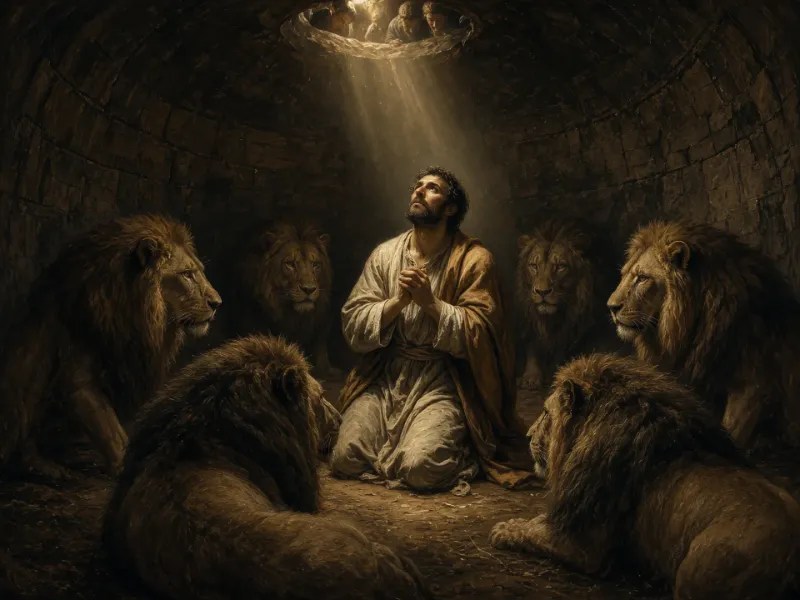
What Can We Learn from Simeon’s Patient Waiting for the Messiah?
In our fast-paced world of instant gratification, the story of Simeon at the Temple offers a gentle but powerful counter-cultural message. His life is a masterclass in the spiritual art of waiting, teaching us invaluable lessons about faith, patience, and the peace that comes from trusting God’s perfect timing.
The Power of Patient Faith
Simeon’s waiting was not a passive, empty idleness. It was an active, hope-filled spiritual discipline.²² The Bible doesn’t tell us how long he waited after receiving God’s promise. Was it a few years? Or was it decades? We can imagine him as an old man, having carried this promise in his heart for most of his life.²⁹ Yet, his faith never wavered. His hope was not in his circumstances or on a human calendar, but in the unchanging character of a faithful God.²⁹
This speaks directly to our own lives. We are all waiting for something—an answer to a heartfelt prayer, a breakthrough in a difficult situation, healing for a loved one, or the ultimate return of Christ. Simeon’s example encourages us to wait well. It teaches us to anchor our hope not in the when or the how of God’s answer, but in the Who—the God who always keeps His promises. His life is the antidote to the impulsive violence of the first Simeon. Where Jacob’s son reacted with immediate, self-willed rage, the prophet of Luke’s gospel responded to life’s greatest longing with patient, prayerful trust.
Living Attuned to the Holy Spirit
Simeon’s story is a beautiful illustration of what it means to be led by the Holy Spirit. He didn’t just receive a promise and then sit back. He cultivated an ongoing, moment-by-moment relationship with God that allowed him to be in the right place at exactly the right time.²¹ On that specific day, when Mary and Joseph walked into the vast Temple complex with their baby, it was the Spirit who prompted Simeon to go there.³¹
This is a powerful encouragement for us. God wants to guide our steps, too. The Christian life is an invitation to cultivate a sensitivity to the Spirit’s leading through prayer, reading Scripture, and simple obedience.³² It means giving God permission to interrupt our daily plans and schedules. It’s about trusting that He is orchestrating divine appointments for us, leading us toward the very people and moments He has prepared for us to encounter.
Finding True Fulfillment in Christ
When Simeon finally saw the infant Jesus, his life felt complete. His first words were a prayer of release: “Lord, now you are letting your servant depart in peace”.²³ His ultimate satisfaction was not found in worldly success, status, or even in seeing the full story of Jesus’s life unfold. His deepest joy came from one single moment: seeing God’s promise fulfilled in the person of Christ.
This challenges us to examine where we seek our own fulfillment. Simeon’s example points us away from the fleeting treasures of this world and toward a life centered on Jesus. He teaches us that knowing Christ is the greatest treasure of all. It is this encounter that brings a peace that calms our restless hearts and a purpose that transcends all other circumstances, even the finality of death. For Simeon, seeing his Savior was enough. His life’s work was done, and he was ready to go home in peace.
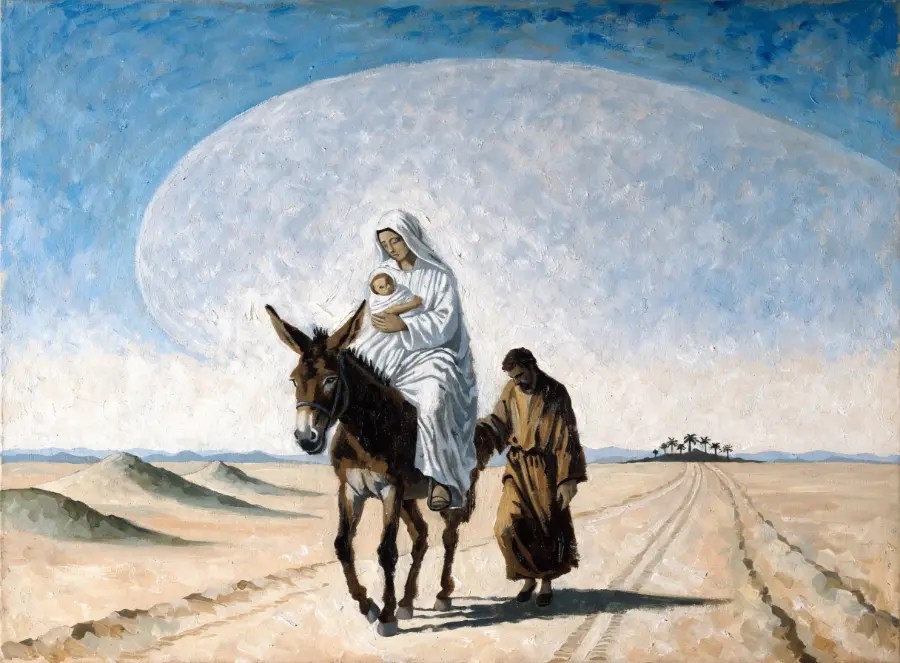
What is the Meaning of Simeon’s Song, the “Nunc Dimittis”?
When the aged Simeon took the baby Jesus into his arms, the words that flowed from his heart became one of the most beloved and theologically rich hymns in all of Christianity. This prayer, recorded in Luke 2:29-32, is known as the Nunc Dimittis. Its beauty lies in its powerful simplicity and its world-changing message.
The Name and Its Tradition
The name Nunc Dimittis comes from the first two words of the prayer in its Latin translation, which mean “Now you dismiss” or “Now you let depart”.⁵ For centuries, the Church has recognized the deep spiritual truth in these words. The song is traditionally used in evening prayer services, such as Compline, in Catholic, Orthodox, Anglican, and Lutheran traditions.²⁷ Just as the day ends in rest, Simeon’s song speaks of life’s work being complete, allowing the faithful servant to rest in the peace of God.
A Prayer of Personal Peace
The song begins with a deeply personal expression of contentment: “Sovereign Lord, as you have promised, you may now dismiss your servant in peace.”.³⁵ Simeon is addressing God as his Master (
despota in Greek), and he sees himself as a faithful servant whose mission is now complete. He had been given one great task: to wait and watch for the Messiah. Now that he has seen Him, he can face death not with fear, but with a powerful sense of peace and fulfillment.¹⁹ His life has found its ultimate meaning.
A Prayer of Universal Salvation
The prayer then expands from the personal to the universal: “For my eyes have seen your salvation, which you have prepared in the sight of all nations.”.³⁵ This is a breathtaking declaration. Simeon, a devout Jew standing in the heart of the Jerusalem Temple, proclaims that the salvation he holds in his arms is not just for the people of Israel. It has been prepared by God for
all people.¹⁹ This is one of the earliest and clearest statements of the universal scope of the Gospel in the New Testament. It’s a theological bombshell, dropped in the most sacred Jewish space, signifying that God’s plan in Christ was always for the entire world.
A Prayer of Dual Revelation
The final verse clarifies the nature of this universal salvation: “a light for revelation to the Gentiles, and the glory of your people Israel.”.³⁵ This beautiful line holds two distinct but related truths:
- A Light for the Gentiles: For the non-Jewish nations, who were often described as living in spiritual darkness, Jesus would be a revealing light. He would make God known to them in a way they had never experienced before. This fulfills the great prophecies of Isaiah, who spoke of God’s servant being a light to the nations (Isaiah 42:6; 49:6).³⁴
- The Glory of Israel: For the Jewish people, Jesus is the ultimate glory. He is the fulfillment of every promise God ever made to them—the culmination of the covenants with Abraham, Moses, and David. He is the living embodiment of God’s faithfulness to His chosen people.³⁷
In this short, beautiful song, Simeon captures the very heart of the Gospel. It is a message of personal peace, universal hope, and the glorious light of Christ shining for all the world to see.
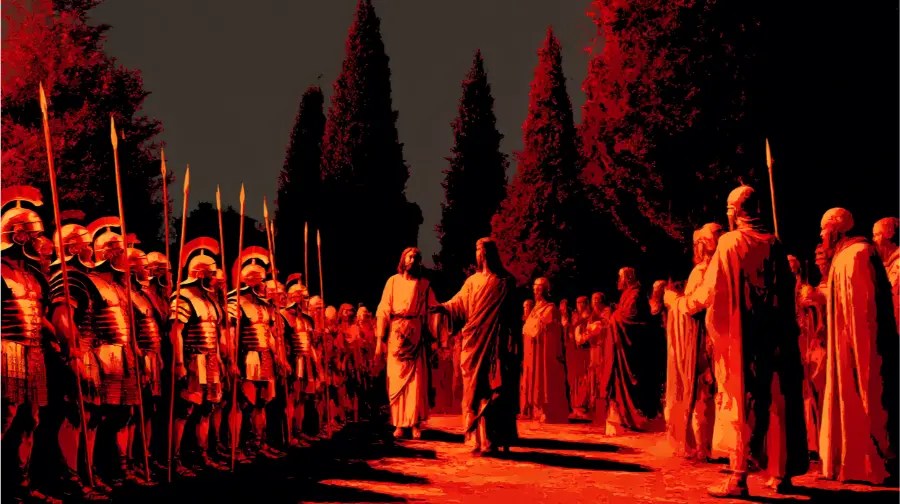
What Did Simeon’s Prophecy to Mary Mean? A Sword in the Heart
After his song of praise, the mood of the scene in the Temple shifts. Simeon turns to bless the Holy Family, and then he speaks directly to Mary. His words are a prophecy that is both powerful and painful, foreshadowing the difficult path that lay ahead for her and her Son (Luke 2:34-35).
A Child of Division
Simeon begins, “Behold, this child is destined to cause the falling and rising of many in Israel.”.⁸ This reveals a startling truth: Jesus’s arrival would not automatically bring peace and unity. Instead, it would force a choice. He would become a dividing line in the heart of Israel. Those who accepted Him in faith and humility would “rise” to new life and salvation. But those who rejected Him in pride and unbelief would “fall” under judgment.¹⁸ A person’s response to Jesus would determine their ultimate destiny.
A Sign to Be Opposed
Simeon continues that Jesus is destined to be “a sign that will be spoken against.”.⁸ A “sign” in the Bible is something that points to God’s presence and power. But Simeon prophesies that this divine sign would be met with contradiction, opposition, and slander. This foretold the intense resistance Jesus would face from the religious and political leaders throughout His ministry, a rejection that would ultimately lead to His crucifixion.¹
A Sword for a Mother’s Soul
Then, Simeon delivers the most personal and heart-wrenching part of the prophecy: “…(and a sword will pierce through your own soul also).”.⁸ This vivid and painful image speaks directly to the immense sorrow that Mary would have to endure as a mother. This “sword” is the deep, piercing grief of watching her beloved Son be misunderstood, rejected, persecuted, and finally, brutally executed.⁴⁰
This prophecy connects Mary intimately to the suffering and redemptive mission of her Son. Her pain is not a random tragedy; it is a direct result of her unique relationship with the rejected Messiah. In this moment, Mary becomes the first disciple to be told that following Jesus involves sharing in His suffering. Her pierced heart is a symbol for the heart of the Church, which grieves with its Lord and finds its life by embracing the cross.
Revealing the Hearts of Many
Simeon concludes by explaining the purpose of all this division and pain: “…so that the thoughts of many hearts may be revealed.”.⁸ Jesus is God’s great litmus test. How a person responds to Him—with faith or with hostility—exposes the true condition of their heart. He brings to the surface the hidden attitudes, secret allegiances, and the deepest posture of a soul toward God.¹⁸ There can be no neutrality in the face of Christ; He reveals who we truly are.
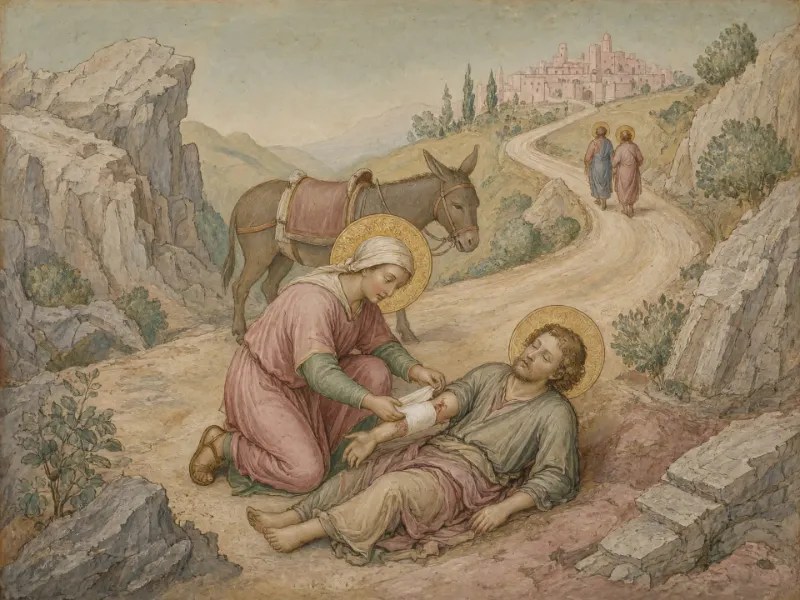
How Does the Catholic Church View St. Simeon?
In the Catholic tradition, St. Simeon is far more than just a passing character in the Christmas story. He is a revered saint, a liturgical guide, and a figure whose words have shaped centuries of prayer and devotion. The Church’s engagement with him shows how a brief scriptural passage can blossom into a vast web of living faith.
Veneration as a Saint and the Feast of the Presentation
Simeon is honored as a saint in the Catholic with his feast day celebrated on February 3.⁵ This date is major because it immediately follows a major feast on February 2: the Presentation of the Lord. This feast, celebrated 40 days after Christmas, commemorates the day Mary and Joseph brought the infant Jesus to the Temple.⁴⁴
The Feast of the Presentation has a beautiful dual focus. It celebrates Jesus, the firstborn Son, being consecrated to God. It also recalls Mary’s ritual purification according to the Law of Moses.⁴⁴ For centuries, this feast has also been known as “Candlemas.” This name comes from the ancient tradition of blessing candles and holding a candlelight procession during the Mass. This custom is directly inspired by Simeon’s prophecy that Jesus would be “a light for revelation to the Gentiles,” transforming his words into a tangible, sensory experience of light for the faithful each year.⁴⁵
Popes have often reflected on the deep meaning of this day. Pope Benedict XVI spoke of it as the wondrous meeting of the Old and New Testaments.⁴⁹ Pope Francis has called it the “Feast of the Encounter,” a meeting between the young Holy Family, representing faithful observance of God’s Law, and the elderly Simeon and Anna, representing prophecy guided by the Holy Spirit.⁵¹
The First Sorrow of Mary
Simeon’s poignant prophecy to Mary—”and you yourself a sword will pierce”—holds a special place in Catholic devotion. It is honored as the first of the Seven Sorrows (or Dolors) of the Blessed Virgin Mary.⁵² This traditional devotion meditates on seven painful events in Mary’s life. By identifying Simeon’s prophecy as the very first sorrow, the Church highlights that Mary’s path of suffering in union with her Son’s redemptive mission began in this moment at the Temple.⁴⁰ It was the first shadow of the cross to fall upon her heart.
A Model of Patience and Hope
Modern popes have also held up St. Simeon as a powerful model for the Christian life. In a homily, Pope Francis used Simeon’s example to teach about the virtue of patience. He noted that Simeon waited his whole life, facing disappointments without losing hope. This, the Pope explained, is not a sign of weakness, but a “strength of spirit that enables us to ‘carry the burden'” of life’s difficulties.⁵⁵ Simeon’s long, faithful waiting becomes a guide for all believers who must navigate their own seasons of waiting with hope and trust in God.
Through its liturgy, devotions, and teachings, the Catholic Church shows that St. Simeon is a pivotal figure who connects the story of Christ (Christology), the role of Mary (Mariology), and the daily walk of a believer.
How Has Simeon’s Encounter with Jesus Been Pictured in Art?
The tender and powerful scene of Simeon meeting Jesus in the Temple has captured the imagination of artists for centuries. From the grand altarpieces of the Renaissance to the intimate etchings of the Dutch Golden Age and the mystical icons of the East, art provides a beautiful window into the emotional and theological heart of this story.
Rembrandt’s Two Simeons: A Life’s Journey in Paint
Perhaps no artist explored this scene with more depth than the Dutch master Rembrandt van Rijn. He painted the subject multiple times, but two specific versions, created nearly four decades apart, tell a powerful story not just about Simeon, but about Rembrandt’s own spiritual journey.
- The Young Master (1631): Rembrandt’s early painting of the scene is a display of youthful genius and dramatic flair. The canvas is filled with grandeur: towering columns, a majestic high priest seated on a throne in the background, and onlookers shrouded in dramatic light and shadow (chiaroscuro).⁵⁷ The infant Jesus himself seems to be the source of a brilliant, divine light that illuminates Simeon’s face. It is a public, spectacular event, showcasing the artist’s incredible technical skill.
- The Old Master (1669): Painted in the year of his death, Rembrandt’s final version is profoundly different. It was found unfinished in his studio.⁶⁰ All the architectural grandeur and the crowds are gone. The background is a dark, undefined space. The focus is intensely personal and emotional. We see only the aged, weary Simeon, his eyes closed, cradling the child with a look of absolute peace and love.⁵⁸ The brushwork is loose and textured, conveying emotion rather than crisp detail.
The contrast is deeply moving. The young Rembrandt depicted the event, focusing on its divine spectacle. The old Rembrandt, at the end of his own long life, painted the encounter, focusing only on the tender, quiet, and personal embrace between a faithful servant and his Savior. It is as if the artist, like Simeon, was now ready to depart in peace, his eyes having seen all that mattered.
The Orthodox Icon: Simeon the God-Receiver
In the Eastern Orthodox tradition, the scene is depicted in a very different style, rich with its own theological meaning. In icons, Simeon is often called Simeon Theodochos, a Greek title meaning “Simeon the God-Receiver”.⁵ This title emphasizes the incredible mystery of the moment: a mortal man is literally holding God in his arms.
Orthodox icons are not meant to be realistic snapshots but “windows into heaven,” conveying spiritual truth. The figures are often stylized, the colors symbolic, and the atmosphere one of serene, timeless holiness. A popular tradition, often associated with these icons, tells that Simeon was one of the 72 scholars who translated the Hebrew Scriptures into Greek (the Septuagint) centuries before Christ. According to the legend, when he came to Isaiah’s prophecy of a virgin conceiving, he doubted it and went to change the word to “woman.” An angel stopped him, promising he would not die until he saw the prophecy fulfilled with his own eyes.⁵ While this story is not in the Bible, it beautifully illustrates the immense span of faithful waiting and the miraculous nature of the moment Simeon finally beheld his Lord.
These artistic traditions, from Rembrandt’s emotional realism to the serene theology of the icon, enrich our understanding of this simple, beautiful encounter, allowing us to see it with the eyes of faith through the centuries.
Who Were the Other Simeons Mentioned in the Bible?
To make our exploration complete, it is important to acknowledge the other men named Simeon in Scripture. Though their stories are brief, they each add a unique thread to the biblical narrative, often reinforcing the themes of diversity and “hearing” God that we have seen.
Simeon Niger: A Leader in the Early Church
In the book of Acts, we get a fascinating glimpse into the leadership of the church in Antioch, which was a major hub for early Christianity. Acts 13:1 lists the “prophets and teachers” of this vibrant community: “Barnabas, Simeon who was called Niger, Lucius of Cyrene, Manaen who had been brought up with Herod the tetrarch, and Saul”.⁹
The detail given about Simeon is his surname, “Niger.” This is a Latin word that means “black”.⁶ This strongly suggests that Simeon was a man of African descent. His prominent position as a prophet and teacher, listed alongside figures like Barnabas and the future Apostle Paul, is a beautiful testament to the multi-ethnic and multicultural nature of the church from its earliest days. He was part of the very leadership team, guided by the Holy Spirit, that commissioned and sent out Paul and Barnabas on their first great missionary journey to the Gentile world.⁹ Simeon Niger’s presence in Scripture is a powerful reminder that the good news of Jesus has always been for every nation, tribe, and tongue.
Simon Peter: The Apostle Named “Hearing”
One of the most major connections is that the Apostle Peter, the leader of the twelve, was originally named Simeon. Acts 15:14 and 2 Peter 1:1 refer to him by his Hebrew name, Symeon.² He was more commonly known by the Greek version of the name, Simon. It was Jesus who gave him the additional name Cephas (in Aramaic) or Peter (in Greek), which means “Rock”.⁷
This connection brings the theme of “hearing” full circle. The first Simeon, Jacob’s son, failed to hear God and acted on his own anger. The second Simeon, the prophet in the Temple, perfectly heard the Holy Spirit and acted in faith. And Simon Peter, whose original name was Simeon, has a story that is perhaps the most relatable of all. His journey throughout the Gospels is a process of learning to truly hear and understand Jesus. He is impulsive, sometimes speaking without thinking and even denying his Lord. Yet, through God’s grace, this “Simeon” is transformed into Peter, the “Rock” on whom Christ would build His church. His life embodies the messy, difficult, but ultimately triumphant journey of discipleship—the journey of learning to hear the voice of the Shepherd and follow Him.
Living with Simeon’s Hope
The stories of the Simeons in the Bible offer us a powerful spiritual map. They trace a path from a life defined by anger to a life fulfilled in peace, from a legacy of being scattered to a promise of being sealed by God. They show us two ways to live: one driven by our own wounded and reactive hearts, and another guided by the patient, hope-filled leading of the Holy Spirit.
The first Simeon, son of Jacob, reminds us of the destructive power of unchecked anger and vengeance. His story is a timeless warning that when we refuse to hear God’s counsel and instead act on our own pain, we create a legacy of sorrow for ourselves and those who come after us.
But God, in His grace, gives us another Simeon. The righteous man in the Temple stands as a beacon of hope. His life teaches us the beauty of patient faith, the power of living in constant communion with the Holy Spirit, and the deep, unshakable peace that comes from centering our lives on Jesus Christ. His joyful song, the Nunc Dimittis, echoes through the ages, reminding us that God’s salvation is a light for the whole world.
As we reflect on these lives, we are invited to ask ourselves: which Simeon are we living like today? Are we allowing old hurts and present frustrations to fuel a spirit of anger and impatience? Or are we cultivating a heart like the wise man in the Temple, waiting with hopeful expectation for God to move?
The promise of Simeon’s story is that we can all learn to hear God more clearly. We can, like him, live attuned to the Holy Spirit’s guidance. We can trust that the God who has heard our deepest cries is faithful to fulfill His promises in His perfect time. And we, too, can find our ultimate purpose and peace when, like Simeon, our eyes have seen His salvation.


Leave a Reply