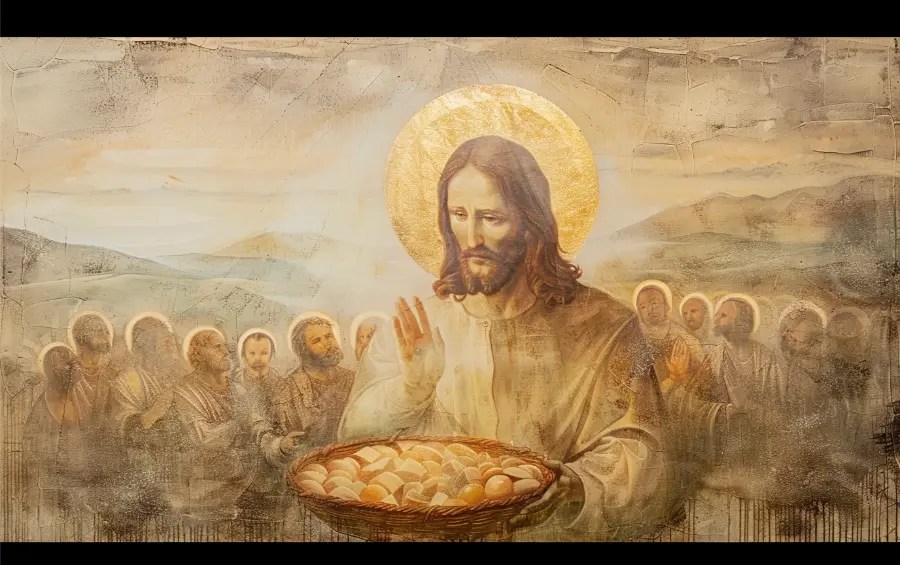
Les habitudes de jeûne de Jésus : à quelle fréquence jeûnait-il ?


  • While the Bible explicitly mentions only one extended fast of Jesus (40 days in the wilderness), it's likely he fasted at other times, reflecting common Jewish practice. The exact details of those fasts (including water consumption) are unclear, leading to varied interpretations.
  • More important than the physical specifics is the spiritual significance of Jesus' fasting. It represents: communion with God, preparation for ministry, resisting temptation, and a model for Christian discipleship.
  • The Church Fathers saw deep meaning in Jesus' fasting, emphasizing its transformative power for spiritual growth, strengthening willpower, and drawing closer to God. They connected it to Old Testament parallels, highlighting Jesus' fulfillment of God's plan.
  • Christians are encouraged to reflect on how fasting (in various forms) can deepen their own faith, not to replicate Jesus' actions literally. Balance, wisdom, and a focus on spiritual growth over physical austerity are key.
This entry is part 3 of 12 in the series La vie de Jésus

How many times did Jesus fast in the Bible?

As a faithful Jew, Jesus would have participated in regular fasting practices prescribed by Jewish law and custom. The Day of Atonement (Yom Kippur) was a time of fasting for all adult Jews. some devout Jews in Jesus’ time fasted twice a week, as mentioned in the parable of the Pharisee and the tax collector (Luke 18:12).

Psychologically fasting can be a powerful tool for spiritual growth and self-discipline. Jesus likely engaged in this practice throughout his life as a means of drawing closer to the Father and preparing himself for his mission. While not explicitly recorded, we can infer that Jesus fasted at other major moments in his ministry, such as before choosing his disciples or during intense periods of prayer.

We must also consider the cultural context. Fasting was a common spiritual practice in first-century Judaism, often associated with repentance, mourning, and preparation for divine revelation. Jesus, as a rabbi and spiritual leader, would have been expected to engage in such practices regularly.

Although the Bible explicitly mentions only one extended fast, we can confidently say that fasting was an integral part of Jesus’ spiritual life. Let us be inspired by his example, recognizing that fasting, when done with the right intentions, can be a powerful means of deepening our relationship with God and strengthening our spiritual resolve.

When Jesus fasted for 40 days, did he drink water?

This question touches on the very nature of Jesus’ humanity and the intensity of his spiritual preparation. The Gospel accounts of Jesus’ 40-day fast in the wilderness do not explicitly mention whether he consumed water during this time . This silence has led to various interpretations within our Christian tradition.

Historically we must consider the harsh realities of the Judean wilderness where Jesus retreated. This arid environment, with its scorching heat and scarcity of water sources, would have made a complete abstention from water extremely dangerous, if not fatal, over such an extended period.

I reflect on the powerful mental and emotional challenges such extreme fasting would entail. The human body can survive for several weeks without food only a few days without water. The physical and psychological stress of complete fluid deprivation would be immense, potentially overshadowing the spiritual focus of the fast.

But we must also contemplate the miraculous nature of this event. Jesus, fully human yet fully divine, may have been sustained by divine intervention during this intense period of spiritual warfare. The Gospels tell us that angels ministered to him at the end of his fast (Matthew 4:11), suggesting supernatural support throughout this ordeal.

In our Catholic tradition, the practice of fasting typically allows for the consumption of water and other non-caloric beverages. This approach recognizes the need to maintain basic bodily functions while still embracing the spiritual discipline of abstaining from food.

Whether Jesus consumed water during his 40-day fast remains a mystery. What is clear is the powerful spiritual significance of this event. It was a time of intense communion with the Father, a period of testing and preparation for his public ministry. Let us focus on emulating Jesus’ devotion and spiritual resilience, rather than becoming overly concerned with the specific details of his fast.

Did Jesus drink water while fasting?

Historically we know that fasting practices in first-century Judaism varied. Some fasts involved complete abstinence from both food and drink, while others allowed for the consumption of water. The Day of Atonement (Yom Kippur), for instance, traditionally involved a complete fast from both food and water for 25 hours.

I reflect on the physical and mental challenges of fasting. Water is essential for bodily functions, and prolonged abstinence can lead to severe dehydration, affecting both physical health and mental clarity. Given that Jesus often engaged in teaching and healing during his ministry, it seems plausible that he would have maintained adequate hydration to fulfill his mission effectively.

But we must also consider the spiritual dimension of Jesus’ fasts. As both fully human and fully divine, Jesus may have experienced fasting in ways that transcend our ordinary understanding. His fasts were not merely physical exercises but powerful spiritual encounters with the Father.

In our Christian tradition, fasting is typically understood as abstaining from food while allowing for the consumption of water. This practice recognizes the need to care for our bodies as temples of the Holy Spirit while still embracing the spiritual discipline of self-denial.

Whether Jesus drank water during his fasts is less important than the spiritual significance of his fasting. These were times of intense prayer, spiritual preparation, and resistance to temptation. Jesus’ fasting demonstrates his complete dependence on the Father and serves as a model for our own spiritual practices.

How many days did Jesus fast for?

The number 40 holds great significance in biblical tradition. As historians, we recognize this pattern throughout Scripture: the flood lasted 40 days and nights, Moses spent 40 days on Mount Sinai, the Israelites wandered in the desert for 40 years, and Elijah journeyed 40 days to Mount Horeb. This recurring motif often signifies a time of testing, purification, and preparation for a divine mission.

Psychologically such an extended fast would have been an intense experience of physical deprivation and spiritual focus. It would have required immense mental fortitude and a deep reliance on divine sustenance. This period of isolation and self-denial served to strengthen Jesus’ resolve and deepen his connection with the Father as he prepared to begin his public ministry.

Although the 40-day fast in the wilderness is the only extended fast explicitly mentioned in the Gospels, Jesus likely engaged in other fasting practices throughout his life and ministry. As a devout Jew, he would have participated in regular fasts prescribed by Jewish law and custom.

The duration of Jesus’ fast challenges us to reflect on our own spiritual practices. While few of us are called to such extreme fasting, we can draw inspiration from Jesus’ example of dedicated time for prayer, reflection, and spiritual preparation. In our busy modern lives, setting aside even short periods for fasting and prayer can help us refocus on our relationship with God and our mission as followers of Christ.

Why did Jesus fast?

We must understand that Jesus’ fast was a time of intense communion with the Father. In those 40 days in the wilderness, our Lord withdrew from the distractions of the world to focus entirely on His relationship with God. This teaches us the importance of creating space in our lives for deep prayer and reflection.

Psychologically, fasting can be seen as a way to heighten our spiritual awareness and strengthen our willpower. By denying Himself physical nourishment, Jesus was sharpening His spiritual senses and fortifying His resolve for the mission that lay ahead. This reminds us that sometimes, to grow stronger in spirit, we must be willing to embrace temporary discomfort.

Historically, we see echoes of Jesus’ fast in the 40-day fasts of Moses and Elijah in the Old Testament. By paralleling these great prophets, Jesus was establishing Himself as the fulfillment of the Law and the Prophets. This connection would not have been lost on those familiar with Jewish tradition.

Jesus’ fast served as a model for us, His followers. He showed us that through fasting, we can overcome temptation and grow closer to God. In facing and resisting the devil’s temptations during His fast, Jesus demonstrated the power of faith and the Word of God to overcome evil.

Finally, we must remember that Jesus’ fast was a preparation for His public ministry. It was a time of testing and strengthening before He began His work of preaching, teaching, and healing. This teaches us the importance of proper preparation and spiritual grounding before undertaking important tasks in our own lives.

Jesus fasted to draw closer to the Father, to prepare for His mission, to overcome temptation, and to set an example for us. Let us reflect on how we too can incorporate periods of fasting and spiritual renewal in our own lives, always seeking to grow closer to God and strengthen our faith.

What month did Jesus fast for 40 days?

Traditionally, many have associated Jesus’ 40-day fast with the season of Lent, which we observe in preparation for Easter. But Lent was established by the Church long after Jesus’ time on earth. The connection is spiritual rather than historical.

Historically we know that Jesus’ fast occurred immediately after His baptism by John in the Jordan River and before the beginning of His public ministry. The Gospel of Luke tells us that Jesus was “about thirty years of age” when He began His ministry (Luke 3:23). In Jewish culture of that time, this was considered the age of maturity for religious teachers.

Some scholars suggest that Jesus’ baptism and subsequent fast may have occurred in the autumn or early winter. This timing would align with the Jewish tradition of baptisms taking place before the major pilgrimage festivals. The fast would then have extended into the winter months, a time when the Judean wilderness would have been particularly harsh and challenging.

Psychologically the timing of Jesus’ fast is less important than its spiritual significance. The 40-day period echoes other major 40-day periods in Scripture, such as the 40 days and nights of the Great Flood, the 40 years the Israelites wandered in the desert, and Moses’ 40 days on Mount Sinai. This number often symbolizes a time of testing, purification, and preparation in biblical tradition.

I encourage you not to become overly focused on pinpointing the exact month of Jesus’ fast. Instead, let us reflect on the spiritual meaning of this time. Just as Jesus used these 40 days to prepare for His ministry, we too are called to periods of spiritual renewal and preparation in our own lives.

Whether it’s during Lent or at other times throughout the year, we can follow Christ’s example by setting aside time for prayer, fasting, and reflection. These practices help us to grow closer to God, resist temptation, and prepare ourselves for the work He calls us to do in the world.

How long did Jesus go without eating?

Historically a 40-day fast would have been an extraordinary feat of endurance. In the harsh conditions of the Judean wilderness, with its scorching days and cold nights, such a prolonged period without nourishment would have pushed the human body to its limits. Yet, we must remember that Jesus was both fully human and fully divine, and His fast was sustained by the power of the Holy Spirit.

Psychologically, such an extended fast would have powerful effects on the mind and body. Modern research on fasting shows that after several days without food, the body enters a state called ketosis, where it begins to burn fat for fuel. This can lead to heightened mental clarity but also physical weakness. For Jesus, this state of physical vulnerability may have intensified His spiritual receptivity and dependence on the Father.

The Gospels specifically mention that Jesus was hungry at the end of this period (Matthew 4:2). This detail emphasizes His genuine human experience and the real sacrifice involved in His fast. It also sets the stage for the temptations He faced, making them all the more challenging and His victory all the more major.

The number 40 in Scripture often symbolizes a period of testing, trial, or probation. We see this in the 40 days and nights of the flood, the 40 years of Israel’s wandering in the desert, and Moses’ 40 days on Mount Sinai. Jesus’ 40-day fast aligns Him with these great moments in salvation history, marking His time in the wilderness as a crucial period of preparation for His ministry. In this context, the significance of the number 40 is deeply woven into the narrative of faith and endurance. Similarly, when exploring the meaning of number 200 in the Bible, we find that it often represents a time of transition and the fulfillment of God’s promises. Just as the number 40 signifies preparation and testing, the number 200 can also indicate a divine shift, where God’s plan unfolds in profound ways.

I encourage you to reflect on what Jesus’ 40-day fast means for your own spiritual journey. While such an extreme fast is not advisable for most people, we can all learn from Jesus’ example of self-discipline, reliance on God, and preparation for our life’s mission.

Perhaps we might consider shorter periods of fasting or other forms of self-denial as a way to draw closer to God and strengthen our spiritual resolve. Remember, the goal is not to prove our endurance to create space in our lives for deeper communion with God and preparation for His work in and through us.

What did Jesus eat during his fasts?

But not all fasts in Jewish tradition were absolute. Some fasts allowed for small amounts of food or water. In Jesus’ time, there were various fasting practices, ranging from complete abstinence to partial restrictions.

Historically the typical diet in first-century Palestine consisted of bread, fish, olives, and occasional meat. During less severe fasts, individuals might consume small amounts of bread or dried fruits. But for a prolonged and spiritually major fast like Jesus’, it’s likely He abstained from all food.

D'un point de vue psychologique, nous pouvons comprendre ce jeûne complet comme un moyen de se concentrer entièrement sur les questions spirituelles, en se libérant des distractions physiques. Les tiraillements de la faim serviraient de rappel constant de notre dépendance envers Dieu, intensifiant la prière et la réflexion spirituelle.

Le jeûne de 40 jours de Jésus était extraordinaire et n'était pas destiné à être imité littéralement par la plupart des croyants. Dans nos propres pratiques de jeûne, nous devrions rechercher la croissance spirituelle tout en étant attentifs à notre santé et à nos circonstances individuelles.

Je vous encourage à ne pas voir le jeûne simplement comme un acte physique de privation, mais comme une pratique spirituelle qui ouvre nos cœurs plus pleinement à la présence de Dieu. Que nous nous abstenions de toute nourriture pendant une courte période ou que nous renoncions à certains aliments sous forme d'autodiscipline, le but est de se rapprocher de notre Père céleste et de renforcer notre foi.

What did the Church Fathers teach about Jesus’ fasting?

Les Pères de l'Église considéraient le jeûne de Jésus comme bien plus qu'un événement historique ; ils le comprenaient comme un modèle pour la vie chrétienne et une source profonde de sagesse spirituelle. Saint Ambroise de Milan, par exemple, enseignait que le jeûne du Christ n'était pas seulement un exemple de renoncement à soi, mais une démonstration du pouvoir de la Parole de Dieu pour nous soutenir. Il a écrit : « Il a jeûné pour vous montrer comment jeûner... Il a eu faim en tant qu'homme, et a nourri ceux qui avaient faim en tant que Dieu. »

Psychologiquement, les Pères ont reconnu le pouvoir transformateur du jeûne. Saint Jean Chrysostome a souligné comment le jeûne peut aiguiser nos sens spirituels et renforcer notre volonté contre la tentation. Il a vu dans le jeûne de Jésus un modèle pour nos propres combats spirituels, enseignant que le jeûne nous arme contre les assauts du diable.

Historiquement, les Pères ont établi des parallèles entre le jeûne de 40 jours de Jésus et d'autres périodes majeures de 40 jours dans les Écritures, telles que le temps passé par Moïse sur le mont Sinaï et le voyage d'Élie vers l'Horeb. Ils ont vu dans le jeûne de Jésus l'accomplissement et la perfection de ces types de l'Ancien Testament, soulignant la continuité du plan de salut de Dieu.

Saint Augustin, avec sa fine perspicacité sur la nature humaine, a enseigné que le jeûne de Jésus était un remède au péché de gourmandise d'Adam dans le jardin d'Éden. Il a vu dans le renoncement du Christ un renversement de la chute de l'humanité et un chemin vers la restauration de notre relation avec Dieu.

Les Pères ont également souligné l'aspect communautaire du jeûne. Saint Léon le Grand a enseigné que le jeûne de Jésus n'était pas seulement pour Son propre bénéfice, mais aussi pour le nôtre. Il a vu dans l'exemple du Christ un appel à toute l'Église à s'engager dans le jeûne comme moyen de renouveau spirituel et d'unité.

Je vous encourage à réfléchir à ces enseignements des Pères de l'Église. Ils nous rappellent que le jeûne ne consiste pas simplement à s'abstenir de nourriture, mais à nous ouvrir plus pleinement à la grâce et au pouvoir transformateur de Dieu. Dans nos propres pratiques de jeûne, cherchons cette nourriture spirituelle plus profonde que le Christ a illustrée dans Son jeûne de 40 jours.

Puissions-nous, comme Jésus, utiliser les temps de jeûne pour nous rapprocher du Père, pour renforcer notre résistance à la tentation et pour grandir en compassion envers nos frères et sœurs dans le besoin. Que la sagesse des Pères de l'Église nous inspire à voir le jeûne non pas comme un fardeau, mais comme un privilège – un moyen de participer plus pleinement à la vie et à la mission du Christ.

Did Jesus fast without water?

Historiquement, nous savons que les jeûnes complets sans eau (parfois appelés « jeûnes absolus » ou « jeûnes secs ») étaient rares et généralement de très courte durée dans la pratique juive ancienne. Le corps humain ne peut survivre que quelques jours sans eau, ce qui rend un jeûne absolu de 40 jours physiquement impossible sans intervention divine.

Psychologiquement, nous pouvons comprendre l'immense défi que représenterait même un jeûne partiel de 40 jours. L'environnement désertique où Jésus a jeûné était rude et impitoyable, rendant le besoin d'eau encore plus critique. Cette privation extrême aurait intensifié les aspects spirituels et mentaux du temps de préparation et de tentation de Jésus.

De nombreux érudits bibliques et traditions ecclésiales suggèrent que Jésus a probablement consommé un peu d'eau pendant Son jeûne. Cette interprétation s'aligne avec d'autres récits bibliques de jeûnes prolongés, tels que ceux de Moïse et d'Élie, où de l'eau était probablement consommée même si cela n'est pas explicitement mentionné.

Mais nous devons également considérer la nature unique de Jésus, à la fois pleinement humain et pleinement divin. Alors que Sa nature humaine aurait nécessité une subsistance, Sa nature divine aurait pu Le soutenir au-delà des limites humaines normales. Ce mystère des deux natures du Christ nous invite à contempler les profondeurs puissantes de Son sacrifice et de Son identification à la souffrance humaine.

Je vous encourage à ne pas trop vous concentrer sur les détails physiques du jeûne de Jésus. Au lieu de cela, réfléchissons à sa signification spirituelle. Que Jésus ait consommé de l'eau ou non, Son jeûne de 40 jours était un acte extraordinaire de renoncement à soi et de préparation spirituelle. Il a démontré Sa dépendance totale envers le Père et Son rejet des conforts mondains en faveur d'une subsistance spirituelle.

Pour nous aujourd'hui, la question de l'eau dans le jeûne de Jésus peut servir de rappel de l'importance de l'équilibre dans nos propres pratiques spirituelles. Bien que nous soyons appelés à l'autodiscipline et au sacrifice, nous devons également faire preuve de sagesse et prendre soin de notre santé, qui est un don de Dieu.

Laissons-nous inspirer par l'exemple du Christ de dévouement spirituel puissant, tout en nous souvenant de Ses enseignements sur le jeûne sans ostentation (Matthieu 6:16-18). Que nos propres pratiques de jeûne, qu'elles impliquent de la nourriture, de l'eau ou d'autres formes de renoncement, soient toujours centrées sur le rapprochement avec Dieu et la croissance en compassion pour les autres.

Dans notre cheminement spirituel, ne nous concentrons pas sur la reproduction des conditions exactes du jeûne de Jésus, mais sur l'émulation de Son esprit de reddition totale à la volonté du Père. Puissions-nous, comme le Christ, utiliser les temps de jeûne et d'autodiscipline pour renforcer notre foi, résister à la tentation et nous préparer au travail que Dieu nous appelle à accomplir dans le monde.


En savoir plus sur Christian Pure

Abonnez-vous pour poursuivre la lecture et avoir accès à l’ensemble des archives.

Poursuivre la lecture

Partager sur...