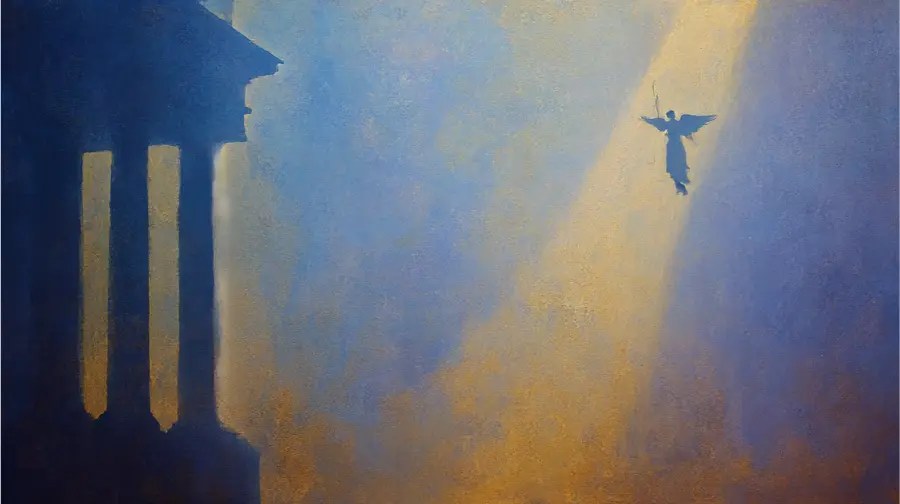
Misteri biblici: Com'è il cielo secondo la Scrittura?


  • L'aspetto del cielo è descritto simbolicamente nella Bibbia: Il testo sottolinea che le descrizioni di strade d'oro, porte perlacee, ecc, non sono destinate ad essere prese alla lettera. Invece, usano immagini familiari per indicare le realtà spirituali della perfetta comunione con Dio, della pace eterna e del compimento del desiderio umano.
  • La nostra comprensione terrena limita la nostra capacità di afferrare il cielo: Siamo legati dal tempo, dallo spazio e dai limiti del linguaggio umano. Il Cielo, come un regno al di là della nostra attuale esperienza fisica, probabilmente trascende queste categorie, rendendo difficile comprendere appieno con i nostri attuali quadri cognitivi.
  • Gesù si è concentrato sulla realtà attuale del Regno dei Cieli: Pur riconoscendo il cielo come speranza futura, Gesù ha sottolineato che il Regno dei Cieli è anche una realtà presente, che irrompe nel nostro mondo. Ha usato parabole e metafore per insegnare il suo potere trasformativo e il suo valore.
  • I Padri della Chiesa hanno evidenziato gli aspetti spirituali e comunitari del cielo: Sottolineavano la visione beatifica (vedere Dio faccia a faccia), la perfetta comunità di santi e l'eterna progressione di avvicinarsi a Dio. Hanno riconosciuto i limiti del linguaggio umano per descrivere pienamente questa realtà.

Cosa dice la Bibbia sull'apparizione del cielo?

La Bibbia ci offre scorci dell'aspetto del cielo, dobbiamo avvicinarci a queste descrizioni con fede e ragione. I testi sacri usano immagini ricche per trasmettere verità spirituali che possono trascendere la nostra comprensione terrena.

Nell'Antico Testamento troviamo visioni del cielo che ne sottolineano la gloria e la maestà. Il profeta Isaia descrive il vedere "il Signore seduto su un trono, elevato e innalzato" (Isaia 6:1). Questa immagine trasmette la sovranità e la trascendenza di Dio, mentre suggerisce anche un regno di splendore senza precedenti.

The New Testament provides more detailed descriptions, particularly in the book of Revelation. John’s vision presents heaven as a place of extraordinary beauty and radiance. He speaks of “a sea of glass, like crystal” (Revelation 4:6), suggesting a realm of pristine clarity and tranquility. The apostle also describes “a great multitude that no one could number, from every nation, from all tribes and peoples and languages, standing before the throne and before the Lamb” (Revelation 7:9), painting a picture of a diverse and unified heavenly community.

Devo notare che queste descrizioni sono influenzate dai contesti culturali e letterari dei loro tempi. L'immaginario attinge spesso alla grandezza delle antiche corti reali e dei templi, usando concetti familiari per trasmettere la gloria sconosciuta del cielo.

Psychologically we can understand these vivid descriptions as attempts to express the inexpressible – to capture in human language the overwhelming experience of divine presence. The brilliant light, precious materials, and vast crowds all serve to convey a sense of awe, joy, and fulfillment that surpasses earthly experience.

Although these biblical descriptions provide us with inspiring images, we must remember the words of St. Paul: “What no eye has seen, nor ear heard, nor the heart of man imagined, what God has prepared for those who love him” (1 Corinthians 2:9). The true nature of heaven may well exceed our current capacity to comprehend or imagine.

I encourage you to meditate on these biblical images not as literal blueprints as invitations to deepen your relationship with God. The appearance of heaven, as described in scripture, should awaken in us a longing for divine presence and a commitment to live in ways that reflect the values of God’s kingdom here on earth.

Come è descritto il cielo nel libro dell'Apocalisse?

Il libro dell'Apocalisse ci offre uno sguardo potente e visionario sulla natura del cielo. Mentre esploriamo queste descrizioni, affrontiamole con riverenza per il loro significato spirituale e comprensione del loro contesto storico e letterario.

John’s apocalyptic vision presents heaven as a realm of extraordinary splendor and divine presence. In Revelation 4, he describes a throne room scene of breathtaking majesty: “At once I was in the Spirit, and behold, a throne stood in heaven, with one seated on the throne. And he who sat there had the appearance of jasper and carnelian, and around the throne was a rainbow that had the appearance of an emerald” (Revelation 4:2-3). This imagery conveys the transcendent beauty and authority of God’s presence.

The vision continues with descriptions of celestial beings, elders, and a vast multitude worshipping before the throne. John speaks of “a sea of glass, like crystal” (Revelation 4:6) and “golden bowls full of incense, which are the prayers of the saints” (Revelation 5:8). These images suggest a realm of perfect purity and constant communion with God.

In chapters 21 and 22, John’s vision culminates in the description of the New Jerusalem, which represents the fullness of God’s presence among His people. He writes, “And I saw the holy city, new Jerusalem, coming down out of heaven from God, prepared as a bride adorned for her husband” (Revelation 21:2). This city is described in terms of extraordinary beauty and perfection, with walls of jasper, streets of gold, and gates of pearl.

I must note that these descriptions draw heavily on the imagery and symbolism of ancient Near Eastern literature and architecture. The precious stones, the cubic shape of the city, and the emphasis on light and purity all have parallels in the cultural context of John’s time. But John adapts and transforms these elements to convey a uniquely Christian vision of God’s eternal kingdom.

Psychologically we can understand these vivid descriptions as attempts to express the inexpressible – to capture in human language the overwhelming experience of divine presence and the fulfillment of all human longings. The emphasis on light, beauty, and worship speaks to our deepest needs for meaning, belonging, and transcendence.

As we contemplate these descriptions, let us remember that they are not meant to be taken as literal architectural plans. Rather, they are symbolic representations of spiritual realities that may well exceed our current capacity to fully comprehend. The book of Revelation uses this rich imagery to convey truths about God’s nature, His relationship with His people, and the ultimate destiny of creation.

I encourage you to approach these passages with a spirit of wonder and hope. Let them inspire you to live in ways that reflect the values of God’s kingdom here and now. The vision of heaven in Revelation is not just about a future state about the transformative power of God’s presence in our lives today.

Quali caratteristiche fisiche o punti di riferimento sono menzionati nelle descrizioni bibliche del cielo?

One of the most prominent features mentioned is the throne of God. This appears in various passages, including Isaiah’s vision where he sees “the Lord sitting upon a throne, high and lifted up” (Isaiah 6:1). In Revelation, John describes a magnificent throne room scene, with the throne surrounded by a rainbow “like an emerald” (Revelation 4:3). This throne symbolizes God’s sovereignty and authority over all creation.

Water is another recurring element in heavenly descriptions. Ezekiel’s vision includes a river flowing from the temple (Ezekiel 47:1-12), while Revelation speaks of “a river of the water of life, bright as crystal, flowing from the throne of God and of the Lamb” (Revelation 22:1). This water symbolizes the life-giving presence of God and the purity of His kingdom.

Il libro dell'Apocalisse fornisce la descrizione più dettagliata dei punti di riferimento celesti, in particolare nella sua rappresentazione della Nuova Gerusalemme. Questa città celeste è descritta come avente:

  • Mura di diaspro con dodici porte di perla (Apocalisse 21:12,21)
  • Fondamenti ornati di pietre preziose (Apocalisse 21:19-20)
  • Strade d'oro puro, trasparenti come il vetro (Apocalisse 21:21)
  • L'albero della vita, che porta dodici tipi di frutti (Apocalisse 22:2)

I must note that these descriptions draw heavily on the imagery of ancient Near Eastern architecture and the symbolism of precious materials. The cubic shape of the New Jerusalem, for instance, echoes the Holy of Holies in Solomon’s temple, suggesting the all-encompassing presence of God.

Psychologically these physical features serve to convey abstract spiritual concepts in tangible forms. The precious materials speak to the incomparable value of God’s presence, Although the abundance of light and the absence of a temple (Revelation 21:22) suggest a realm of perfect communion with God.

As we contemplate these descriptions, let us remember that they are not meant to be blueprints for celestial geography. Rather, they are inspired attempts to express the inexpressible – the glory, beauty, and perfection of God’s eternal kingdom. The physical features mentioned in scripture serve as symbols of deeper spiritual realities.

I encourage you to meditate on these images not as literal depictions as invitations to deepen your relationship with God. The landmarks of heaven described in the Bible should awaken in us a longing for divine presence and a commitment to live in ways that reflect the values of God’s kingdom here on earth.

Il cielo avrà strade, edifici o altre strutture simili alla Terra?

Il libro dell'Apocalisse, in particolare, descrive il cielo usando elementi terreni familiari. Giovanni parla della Nuova Gerusalemme come se avesse strade d'oro (Apocalisse 21:21) e la descrive come una città con mura, porte e fondamenta (Apocalisse 21:12-14). Queste descrizioni potrebbero suggerire strutture simili a quelle sulla Terra, dobbiamo considerare il loro significato simbolico più profondo.

I must point out that these descriptions draw heavily on the urban imagery of the ancient world, particularly the idealized vision of a perfect city. The use of precious materials like gold for streets and jewels for foundations speaks more to the incomparable value and beauty of God’s dwelling place than to literal urban planning.

Psychologically we can understand these familiar elements as a way of making the concept of heaven more relatable and comprehensible to human minds. By using imagery of cities, streets, and buildings, the biblical authors provide tangible metaphors for the intangible realities of eternal life in God’s presence.

But we must also consider passages that suggest heaven may be quite different from our earthly experience. Jesus tells us that “In my Father’s house are many rooms” (John 14:2), which could be interpreted as suggesting some form of structures. Yet, Revelation also states that in the New Jerusalem, “I saw no temple in the city, for its temple is the Lord God the Almighty and the Lamb” (Revelation 21:22). This implies a realm where the divisions between sacred and secular spaces no longer exist, as all is suffused with God’s presence.

As we contemplate these descriptions, let us remember the words of St. Paul: “For now we see in a mirror dimly then face to face” (1 Corinthians 13:12). Our current understanding of heaven is limited by our earthly experience and language. The true nature of our eternal dwelling may well transcend our current capacity to imagine or describe.

I encourage you not to become too fixated on the physical details of heaven. Instead, focus on the spiritual realities these images represent – perfect communion with God, eternal peace, and the fulfillment of all our deepest longings. Whether heaven has literal streets of gold or buildings of pearl is less important than the promise of God’s eternal presence and love.

Let us approach this question with humility and wonder, trusting that God has prepared for us something beyond our current comprehension. The descriptions of heavenly structures in scripture should inspire us to build our lives on the foundation of faith, to walk the path of righteousness, and to open the gates of our hearts to God’s transforming love.

May our contemplation of heaven, whether it has familiar structures or not, deepen our longing for God’s presence and strengthen our commitment to live as citizens of His kingdom here on Earth.

In che modo gli studiosi biblici interpretano l'immaginario simbolico usato per descrivere il cielo?

Biblical scholars generally agree that the imagery used to describe heaven is highly symbolic and should not be interpreted literally. They recognize that these descriptions draw on cultural, historical, and literary contexts to convey powerful spiritual truths about the nature of God’s presence and the ultimate destiny of creation.

Molti studiosi vedono l'immaginario celeste attraverso la lente della letteratura apocalittica, un genere prevalente negli scritti ebrei e paleocristiani. Questo genere usa spesso immagini vivide, a volte fantastiche, per rivelare verità nascoste sul regno spirituale e sul culmine della storia. In questo contesto, le descrizioni del cielo non sono viste come rappresentazioni letterali come rappresentazioni simboliche di realtà spirituali che trascendono il linguaggio e l'esperienza umana.

For example, the precious materials mentioned in Revelation’s description of the New Jerusalem – gold, pearls, and jewels – are interpreted not as literal building materials as symbols of the incomparable value and beauty of life in God’s presence. The cubic shape of the city (Revelation 21:16) is often seen as a reference to the Holy of Holies in the Jerusalem Temple, symbolizing the all-encompassing presence of God.

I must note that scholars also consider the historical context of these descriptions. The imagery of thrones, crowns, and a heavenly court reflects the political structures of the ancient Near East, used to convey God’s supreme authority and the honor bestowed on His faithful ones.

Psicologicamente gli studiosi riconoscono che queste descrizioni simboliche servono a rendere il concetto di paradiso più riconoscibile ed emotivamente risonante. L'immaginario della luce, della purezza e dell'armonia parla ai nostri desideri più profondi di significato, appartenenza e trascendenza.

Molti studiosi sottolineano l'aspetto relazionale dell'immaginario celeste. La descrizione di Dio che dimora tra il Suo popolo (Apocalisse 21:3) è vista come l'adempimento finale della relazione di alleanza, piuttosto che una disposizione architettonica letterale.

Mentre consideriamo queste interpretazioni accademiche, ricordiamo che non sono destinate a diminuire il potere o la verità delle descrizioni bibliche. Piuttosto, ci aiutano a impegnarci più profondamente con le realtà spirituali che queste immagini rappresentano.

I encourage you to approach these symbolic descriptions of heaven with both your mind and your heart. Let the scholarly insights enrich your understanding also allow the imagery to speak to your soul, awakening a longing for God’s presence and a commitment to His kingdom values.

Let us be inspired by the words of St. Augustine, who wrote, “The entire life of a good Christian is a holy longing.” May our contemplation of heaven’s symbolic imagery deepen this holy longing within us, spurring us on to greater love for God and neighbor.

Cosa insegnò Gesù sulla natura e l'aspetto del cielo?

In the Gospels, we find Jesus frequently referring to the “Kingdom of Heaven” or the “Kingdom of God.” This kingdom, He taught, was not a distant realm but something breaking into our present reality. “The kingdom of God is in your midst,” He declared (Luke 17:21). I see in this teaching an invitation to recognize the divine presence in our everyday lives, to cultivate an awareness of the sacred within the ordinary.

When Jesus did speak of heaven’s nature, He often used parables and metaphors. He compared the kingdom of heaven to a mustard seed, a treasure hidden in a field, a pearl of great price, and a net cast into the sea (Matthew 13:31-50). These diverse images suggest that heaven’s reality is too rich and layered to be captured in a single description. They also emphasize heaven’s value and the transformative power of encountering it.

Historically, we must understand that Jesus was speaking to a Jewish audience with existing concepts of the afterlife and the world to come. He both built upon and radically reinterpreted these ideas. For instance, when questioned by the Sadducees about marriage in the resurrection, Jesus said, “At the resurrection people will neither marry nor be given in marriage; they will be like the angels in heaven” (Matthew 22:30). This suggests a transformed state of being, beyond our current understanding of human relationships.

Perhaps one of the most comforting images Jesus gave us of heaven is that of a home. “In my Father’s house are many rooms,” He told His disciples, “I am going there to prepare a place for you” (John 14:2). This evokes a sense of belonging, of being welcomed into an intimate family setting. I encourage you to reflect on the powerful implications of this image – heaven as a place where we are truly and fully at home with God.

Jesus also emphasized that heaven is not just a future hope but has present implications. The Beatitudes, for instance, speak of the kingdom of heaven belonging to the poor in spirit, and to those persecuted for righteousness’ sake (Matthew 5:3,10). This teaches us that heavenly values should shape our earthly lives.

While Jesus did not give us a detailed physical description of heaven, He did provide glimpses of its glory. The Transfiguration, where His appearance became dazzling white, offers a momentary revelation of heavenly splendor (Mark 9:2-3). And in His resurrected body, we see a preview of our own glorified state in heaven – recognizable yet transformed.

In che modo i Padri della Chiesa descrivevano o immaginavano il cielo nei loro scritti?

One of the most influential early descriptions comes from St. Augustine of Hippo. In his monumental work “City of God,” Augustine envisions heaven as the perfect community, the “City of God” in contrast to the earthly city. For Augustine, heaven is characterized by perfect peace, order, and love. He writes, “There we shall rest and see, see and love, love and praise.” I am struck by how Augustine captures the deepest longings of the human heart – for rest, for understanding, for love, and for the ability to express gratitude and worship.

St. John Chrysostom, known for his eloquence, often spoke of heaven in terms of its incomparable beauty and joy. He emphasized that the greatest aspect of heaven is the direct vision of God, what theologians call the “beatific vision.” Chrysostom writes, “What do you suppose is the radiant beauty of those who continually behold the glory of God?” This reminds us that heaven’s true splendor lies not in physical adornments in the transformative presence of the Divine.

Historically, we see a development in how the Fathers conceptualized heaven. Early writers like Justin Martyr and Irenaeus of Lyon, influenced by Jewish apocalyptic literature, sometimes described heaven in more concrete, earthly terms – as a renewed paradise or a celestial city. Later Fathers, particularly those influenced by Neo-Platonism, tended to emphasize the spiritual and immaterial aspects of heaven.

St. Gregory of Nyssa, for instance, speaks of heaven as an eternal progress into the infinite nature of God. He writes of the soul in heaven “going from glory to glory,” always growing in its knowledge and love of God. This dynamic view of heaven as continuous growth and discovery is particularly compelling to our modern minds, accustomed as we are to ideas of progress and evolution.

The Cappadocian Fathers – Basil the Great, Gregory of Nazianzus, and Gregory of Nyssa – all emphasized the communal aspect of heaven. They saw it not as a place of isolated, individual bliss as a perfect communion of saints with each other and with God. This vision resonates deeply with our understanding of the human person as inherently relational.

Although the Fathers often used vivid imagery to describe heaven, they also recognized its ultimate ineffability. St. Cyril of Jerusalem reminds us, “We speak of the things of heaven only in the way that we are able.” This humility before the mystery of heaven is something we would do well to emulate.

The Fathers also consistently taught that our experience of heaven begins, in a sense, here on earth. Origen writes, “The kingdom of heaven is within you… Whoever has Christ in his mind so that he understands and knows Him… already has the kingdom of heaven within himself.” I encourage you to reflect on how this understanding might transform your daily life.

In all their reflections, the Church Fathers sought to inspire hope and encourage holy living. They saw heaven not as an escape from the world as the fulfillment of God’s purposes for creation. St. Irenaeus beautifully expresses this: “The glory of God is a living man; and the life of man consists in beholding God.”

Le persone avranno corpi fisici in cielo secondo la Scrittura?

Central to our Christian hope is the doctrine of the resurrection of the body. This is not a mere afterthought in Scripture a cornerstone of our faith. The Apostle Paul, in his first letter to the Corinthians, devotes an entire chapter to defending and explaining this truth (1 Corinthians 15). He emphatically declares, “The body that is sown is perishable, it is raised imperishable” (1 Corinthians 15:42).

Questo insegnamento è radicato nella risurrezione di Gesù Cristo stesso. I Vangeli sono chiari sul fatto che Gesù non è risorto come uno spirito disincarnato con un corpo fisico trasformato. Poteva essere toccato, mangiava con i suoi discepoli, ma apparve anche in stanze chiuse a chiave (Giovanni 20:19-29). Questo corpo di Cristo risorto è presentato come il prototipo per i nostri corpi di risurrezione.

Sono colpito dalla visione olistica della persona umana che questa dottrina presenta. Non siamo anime intrappolate nei corpi, in attesa di essere liberate. Piuttosto, i nostri corpi sono parte integrante di ciò che siamo, destinati alla redenzione e alla trasformazione. Questa comprensione può avere potenti implicazioni sul modo in cui vediamo e ci prendiamo cura del nostro corpo in questa vita.

The nature of these resurrection bodies is described in Scripture as somehow different from our current physical bodies. Paul uses the analogy of a seed and the plant it becomes: “What you sow does not come to life unless it dies. When you sow, you do not plant the body that will be just a seed” (1 Corinthians 15:36-37). This suggests both continuity and radical transformation.

Historically, we see that the early Church strongly defended the reality of bodily resurrection against various forms of Gnosticism that denigrated the physical. The Apostles’ Creed, one of our earliest statements of faith, explicitly affirms belief in “the resurrection of the body.”

Yet, we must be careful not to conceive of these resurrection bodies in overly materialistic terms. Paul also tells us that “flesh and blood cannot inherit the kingdom of God” (1 Corinthians 15:50). He speaks of a “spiritual body” (1 Corinthians 15:44), a concept that challenges our categories of physical and spiritual.

Il libro dell'Apocalisse, nel suo vivido linguaggio simbolico, raffigura i redenti in cielo in forma corporea. Stanno in piedi, cantano, indossano vesti bianche (Apocalisse 7:9-10). Anche se dobbiamo essere cauti nell'interpretare le immagini apocalittiche troppo letteralmente, questo rafforza l'idea dell'esistenza incarnata in cielo.

La Scrittura parla spesso di due fasi della nostra esistenza celeste. C'è uno stato intermedio subito dopo la morte, e poi lo stato finale dopo la risurrezione generale. La natura della nostra esistenza nello stato intermedio è meno chiara nella Scrittura, che ha portato a varie speculazioni teologiche nel corso della storia della Chiesa.

What we can say with confidence is that our final destiny, according to Scripture, is not a disembodied spiritual existence a renewed and transformed physical life. This is intimately connected with the promise of “a new heaven and a new earth” (Revelation 21:1). Our bodily resurrection is part of the larger hope for the renewal of all creation.

Vi incoraggio a riflettere sulla potente dignità che questa dottrina conferisce alla nostra esistenza fisica. Ci sfida a vedere i nostri corpi non come gusci temporanei come parte essenziale della nostra identità, destinati alla gloria eterna. Lasciate che questa speranza formi il modo in cui vivete e vi prendete cura del vostro corpo oggi, e come anticipate la vita a venire.

Quali colori o elementi visivi sono associati al cielo nella Bibbia?

Perhaps the most prominent color associated with heaven in Scripture is white. This color appears repeatedly in heavenly visions, symbolizing purity, holiness, and victory. In the book of Revelation, we read of the redeemed wearing white robes (Revelation 7:9), and of Christ himself appearing on a white horse (Revelation 19:11). The brilliance of this heavenly white is emphasized; Daniel describes the Ancient of Days with clothing “as white as snow” (Daniel 7:9).

Sono colpito dal potere di questa immagine. Il bianco, in molte culture, rappresenta pulizia e nuovi inizi. Nel contesto del cielo, parla della completa purificazione dal peccato e della nuova vita che riceviamo in Cristo. Questa può essere una potente fonte di speranza e conforto per coloro che lottano con la colpa o la vergogna.

L'oro è un altro colore spesso associato al cielo nella Scrittura. La Nuova Gerusalemme è descritta come fatta di "oro puro, chiaro come vetro" (Apocalisse 21:18). Questo metallo prezioso, apprezzato nel corso della storia umana, funge da simbolo appropriato per l'inestimabile valore del cielo. Tuttavia, è interessante notare che, in questo contesto celeste, l'oro è descritto come trasparente, suggerendo forse una trasformazione anche delle nostre sostanze terrene più preziose.

L'elemento visivo della luce è fondamentale nelle descrizioni bibliche del cielo. Dio stesso è descritto come abitante in una "luce inavvicinabile" (1 Timoteo 6:16). Nell'Apocalisse ci viene detto che la Nuova Gerusalemme non ha bisogno del sole o della luna, "perché la gloria di Dio le dà luce e l'Agnello è la sua lampada" (Apocalisse 21:23). Questa enfasi sulla luce ci ricorda le parole di Gesù, "Io sono la luce del mondo" (Giovanni 8:12), e ci invita a riflettere su come potremmo diventare portatori di questa luce divina nel nostro mondo attuale.

Le pietre preziose occupano un posto di primo piano nelle visioni bibliche del cielo. Le fondamenta della Nuova Gerusalemme sono ornate di diaspro, zaffiro, smeraldo e altre gemme (Apocalisse 21:19-20). Un arcobaleno, descritto come simile a uno smeraldo, circonda il trono di Dio (Apocalisse 4:3). Questa gamma di colori e la natura duratura di queste pietre parlano alla bellezza e alla permanenza della nostra casa celeste.

L'acqua è un altro importante elemento visivo. Leggiamo di "il fiume dell'acqua della vita, limpido come il cristallo, che scorre dal trono di Dio e dell'Agnello" (Apocalisse 22:1). Questa immagine evoca idee di purezza, vita e abbondanza, ricordandoci la promessa di Gesù di "acqua viva" (Giovanni 4:10).

Storicamente, queste immagini bibliche hanno profondamente influenzato l'arte e l'architettura cristiana. Dai scintillanti mosaici d'oro delle chiese bizantine alle luminose vetrate delle cattedrali gotiche, gli artisti hanno cercato di catturare qualcosa di questo splendore celeste.

È fondamentale ricordare che queste descrizioni sono probabilmente simboliche piuttosto che letterali. Usano gli elementi più preziosi e belli della nostra esperienza terrena per indicare una realtà che alla fine trascende la nostra capacità di comprendere o rappresentare pienamente.

Vi incoraggio a meditare su queste immagini non come un progetto letterale del cielo come inviti a contemplare la gloria, la purezza e la gioia della vita eterna con Dio. Lasciate che vi ispirino a cercare le cose che sono al di sopra, dove Cristo è seduto alla destra di Dio (Colossesi 3:1). E ricordiamo che la vera bellezza del cielo non sta nel suo aspetto fisico nella perfetta comunione che godremo con Dio e gli uni con gli altri.

In che modo le interpretazioni bibliche del 616 e del 666 si riferiscono ai concetti del cielo?

Esplorando i concetti del cielo, Comprendere i significati biblici di 616 666 rivela un significato spirituale più profondo. Le variazioni in questi numeri simboleggiano percorsi diversi verso la verità divina. Esaminando le loro interpretazioni, si possono trovare intuizioni sulla salvezza e la speranza, evidenziando il potere trasformativo della fede nella ricerca della vita eterna.

In che modo la nostra comprensione terrena potrebbe limitare la nostra capacità di comprendere il vero aspetto del cielo?

Dobbiamo riconoscere che la nostra percezione della realtà è fondamentalmente modellata dalle nostre esperienze terrene. L'apostolo Paolo ci ricorda: "Per ora vediamo solo un riflesso come in uno specchio; Poi vedremo faccia a faccia. Ora lo so in parte; allora conoscerò pienamente, come sono pienamente conosciuto" (1 Corinzi 13:12). Questa bella metafora parla della natura parziale della nostra attuale comprensione.

Sono profondamente consapevole di come i nostri quadri cognitivi, sviluppati attraverso le nostre interazioni con il mondo fisico, possano sia abilitare che vincolare il nostro pensiero. I nostri cervelli sono cablati per elaborare le informazioni in base alle nostre esperienze sensoriali in questo mondo. Il Cielo, essendo un regno al di là della nostra attuale realtà fisica, può ben trascendere le categorie e i concetti che usiamo per dare un senso al nostro ambiente.

Consideriamo, ad esempio, la nostra comprensione del tempo e dello spazio. Nella nostra esistenza terrena, questi sono aspetti fondamentali di come percepiamo e interagiamo con il mondo. Tuttavia, la Scrittura accenna a una realtà in cielo che può operare al di là di questi vincoli. L'eterna natura del cielo sfida il nostro pensiero legato al tempo, sebbene l'onnipresenza di Dio estenda i nostri concetti spaziali ai loro limiti.

Historically, we see how human attempts to envision heaven have often been shaped by the cultural and technological contexts of their times. From the agrarian paradise of early societies to the crystal cities of the industrial age, our images of heaven have evolved, reflecting our changing worldviews and aspirations. This should remind us of the need for humility in our speculations about heaven’s appearance.

Il nostro stesso linguaggio, radicato nella nostra esperienza terrena, può essere inadeguato a catturare pienamente la realtà del cielo. Quando la Bibbia parla di strade d'oro o di porte perlate, dobbiamo riconoscerle come tentativi di trasmettere verità trascendenti attraverso immagini familiari. I limiti del linguaggio umano nel descrivere le realtà divine sono un tema che troviamo in tutta la Scrittura e negli scritti mistici.

La nostra natura decaduta e gli effetti del peccato sul nostro intelletto e sulla nostra immaginazione possono limitare ulteriormente la nostra capacità di concepire la perfezione del cielo. Come ha saggiamente osservato sant'Agostino, i nostri cuori sono inquieti finché non riposano in Dio. Questa irrequietezza può renderci difficile immaginare veramente uno stato di perfetta pace e realizzazione.

The very concept of physicality in heaven challenges our understanding. While Scripture affirms the resurrection of the body, it also speaks of a transformation so powerful that it stretches our current categories of physical and spiritual. Paul’s concept of a “spiritual body” (1 Corinthians 15:44) is one that continues to provoke theological reflection


Scopri di più da Christian Pure

Abbonati ora per continuare a leggere e avere accesso all'archivio completo.

Continua a leggere

Condividi su...