
 English
 Chinese
 Dutch
 Arabic
 Spanish
 Portuguese
 Russian
 French
 Italian
 German
 Japanese
Very few Amish people are Black, and nowhere do they form a community of their own. A few Black and biracial children have grown up in Amish homes, mostly through adoption. A Black adult may ask to join an Amish church like anyone else, but the Amish do not look for converts, and few outsiders of any race ever join.
The reason is family more than colour. The Young Center for Anabaptist and Pietist Studies at Elizabethtown College counts the Amish every year, and in June 2026 it estimated 421,200 Amish adults and children in North America. “A few outsiders have joined the Amish,” it says, “but the growth is almost entirely from within the Amish community.” Nearly every Amish person alive today was born Amish, into families whose forebears came from Switzerland and Alsace. The Amish have a word for everyone else, whatever their colour: “English.”
Why are almost all Amish people white?
Because the Amish are a people of European origin who grow by having children. The movement began in 1693, when the followers of Jakob Ammann, a Swiss Anabaptist leader who had moved to Alsace, in present-day France, parted from the other Anabaptists of Switzerland and Alsace. Amish families crossed to North America in the eighteenth and nineteenth centuries.
They have grown fast since then, and almost entirely from within. Amish couples have five or more children on average, and about 85 percent of Amish young people choose baptism into the church as adults. The population doubles about every twenty years. So nearly all Amish today descend from those first Swiss and Alsatian families.
Language draws the same line. The Amish speak Pennsylvania German, a German dialect, at home and learn English at school. They call everyone outside their church “English,” because that is the language outsiders speak. The word tells you a person is not Amish. It says nothing about the colour of their skin.
Do Amish families adopt Black children?
Some do, though not often. Amish couples sometimes adopt children from outside the community, including Black and Latino children, who then grow up inside Amish family and church life.
Charles Hurst and David McConnell spent seven years among the Amish of Holmes County, Ohio, then the largest Amish community in the world, for their book An Amish Paradox (Johns Hopkins University Press, 2010). Erik Wesner, who writes the Amish America website, points to two families they describe. An unmarried Amish woman adopted an African American child (page 268). And an Amish bishop told them how his sister and her husband “adopted four biracial children,” because “they just wanted children to lavish love on” (page 101). That is as good a reason as any family has ever had.
A child raised in an Amish home is not yet a church member. Like every Amish young person, he or she decides as a young adult, usually between 18 and 22, whether to be baptized and join. Some adopted children stay, and some do not.
Can a Black person become Amish?
Yes, in principle. Nothing in the church’s stated requirements concerns race: a seeker must learn the dialect, accept the rules of the church and be baptized. In the Young Center’s words, “Although the Amish do not actively evangelize, several dozen outside people have joined the Amish,” and “some outsiders have become well accepted and respected members of the Amish community.”
But the road in is hard for anyone. A seeker has to learn Pennsylvania German, give up the car, television and computer, and accept the Ordnung, the usually unwritten rules each church district keeps on dress, technology and daily life. Then comes adult baptism into the church, after several weeks of instruction, with a vow to keep the Ordnung for life. Members who break that vow face church discipline and can be shunned. Wesner, who has written about joiners, reports that seekers who try to join fail to stay at least as often as they succeed. He has never met or heard of a Black seeker or convert himself, yet he writes that “you do occasionally hear of adult baptized black Amish people who are currently members of an Amish church.”
He is honest about two other difficulties, both social. A Black member would be accepted in some Amish churches and might find it harder in others. And finding a husband or wife could be a challenge, because a marriage across races would be unusual in a society that values conformity. He is careful to add that this does not necessarily reflect racism.
Are there Black Amish communities anywhere?
No. You may come across articles online about “Black Amish villages” with their own gospel music and customs, but none of them names a place. Wesner looked into these claims in 2023 and concluded that “black Amish church members are very uncommon, and there are no black Amish communities.”
The stories may come from mixing the Amish up with their relatives. Mennonites share the Amish’s Anabaptist roots, and some Mennonite churches send missionaries and welcome converts, so there are Black Mennonite congregations. The Beachy Amish, a related group that drives cars, are often taken for Amish, and the Young Center leaves them out of its Amish counts.
Outside North America there are only a few small Amish settlements, in Bolivia and Mexico. In Europe, where the Amish began, the last Amish congregations had disappeared by the 1930s.
Are there Black Mennonites?
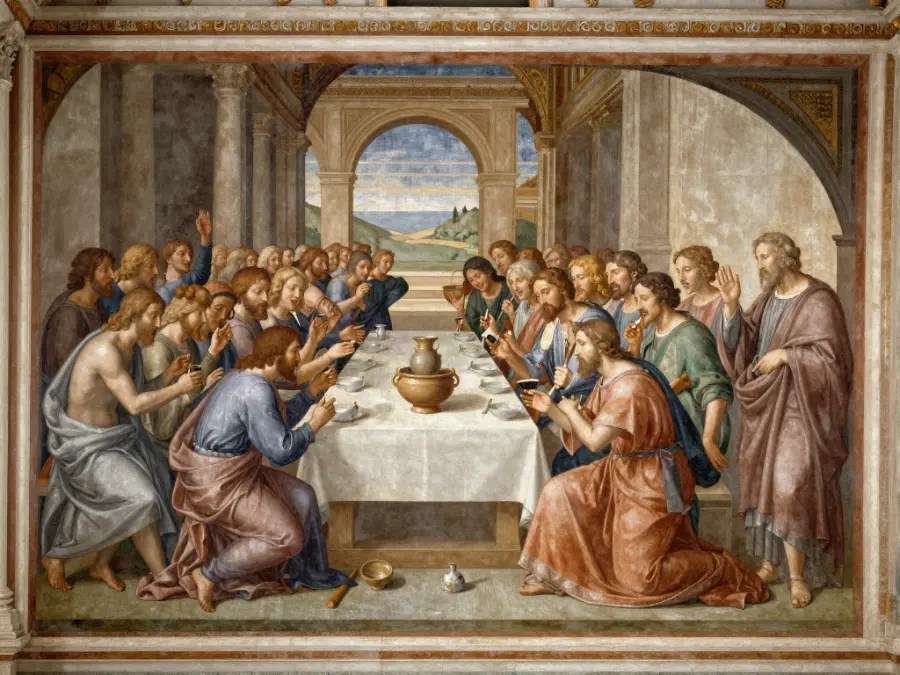
Yes, and far more than most people would guess. Africa holds 45 percent of the world’s Anabaptist church members. Mennonite World Conference’s statistics, as published in 2026, count 2.03 million baptized believers in the wider Anabaptist family of churches; North America holds 29 percent of them, and Europe 3 percent. Ethiopia’s Meserete Kristos Church, whose first congregation was founded in 1951, had around 515,000 baptized adult members in 2022, making it “the largest national body in the global MWC family.” Mennonite World Conference plans to hold its 2028 world assembly in Ethiopia.
In the United States, Black Mennonite history goes back more than a century. Mennonite Church USA records that the first African Americans were baptized as members of a Mennonite church in 1897, at Lauver Mennonite Church in Pennsylvania, and that James H. Lark was ordained the first African American bishop in 1954. Black members formed a Black Caucus in 1971, and in 1982 it became the African American Mennonite Association, which is still part of Mennonite Church USA.
Most of these churches look very different from the Amish. Most Mennonites dress like their neighbours; only conservative and Old Order Mennonites keep plain dress, as you can see in what Mennonite women wear. How the two groups divided, and how they differ today, is set out in Amish vs Mennonite.
Are the Amish racist?
The scholars and writers who study the Amish describe no racial rule in Amish teaching. What they describe is separation from “the world,” a line drawn between church members and everyone else. The Young Center calls it a religious principle, sharpened by the persecution their Anabaptist forebears suffered, under which “the practices of the church should be separate from the larger society.” The line runs around the church, and every outsider, of any colour, stands on the other side of it as “English.”
The Amish are almost all white because of where they came from and because they grow from within. Individual Amish people, like members of any church, hold their own opinions, and Wesner cautions that a Black member might be accepted more readily in some Amish churches than in others.
Within the church, the Young Center says, the Amish try to live out the teachings of Jesus day by day, loving their enemies and forgiving insults. They give special weight to the Sermon on the Mount, in Matthew, chapters 5 to 7, where Jesus says, “Love your enemies, bless them that curse you, do good to them that hate you” (Matthew 5:44). It is the standard every church, Amish or not, is measured by.
Related reading
- Amish vs Mennonite: Same Anabaptist Roots, Different Ways of Living
- Are the Amish and Mennonites Related? Yes, They Parted Ways in 1693
- Amish Religious Practices: How Do The Amish Worship?
- Amish Marriage and Children: Wedding Age, Family Size and Birth Customs
- Pennsylvania Dutch vs Amish: What’s the difference?


Leave a Reply