
 English
 Chinese
 Dutch
 Arabic
 Spanish
 Portuguese
 Russian
 French
 Italian
 German
 Japanese
We don’t know what Eve first said to Adam. Genesis tells us that he listened to his wife, yet nowhere in the Bible do we hear the words they said to each other. Her first recorded words are an answer to the serpent, “We may eat of the fruit of the trees of the garden” (Genesis 3:2).
There is room for Adam in that first word of hers. The King James Version begins with “We.” Hebrew saves that thought for the very end of the sentence, in the verb nokhel, “we may eat”. The serpent asks about the trees, and Eve answers for them both.
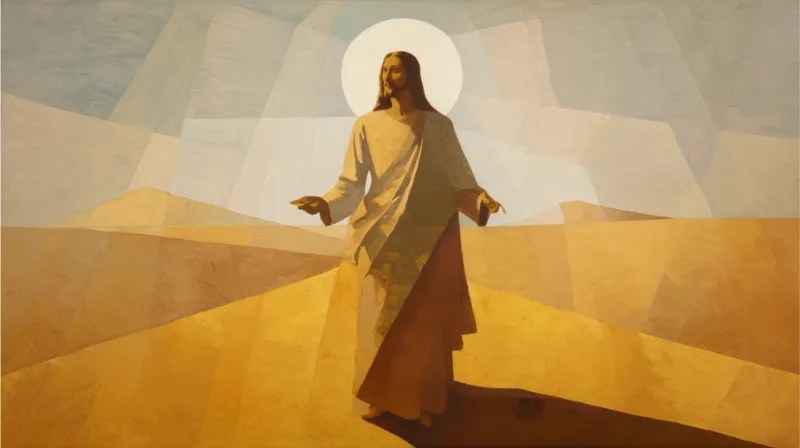
Whom do Adam and Eve speak to in Genesis?
If you read through Genesis 2 to 4 listening for a conversation between husband and wife, it’s easy to think you’ve found one as soon as God brings them together. Look at whom each of them is speaking to. These are all their speeches, with the opening words from the King James Version.
| Verse | Who speaks | To whom | First words |
|---|---|---|---|
| Genesis 2:23 | Adam | No one named; he speaks of her | “This is now bone of my bones” |
| Genesis 3:2–3 | The woman | The serpent | “We may eat of the fruit” |
| Genesis 3:10 | Adam | God | “I heard thy voice in the garden” |
| Genesis 3:12 | Adam | God | “The woman whom thou gavest to be with me” |
| Genesis 3:13 | The woman | God | “The serpent beguiled me” |
| Genesis 4:1 | Eve | Not said | “I have gotten a man from the LORD” |
| Genesis 4:25 | Eve | Not said | “For God … hath appointed me another seed” |
Adam speaks three times in these chapters. All four times Eve speaks in Scripture are here too, just 73 words from her in the King James Bible. We even know what she said when Cain was born and again when Seth was born. Was she speaking to their father? Neither verse names the person who heard her.
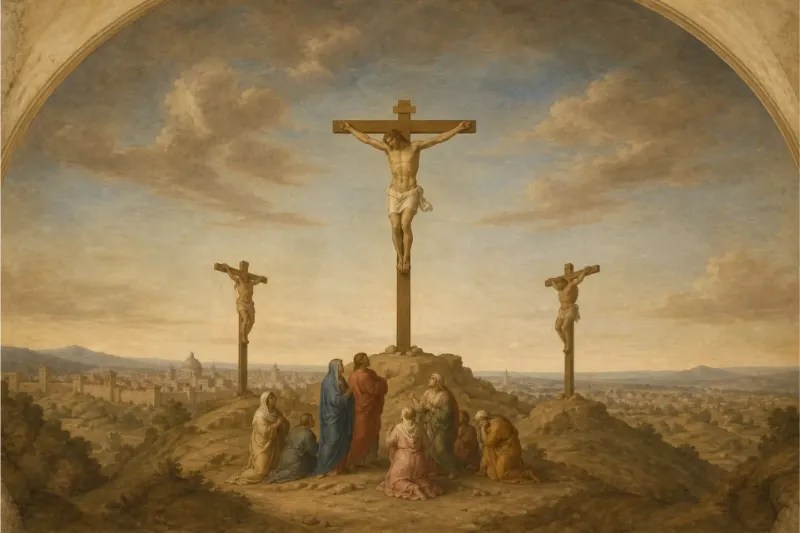
What were Adam’s first words about Eve?
When God “brought her unto the man”, Adam spoke the first human words we have in Scripture. “This is now bone of my bones, and flesh of my flesh: she shall be called Woman, because she was taken out of Man” (Genesis 2:22–23). You can hear his delight in her. She is there with him and may well have heard every word, though Adam says “she shall be called”, and Genesis gives us no reply from her.
It takes only a chapter for “bone of my bones” to become “the woman whom thou gavest to be with me” (Genesis 3:12). You can hear the distance in those words too. Adam tells God, “she gave me of the tree, and I did eat” (Genesis 3:12). Eve says, “The serpent beguiled me, and I did eat” (Genesis 3:13). Both begin by telling God what someone else did. The woman who spoke for two now answers for herself, and so does the man.
Even after Adam hears that he will return to dust, he gives his wife a name that speaks of life. He calls her Eve “because she was the mother of all living” (Genesis 3:20). You can read the four verses that call Eve by name and still wonder what he said the first time he used it with her.
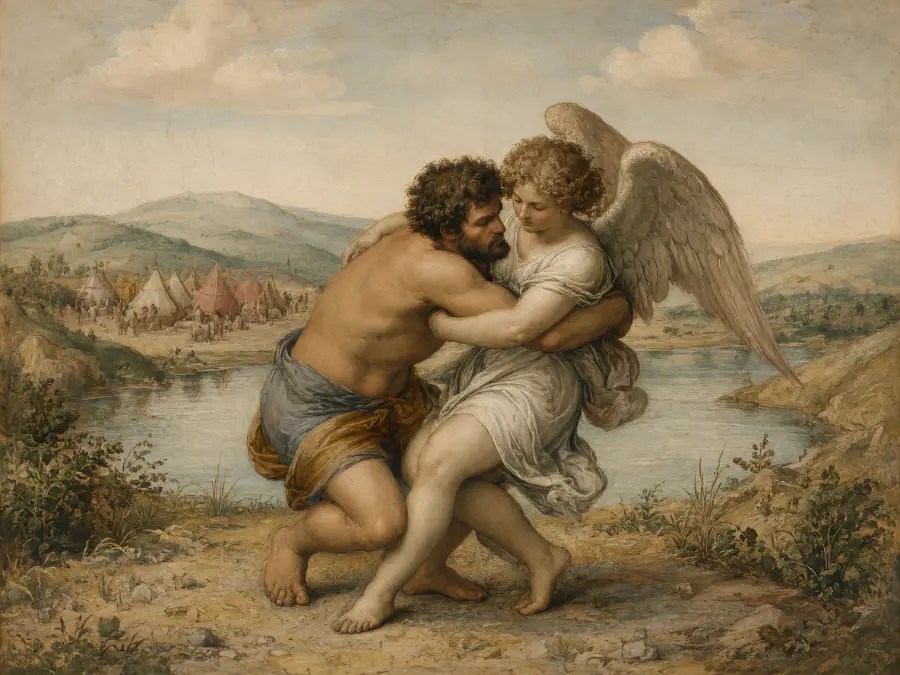
Did Adam tell Eve about the forbidden tree?
Adam may have been the one to tell her, because God gave him the command before he made Eve. “Of every tree of the garden thou mayest freely eat: But of the tree of the knowledge of good and evil, thou shalt not eat of it” (Genesis 2:16–17). The Hebrew verb tokhal in “thou shalt not eat” is singular. Listen to what happens when Eve repeats the command to the serpent. “God hath said, Ye shall not eat of it, neither shall ye touch it, lest ye die” (Genesis 3:3). Her tokhelu is plural. She understands that God’s command is for her as well.
Where did she hear it? Adam may have told her, or God may have told her himself. And where did she get the words “neither shall ye touch it”? They are part of Eve’s answer to the serpent, though God says nothing about touching the tree when he speaks to Adam. Genesis lets us hear the difference. It doesn’t tell us how she came to say it that way.
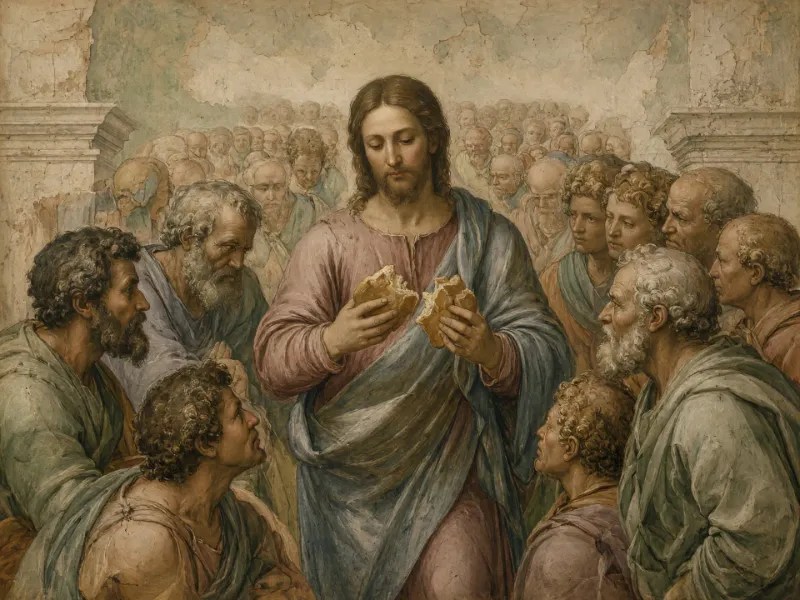
What does “the voice of thy wife” tell us?
When Eve gives Adam the fruit, Genesis tells us what she did in just a few words. “She took of the fruit thereof, and did eat, and gave also unto her husband with her; and he did eat” (Genesis 3:6). In the King James Version, we can picture Adam beside her because it says “with her”. The Chinese Union Version simply says “又给她丈夫,她丈夫也吃了” (she also gave some to her husband, and he ate too). Read either account aloud and you get all the way through the verse without a word from Eve to Adam.
“And unto Adam he said, Because thou hast hearkened unto the voice of thy wife, and hast eaten of the tree, of which I commanded thee, saying, Thou shalt not eat of it: cursed is the ground for thy sake” (Genesis 3:17). The Hebrew words shamata leqol ishtekha mean “you have listened to the voice of your wife”. Where the King James Version says “the voice of thy wife”, the Chinese has “妻子的话”, his wife’s words. This is the one verse that tells us Adam listened to her. And whom do we hear speaking? God reminds Adam of the command he gave him and holds him answerable for eating from the tree.
Why doesn’t Genesis tell us what she said? It gives no reason. Even if we knew her exact words, Adam would still be the man who heard God’s command for himself and took the fruit. We can take his choice seriously without putting a speech in his wife’s mouth.
Where do the words people remember come from?
People were imagining what Eve might have said to Adam centuries before John Milton wrote his poem. Gary Anderson and Michael Stone date the Life of Adam and Eve to somewhere between the third and seventh centuries, though parts may be older. It tells of the couple after they left Eden. In the Greek version we hear about the tree again, this time from a mother telling her children how she called their father over.
“Adam, Adam, where art thou? Rise up, come to me and I will show thee a great secret.” You may recognise the question. In Genesis 3:9 it’s God who asks Adam, “Where art thou?” Here it is Eve calling her husband. What happens once he reaches her? “I opened my mouth and the devil was speaking,” she tells her children. The devil speaks through her when she urges Adam to eat. “Come hither, my lord Adam, hearken to me and eat of the fruit of the tree of which God told us not to eat of it, and thou shalt be as a God” (Apocalypse of Moses 21).
The first thing Eve says to Adam outside the garden in the Latin version is something any of us might say. “My lord, I am hungry.” Later she asks him to kill her. His answer reaches all the way back to the day God brought her to him. “How is it possible that I should stretch forth my hand against my own flesh?” Even here, outside Eden, he still calls her his own flesh.
Milton lets Eve answer Adam’s “flesh of my flesh” with a greeting of her own in Book IV of Paradise Lost (1667).
O thou for whom
And from whom I was formed, flesh of thy flesh,
And without whom am to no end, my guide
And head!
As she goes on, we learn that she turned away the first time she saw him. Adam was the one who called after her, “Return, fair Eve; Whom flyest thou?” Milton imagined both sides of the meeting. The words we recognise from Genesis 2:23 are Adam’s.
Then there’s the old joke in which Adam introduces himself. He says, “Madam, I’m Adam,” and she answers, “Eve.” Read either greeting backwards, letter by letter, and you get the same words. The joke only works in English, which leaves us with a different question about Eden. What language did Adam and Eve speak?
Why did Irenaeus read Eve’s story alongside Mary’s?
Irenaeus, the second-century bishop of Lyons, asks us to listen to Eve alongside Mary. He says Eve was “led astray by the word of an angel” and fled from God. Mary heard from an angel that she would bear God, and Irenaeus describes her as “being obedient to His word” (Against Heresies 5.19.1).
What did that obedience sound like? Mary says, “Behold the handmaid of the Lord; be it unto me according to thy word” (Luke 1:38). Eve too had known what God said. When she answered the serpent, she began with what God had given her and Adam to share. “We may eat.” Then she listened to the serpent.
If we go back to the day God brought Eve to Adam, there are words for their marriage even though we never hear their first conversation. “Therefore shall a man leave his father and his mother, and shall cleave unto his wife: and they shall be one flesh” (Genesis 2:24). When Eve first speaks and says “we”, we can hear that kinship in her own voice.
Related reading
- How many times is Eve named in the Bible?
- Why did Adam name the woman Eve?
- How long was Adam alone before Eve?
- What language did Adam and Eve speak?
- What did Adam and Eve cover themselves with?
- Women of the Bible, from Eve to Phoebe


Leave a Reply