
 English
 Chinese
 Dutch
 Arabic
 Spanish
 Portuguese
 Russian
 French
 Italian
 German
 Japanese
The Bible never tells us what kind of fruit it was. Genesis calls it only “the fruit of the tree which is in the midst of the garden”, and the apple is a tradition that grew up later in the West, while the rabbis thought of a fig, grapes, wheat or a citron. What Genesis does tell us is who ate first: Eve took the fruit, and “gave also unto her husband with her; and he did eat.”
One of those rabbis believed the silence was on purpose. God, he taught, has never revealed the tree and never will, so as to spare the first man’s honour. Whether or not he had the reason right, Genesis keeps our eyes off the fruit and on a command, a choice and two people hiding among the trees. What followed the eating, the opened eyes, the hiding and God’s sentence, is told in what happened when Adam and Eve ate the fruit.
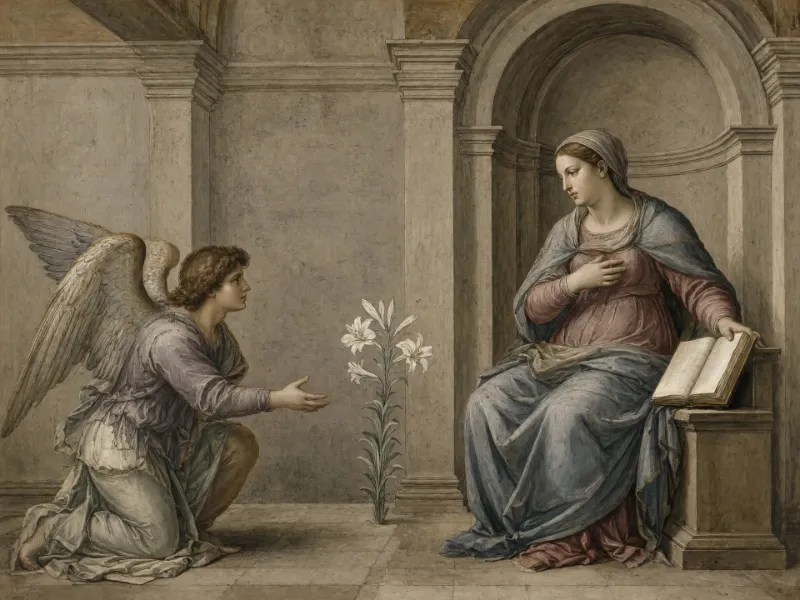
What does Genesis say about the forbidden fruit?
Genesis names the tree but never its fruit. Among the trees God made to grow in Eden were “the tree of life also in the midst of the garden, and the tree of knowledge of good and evil” (Genesis 2:9). It was the second that God forbade: “Of every tree of the garden thou mayest freely eat: But of the tree of the knowledge of good and evil, thou shalt not eat of it: for in the day that thou eatest thereof thou shalt surely die” (2:16–17).
When the serpent questioned her, the woman repeated the command and added something of her own: “God hath said, Ye shall not eat of it, neither shall ye touch it, lest ye die” (3:3). All through the story, the Hebrew word for the fruit is the ordinary word for fruit of any kind, and as Robert Appelbaum, a professor of English literature at Uppsala University, puts it, “Peri could be absolutely any fruit.”
The only plant Genesis names in the scene is the fig, and only for its leaves: “they sewed fig leaves together, and made themselves aprons” (3:7). The idea that the fruit was a fig began with that verse.
Theophilus of Antioch, an early Christian writer, saw that the fruit was never the point. “The tree of knowledge itself was good, and its fruit was good,” he wrote in To Autolycus. “For it was not the tree, as some think, but the disobedience, which had death in it.”

Why do people say the forbidden fruit was an apple?
Scholars give two explanations, one from Latin and one from medieval French, and they do not agree with each other.
The Latin pun
The best-known explanation is a pun on two Latin words that are spelled alike. Said with a long vowel, mālum is “an apple, i. e. any tree-fruit fleshy on the outside, and having a kernel within,” as Lewis and Short’s dictionary defines it, a word “applied also to quinces, pomegranates, peaches, oranges, lemons, etc.” Said with a short vowel, mălum means “an evil, mischief, misfortune, calamity.” The Roman playwright Plautus was already playing on the pair, and the dictionary cites his pun on the two words.
Appelbaum, quoted by NPR, says that when Jerome translated the Bible into Latin he “hit upon the idea of translating peri as malus,” which he calls “a very good pun.” Yet if you open the Latin Bible, the Vulgate, at Genesis 3, you will not quite find it, because the word there for the fruit is fructus, plain “fruit.” The play on words is in the name of the tree instead. The tree “of the knowledge of good and evil” (2:17) is the tree “scientiae boni et mali,” and mali, “of evil,” is spelled like the Latin for “of the apple.”
The French apple
Azzan Yadin-Israel, professor of Jewish Studies and Classics at Rutgers University, calls the Latin explanation “a dead end.” He wrote Temptation Transformed: The Story of How the Forbidden Fruit Became an Apple, and he gathered a little under 600 images of the forbidden fruit from the fourth century to the Renaissance. In them he found pomegranates, citrons, grapes and figs until, in his words, “in late 11th century France we find an apple.” Within “50 or 70 years,” he says, “the apple has become the dominant forbidden fruit.” He traces the change to language. The Old French word pomme “at one point meant fruit and then came to mean apple,” so a French reader told that Eve gave Adam a pomme pictured an apple. German, English and Dutch art followed, he says, though Italian art did not until the seventeenth century.
Milton and the artists
John Milton’s Paradise Lost begins with the fruit of the forbidden tree “whose mortal taste” brought “death into the World, and all our woe,” and later in the poem the fruit gets a name: the serpent tells Eve of “those fair apples,” and Satan boasts in hell that he seduced Man “with an apple.” Even so, Appelbaum points out, in Milton’s time the English word “apple” could still mean “any fleshy seed-bearing fruit.”
Albrecht Dürer’s famous engraving of Adam and Eve, made in 1504, is often said to show an apple tree, but the Metropolitan Museum of Art, which holds an impression of it, reads it otherwise: “The branch Adam holds is of the mountain ash, the Tree of Life, while the fig, of which Eve has broken off a branch, is from the forbidden Tree of Knowledge.”
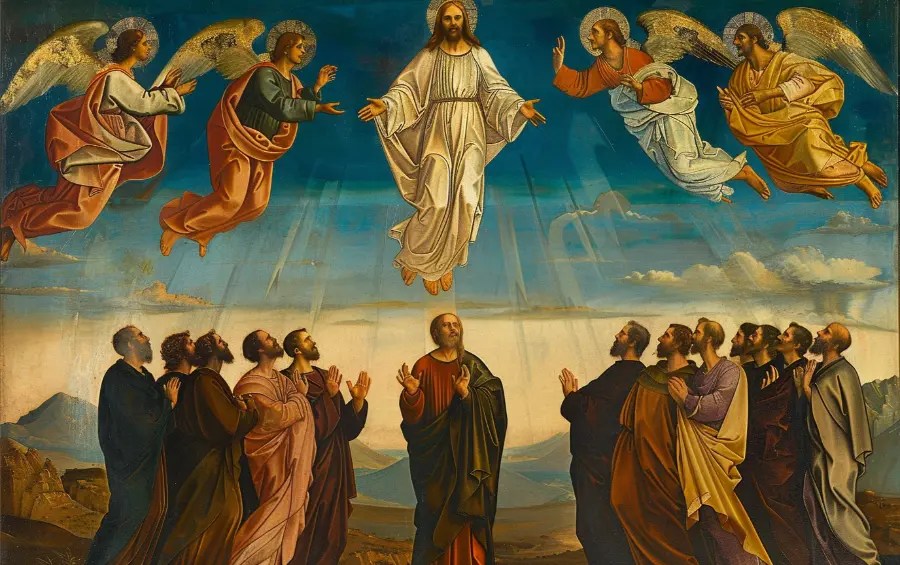
If it was not an apple, what was the forbidden fruit?
The rabbis of the Talmud and the Midrash argued over which tree it was, and every answer they gave comes with a reason drawn from Scripture or from life. The Talmud gives three answers and the Midrash four. Two of the rabbis even swap answers between the books: in the Talmud Rabbi Meir says vine and Rabbi Yehuda bar Ilai wheat, and in the Midrash Meir says wheat and Yehuda grapes.
| Fruit | Who proposed it | The reason given |
|---|---|---|
| Fig | Rabbi Neḥemya (Berakhot 40a); Rabbi Yosei (Genesis Rabbah 15:7) | They covered themselves with fig leaves, so the tree that shamed them clothed them |
| Grape or vine | Rabbi Meir (Berakhot 40a); Rabbi Yehuda bar Ilai (Genesis Rabbah 15:7) | Wine brought Noah to shame, and Deuteronomy speaks of “grapes of poison” |
| Wheat | Rabbi Yehuda bar Ilai (Berakhot 40a); Rabbi Meir (Genesis Rabbah 15:7) | A child cannot call his father and mother until he has tasted grain |
| Citron (etrog) | Rabbi Abba of Akko (Genesis Rabbah 15:7) | Eve saw “that the tree was good for food,” and only the citron’s wood tastes like its fruit |
The fig has the most support, and every reason given for it comes back to the leaves that covered Adam and Eve. In the Talmud, Rabbi Neḥemya reasons that “with the object with which they were corrupted and sinned they were rehabilitated,” since Adam and Eve “must have taken the leaves from the tree closest at hand.” Genesis Rabbah tells a parable in which, after the sin, no tree in the garden would give Adam its leaves, “But the fig tree, whose fruit he had eaten, opened its door and received him.” And in the Apocalypse of Moses, an ancient retelling of Adam and Eve’s life printed among the Old Testament Pseudepigrapha, Eve says that the leaves fell from every tree but the fig, and “it was from the very same plant of which I had eaten.” In these tellings, the tree of their fall became the tree that covered their shame.
Appelbaum’s own list of rabbinic proposals also includes the pomegranate and the apricot, though he names no text for either. The pomegranate’s place in Scripture has a page of its own, the pomegranate in the Bible.
And one rabbi in Genesis Rabbah would not name the tree at all. “Far be it that God should have revealed” the tree “to any man,” taught Rabbi Yehoshua ben Levi, “nor will He reveal it in the future.” He was thinking of Adam’s dignity. If the Law has even an animal put to death so that no one can point it out in the marketplace and recall a person’s sin, how much more, he reasoned, would God guard the honour of the first man.
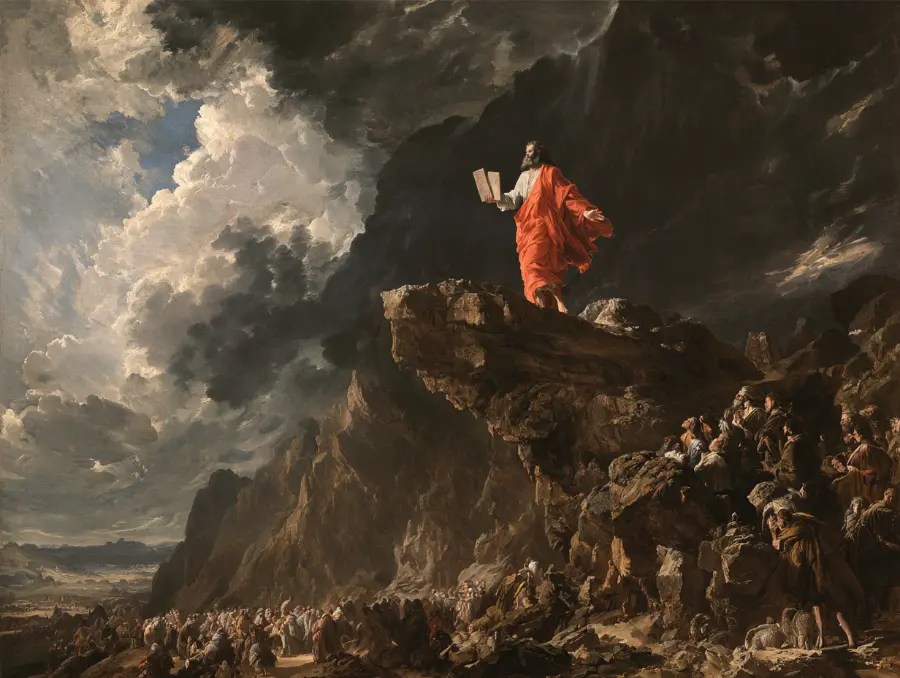
Who ate the forbidden fruit first, Adam or Eve?
Eve ate first, and Genesis 3:6 gives the order: “she took of the fruit thereof, and did eat, and gave also unto her husband with her; and he did eat.” When God questioned them, each of them blamed someone else. “The woman whom thou gavest to be with me, she gave me of the tree, and I did eat,” said Adam (3:12), and the woman said, “The serpent beguiled me, and I did eat” (3:13).
In the New Testament Paul keeps the same order and draws a distinction from it. “And Adam was not deceived, but the woman being deceived was in the transgression,” he wrote (1 Timothy 2:14), and he warned the Corinthians against being led astray “as the serpent beguiled Eve through his subtilty” (2 Corinthians 11:3). Yet when he traces sin and death to their source, he names the man: “by one man sin entered into the world, and death by sin” (Romans 5:12).
The Church’s teachers have told it in the same order. The Orthodox Longer Catechism of Philaret says that “Eve was deceived by this promise, and by the fairness of the fruit, and ate of it,” and that “Adam ate after her example.” Augustine read Paul’s words to mean that Adam knew what he was doing. He was “not on this account less culpable, but sinned with his eyes open,” because “the man could not bear to be severed from his only companion, even though this involved a partnership in sin.” So even love can lead us into sin when we set it above the word of God.
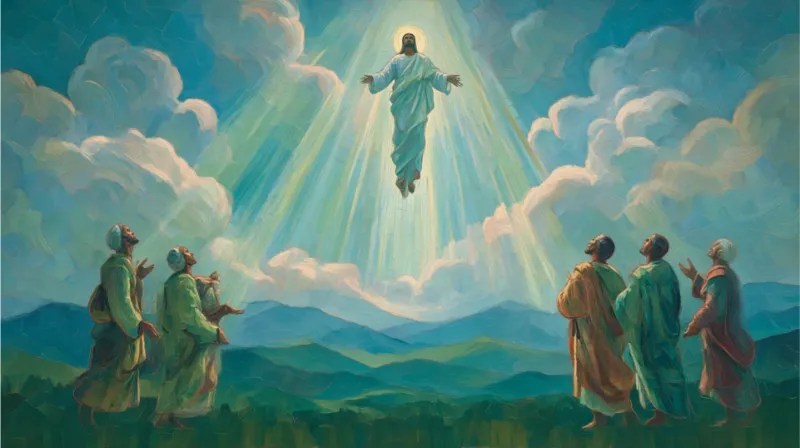
Why did Eve eat the fruit?
The serpent gave her two reasons, and Genesis gives three more of her own. First the serpent contradicted God, “Ye shall not surely die,” and promised, “your eyes shall be opened, and ye shall be as gods, knowing good and evil” (3:4–5). Then she looked at the tree for herself and saw “that the tree was good for food, and that it was pleasant to the eyes, and a tree to be desired to make one wise” (3:6).
The commentator Matthew Henry called her “ringleader in the transgression,” the one who led the way, and traced the steps in that verse: she saw, she took, she ate, she gave, and he ate. He noticed that God had made every tree in the garden “pleasant to the sight, and good for food” (2:9), so that, in her eyes, “She saw no harm in this tree, more than in any of the rest.” To look at, the fruit was like every other good gift in the garden, and only the word of God set it apart.
Why God let the serpent into the garden at all, and did not stop them, is a question of its own, taken up in how Satan entered Eden.
Was Adam with Eve when she ate?
Genesis says she gave the fruit “unto her husband with her,” and read on its own, “with her” puts him at her side. Matthew Henry thought otherwise. “It is probable that he was not with her when she was tempted,” he wrote, because “surely, if he had, he would have interposed to prevent the sin.” The Apocalypse of Moses tells it the same way, with Eve eating alone and then calling, “Adam, Adam, where art thou,” and “speedily I persuaded him, and he ate.”
Eve’s “where art thou” is the very question God himself asks a few verses later (Genesis 3:9), when the two of them are hiding among the trees. Genesis never does give us the name of the fruit. It tells us instead what was lost, and who came looking.
Related reading
- What do snakes symbolize in the Bible?
- What did Adam and Eve wear?
- Why did Adam name her Eve?
- What happened to Adam and Eve after Eden?
- Were Adam and Eve real people?
- The tree of life in the Bible


Leave a Reply