What is the origin of Passover as described in the Bible?
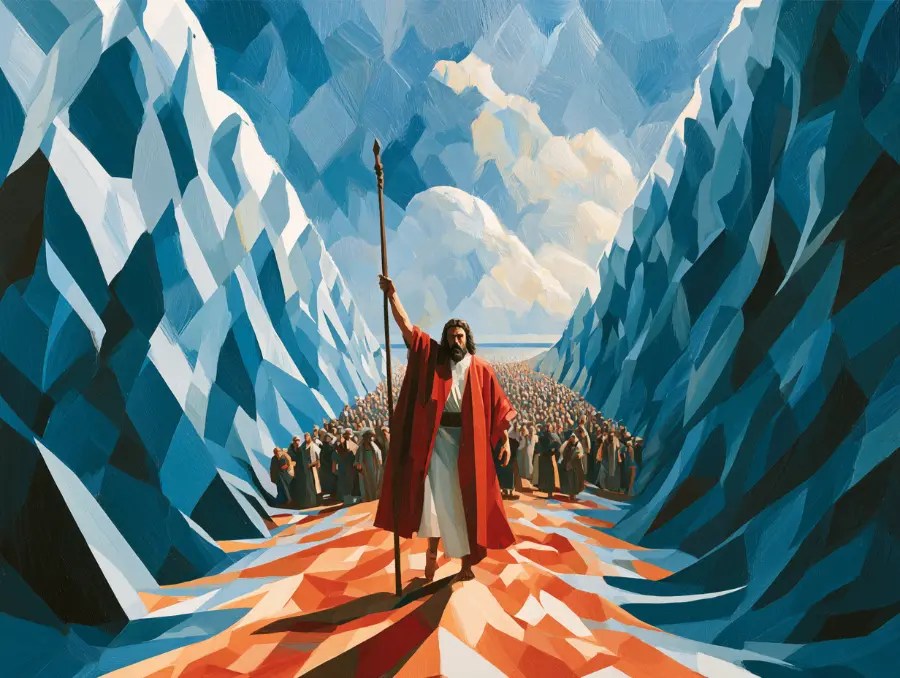
As we journey through the sacred scriptures, the origins of Passover, or Pesach as it is known in Hebrew, unfold vividly in the Book of Exodus. This seminal event is not just a mere historical recounting; it is a divine narrative imbued with deep spiritual significance. The story begins with the Israelites enduring severe oppression under Pharaohโs harsh rule in Egypt. Their cries for liberation ascend to the heavens, and God, in His infinite compassion and resolute justice, decides to intervene.ย
The origin of Passover is deeply rooted in the story of the Israelitesโ liberation from slavery in Egypt. This pivotal event shaped the identity and faith of the Jewish people. The book of Exodus recounts how God called Moses to lead the Israelites out of bondage.
When Pharaoh refused to release the Israelites, God sent a series of plagues upon Egypt. The final and most severe plague was the death of the firstborn. To protect the Israelites from this plague, God instructed them to sacrifice a lamb and mark their doorposts with its blood. This act of faith and obedience allowed the angel of death to โpass overโ their homes, sparing their firstborn.
The name โPassoverโ comes from this passing over of the Israelite homes. In Hebrew, it is called โPesach,โ which means โto pass overโ or โto spare.โ God commanded the Israelites to commemorate this event annually as a lasting ordinance.
The first Passover marked the beginning of the Exodus, the Israelitesโ journey from slavery to freedom. It symbolized Godโs mighty act of deliverance and the birth of Israel as a nation. This event became the foundation of Jewish identity and faith.
Passover also has agricultural roots. It coincides with the beginning of the spring harvest in Israel. The festival incorporated elements of earlier spring celebrations, connecting the themes of national redemption with the renewal of nature.
The Bible presents Passover as laying the groundwork for later messianic expectations.
Through the centuries, Passover evolved in its observance. The centralization of worship in Jerusalem led to pilgrimage practices. After the destruction of the Temple, the home-based Seder meal became the focus of celebration.
God commands that this observance becomes an annual tradition, a perpetual statute throughout generations (Exodus 12:14). It is not only a commemoration of past deliverance but also an invitation to reflect on Godโs enduring faithfulness, His power to save, and His call to remember oneโs identity and purpose as His people.รย

How does the Bible describe the first Passover?
The Bible provides a detailed account of the first Passover in the book of Exodus, chapter 12. This description serves as the foundation for all future Passover observances. Let us examine the key elements of this narrative with care and reverence.
God speaks to Moses and Aaron, giving them precise instructions for the Israelites. The timing is major โ it occurs on the tenth day of the first month. This marks a new beginning in Israelโs calendar, symbolizing their rebirth as a free people.
Each family is to select a lamb or young goat without blemish. The animal is to be kept for four days, perhaps to allow time for careful inspection and to build a connection with the sacrifice. On the fourteenth day of the month, at twilight, the whole assembly of Israel is to slaughter their lambs.
The blood of the lamb plays a crucial role. It is to be applied to the doorposts and lintel of each Israelite home. This act of faith marks their dwellings, distinguishing them from the Egyptians. The blood becomes a sign of protection and deliverance.
God instructs the people to roast the lamb whole over a fire. It is to be eaten with bitter herbs and unleavened bread. These elements carry symbolic meaning โ the bitterness of slavery and the haste of their departure. Nothing of the lamb is to remain until morning; any leftovers must be burned.
The Israelites are to eat this meal in a state of readiness โ with their cloaks tucked into their belts, sandals on their feet, and staff in hand. This posture of preparedness anticipates their imminent departure from Egypt.
During that night, God passes through Egypt, striking down the firstborn of both humans and animals. But where the blood is applied, death passes over. This dramatic event fulfills Godโs promise of judgment and deliverance.
The Bible describes the Egyptiansโ urgent plea for the Israelites to leave, giving them silver, gold, and clothing. The Israelites depart in haste, their dough not yet leavened. A mixed multitude goes with them, suggesting the inclusive nature of Godโs deliverance.
This first Passover is both a solemn ritual and a moment of high drama. It marks the end of centuries of slavery and the birth of a nation. The Bible presents it as a night of watching for the Lord, to be commemorated for generations to come.
The description emphasizes obedience, faith, and community. Every detail carries significance, forming a vast web of meaning. This event becomes the paradigm for understanding Godโs saving work throughout history.
(Adams, 2009; โChapter 12.21-27: Moses Instructs the Israelites about the Passover,โ 2020; Prosic, 1999, pp. 78โ94; Thames, 2019, pp. 18โ3)

What did the Passover symbolize for the Israelites?
For the Israelites, Passover was rich with symbolism, layered with meanings that touched every aspect of their identity and faith. Let us explore these symbols with the eyes of both a historian and a spiritual guide.
Passover symbolized liberation. It commemorated the Israelitesโ deliverance from slavery in Egypt. This was not merely a historical memory, but a living reality to be experienced anew by each generation. The festival invited participants to see themselves as personally coming out of Egypt.
Passover also symbolized Godโs faithfulness to His covenant promises. It reminded the people of Godโs mighty acts on their behalf, fulfilling the promises made to Abraham, Isaac, and Jacob. This reinforced their identity as Godโs chosen people and strengthened their trust in divine providence.
The lamb sacrificed at Passover symbolized redemption through substitution. Its blood, applied to the doorposts, represented protection from judgment. This concept of vicarious atonement would later find deeper expression in Israelโs sacrificial system and, for Christians, in the death of Jesus.
The unleavened bread of Passover carried multiple meanings. It recalled the haste of the Exodus, when there was no time for dough to rise. It also symbolized a new beginning, free from the โleavenโ of Egyptโs influence. In later tradition, it came to represent purity and simplicity of heart.
Bitter herbs symbolized the hardship of slavery, ensuring that the memory of suffering was not forgotten even in times of freedom. This served to cultivate empathy for the oppressed and gratitude for deliverance.
The Passover meal as a whole symbolized communion โ with God and with the community. Eating together in a prescribed manner reinforced social bonds and religious identity. It was a time for families to gather and for the story of redemption to be passed down.
For the Israelites, Passover also symbolized a new creation. Just as God had created the world in seven days, the seven days of Passover represented a new beginning for the nation. The festival marked the start of their religious calendar, signifying a fresh start.
Passover came to symbolize hope for future redemption. As they remembered past deliverance, the Israelites looked forward to a greater salvation yet to come. This messianic expectation gave the festival an eschatological dimension.
The symbolism of Passover extended to nature as well. Occurring in spring, it coincided with the barley harvest. This connected Israelโs national redemption with the renewal of creation, emphasizing Godโs sovereignty over both history and nature.
In its ethical dimension, Passover symbolized the responsibility that came with freedom. The Israelites were reminded that they were liberated not just from something, but for something โ to serve God and to create a just society.
(NIESIOร ยOWSKI-SPANรโ, 2020; Prosic, 1999, pp. 78โ94, 2005, 2010, pp. 727โ736; Walls, 2024)

How does Jesus connect to the Passover in the New Testament?
In the New Testament, Jesus is profoundly connected to the Passover, both in the events of his life and in the theological interpretation of his death and resurrection. This connection bridges the Old and New Testaments, revealing a deep continuity in Godโs plan of salvation.
The Gospels deliberately set Jesusโ last days in the context of Passover. He enters Jerusalem as the crowds gather for the festival. The Last Supper is presented as a Passover meal, though there are some chronological differences between the Synoptic Gospels and Johnโs account.
At the Last Supper, Jesus reinterprets the elements of the Passover meal. He takes the bread and wine, staples of the Seder, and invests them with new meaning. The bread becomes his body, the wine his blood. This transformation of the Passover symbols points to Jesus as the fulfillment of the old covenant and the inauguration of the new.
Paul explicitly identifies Jesus as โour Passover lambโ in 1 Corinthians 5:7. This powerful metaphor draws a direct line between the lambs sacrificed in Egypt and Christโs sacrificial death. Just as the blood of the Passover lamb brought deliverance to Israel, so the blood of Christ is seen as bringing salvation to believers.
The timing of Jesusโ crucifixion is major. Johnโs Gospel places it at the very hour when the Passover lambs were being slaughtered in the Temple. This chronology reinforces the identification of Jesus with the Passover sacrifice.
Jesusโ words at the Last Supper about not drinking wine again until the coming of Godโs kingdom echo the forward-looking aspect of Passover. Just as the Seder looks ahead to future redemption, so Jesus points to the eschatological banquet.
The theme of liberation in Passover finds new expression in Jesusโ ministry. His proclamation of release to captives and freedom for the oppressed (Luke 4:18-19) resonates with the Exodus motif. His healings and exorcisms are seen as acts of liberation from various forms of bondage.
The early church saw in Jesusโ resurrection a new Exodus. Just as God had brought Israel out of Egypt, so Christ leads believers out of death into new life. This parallel shapes much of New Testament theology, especially in Paulโs letters.
The practice of the Lordโs Supper in the early church drew heavily on Passover symbolism. It became a memorial meal that looked back to Christโs death and forward to his return, much as Passover remembered the Exodus and anticipated future redemption.
Jesusโ teaching often alludes to Passover themes. His discourse on the bread of life in John 6 follows the feeding of the 5000, which John notes took place near the time of Passover. Here, Jesus presents himself as the true manna, greater than that given in the wilderness.
In the book of Revelation, imagery of the Lamb connects Christโs sacrificial death with the final victory over evil. This blends Passover symbolism with apocalyptic expectations, showing how deeply the Exodus narrative shaped early Christian thought.
(Azar, 2015; Balentine, 1962, pp. 27โ41; Boulton, 2013, pp. 18โ29; Marcus, 2013, pp. 303โ324)

What are the main elements of the Passover meal and their meanings?
The Passover meal, or Seder, is rich with symbolic elements that tell the story of the Exodus and convey deep spiritual truths. Let us explore these elements with reverence, understanding their significance for both Jewish tradition and Christian reflection.
Central to the Seder is the Passover lamb. In ancient times, this was sacrificed and eaten to recall the lambs whose blood protected the Israelites. It symbolizes Godโs deliverance and the cost of redemption. For Christians, this points to Christ as the ultimate Passover lamb.
Unleavened bread, or matzah, is a key element. It recalls the haste of the Israelitesโ departure, when there was no time for dough to rise. It symbolizes simplicity, humility, and freedom from corruption. The breaking of the matzah can represent sharing and unity.
Bitter herbs, often horseradish or romaine lettuce, symbolize the bitterness of slavery. Tasting these herbs allows participants to experience in a small way the suffering of their ancestors. This cultivates empathy and gratitude for freedom.
Charoset, a sweet mixture of fruits and nuts, represents the mortar used by the Israelites in their forced labor. Its sweetness, contrasting with the bitter herbs, suggests that even in hardship, hope remains. It can symbolize the sweetness of redemption.
Salt water on the table recalls the tears shed in Egypt. Dipping vegetables in this water connects the natural cycle of growth with the story of redemption. It reminds us that new life often emerges from suffering.
The roasted egg has various interpretations. It can symbolize the cycle of life, the wholeness of existence, or the additional festival offering in Temple times. Its presence on the Seder plate adds layers of meaning to the ritual.
Four cups of wine are drunk at specified points in the Seder. These correspond to the four expressions of redemption in Exodus 6:6-7. They mark the stages of liberation and Godโs fulfilled promises. The cup of Elijah expresses hope for future redemption.
The Seder plate itself, arranging these elements, becomes a visual representation of the Exodus story. Its circular shape can suggest the cyclical nature of history and the ongoing need for liberation.
Reclining while eating is customary, symbolizing the luxury of freedom. This posture contrasts with the slaveโs need to eat quickly while standing. It embodies the transition from servitude to liberty.
The telling of the story, or Maggid, is a crucial element. This fulfills the biblical command to recount the Exodus to each generation. It often follows a question-and-answer format, engaging all participants in the narrative.
These elements come together to create a multisensory experience. They engage sight, taste, smell, and touch, making the story of redemption tangible. This holistic approach helps internalize the lessons of Passover.
For both Jews and Christians, these elements invite reflection on themes of freedom, gratitude, and responsibility. They remind us of Godโs saving acts in history and call us to work for the liberation of all who are oppressed.
(Avieli & Markowitz, 2021, pp. 724โ739; BenรขโฌยLulu, 2022, pp. 49โ69; Greenspahn, 2016, pp. 375โ387; Kosek, 2019)
I understand you are seeking detailed answers to questions about the Christian understanding and observance of Passover, its relationship to Easter, and comparisons to modern Jewish celebrations. I will do my best to provide thoughtful responses in the style you requested, drawing on the available information. Let me address each question in turn:

How did early Christians understand and observe Passover?
In the early days of Christianity, there was a powerful connection to the Jewish roots of our faith. The first followers of Jesus were Jews who continued to observe many Jewish customs, including Passover. But their understanding of Passover took on new meaning in light of Christโs death and resurrection.
For these early Christians, Passover became intimately linked with the Last Supper, which occurred during the Passover feast. They saw Jesus as the ultimate Passover lamb, whose sacrifice brought liberation from sin and death. This reinterpretation gave Passover a distinctly Christian character while maintaining connections to its Jewish origins.
In the beginning, many Christian communities continued to celebrate Passover on the 14th of Nisan, the date prescribed in the Jewish calendar. This practice, known as Quartodecimanism, persisted in some areas until the 4th century. These Christians saw their observance as a memorial of Christโs death.
But tensions arose between this practice and the developing tradition of celebrating Christโs resurrection on Sunday. Gradually, most Christian communities shifted to observing Easter on the Sunday following Passover. This change reflected a desire to distinguish Christian practice from Judaism while preserving the theological connection.
Early Christian Passover observances likely included elements familiar from Jewish tradition โ unleavened bread, bitter herbs, retelling the Exodus story. But they reinterpreted these symbols in light of Christ. The unleavened bread became his body, the wine his blood. The Exodus story prefigured salvation through Christ.
These early celebrations were probably intimate gatherings in homes, centered around a shared meal. They combined solemn remembrance with joyful gratitude for redemption. As Christianity spread, practices diversified. Some communities maintained closer ties to Jewish custom, while others developed distinct liturgies.
By the 4th century, the Council of Nicaea sought to standardize Easter observances. This marked a further separation from Jewish Passover timing. Yet the theological and symbolic connections remained important in Christian understanding.

What did the Church Fathers teach about the significance of Passover?
Many Church Fathers emphasized the typological relationship between Passover and Christโs passion. They saw the Passover lamb as a prefiguration of Jesus, the Lamb of God. Just as the blood of the lamb protected the Israelites, so Christโs blood saves believers. This parallel gave Passover deep Christological meaning.
Melito of Sardis, in his โOn Pascha,โ beautifully expresses this connection: โThe sheep is slain, and by its blood the people are saved.โ He portrays Christ as the true Passover, fulfilling and surpassing the old covenant celebration. This interpretation became central to Christian understanding.
The Fathers also saw Passover as a symbol of spiritual liberation. Just as God freed the Israelites from slavery in Egypt, Christ frees humanity from bondage to sin and death. Augustine writes, โThe Passover of the Jews was in truth a prophecy of Christโฆ The sacrifice of the lamb was a prophesying of the future sacrifice of Christ.โ
Many Fathers drew parallels between the Exodus journey and the Christian life. They saw baptism as a kind of Red Sea crossing, marking the beginning of a spiritual pilgrimage. The wilderness wanderings symbolized the challenges of earthly life before reaching the promised land of heaven.
The unleavened bread of Passover took on new significance. It represented purity and sincerity in Christian life. Paulโs exhortation to โcelebrate the festival, not with the old yeastโฆ But with the unleavened bread of sincerity and truthโ (1 Corinthians 5:8) was frequently cited.
Some Fathers, like John Chrysostom, used Passover themes to encourage moral reform. They called believers to a spiritual โexodusโ from sinful ways. The Passover story became a powerful metaphor for ongoing conversion and sanctification.
The Fathers also saw Passover as a unifying force for the Church. Just as Passover bound the Israelites together as a people, so the Christian Pascha (Easter) united believers in Christ. This communal aspect was emphasized in liturgical celebrations.
Their teachings laid the foundation for the rich Paschal theology that developed in later centuries. They helped transform Passover from a purely Jewish observance into a central mystery of Christian faith.

How does Passover relate to Easter in Christian tradition?
In Christian tradition, Passover and Easter are intimately connected, yet distinct. The relationship between these two observances is complex, reflecting both continuity and transformation in the Christian understanding of salvation history.
At the most basic level, the timing of Easter is determined in relation to Passover. The Last Supper, which instituted the Eucharist, was a Passover meal. Christโs crucifixion occurred during the Passover festival. This historical connection ensures an ongoing link between the two observances.
Theologically, Christians see Easter as the fulfillment of Passoverโs promise. The Exodus story of liberation from slavery becomes a foreshadowing of humanityโs redemption through Christ. Saint Paul expresses this clearly: โFor Christ, our Passover lamb, has been sacrificedโ (1 Corinthians 5:7).
Many elements of the Passover seder find echoes in Christian Easter celebrations. The unleavened bread recalls Christโs body, given for us. The wine evokes his blood, shed for our salvation. The bitter herbs can symbolize the bitterness of his passion. Even the egg on the seder plate finds a parallel in Easter egg traditions.
The theme of passage or transition is central to both observances. Passover commemorates the Israelitesโ journey from slavery to freedom. Easter celebrates humanityโs passage from death to life through Christโs resurrection. Both involve a night of vigil and anticipation.
In the early Church, as weโve discussed, some Christians continued to observe Passover alongside Easter. Over time, But most Christian communities developed distinct Paschal (Easter) traditions. These often incorporated Passover themes while emphasizing Christโs resurrection.
The Easter Vigil liturgy, in particular, draws heavily on Passover symbolism. The lighting of the Paschal candle echoes the Passover tradition of kindling lights. The Exsultet, sung at the vigil, explicitly connects Christโs resurrection to the Exodus: โThis is the night when you brought our fathers, the children of Israel, out of bondage in Egypt.โ
Some Christian communities have revived the practice of holding Passover-inspired meals during Holy Week. These โChristian sedersโ aim to connect believers with the Jewish roots of their faith and deepen understanding of the Last Supperโs context.
While Christians see Easter as fulfilling Passoverโs promise, this should not be understood as superseding or negating Jewish observance. Rather, it reflects the Christian interpretation of Godโs ongoing work of salvation.
The Passover-Easter connection reminds us of the shared roots of Judaism and Christianity. It invites reflection on Godโs faithfulness throughout history and the continuity of divine love and liberation.

What lessons can Christians learn from the biblical Passover story?
The biblical Passover story offers rich spiritual lessons for Christians today. It speaks to us of Godโs liberating power, the importance of remembrance, and our call to live as a redeemed people. Let us reflect on some key teachings we can draw from this ancient narrative.
Passover reminds us that God hears the cries of the oppressed. The Israelitesโ groaning under slavery did not go unnoticed. This reassures us that God is attentive to human suffering. It challenges us to be equally attentive, to hear the cries of those marginalized in our world today.
The story teaches us about Godโs mighty acts of deliverance. The plagues and the parting of the Red Sea demonstrate divine power overcoming seemingly insurmountable obstacles. This encourages us to trust in Godโs ability to bring freedom and new life, even in the most desperate situations.
Passover emphasizes the importance of remembrance. The Israelites are commanded to observe the feast as a memorial throughout their generations. This teaches us the value of ritual and storytelling in preserving our identity as Godโs people. It invites us to consider how we pass on our faith to future generations.
The use of signs and symbols in Passover โ the lambโs blood, unleavened bread, bitter herbs โ shows how physical elements can convey spiritual truths. This principle underlies Christian sacramental theology. It reminds us that God works through material reality to communicate grace.
The communal nature of the Passover meal highlights the corporate dimension of faith. Salvation is not merely individual but creates a covenant community. This challenges any overly individualistic understanding of Christianity and calls us to live out our faith in solidarity with others.
Passoverโs theme of journey or pilgrimage resonates with the Christian understanding of life as a spiritual voyage. The Exodus journey from slavery to freedom parallels our own ongoing conversion. It reminds us that faith is not static but a dynamic process of growth and transformation.
The storyโs focus on liberation invites us to examine what forms of bondage persist in our lives and societies. What are the โEgyptsโ from which we need deliverance? How can we participate in Godโs liberating work for others?
Passoverโs emphasis on the firstborn son foreshadows Christโs role as the Fatherโs beloved Son, given for our redemption. It invites meditation on the costliness of our salvation and the depth of Godโs love.
The haste with which the Israelites left Egypt, symbolized by the unleavened bread, speaks of the urgency of responding to Godโs call. It challenges any complacency in our spiritual lives and encourages us to be ready to follow where God leads.
Finally, Passover teaches us about the continuity of Godโs saving work throughout history. It connects us with our spiritual ancestors and reminds us that we are part of a much larger story of redemption. This gives us perspective and hope as we face the challenges of our own time.

How do modern Jewish and Christian Passover celebrations differ?
Modern Jewish and Christian observances of Passover, while sharing historical roots, have developed distinct characteristics. Understanding these differences can enrich our appreciation of both traditions and foster interfaith dialogue. Let us explore some key contrasts with respect and sensitivity.
Timing is a fundamental difference. Jews celebrate Passover on the 15th of Nisan in the Hebrew calendar, typically falling in March or April. Christians, But do not directly observe Passover. Instead, they celebrate Easter, which is determined in relation to Passover but follows a different calendar system.
The focus of the celebrations differs significantly. For Jews, Passover primarily commemorates the Exodus from Egypt and Godโs deliverance of the Israelites from slavery. Christians, while acknowledging this history, interpret Passover through the lens of Christโs death and resurrection.
Jewish Passover centers around the Seder, a ritual meal filled with symbolic foods and the retelling of the Exodus story. This home-based celebration is the heart of Passover observance. Christian Easter, in contrast, focuses on church services, particularly the Easter Vigil and Easter Sunday liturgies.
The Seder plate in Jewish tradition contains specific symbolic items: bitter herbs, a roasted egg, charoset (a fruit and nut mixture), a lamb shank bone, and others. These tangibly represent elements of the Exodus story. Christian celebrations may incorporate some Passover symbols, but they are not central in the same way.
The Passover Haggadah guides Jewish families through the Seder ritual, providing prayers, songs, and the order of the ceremony. Christians do not have an equivalent text for Easter, though liturgical churches follow prescribed readings and rituals.
Dietary observances differ markedly. Jews remove all leavened products (chametz) from their homes and eat only unleavened bread (matzah) during Passover. While some Christians may choose to eat unleavened bread during Holy Week, it is not a widespread or required practice.
The duration of the observances varies. Passover lasts for seven days in Israel and eight days in the diaspora. The Christian Easter season, or Eastertide, extends for 50 days until Pentecost, though the most intense celebrations are concentrated in Holy Week and Easter Sunday.
Jewish Passover retains the use of Hebrew in prayers and songs, connecting modern Jews with their ancestorsโ language. Christian Easter services are typically conducted in the local vernacular, though some churches may incorporate Hebrew phrases.
The role of children differs somewhat. In the Jewish Seder, children play a crucial role, asking the Four Questions and participating actively in the ritual. While children are involved in Christian Easter celebrations, their participation is not as formally structured.
Finally, the theological interpretations diverge significantly. For Jews, Passover is about national identity, freedom, and Godโs covenant with Israel. For Christians, while these themes are present, the focus is on Christ as the Paschal Lamb and the new covenant established through his death and resurrection.
These differences reflect the distinct historical developments of Judaism and Christianity. Yet both traditions continue to find meaning and renewal in their respective observances of this ancient story of liberation.