
 English
 Chinese
 Dutch
 Arabic
 Spanish
 Portuguese
 Russian
 French
 Italian
 German
 Japanese
The Bible names anxiety and a crushed spirit plainly. Proverbs says “anxiety weighs down the heart” (Proverbs 12:25) and asks who can bear “a crushed spirit” (Proverbs 18:14), and Jesus names worry in Martha (Luke 10:41) and “the anxieties of life” in his hearers (Luke 21:34).
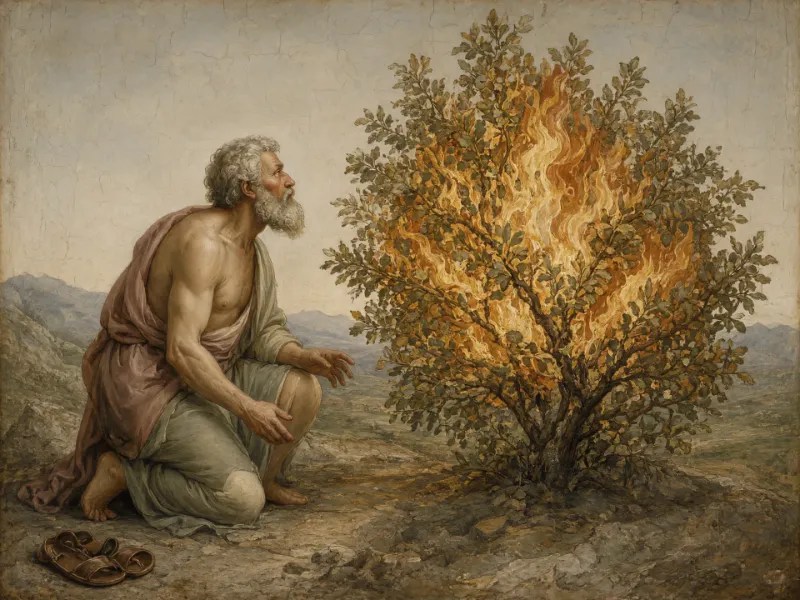
Moses asked God to kill him (Numbers 11:14-15), Jeremiah wished he had never been born (Jeremiah 20:18), and Jesus told three disciples in Gethsemane that his soul was “overwhelmed with sorrow to the point of death” (Mark 14:34). Paul wrote of “fears within” and of his own anxiety (2 Corinthians 7:5; Philippians 2:28). Moses was given seventy elders to share the load (Numbers 11:16-17), and Paul was comforted by the arrival of Titus (2 Corinthians 7:6).
Proverbs on the anxious heart and the crushed spirit

Proverbs 12:25
“Anxiety weighs down the heart, but a kind word cheers it up.”
Reflection: Anxiety here is a weight on the heart, and what the proverb sets against it is spoken: “a kind word.” The same chapter says “the tongue of the wise brings healing” (12:18).

Proverbs 13:12
“Hope deferred makes the heart sick, but a longing fulfilled is a tree of life.”
Reflection: The proverb names one thing that makes a heart sick: hope that is put off. Its second line sets a longing fulfilled against it and calls that “a tree of life.”

Proverbs 17:22
“A cheerful heart is good medicine, but a crushed spirit dries up the bones.”
Reflection: The state of the heart reaches the body here: cheerfulness works like medicine, and a crushed spirit “dries up the bones.” Proverbs 15:13 names one thing that crushes the spirit: “heartache crushes the spirit.”

Proverbs 18:14
“The human spirit can endure in sickness, but a crushed spirit who can bear?”
Reflection: The proverb sets sickness, which the human spirit can endure, against a crushed spirit. It asks who can bear a crushed spirit and leaves the question unanswered.
Moses, Job and Jeremiah wishing for death

Numbers 11:14-15
“I cannot carry all these people by myself; the burden is too heavy for me. If this is how you are going to treat me, please go ahead and kill me—if I have found favor in your eyes—and do not let me face my own ruin.”
Reflection: Moses says this after the Israelites wail for meat and complain that they see nothing but manna (11:4-6), and after the LORD becomes “exceedingly angry” (11:10). His complaint is about the people he leads: he did not conceive them or give them birth, yet he is told to carry them “as a nurse carries an infant” (11:12), and he cannot carry them by himself. The LORD answers the problem of leadership he named: seventy elders will receive some of the Spirit that is on Moses and “share the burden of the people with you so that you will not have to carry it alone” (11:16-17).

Job 3:25-26
“What I feared has come upon me; what I dreaded has happened to me. I have no peace, no quietness; I have no rest, but only turmoil.”
Reflection: Job speaks these lines after cursing the day of his birth (3:1) and asking why life is given to those “who long for death that does not come” (3:21). At the end of the chapter he names dread that has come true, “What I feared has come upon me,” and in place of peace, quietness and rest, “only turmoil.”

Jeremiah 20:18
“Why did I ever come out of the womb to see trouble and sorrow and to end my days in shame?”
Reflection: Jeremiah had been beaten and put in the stocks by the priest Pashhur (20:1-2), and says he is “ridiculed all day long” (20:7). In the verse right after “Sing to the LORD! Give praise to the LORD!” (20:13), he curses the day he was born (20:14), and then the man who brought his father the news, because “he did not kill me in the womb” (20:15-17).
Distress brought before God

1 Samuel 1:15-16
“‘Not so, my lord,’ Hannah replied, ‘I am a woman who is deeply troubled. I have not been drinking wine or beer; I was pouring out my soul to the LORD. Do not take your servant for a wicked woman; I have been praying here out of my great anguish and grief.’”
Reflection: Because the LORD had closed Hannah’s womb, her rival provoked her year after year until she wept and would not eat (1:6-7). Eli watched her lips move without sound and took her for drunk. She calls her prayer “pouring out my soul to the LORD,” and after Eli’s blessing she “ate something, and her face was no longer downcast” (1:18), before any son was born.
Psalm 77:2-4
“When I was in distress, I sought the Lord; at night I stretched out untiring hands, and I would not be comforted. I remembered you, God, and I groaned; I meditated, and my spirit grew faint. You kept my eyes from closing; I was too troubled to speak.”
Reflection: Asaph describes a sleepless night of distress in which he “would not be comforted,” and that remembering God brought groaning: “I remembered you, God, and I groaned.” The questions that follow are blunt: “Has his unfailing love vanished forever?” (77:8). In verse 11 he decides to remember the LORD’s deeds of long ago, and the psalm moves on to how God “redeemed your people” (77:15).

Psalm 102:4
“My heart is blighted and withered like grass; I forget to eat my food.”
Reflection: The heading describes the whole psalm: “A prayer of an afflicted person who has grown weak and pours out a lament before the LORD.” Along with forgetting to eat, the speaker says “I lie awake; I have become like a bird alone on a roof” (102:7). At verse 12 he turns from himself to God, who sits “enthroned forever.”

Psalm 143:7
“Answer me quickly, LORD; my spirit fails. Do not hide your face from me or I will be like those who go down to the pit.”
Reflection: David describes an enemy who “makes me dwell in the darkness like those long dead” and says “my spirit grows faint within me; my heart within me is dismayed” (143:3-4). Verse 7 asks for a quick answer before he becomes like “those who go down to the pit.” The next line asks, “Let the morning bring me word of your unfailing love” (143:8).

Psalm 30:5
“For his anger lasts only a moment, but his favor lasts a lifetime; weeping may stay for the night, but rejoicing comes in the morning.”
Reflection: David’s psalm for the dedication of the temple looks back on a rescue: “you lifted me out of the depths” (30:1). He admits that when he felt secure he said “I will never be shaken,” and that “when you hid your face, I was dismayed” (30:6-7). Verse 5 sets weeping for a night against rejoicing in the morning, and verse 11 says what the change looked like: “You turned my wailing into dancing.”
Jesus troubled, and his words on worry

Mark 14:33-34
“He took Peter, James and John along with him, and he began to be deeply distressed and troubled. ‘My soul is overwhelmed with sorrow to the point of death,’ he said to them. ‘Stay here and keep watch.’”
Reflection: In Gethsemane, Mark says, Jesus “began to be deeply distressed and troubled,” and he told Peter, James and John so. He asked them to keep watch while he prayed that the hour might pass from him (14:35). Three times he came back from praying and found them asleep (14:37-41).

Luke 10:41-42
“‘Martha, Martha,’ the Lord answered, ‘you are worried and upset about many things, but few things are needed—or indeed only one. Mary has chosen what is better, and it will not be taken away from her.’”
Reflection: Martha had opened her home to Jesus and was “distracted by all the preparations” while her sister Mary sat at his feet listening (10:38-40). When she asked him to tell Mary to help, he named her state, “worried and upset about many things,” and said Mary had chosen what is better.
Luke 21:34
“Be careful, or your hearts will be weighed down with carousing, drunkenness and the anxieties of life, and that day will close on you suddenly like a trap.”
Reflection: Jesus says this in his teaching about the coming of the Son of Man, when nations will be “in anguish and perplexity” and people “will faint from terror” (21:25-26). The warning lists “the anxieties of life” with carousing and drunkenness as things that weigh hearts down. Verse 36 adds what to do: “Be always on the watch, and pray.”

John 16:33
“I have told you these things, so that in me you may have peace. In this world you will have trouble. But take heart! I have overcome the world.”
Reflection: Jesus has just told the disciples that they will be scattered and leave him alone (16:32), and a few verses earlier that “you will weep and mourn while the world rejoices” but “your grief will turn to joy” (16:20). Verse 33 states plainly, “In this world you will have trouble.” The peace he offers is “in me,” and the reason to take heart is that he has overcome the world.
Paul’s fears and anxiety
2 Corinthians 7:5-7
“For when we came into Macedonia, we had no rest, but we were harassed at every turn—conflicts on the outside, fears within. But God, who comforts the downcast, comforted us by the coming of Titus, and not only by his coming but also by the comfort you had given him. He told us about your longing for me, your deep sorrow, your ardent concern for me, so that my joy was greater than ever.”
Reflection: Paul had left Troas with “no peace of mind” because he did not find Titus there (2:12-13), and here he picks up the story in Macedonia: “conflicts on the outside, fears within.” God, “who comforts the downcast,” comforted him through a person: Titus arrived, and brought news of the Corinthians’ longing, sorrow and concern for Paul, so that Paul’s joy “was greater than ever.”

2 Corinthians 11:28
“Besides everything else, I face daily the pressure of my concern for all the churches.”
Reflection: The verse follows Paul’s list of beatings, shipwrecks, dangers, hunger and sleepless nights (11:23-27). After all of those he names a pressure he faces daily, his concern for all the churches, and verse 29 explains it: “Who is weak, and I do not feel weak?”

Philippians 2:28
“Therefore I am all the more eager to send him, so that when you see him again you may be glad and I may have less anxiety.”
Reflection: Epaphroditus, sent by the Philippians to take care of Paul’s needs, had been ill and almost died, and was distressed that they had heard of it (2:25-27). Paul says God’s mercy to Epaphroditus spared him “sorrow upon sorrow,” and he sends him home so that the Philippians may be glad and Paul may have less anxiety.
A verse for how you feel
Choose how you feel today and read a verse from Scripture.
When anxiety overwhelms me, Your consolation delights my soul.
Get a verse each week
Thank you. Your first verse is on its way.
If nothing arrives in a few minutes, look in your spam or promotions folder.
Keep this for another day. A verse for how you feel has a page of its own, with our verses for each feeling.
Each verse is quoted from the Berean Standard Bible.


Leave a Reply