
 English
 Chinese
 Dutch
 Arabic
 Spanish
 Portuguese
 Russian
 French
 Italian
 German
 Japanese
The Bible speaks about being a mother through commands, through the stories of particular mothers, and through images that set God’s care beside a mother’s. Proverbs puts a mother’s teaching beside a father’s (Proverbs 1:8; 6:20), and in Isaiah 66:13 God comforts his people “as one whom his mother comforts.”
Among the mothers whose stories the Bible tells are Sarah (Genesis 21:1-2), the mother of Moses (Exodus 2:2-3), Hannah (1 Samuel 1:27-28), Mary (Luke 1:45; John 19:26-27) and Eunice, the mother of Timothy (2 Timothy 1:5). The law tells children to honour and revere their mothers (Exodus 20:12; Leviticus 19:3).
Teaching children
Deuteronomy 6:6-7
“And these words that I command you today shall be on your heart. You shall teach them diligently to your children, and shall talk of them when you sit in your house, and when you walk by the way, and when you lie down, and when you rise.”
Reflection: Moses speaks to all Israel, after the words “Hear, O Israel: The Lord our God, the Lord is one” (6:4) and the command to love the Lord with all the heart (6:5). The command to teach “your children” places the teaching in ordinary hours: sitting at home, walking, lying down and getting up.
Proverbs 6:20-21
“My son, keep your father’s commandment, and forsake not your mother’s teaching. Bind them on your heart always; tie them around your neck.”
Reflection: The father’s commandment and the mother’s teaching stand side by side here, as they do at the opening of the book’s instruction in Proverbs 1:8. The next verse echoes Deuteronomy 6:7: “When you walk, they will lead you; when you lie down, they will watch over you; and when you awake, they will talk with you.”
Proverbs 22:6
“Train up a child in the way he should go; even when he is old he will not depart from it.”
Reflection: The saying is addressed to whoever raises a child and names neither parent. It speaks of training a child “in the way he should go” and of what remains when he is old.
2 Timothy 1:5
“I am reminded of your sincere faith, a faith that dwelt first in your grandmother Lois and your mother Eunice and now, I am sure, dwells in you as well.”
Reflection: Paul writes to Timothy and traces his faith back through two women by name, his grandmother Lois and his mother Eunice. Acts 16:1 describes Timothy as “the son of a Jewish woman who was a believer, but his father was a Greek.” Later in the letter Paul reminds him “how from childhood you have been acquainted with the sacred writings” (2 Timothy 3:15).
The wife and mother of Proverbs 31
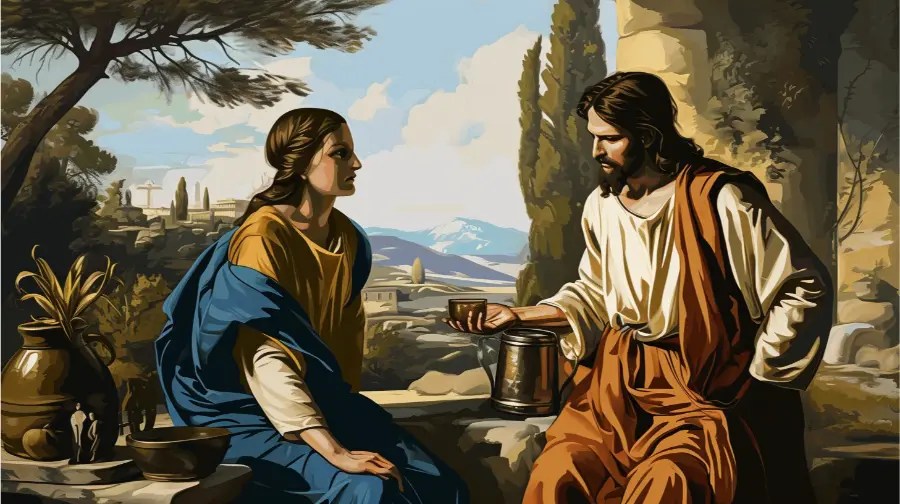
Proverbs 31:26
“She opens her mouth with wisdom, and the teaching of kindness is on her tongue.”
Reflection: Proverbs 31 opens with “an oracle that his mother taught him,” the words of King Lemuel’s mother to her son (31:1). The chapter closes with a separate portrait of “an excellent wife” (31:10-31), a mother whose children appear in verse 28, and this verse describes her speech: wisdom and “the teaching of kindness.”
Proverbs 31:25
“Strength and dignity are her clothing, and she laughs at the time to come.”
Reflection: The mother in this poem makes clothes for her family and sells linen garments. Verse 22 describes her own clothes as “fine linen and purple.” The same image now describes her character, and verse 26 turns to the kindness in her speech.
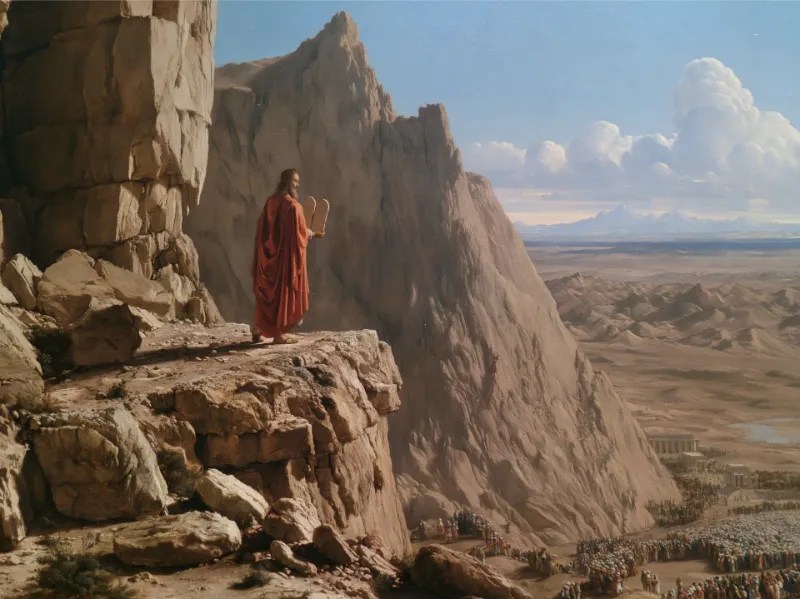
Proverbs 31:28-29
“Her children rise up and call her blessed; her husband also, and he praises her: ‘Many women have done excellently, but you surpass them all.’”
Reflection: Her children speak first, then her husband. The praise comes after a long list of her work: buying a field, planting a vineyard, trading linen, rising “while it is yet night” to feed her household (31:15-24). The chapter ends by asking that “her works praise her in the gates” (31:31).
Mothers in the Bible’s stories
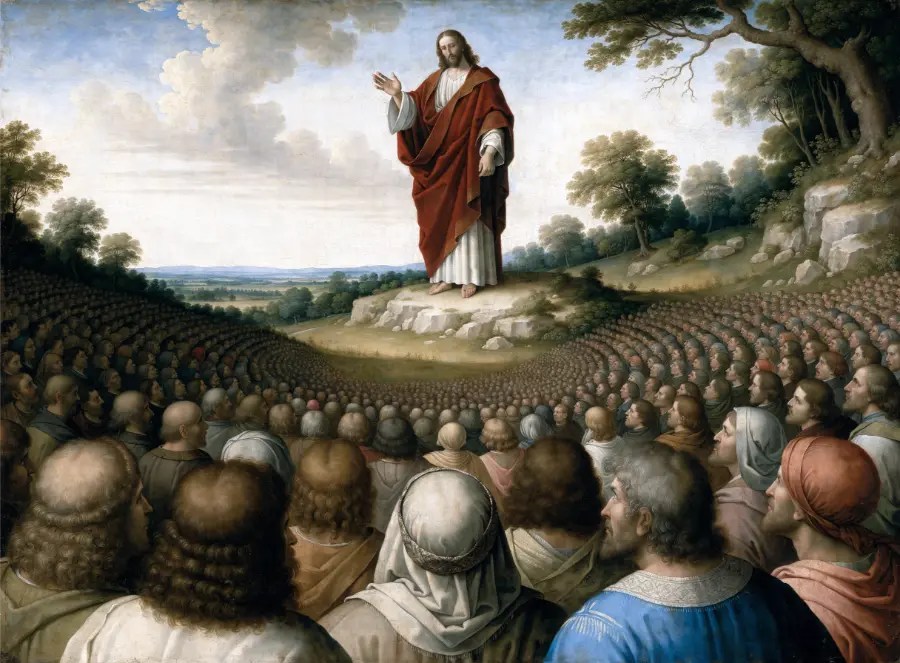
Genesis 21:1-2
“The Lord visited Sarah as he had said, and the Lord did to Sarah as he had promised. And Sarah conceived and bore Abraham a son in his old age at the time of which God had spoken to him.”
Reflection: The Lord had told Abraham that Sarah would have a son, though she was past the age of bearing, and Sarah laughed to herself when she heard it (Genesis 18:10-14). When Isaac is born she names the laughter again: “God has made laughter for me” (21:6). Her next words are about nursing: “Who would have said to Abraham that Sarah would nurse children?” (21:7).
Exodus 2:2-3
“The woman conceived and bore a son, and when she saw that he was a fine child, she hid him three months. When she could hide him no longer, she took for him a basket made of bulrushes and daubed it with bitumen and pitch. She put the child in it and placed it among the reeds by the river bank.”
Reflection: Pharaoh had ordered Hebrew boys thrown into the Nile, and this mother hides her son for three months before placing him in a basket at the river’s edge. When Pharaoh’s daughter finds the child, his sister offers to fetch a Hebrew nurse, and the mother is paid to nurse her own son (2:7-9). Exodus 6:20 gives her name, Jochebed.
1 Samuel 1:27-28
“For this child I prayed, and the Lord has granted me my petition that I made to him. Therefore I have lent him to the Lord. As long as he lives, he is lent to the Lord.”
Reflection: Hannah had prayed at Shiloh for a son and vowed to give him to the Lord. After weaning Samuel she brings him to Eli at the house of the Lord and keeps the vow. The next chapter adds that she made him “a little robe” and took it to him each year when she went up to sacrifice (1 Samuel 2:19).
Luke 1:45
“And blessed is she who believed that there would be a fulfillment of what was spoken to her from the Lord.”
Reflection: Elizabeth, pregnant herself, says these words to Mary, whom she has just greeted as “the mother of my Lord” (1:43). The blessing is for Mary’s belief that what the Lord had spoken to her would be fulfilled.
John 19:26-27
“When Jesus saw his mother and the disciple whom he loved standing nearby, he said to his mother, ‘Woman, behold, your son!’ Then he said to the disciple, ‘Behold, your mother!’ And from that hour the disciple took her to his own home.”
Reflection: From the cross, Jesus sees his mother standing with the disciple whom he loved and gives each to the other. John adds that “from that hour the disciple took her to his own home.” Also at the cross were “his mother’s sister, Mary the wife of Clopas, and Mary Magdalene” (19:25).
God and the apostles set beside a mother
Isaiah 66:13
“As one whom his mother comforts, so I will comfort you; you shall be comforted in Jerusalem.”
Reflection: The verses before this one picture Jerusalem as a mother who nurses her children, carries them on her hip and bounces them on her knees (66:11-12). Then God speaks of himself in the same terms: he will comfort his people as a mother comforts her child.
Isaiah 49:15
“Can a woman forget her nursing child, that she should have no compassion on the son of her womb? Even these may forget, yet I will not forget you.”
Reflection: Zion has just complained, “The Lord has forsaken me; my Lord has forgotten me” (49:14). God answers with a question, “Can a woman forget her nursing child?”, and then goes beyond the comparison: “Even these may forget, yet I will not forget you.”
1 Thessalonians 2:7
“But we were gentle among you, like a nursing mother taking care of her own children.”
Reflection: Paul, Silvanus and Timothy describe how they behaved in Thessalonica. They could have made demands as apostles, but they were gentle, “like a nursing mother taking care of her own children,” and shared their own lives as well as the gospel (2:8). A few verses later they use the father’s image too: “like a father with his children, we exhorted each one of you” (2:11).
Children, birth and the womb
Psalm 139:13-14
“For you formed my inward parts; you knitted me together in my mother’s womb. I praise you, for I am fearfully and wonderfully made. Wonderful are your works; my soul knows it very well.”
Reflection: David’s psalm places God at work in the womb, forming and knitting together a person before birth. The mother’s womb is where the making happens, and the praise in verse 14 is directed to God for the result.
Psalm 127:3
“Behold, children are a heritage from the Lord, the fruit of the womb a reward.”
Reflection: The psalm is headed “Of Solomon” and opens with the house the Lord must build (127:1). Children are called a heritage and a reward from the Lord, and the next verses compare them to arrows in a warrior’s hand.
John 16:21
“When a woman is giving birth, she has sorrow because her hour has come, but when she has delivered the baby, she no longer remembers the anguish, for joy that a human being has been born into the world.”
Reflection: Jesus speaks to his disciples before his arrest about the sorrow they will feel when he leaves them for “a little while” (16:16). He takes childbirth as the example of anguish that gives way to joy, and applies it: “So also you have sorrow now, but I will see you again, and your hearts will rejoice” (16:22).
Honouring a mother
Exodus 20:12
“Honor your father and your mother, that your days may be long in the land that the Lord your God is giving you.”
Reflection: Among the commandments God speaks in Exodus 20, this one names the mother alongside the father and attaches a promise of long life in the land. Ephesians 6:2-3 quotes it and repeats the promise.
Leviticus 19:3
“Every one of you shall revere his mother and his father, and you shall keep my Sabbaths: I am the Lord your God.”
Reflection: This command comes in the chapter that begins “You shall be holy, for I the Lord your God am holy” (19:2). Here the mother is named before the father, and reverence for both is set next to keeping the Sabbath.
Proverbs 23:22
“Listen to your father who gave you life, and do not despise your mother when she is old.”
Reflection: The proverb looks ahead to a mother’s old age and warns against despising her then. Three verses later the same passage returns to her: “let her who bore you rejoice” (23:25).
Proverbs 30:11
“There are those who curse their fathers and do not bless their mothers.”
Reflection: Agur describes children who curse one parent and withhold a blessing from the other. He returns to both parents in verse 17 with a warning about the eye that “mocks a father and scorns to obey a mother.”
Ephesians 6:1-2
“Children, obey your parents in the Lord, for this is right. ‘Honor your father and mother’ (this is the first commandment with a promise).”
Reflection: Paul quotes the commandment of Exodus 20:12 to children in the church at Ephesus and notes that it is “the first commandment with a promise.” He goes on to address fathers in verse 4, telling them not to provoke their children to anger.


Leave a Reply