
 English
 Chinese
 Dutch
 Arabic
 Spanish
 Portuguese
 Russian
 French
 Italian
 German
 Japanese
The Bible says that those who do not believe in Christ stand condemned already, and that God wants them to be saved.
John 3:18 and 1 Timothy 2:4 state those two things. 2 Corinthians 4:4 speaks of minds blinded by “the god of this age”, and Mark 9:24 shows unbelief inside a believer. Letters to the churches tell Christians how to live among unbelievers (1 Peter 2:12) and what a believer already married to one should do (1 Corinthians 7:12-13).
What the New Testament says about those who do not believe
John 3:18
“Whoever believes in him is not condemned, but whoever does not believe stands condemned already because they have not believed in the name of God’s one and only Son.”
Reflection: The verse comes from John 3, after Nicodemus, a Pharisee on the Jewish ruling council, came to Jesus at night (3:1-2). It follows “For God so loved the world” (3:16) and the statement that God sent his Son “not to condemn the world, but to save the world through him” (3:17). Condemnation here is a present state, “already”, and verse 19 gives the verdict: “Light has come into the world, but people loved darkness instead of light because their deeds were evil.”

John 3:16
“For God so loved the world that he gave his one and only Son, that whoever believes in him shall not perish but have eternal life.”
Reflection: In John’s account of Nicodemus’s visit, the world is the object of God’s love, and the promise of eternal life extends to whoever believes in his Son. Verse 18 takes up the other side of that promise when it says that whoever does not believe “stands condemned already.”

John 3:36
“Whoever believes in the Son has eternal life, but whoever rejects the Son will not see life, for God’s wrath remains on them.”
Reflection: The last verse of John 3 sets belief against rejection. The Greek verb behind “rejects” is apeitheo, which Strong’s defines as to disobey, be disobedient or refuse to believe. The believer “has” eternal life already; the one who rejects the Son “will not see life”, and God’s wrath “remains” on them.

2 Corinthians 4:4
“The god of this age has blinded the minds of unbelievers, so that they cannot see the light of the gospel that displays the glory of Christ, who is the image of God.”
Reflection: Paul is explaining why some who hear his gospel do not see it: it is “veiled to those who are perishing” (4:3). The NIV’s lower-case “god” marks the one who blinds them as someone other than God; later in the same letter Paul writes that “Satan himself masquerades as an angel of light” (11:14). In verse 6 the light reaches believers from the God who said, “Let light shine out of darkness”, and who “made his light shine in our hearts”.

Ephesians 4:18
“They are darkened in their understanding and separated from the life of God because of the ignorance that is in them due to the hardening of their hearts.”
Reflection: Paul describes how “the Gentiles” live, “in the futility of their thinking”, and tells his readers they “must no longer live” that way (4:17). The verse traces a chain backwards: separation from the life of God comes from ignorance, and the ignorance from “the hardening of their hearts”. Verse 19 describes where the chain ends, with people who have “lost all sensitivity” and given themselves over to impurity and greed.

1 Corinthians 1:18
“For the message of the cross is foolishness to those who are perishing, but to us who are being saved it is the power of God.”
Reflection: Paul divides those who hear the message of the cross into “those who are perishing” and “us who are being saved”, and the NIV words both as something still under way. The same message is foolishness to one group and the power of God to the other. Verse 23 names two forms the rejection takes: Christ crucified is “a stumbling block to Jews and foolishness to Gentiles”.

Revelation 21:8
“But the cowardly, the unbelieving, the vile, the murderers, the sexually immoral, those who practice magic arts, the idolaters and all liars—they will be consigned to the fiery lake of burning sulfur. This is the second death.”
Reflection: The verse belongs to John’s vision of a new heaven and a new earth (21:1). Just before it, God offers “water without cost from the spring of the water of life” to the thirsty (21:6). “The unbelieving” stand second in the list of those shut out, after “the cowardly” and before murderers and idolaters, and their end is called “the second death”.
What God wants for those who do not believe

2 Peter 3:9
“The Lord is not slow in keeping his promise, as some understand slowness. Instead he is patient with you, not wanting anyone to perish, but everyone to come to repentance.”
Reflection: Peter is replying to scoffers who ask, “Where is this ‘coming’ he promised?” (3:4). He says the delay is patience: God is “not wanting anyone to perish, but everyone to come to repentance”. The patience is “with you”, the letter’s own readers, and the next verse adds that the day of the Lord “will come like a thief”.
1 Timothy 2:4
“Who wants all people to be saved and to come to a knowledge of the truth.”
Reflection: Paul gives God’s wish as the reason prayer for “all people” is good (2:1-3). Verses 5 and 6 rest it on “one mediator between God and mankind, the man Christ Jesus, who gave himself as a ransom for all people.”

Acts 17:30
“In the past God overlooked such ignorance, but now he commands all people everywhere to repent.”
Reflection: Paul is speaking at the meeting of the Areopagus in Athens, where he had found an altar inscribed “to an unknown god” (17:22-23). He calls their worship of images of gold, silver and stone ignorance that God “overlooked” in the past (17:29), and says the command now reaches “all people everywhere”. Verse 31 gives the reason: God “has set a day when he will judge the world” by a man he has appointed, and has given proof “by raising him from the dead”.
1 Timothy 1:13
“Even though I was once a blasphemer and a persecutor and a violent man, I was shown mercy because I acted in ignorance and unbelief.”
Reflection: Paul describes his own life before he believed: “a blasphemer and a persecutor and a violent man”. He says he was shown mercy because he “acted in ignorance and unbelief”. Verse 16 gives that mercy a purpose beyond Paul himself, to display Christ’s “immense patience as an example for those who would believe in him”.
Unbelief in people who already believe
Mark 9:24
“Immediately the boy’s father exclaimed, ‘I do believe; help me overcome my unbelief!’”
Reflection: A father has brought his son, whom a spirit has thrown “into fire or water to kill him” since childhood, and asks Jesus, “if you can do anything, take pity on us” (9:21-22). Jesus repeats the “if” back to him and says, “Everything is possible for one who believes.” The father’s reply claims belief and asks for help with unbelief in one sentence, and in the next verses Jesus drives the spirit out of the boy (9:25-27).

Hebrews 3:12
“See to it, brothers and sisters, that none of you has a sinful, unbelieving heart that turns away from the living God.”
Reflection: The warning is addressed to “brothers and sisters”, people already in the church, and the next verse gives them a shared remedy: “encourage one another daily” (3:13). The example is the generation Moses led out of Egypt, and the chapter ends with the verdict on them: “they were not able to enter, because of their unbelief” (3:19).
Praying for unbelievers and telling them the gospel
1 Timothy 2:1-2
“I urge, then, first of all, that petitions, prayers, intercession and thanksgiving be made for all people— for kings and all those in authority, that we may live peaceful and quiet lives in all godliness and holiness.”
Reflection: Paul places this request “first of all” among his instructions to Timothy. It lists petitions, prayers, intercession and thanksgiving, and extends them to “all people”, naming kings and all those in authority. The stated aim is that believers “may live peaceful and quiet lives in all godliness and holiness”, and verse 3 says such prayer “is good, and pleases God our Savior”.
Romans 10:1
“Brothers and sisters, my heart’s desire and prayer to God for the Israelites is that they may be saved.
Reflection: Paul is praying for his own people, the Israelites, many of whom had not “accepted the good news” (10:16). The chapter before opens with his “great sorrow and unceasing anguish” over them, to the point of wishing himself “cursed and cut off from Christ” for their sake (9:2-3). In the next verse he credits them with zeal for God that is “not based on knowledge” (10:2).
Romans 10:14
“How, then, can they call on the one they have not believed in? And how can they believe in the one of whom they have not heard? And how can they hear without someone preaching to them?”
Reflection: The questions run backwards from salvation to the messenger: calling on the Lord needs belief, belief needs hearing, hearing needs a preacher, and verse 15 adds that a preacher must be sent. Verse 16 adds that hearing does not guarantee belief, since “not all the Israelites accepted the good news”. Paul’s conclusion is in verse 17: “faith comes from hearing the message, and the message is heard through the word about Christ.”

Romans 1:16
“For I am not ashamed of the gospel, because it is the power of God that brings salvation to everyone who believes: first to the Jew, then to the Gentile.”
Reflection: Writing to believers in Rome, Paul explains why he is eager to preach there. In verse 14 he says he owes it “both to Greeks and non-Greeks” to preach the gospel. His reason is that God saves everyone who believes the message, whether Jew or Gentile.
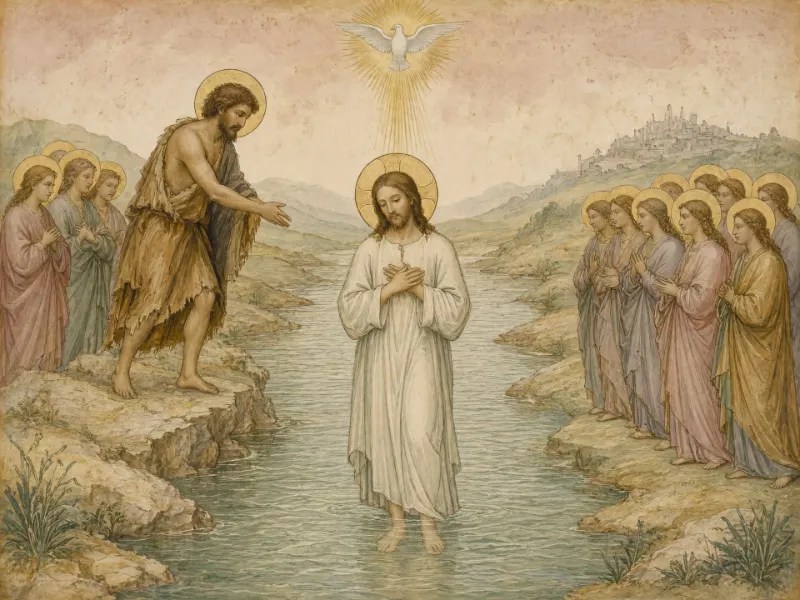
Matthew 28:19-20
“Therefore go and make disciples of all nations, baptizing them in the name of the Father and of the Son and of the Holy Spirit, and teaching them to obey everything I have commanded you. And surely I am with you always, to the very end of the age.”
Reflection: In the closing verses of Matthew, the risen Jesus sends his disciples to “all nations” on the ground that “all authority in heaven and on earth has been given to me” (28:18). The command has three parts: make disciples, baptize them, and teach them to obey. The promise “I am with you always” is attached to that task and ends the Gospel.
Living among unbelievers, and marriage to one

1 Peter 2:12
“Live such good lives among the pagans that, though they accuse you of doing wrong, they may see your good deeds and glorify God on the day he visits us.”
Reflection: Peter writes to believers he calls “foreigners and exiles” (2:11), and “the pagans” are the neighbours among whom they live. The verse assumes the accusations will come; its hope is that the accusers will see good deeds and “glorify God on the day he visits us”. Jesus gives the same pattern in Matthew 5:16: “let your light shine before others, that they may see your good deeds and glorify your Father in heaven.”
Colossians 4:5-6
“Be wise in the way you act toward outsiders; make the most of every opportunity. Let your conversation be always full of grace, seasoned with salt, so that you may know how to answer everyone.”
Reflection: Paul writes as a prisoner (“I am in chains”, 4:3) and asks the Colossians to pray that God will “open a door for our message”. He then turns to their own dealings with “outsiders”: wisdom in conduct, use of every opportunity, and speech “full of grace, seasoned with salt”. The purpose he gives is practical: “so that you may know how to answer everyone”.
2 Corinthians 6:14
“Do not be yoked together with unbelievers. For what do righteousness and wickedness have in common? Or what fellowship can light have with darkness?”
Reflection: Paul follows the command with five questions that set righteousness against wickedness, light against darkness, Christ against Belial, believer against unbeliever, and the temple of God against idols (6:14-16). A yoke joins two animals to pull together, and the passage names no particular partnership to which the rule applies. Verse 17 adds the call “Come out from them and be separate”.
1 Corinthians 7:12-13
“To the rest I say this (I, not the Lord): If any brother has a wife who is not a believer and she is willing to live with him, he must not divorce her. And if a woman has a husband who is not a believer and he is willing to live with her, she must not divorce him.”
Reflection: Paul marks this as his own instruction: “I, not the Lord”. A believer married to an unbeliever who is willing to stay must not divorce, and verse 14 gives the reason, that “the unbelieving husband has been sanctified through his wife” and the children are “holy”. If the unbelieving partner leaves, “let it be so” (7:15).


Leave a Reply