
 English
 Chinese
 Dutch
 Arabic
 Spanish
 Portuguese
 Russian
 French
 Italian
 German
 Japanese
The Bible describes focus as attention held on one aim, whether that aim is Jesus, the things above, the path ahead or a prize. Hebrews 12:1-2 tells runners to look to Jesus, Colossians 3:1-2 says “Set your minds on things that are above”, and Psalm 27:4 and Luke 10:41-42 turn on “one thing”.
The Bible sets distraction and a divided mind against it: Martha “distracted with much serving” (Luke 10:40), the saying “No one can serve two masters” (Matthew 6:24), and the “double-minded man, unstable in all his ways” (James 1:8). Proverbs 4:27 and Joshua 1:7 both warn against turning to the right or the left.
Where the eyes are fixed
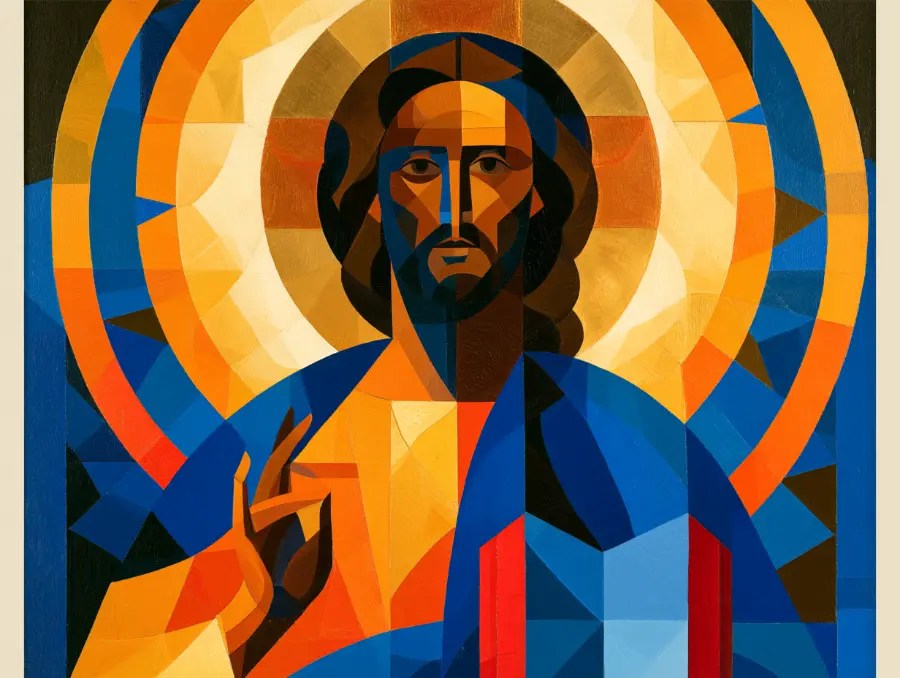
Hebrews 12:1-2
“Therefore, since we are surrounded by so great a cloud of witnesses, let us also lay aside every weight, and sin which clings so closely, and let us run with endurance the race that is set before us, looking to Jesus, the founder and perfecter of our faith, who for the joy that was set before him endured the cross, despising the shame, and is seated at the right hand of the throne of God.”
Reflection: The “cloud of witnesses” are the people chapter 11 has just listed, who were “commended through their faith” yet “did not receive what was promised” (Hebrews 11:39). The Greek verb behind “looking to” is aphorao, which Strong’s glosses as “to fix one’s eyes upon.” Jesus himself endured the cross “for the joy that was set before him”, and the next verse gives the reason for fixing on him: “so that you may not grow weary or fainthearted.”
2 Corinthians 4:18
“as we look not to the things that are seen but to the things that are unseen. For the things that are seen are transient, but the things that are unseen are eternal.”
Reflection: In the ESV this verse completes a sentence that begins in verse 17: the “light momentary affliction is preparing for us an eternal weight of glory beyond all comparison, as we look not to the things that are seen.” Paul is writing about the wear of his ministry, an “outer self” that “is wasting away” while the inner self “is being renewed day by day” (verse 16). Looking at the unseen is how he explains why he and his companions “do not lose heart.”
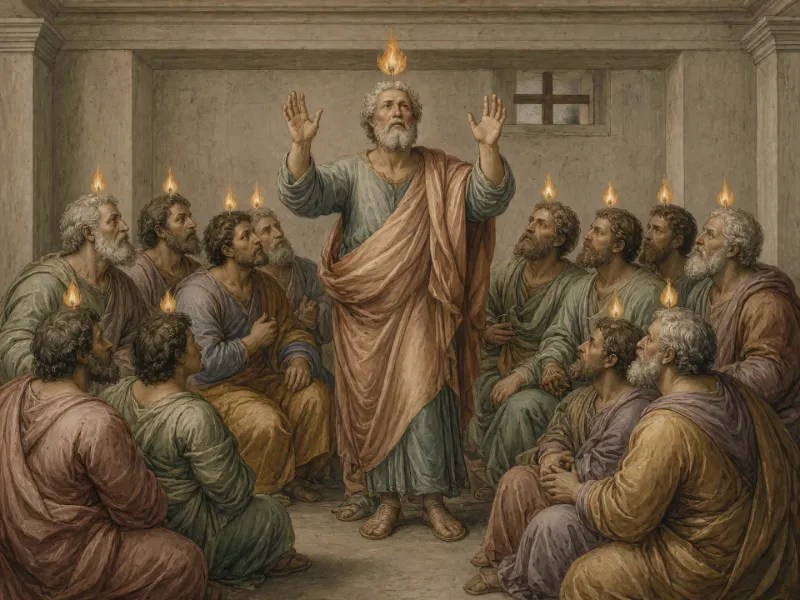
Colossians 3:1-2
“If then you have been raised with Christ, seek the things that are above, where Christ is, seated at the right hand of God. Set your minds on things that are above, not on things that are on earth.”
Reflection: The command rests on something Paul says has already happened: the readers “have been raised with Christ.” It follows his challenge to rules like “Do not handle, Do not taste, Do not touch” (Colossians 2:21), which he says are “of no value in stopping the indulgence of the flesh.” Instead of those rules he gives a direction for the mind, and verse 3 supplies the reason: “your life is hidden with Christ in God.”
Psalm 16:8
“I have set the LORD always before me; because he is at my right hand, I shall not be shaken.”
Reflection: David speaks of keeping the Lord in front of him at all times, and the result he names is steadiness: “I shall not be shaken.” The verses after it move from that steadiness to gladness and security, “my flesh also dwells secure.” Peter quotes this psalm in Acts 2:25-28 as David speaking about Jesus, in the Greek wording “I saw the Lord always before me.”
One thing instead of many

Psalm 27:4
“One thing have I asked of the LORD, that will I seek after: that I may dwell in the house of the LORD all the days of my life, to gaze upon the beauty of the LORD and to inquire in his temple.”
Reflection: The psalm opens with threats: evildoers who “assail me to eat up my flesh” and an army encamped against the writer (verses 2-3). Among all that, David names a single request, to live in the Lord’s house and “gaze upon the beauty of the Lord.” Verse 5 gives the reason the house matters to him: “he will hide me in his shelter in the day of trouble.”

Luke 10:41-42
“But the Lord answered her, ‘Martha, Martha, you are anxious and troubled about many things, but one thing is necessary. Mary has chosen the good portion, which will not be taken away from her.’”
Reflection: Martha has welcomed Jesus into her house, and her sister Mary sits at his feet listening. Luke says Martha “was distracted with much serving” (verse 40), using perispao, to be pulled away or over-occupied. When she asks Jesus to send Mary to help, he names her many worries, sets “one thing” against them, and declines to take Mary’s place at his feet away from her.

Philippians 3:13-14
“Brothers, I do not consider that I have made it my own. But one thing I do: forgetting what lies behind and straining forward to what lies ahead, I press on toward the goal for the prize of the upward call of God in Christ Jesus.”
Reflection: Paul has just said he counts everything as loss “because of the surpassing worth of knowing Christ Jesus my Lord” (verse 8), and that he has not yet obtained what he wants. His one thing has two movements, forgetting and straining forward, and a runner’s goal: “the prize of the upward call of God in Christ Jesus.” In verse 15 he counts himself in: “Let those of us who are mature think this way.”
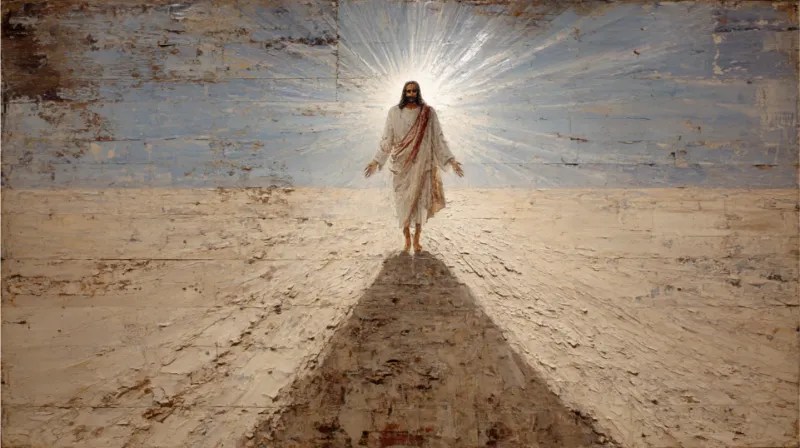
Matthew 6:22-23
“The eye is the lamp of the body. So, if your eye is healthy, your whole body will be full of light, but if your eye is bad, your whole body will be full of darkness. If then the light in you is darkness, how great is the darkness!”
Reflection: Jesus says this in the Sermon on the Mount, between “where your treasure is, there your heart will be also” (verse 21) and “No one can serve two masters” (verse 24). The word translated “healthy” is haplous, which means single, clear, sincere or sound. A bad eye, by contrast, leaves the whole body “full of darkness.”

Matthew 6:33
“But seek first the kingdom of God and his righteousness, and all these things will be added to you.”
Reflection: The command comes near the end of a passage on anxiety about food and clothing, with the birds that do not sow and the lilies that do not spin (verses 26-30). Jesus does not call those needs unimportant: “your heavenly Father knows that you need them all” (verse 32). He puts them in order, with the kingdom first and the rest “added”, and the next verse adds, “do not be anxious about tomorrow.”
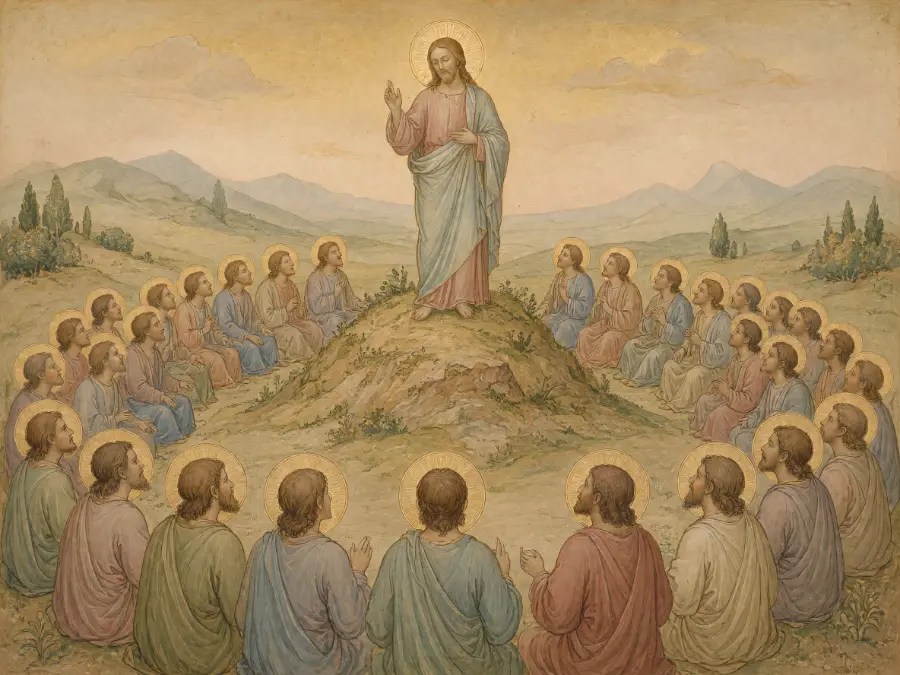
James 1:6-8
“But let him ask in faith, with no doubting, for the one who doubts is like a wave of the sea that is driven and tossed by the wind. For that person must not suppose that he will receive anything from the Lord; he is a double-minded man, unstable in all his ways.”
Reflection: The setting is trials and the request for wisdom, which God “gives generously to all without reproach” (verse 5). The person who asks while doubting is compared to a wave driven by the wind, and James calls him dipsuchos, double-minded. James uses the same word again in 4:8, where the remedy is “Draw near to God” and “purify your hearts, you double-minded.”
Not turning aside

Proverbs 4:25-27
“Let your eyes look directly forward, and your gaze be straight before you. Ponder the path of your feet; then all your ways will be sure. Do not swerve to the right or to the left; turn your foot away from evil.”
Reflection: A father tells his son to “be attentive to my words” (verse 20), then works through the whole person: “Keep your heart with all vigilance” (verse 23), put away crooked speech (verse 24), keep the eyes straight ahead and the feet on the path. The last line names what the path is to avoid: “turn your foot away from evil.”

Joshua 1:8
“This Book of the Law shall not depart from your mouth, but you shall meditate on it day and night, so that you may be careful to do according to all that is written in it. For then you will make your way prosperous, and then you will have good success.”
Reflection: The Lord speaks to Joshua as he is about to lead the people into the land promised to their fathers (verse 6). The verse before gives the same picture as Proverbs 4:27: “Do not turn from it to the right hand or to the left.” Here the focus is a book: Joshua is to meditate on the law day and night so that he does what it says, and verse 9 adds that “the Lord your God is with you wherever you go.”

1 Corinthians 9:24-26
“Do you not know that in a race all the runners run, but only one receives the prize? So run that you may obtain it. Every athlete exercises self-control in all things. They do it to receive a perishable wreath, but we an imperishable. So I do not run aimlessly; I do not box as one beating the air.”
Reflection: Paul has just said he has “become all things to all people” for the sake of the gospel (verses 22-23). He turns to the runner and the boxer: training takes self-control in everything, and it is aimed at a prize. “I do not run aimlessly” is his own practice, and verse 27 names the risk he is guarding against, that “after preaching to others I myself should be disqualified.”

2 Timothy 2:4
“No soldier gets entangled in civilian pursuits, since his aim is to please the one who enlisted him.”
Reflection: Paul writes to Timothy as “my child” and asks him to “share in suffering as a good soldier of Christ Jesus” (verse 3). The soldier is the first of three pictures, followed by the athlete who competes by the rules and the hard-working farmer (verses 5-6). The soldier’s single aim is “to please the one who enlisted him”, and Paul ends with “Think over what I say.”
Where the mind rests

Isaiah 26:3
“You keep him in perfect peace whose mind is stayed on you, because he trusts in you.”
Reflection: The verse is part of a song that, the chapter says, “will be sung in the land of Judah” (verse 1), about a strong city whose walls are salvation. God keeps in peace the one whose mind is stayed on him, and the verse gives the reason: “because he trusts in you.” Verse 4 turns that into a command, “Trust in the Lord forever”, and gives its ground: “the Lord God is an everlasting rock.”
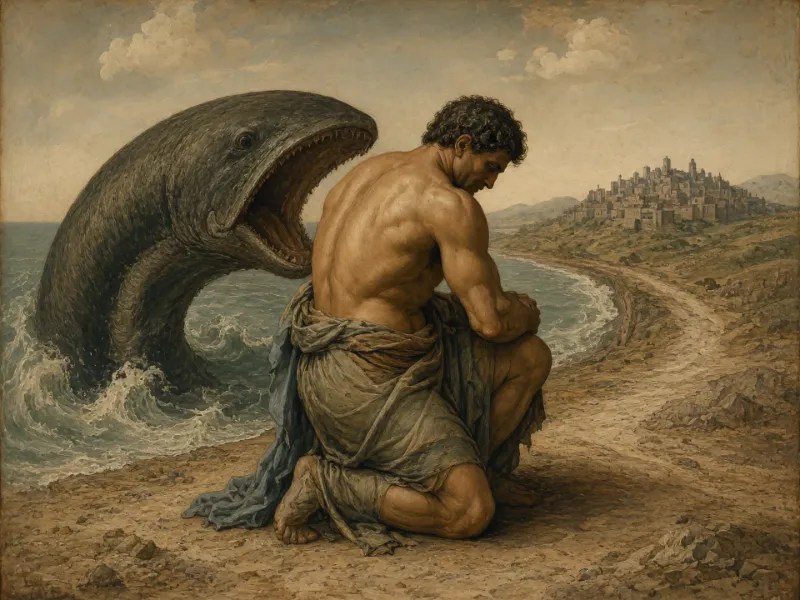
Philippians 4:8
“Finally, brothers, whatever is true, whatever is honorable, whatever is just, whatever is pure, whatever is lovely, whatever is commendable, if there is any excellence, if there is anything worthy of praise, think about these things.”
Reflection: Paul gives this list right after telling the Philippians to bring their requests to God instead of being anxious, with the promise that “the peace of God” will “guard your hearts and your minds in Christ Jesus” (verses 6-7). Verse 8 then lists what to think about. Verse 9 turns thinking into doing: “practice these things, and the God of peace will be with you.”
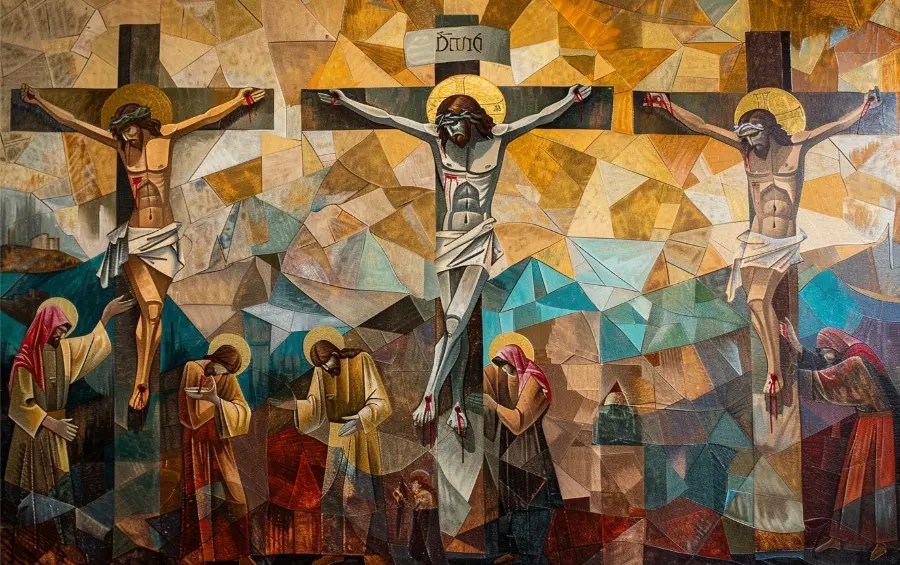
1 Peter 1:13
“Therefore, preparing your minds for action, and being sober-minded, set your hope fully on the grace that will be brought to you at the revelation of Jesus Christ.”
Reflection: The “therefore” points back to verses 10-12, where the prophets “searched and inquired carefully” about this salvation and angels “long to look” into it. Peter asks his readers for a prepared and sober mind with its hope set “fully” on the grace still to come. He repeats the call “Be sober-minded; be watchful” in 5:8, where the reason is an adversary who “prowls around like a roaring lion.”


Leave a Reply