
 English
  Chinese
  Dutch
Dutch  Arabic
  Spanish
  Portuguese
  Russian
  French
  Italian
  German
  Japanese
 Category 1: The Sacred Permission to Grieve
This collection of verses validates the raw, honest, and necessary experience of sorrow. It frames mourning not as a weakness or a failure of faith, but as a sacred and human response to loss.
Matthew 5:4
“Blessed are those who mourn, for they will be comforted.”
Reflection: This is not a command to seek out sorrow, but a profound validation for those who are already in its grip. It bestows honor upon the act of grieving, framing it not as a spiritual deficit, but as a path to receiving divine comfort. The integrity of our emotional life is affirmed here; we are not called to suppress our pain but to move through it honestly, with the deep assurance that our tears create the very space that God has promised to fill with His solace.

John 11:35
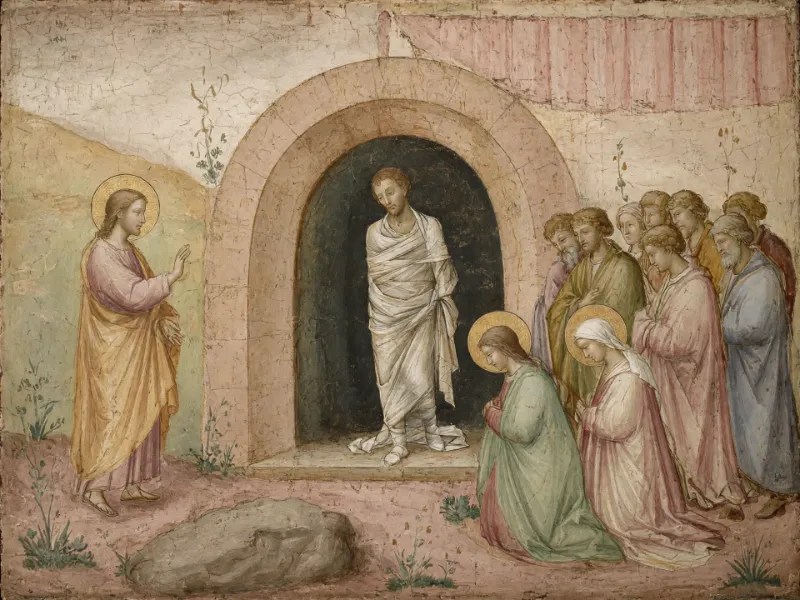
“Jesus wept.”
Reflection: In these two words, we find the most complete permission to grieve. The Son of God, faced with the tomb of a friend and the sorrow of those he loved, did not offer a detached theological lecture. He entered into their pain and wept with them. This reveals a God who doesn’t stand aloof from our suffering but is intimately acquainted with it, sanctifying our tears with His own. Our grief is never foreign to Him.

Psalm 34:18
“The LORD is close to the brokenhearted and saves those who are crushed in spirit.”
Reflection: This verse speaks to the nearness of God not in our moments of strength, but in our deepest fragmentation. A broken heart is not a sign of God’s absence but a signal of His imminent presence. There is a particular tenderness God reserves for the soul that is “crushed,” reminding us that our most profound wounds are the very places He comes to meet us with saving intimacy.

Ecclesiastes 3:1, 4
“There is a time for everything, and a season for every activity under the heavens… a time to weep and a time to laugh, a time to mourn and a time to dance.”
Reflection: Grief is given its proper place in the rhythm of a full life. This isn’t about rushing the process, but about understanding that mourning is a legitimate and necessary season. It gives us permission to fully inhabit our sorrow without guilt, knowing that just as seasons change in nature, the seasons of our soul are also ordained and understood by our Creator. Weeping is as sacred a time as laughing.

Psalm 6:6
“I am weary with my moaning; all night I flood my bed with weeping and drench my couch with tears.”
Reflection: Here is the raw, unfiltered language of profound grief. This verse gives voice to the physical and emotional exhaustion that sorrow brings. It is a powerful affirmation that there is space within our relationship with God for this kind of gut-wrenching lament. It shows us that expressing the depths of our anguish is a form of prayer, a desperate and holy cry from a soul overwhelmed.

Lamentations 3:20-21
“I well remember them, and my soul is downcast within me. Yet this I call to mind and therefore I have hope.”
Reflection: This passage models the courageous tension of healthy mourning. It does not deny the pain—”my soul is downcast.” The trauma is remembered and its weight is felt. Yet, it shows the capacity of the human spirit, by God’s grace, to consciously pivot toward hope, even while the ache of memory persists. It is an act of will, a choice to hold pain in one hand and promise in the other.
Category 2: Divine Presence in the Depths
These verses are anchors, reminding us that we are never truly alone in our sorrow. They speak of a God who walks with us through the darkest valleys, holding our tears and binding our wounds.

Psalm 23:4
“Even though I walk through the darkest valley, I will fear no evil, for you are with me; your rod and your staff, they comfort me.”
Reflection: This is the quintessential verse of companionship in crisis. The promise is not that we will avoid the “darkest valley” of loss, but that we will not walk it alone. The “rod and staff” are instruments of guidance and protection, a tangible sense of a Shepherd’s care. This presence re-frames fear, not by eliminating the danger or the darkness, but by introducing a source of comfort so profound that it can be felt even there.

Isaiah 43:2
“When you pass through the waters, I will be with you; and when you pass through the rivers, they will not sweep over you. When you walk through the fire, you will not be burned; the flames will not set you ablaze.”
Reflection: Grief can feel like drowning or being consumed by fire. This verse offers a powerful image of God’s protective presence amidst overwhelming elemental forces. It does not promise we won’t enter the water or feel the heat; it promises we will not be overcome by them. It speaks to a resilience that is not our own, but is gifted to us by the One who journeys with us through the very heart of our trial.

Psalm 56:8
“You have kept count of my tossings; put my tears in your bottle. Are they not in your book?”
Reflection: This is one of the most intimate portrayals of God’s care. The image of God collecting our tears suggests that not one moment of our sorrow is unnoticed or wasted. Our pain is recorded, remembered, and valued by Him. This knowledge can be profoundly steadying, assuring us that our personal, hidden grief has cosmic significance and is held with tenderness by our Creator.

Deuteronomy 31:8
“The LORD himself goes before you and will be with you; he will never leave you nor forsake you. Do not be afraid; do not be discouraged.”
Reflection: The fear of abandonment is a core human anxiety, and it is exponentially amplified by loss. This verse is a direct antidote to that fear. The promise is threefold: God goes ahead to prepare the way, He is with us in the present moment, and He will never leave us in the future. It is a comprehensive promise of an unbreakable attachment, offering a secure base from which we can face the disorienting landscape of grief.
Psalm 147:3
“He heals the brokenhearted and binds up their wounds.”
Reflection: This verse portrays God as the Divine Physician who tends to the internal injuries of the soul. The imagery is gentle and active. “Healing” is a process, and “binding up” suggests careful, personal attention. It assures us that our brokenness is not a permanent state. There is a restorative force at work, skillfully mending what has been torn apart by loss.

2 Corinthians 1:3-4
“Praise be to the God and Father of our Lord Jesus Christ, the Father of compassion and the God of all comfort, who comforts us in all our troubles…”
Reflection: Here, comfort is not just something God does; it is who God is. He is the “Father of compassion” and the “God of all comfort.” This means comfort is His very nature, His native language. When we are grieving, we are not appealing to a quality God might choose to show, but we are drawing from the very essence of His being. We are never outside the reach of His comforting nature.
Category 3: The Promise of Comfort and Healing
These scriptures offer a forward-looking perspective, illuminating the promise of restoration, rest, and peace that God extends to the grieving heart.

Matthew 11:28-30
“Come to me, all you who are weary and burdened, and I will give you rest. Take my yoke upon you and learn from me, for I am gentle and humble in heart, and you will find rest for your souls.”
Reflection: Grief is exhausting work; it is a heavy, invisible burden. Jesus’s invitation here is one of profound empathy for this weariness. The “rest” He offers is not inactivity, but a different way of carrying our load—yoked to His strength and gentleness. It’s a promise of shared labor, a release from the crushing weight of going it alone, and a deep, restorative soul-rest found in His presence.

Isaiah 61:1-3
“He has sent me to bind up the brokenhearted… to comfort all who mourn, and provide for those who grieve in Zion—to bestow on them a crown of beauty instead of ashes, the oil of joy instead of mourning, and a garment of praise instead of a spirit of despair.”
Reflection: This is a beautiful portrait of spiritual and emotional transformation. It speaks of a divine exchange. God does not just remove our sorrow; He replaces it with something beautiful and strong. The “ashes” of our deepest grief, a symbol of utter desolation, can become a “crown of beauty.” This is not a superficial fix, but a deep, alchemical work of grace that redeems our suffering and clothes us in hope.

2 Corinthians 4:17-18
“For our light and momentary troubles are achieving for us an eternal glory that far outweighs them all. So we fix our eyes not on what is seen, but on what is unseen, since what is seen is temporary, but what is unseen is eternal.”
Reflection: This verse offers a radical re-framing of our suffering. It does not diminish the present pain—calling it “light and momentary” feels almost impossible in the moment. Yet, it invites us to anchor our perspective in a greater, eternal reality. This shift in focus can provide a crucial sense of purpose to our pain, suggesting it is not meaningless but is, in some mysterious way, producing something of infinite worth within us.

1 Peter 5:7
“Cast all your anxiety on him because he cares for you.”
Reflection: This is a direct, actionable invitation for emotional release. The word “cast” implies a forceful, intentional act of giving over a burden that is too heavy to bear. The foundation for this act is not our own strength, but the truth of God’s character: “because he cares for you.” It is the profound, personal care of God that makes this transfer of anxiety possible, freeing us from the exhausting work of carrying it ourselves.
Romans 8:26
“In the same way, the Spirit helps us in our weakness. We do not know what we ought to pray for, but the Spirit himself intercedes for us through wordless groans.”
Reflection: Grief can render us speechless, unable to form coherent prayers. This verse is an incredible comfort for such moments. It reveals that our inability to articulate our pain does not sever our connection to God. The Holy Spirit Himself translates our deepest, non-verbal anguish—our “wordless groans”—into perfect prayer. We are never without an advocate, even when we have lost our own voice.

Psalm 119:50
“My comfort in my suffering is this: Your promise preserves my life.”
Reflection: In the disorientation of grief, we often search for something solid to hold onto. This verse identifies God’s promise as that anchor. It is not a vague hope, but a specific, reliable word from God that becomes a life-preserving force. The integrity of God’s promises provides a cognitive and spiritual mooring that can keep our soul from being completely swept away by the storms of suffering.
Category 4: Hope Beyond the Veil of Tears
This final group of verses lifts our eyes to the ultimate horizon of Christian hope—the promise of resurrection, reunion, and a new creation where sorrow will be no more.

Revelation 21:4
“‘He will wipe every tear from their eyes. There will be no more death’ or mourning or crying or pain, for the old order of things has passed away.”
Reflection: This is the ultimate promise for the grieving heart. It is not just a cessation of pain, but a tender, personal act: God Himself will wipe away our tears. It envisions a future reality where the very sources of our grief—death, mourning, pain—are completely undone. This hope does not erase our present sorrow, but it frames it as temporary and destined for a final, glorious healing.

1 Thessalonians 4:13-14
“Brothers and sisters, we do not want you to be uninformed about those who sleep in death, so that you do not grieve like the rest of mankind, who have no hope. For we believe that Jesus died and rose again, and so we believe that God will bring with Jesus those who have fallen asleep in him.”
Reflection: This passage draws a crucial distinction. Christian grief is not the absence of sorrow, but the absence of hopelessness. Our pain is real, but it is infused with the certainty of resurrection. The belief that death is not a final separation but a temporary “sleep” from which our loved ones will be awakened by Christ provides a profound and durable hope that changes the very nature of our mourning.

John 14:1-3
“Do not let your hearts be troubled. You believe in God; believe also in me. My Father’s house has many rooms… I am going there to prepare a place for you. And if I go and prepare a place for you, I will come back and take you to be with me that you also may be where I am.”
Reflection: In a moment of impending separation and confusion for his disciples, Jesus addresses their “troubled hearts” directly. He speaks not of philosophy, but of relationship and reunion. The promise of a prepared place and a personal return is a powerful anchor against the anxiety of loss. It assures us that our ultimate destiny is not oblivion, but a place of belonging and eternal communion with Him.

1 Corinthians 15:54-55
“When the perishable has been clothed with the imperishable, and the mortal with immortality, then the saying that is written will come true: ‘Death has been swallowed up in victory.’ ‘Where, O death, is your victory? Where, O death, is your sting?’”
Reflection: This is a triumphant declaration of defiance against our greatest enemy. It reframes death not as a tragic victor, but as a defeated foe. For the grieving, this is a profound truth to hold onto. It asserts that the power of Christ’s resurrection is so complete that it not only overcomes death but mocks its former power. The sting of our current loss is real, but its venom has been neutralized by the ultimate victory of life.

Romans 8:18
“I consider that our present sufferings are not worth comparing with the glory that will be revealed in us.”
Reflection: This verse provides a powerful sense of perspective without invalidating our present pain. It asks us to perform a kind of spiritual mathematics, weighing our current, tangible suffering against a future, unseen glory. The conclusion is that there is no comparison. This doesn’t make the pain disappear, but it can infuse it with a sense of anticipation and prevent despair from having the final word.

Isaiah 25:8
“…he will swallow up death forever. The Sovereign LORD will wipe away the tears from all faces; he will remove his people’s disgrace from all the earth. The LORD has spoken.”
Reflection: Centuries before Revelation, Isaiah cast the same vision of a world without tears or death. This dual witness strengthens the reliability of the promise. It speaks to a deep, ancient longing in the heart of God to restore His creation and to personally comfort His people. The finality of the phrase, “The LORD has spoken,” serves as a divine seal upon this hope, making it a trustworthy foundation upon which to build our lives, even in the midst of sorrow.
