
 English
 Chinese
 Dutch
 Arabic
 Spanish
 Portuguese
 Russian
 French
 Italian
 German
 Japanese
Category 1: The Divine Invitation to Release Worry
These verses frame the release of anxiety not merely as a suggestion, but as a loving command rooted in God’s desire for our well-being and wholeness.

Philippians 4:6-7
“Do not be anxious about anything, but in every situation, by prayer and petition, with thanksgiving, present your requests to God. And the peace of God, which transcends all understanding, will guard your hearts and your minds in Christ Jesus.”
Reflection: The anxious heart often feels like a city under siege, with thoughts racing uncontrollably. This verse offers a profound strategy for soul-defense. It’s an invitation to channel that restless energy into a conversation with God. The act of prayer is one of entrusting; the act of thanksgiving realigns our emotional posture from fear to gratitude. The promised result isn’t just a fleeting calm, but a supernatural peace that stands guard—like a loving sentinel—over the very core of our being: our hearts and minds.

Matthew 6:34
“Therefore do not worry about tomorrow, for tomorrow will worry about itself. Each day has enough trouble of its own.”
Reflection: Anxiety is often an attempt to control a future that we cannot. It’s an exhausting and futile expenditure of our emotional and spiritual energy. Jesus, with incredible tenderness and realism, calls us back to the present. He validates that today has real challenges, inviting us to pour our strength into meeting them with grace. This is a call to live with integrity in the now, trusting that the same grace that meets us today will be sufficient for the unseen trials of tomorrow.
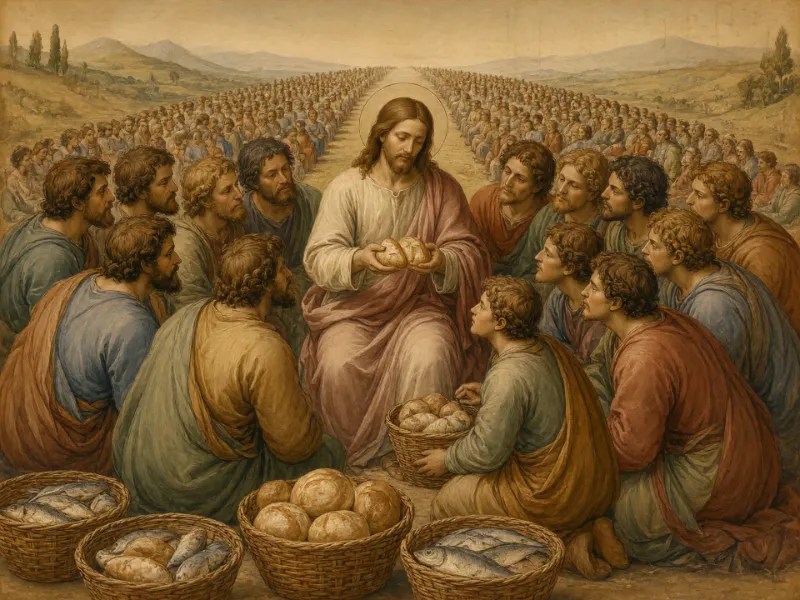
John 14:1
“Do not let your hearts be troubled. You believe in God; believe also in me.”
Reflection: Jesus speaks these words on the eve of his greatest trial, yet his concern is for the inner state of his friends. He acknowledges their troubled hearts and directly links the remedy to belief—a deep, relational trust. He is essentially saying, “The stability you seek outside of yourselves can be found inside our relationship.” It’s an appeal to relocate our emotional anchor from the shifting sands of circumstance to the bedrock of his divine identity and love for us.
Proverbs 12:25
“Anxiety in a man’s heart weighs it down, but a good word makes it glad.”
Reflection: This Proverb shows a profound understanding of the felt, physical nature of anxiety. It is a “weight” that burdens the soul and robs it of its vitality. It affirms the pain of the anxious person. The remedy offered is simple yet powerful: “a good word.” This can be a word of encouragement from a friend, but at its heart, it is the good word of God’s truth and promise. Truth has the power to lift the soul, to bring gladness and light where the heaviness of worry once resided.
Category 2: Casting Your Burdens upon a Capable God
This group of verses provides a clear action: to actively transfer the weight of our worries to God, who is both willing and able to carry them.

1 Peter 5:7
“Cast all your anxiety on him because he cares for you.”
Reflection: This is one of the most intimate invitations in scripture. The word “cast” is an active, decisive verb. It is a choice to hurl the full weight of our worries away from ourselves and onto God. The motivation provided is not one of duty, but of love: “because he cares for you.” Your anxiety is not an irritation to God; it is a matter of His profound, tender concern. He wants your burdens not because He needs them, but because He loves you and desires your freedom.
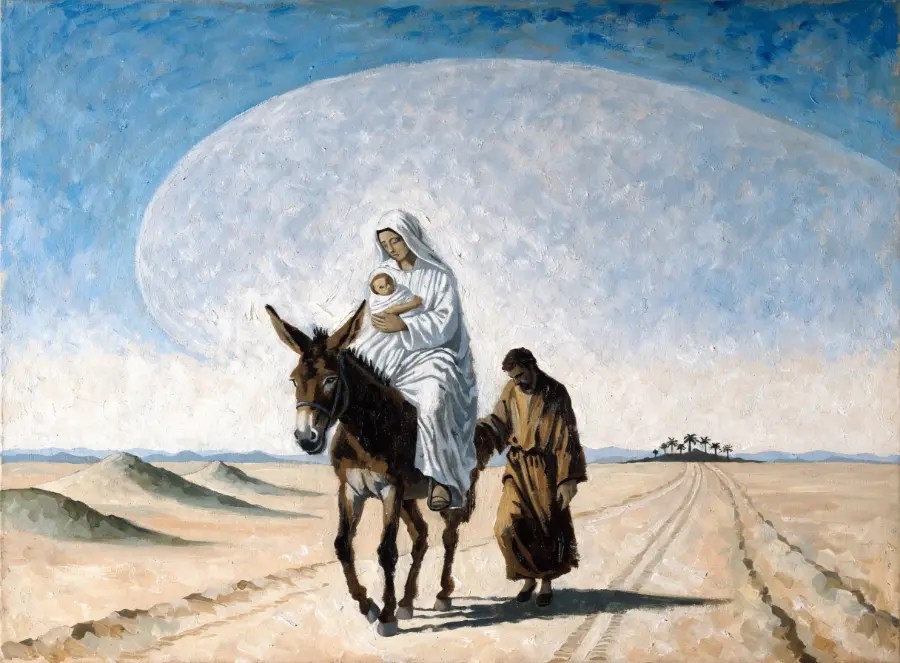
Psalm 55:22
“Cast your cares on the Lord and he will sustain you; he will never let the righteous be shaken.”
Reflection: Here, the act of casting our cares is met with a powerful promise of being “sustained.” This isn’t just about removal of a burden; it’s about God actively upholding our very being. He doesn’t just take the weight, He supports the person who was carrying it. The assurance that the “righteous will never be shaken” speaks to our core identity. When we align our way with Him, our foundation becomes unshakable, even when our emotions feel profoundly unsteady.

Matthew 11:28-30
“Come to me, all you who are weary and burdened, and I will give you rest. Take my yoke upon you and learn from me, for I am gentle and humble in heart, and you will find rest for your souls. For my yoke is easy and my burden is light.”
Reflection: Jesus doesn’t pathologize our weariness; He names it and invites it into His presence. He offers an exchange. We give Him the heavy, ill-fitting yoke of anxiety and self-reliance, and He gives us His yoke, which is custom-fit by grace. This “yoke” is a life lived in partnership with Him. The rest He offers is not inactivity, but a soulful peace found in learning His rhythms of gentleness and humility, discovering that a life tethered to Him is incomparably lighter than one lived alone.

Psalm 37:5
“Commit your way to the Lord; trust in him and he will do this.”
Reflection: Worry is often a tangled “way” of thinking and feeling. To “commit your way” is an act of profound trust and surrender. It is to hand over the map of your life, with all its confusing paths and frightening unknowns, to the one true Guide. It requires a courageous trust that He is not passive, but active—”he will do this.” He will act on your behalf, untangling the knots you cannot and paving a way toward wholeness and purpose.
Category 3: God’s Presence as the Antidote to Fear
These scriptures remind us that the ultimate answer to anxiety is not an absence of problems, but the presence of a Person.

Isaiah 41:10
“So do not fear, for I am with you; do not be dismayed, for I am your God. I will strengthen you and help you; I will uphold you with my righteous right hand.”
Reflection: These words are a balm to the frightened soul. God offers a four-fold promise that directly counters the experience of anxiety. In place of fear, He gives His presence (“I am with you”). In place of dismay, He gives His identity (“I am your God”). In place of weakness, He gives His strength. And in place of the feeling of falling, He gives His secure grip (“I will uphold you”). This is not a command to simply stop feeling; it’s an invitation to receive His powerful, present help.

Deuteronomy 31:8
“The Lord himself goes before you and will be with you; he will never leave you nor forsake you. Do not be afraid; do not be discouraged.”
Reflection: Anxiety often makes us feel utterly alone and unprepared for what’s ahead. This promise dismantles that lie. God is not just with us in the moment of crisis; He “goes before” us, preparing the way. The declaration that He will never leave or forsake us provides a permanent foundation for our emotional security. This truth allows us to face the future not with a naive lack of concern, but with a courageous confidence in our constant Companion.

Psalm 23:4
“Even though I walk through the darkest valley, I will fear no evil, for you are with me; your rod and your staff, they comfort me.”
Reflection: This verse offers no illusion of a life without “darkest valleys.” It acknowledges that pain and fear are real parts of the human journey. The source of courage, however, is not a change in scenery but the unchanging reality of God’s presence. The rod (for protection) and the staff (for guidance) are tangible symbols of His active care. They bring comfort because they remind us that the Shepherd is near, expertly equipped to lead us safely through the darkness.
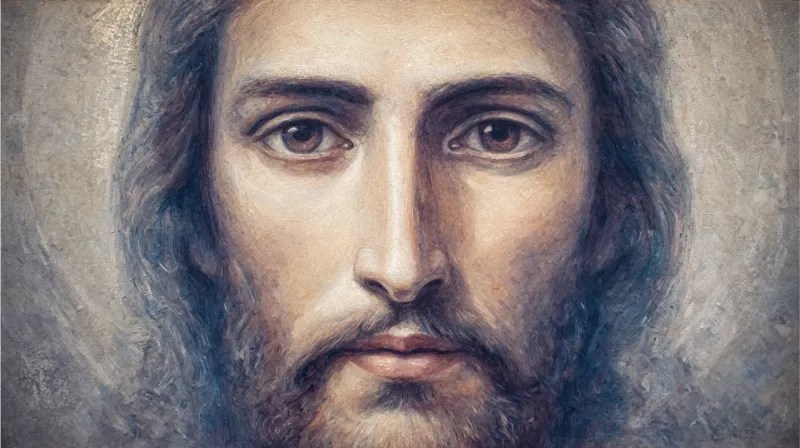
Joshua 1:9
“Have I not commanded you? Be strong and courageous. Do not be afraid; do not be discouraged, for the Lord your God will be with you wherever you go.”
Reflection: Courage here is presented not as a feeling to be mustered, but as obedience to a command, grounded in a promise. The strength required is not our own; it is drawn from the fact of God’s omnipresence. “Wherever you go”—into a difficult meeting, a doctor’s office, a lonely night—His presence is the non-negotiable reality. We can act with moral courage because we are never, ever acting alone.
Category 4: The Gift of Supernatural Peace
These verses describe a peace that is not from this world—a divine gift that can rule in our hearts even when external circumstances are chaotic.

John 14:27
“Peace I leave with you; my peace I give you. I do not give to you as the world gives. Do not let your hearts be troubled and do not be afraid.”
Reflection: Jesus makes a crucial distinction here. The world’s peace is conditional, dependent on a lack of conflict or trouble. His peace is a gift, a transfer of His own internal state to us. It is a peace that can coexist with trials, a deep soul-calm that is not rattled by external chaos. It is a state of being we are invited to receive and protect, allowing it to settle the troubled waters of our hearts.

Isaiah 26:3
“You will keep in perfect peace those whose minds are steadfast, because they trust in you.”
Reflection: The Hebrew for “perfect peace” is Shalom, Shalom—a peace so complete it is stated twice. This verse reveals a direct relationship between the state of our mind and the experience of peace. A “steadfast” mind is one that is intentionally and consistently fixed on God’s character and promises. This mental discipline of trust is not about ignoring reality, but about interpreting reality through the greater truth of who God is. The result is a profound, holistic peace that endures.

Colossians 3:15
“Let the peace of Christ rule in your hearts, since as members of one body you were called to peace. And be thankful.”
Reflection: Peace is presented here as the “umpire” or “ruler” of the heart. When conflicting emotions and anxious thoughts compete for control, we are to consciously allow Christ’s peace to make the final call. This is an active choice to enthrone peace over anxiety. The verse links this internal state to our communal identity in the church and grounds it, once again, in the heart-posture of thankfulness, which displaces the anxiety of scarcity and fear.

John 16:33
“I have told you these things, so that in me you may have peace. In this world you will have trouble. But take heart! I have overcome the world.”
Reflection: This is a verse of stunning realism and triumphant hope. Jesus does not promise a trouble-free life; in fact, He guarantees trouble. He validates our struggles. The peace He offers is found “in Him,” a safe harbor in the midst of the storm. The final command, “Take heart!” is not a trivial platitude; it is a battle cry based on His victory. We can be courageous because the ultimate outcome has already been secured by the one who has overcome the very world that causes us so much trouble.
Category 5: Reframing Reality with a Heavenly Perspective
These verses challenge the myopic view of anxiety by lifting our gaze to a larger, more beautiful, and eternal reality.
Matthew 6:25-26
“Therefore I tell you, do not worry about your life, what you will eat or drink; or about your body, what you will wear… Look at the birds of the air; they do not sow or reap or store away in barns, and yet your heavenly Father feeds them. Are you not much more valuable than they?”
Reflection: Jesus gently confronts our worry by inviting us into a state of mindful observation. “Look at the birds.” This is an exercise in seeing the world as it truly is: a place sustained by the constant, detailed care of a loving Father. The argument is one of beautiful and irrefutable logic: if God expends such care on creatures of lesser value, how can we believe He will neglect us, His beloved children? It reframes our value and His provision, shrinking our anxieties in the light of His immense love.

Romans 8:28
“And we know that in all things God works for the good of those who love him, who have been called according to his purpose.”
Reflection: Anxiety often stems from a fear that events are random, chaotic, and meaningless. This verse offers a radical counter-narrative. It does not say that all things are good, but that God is a master weaver, able to work in all things—even the painful and confusing ones—to bring about an ultimate good for His people. This truth provides a deep sense of purpose and trust, allowing us to endure present difficulties with the knowledge that they are not the final word.

2 Corinthians 4:17-18
“For our light and momentary troubles are achieving for us an eternal glory that far outweighs them all. So we fix our eyes not on what is seen, but on what is unseen, since what is seen is temporary, but what is unseen is eternal.”
Reflection: From the depths of our anxiety, our troubles feel heavy and permanent. Paul, who was no stranger to suffering, offers a radical reframing of our perspective. He calls them “light and momentary” in comparison to the “eternal glory” they are producing within us. This requires a conscious decision to “fix our eyes” on the unseen spiritual realities—God’s love, His promises, our future hope—rather than being mesmerized by the temporary crises of the here and now.

Matthew 6:27
“Can any one of you by worrying add a single hour to your life?”
Reflection: Jesus uses this piercing question to reveal the utter impotence of worry. It is a moral and emotional exercise in futility. It drains our energy, steals our joy, and clouds our judgment, all without accomplishing anything of value. This is not a shaming question, but a liberating one. It invites us to see worry for what it is—a thief—and to abandon this fruitless endeavor for the life-giving work of trust.
Category 6: God’s Tender Comfort in Inner Turmoil
This final set of verses acknowledges the deep pain of anxiety and highlights God’s compassionate, comforting, and empowering response.
Psalm 94:19
“When anxiety was great within me, your consolation brought me joy.”
Reflection: This verse offers immense validation to the one suffering. It does not deny the reality of great inner anxiety, but tells a story of personal encounter. In the midst of that turmoil, God’s “consolation”—His gentle comfort, His whispered truths, His felt presence—did not just neutralize the anxiety, but miraculously birthed joy in its place. It testifies that God is not afraid of our inner chaos, but enters into it with a comfort that can transform our entire emotional landscape.

2 Timothy 1:7
“For the Spirit God gave us does not make us timid, but gives us power, love and a sound mind.”
Reflection: Fear and anxiety make us feel timid, weak, and mentally scattered. This verse reminds us that this state is not our true identity in Christ. The Holy Spirit’s presence within us is a source of a completely different reality: “power” to act when we feel helpless, “love” that casts out fear and connects us to others, and a “sound mind” (or self-discipline) that brings order to chaotic thoughts. This is a promise of an internal resource for wholeness that is always available to us.

Psalm 34:4
“I sought the Lord, and he answered me; he delivered me from all my fears.”
Reflection: This is the powerful, personal testimony of a heart that moved from seeking to deliverance. The psalmist does not present a complex formula, but a simple, relational sequence: I felt fear, I took that fear to God, and He responded. The deliverance spoken of may be a change in circumstances, but more often it is a deliverance of the heart—a freeing from the tyranny of fear, even if the object of the fear remains. It’s a message of hope that God hears and answers the cry of the fearful heart.

Isaiah 43:1-2
“But now, this is what the Lord says… ‘Fear not, for I have redeemed you; I have summoned you by name; you are mine. When you pass through the waters, I will be with you; and when you pass through the rivers, they will not sweep over you. When you walk through the fire, you will not be burned; the flames will not set you ablaze.’”
Reflection: This passage is a cascade of profound comfort. It grounds our security in our core identity: we are redeemed, named, and owned by a loving God. It doesn’t promise a life without “waters” or “fire”—the overwhelming and painful trials of life. Instead, it promises His presence in them. The assurance is that these trials will not have the final, destructive say. They will not “sweep over” or “set you a-blaze.” We are protected not from the trial, but in the trial, by the one who calls us His own.


Leave a Reply