
 English
 Chinese
 Dutch
 Arabic
 Spanish
 Portuguese
 Russian
 French
 Italian
 German
 Japanese
No, not in the popular sense. The Catholic Church does not teach a rapture that takes believers from the earth before a time of tribulation. It teaches one visible return of Christ at the end of time, when the dead will rise and the living will be “caught up” to meet him, as 1 Thessalonians 4:17 says.
It helps to remember why Paul wrote that verse at all. The Christians of Thessalonica were grieving for believers who had died, and they wondered whether their dead would miss the Lord’s coming. Paul wrote so “that you may not grieve as others do who have no hope” (1 Thessalonians 4:13). Every Christian who argues about the rapture is arguing over a letter of comfort.
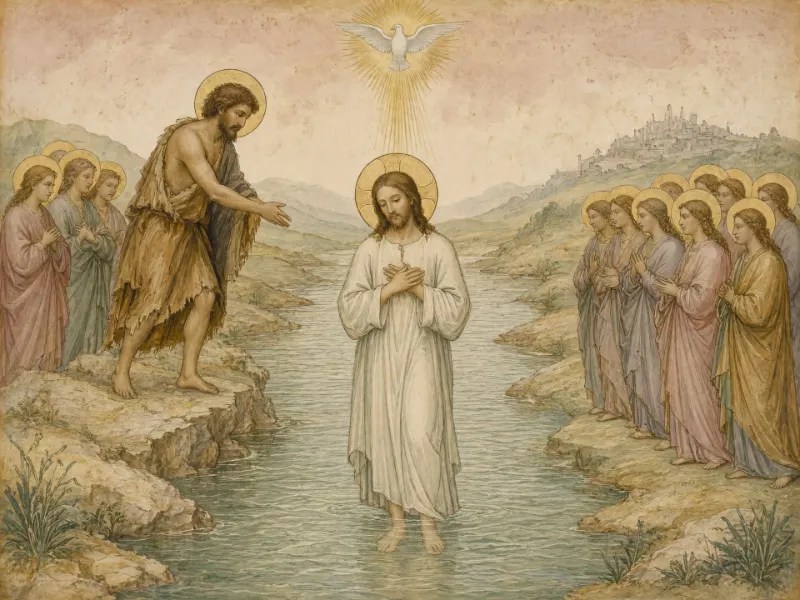
What is the rapture?
Many evangelical Protestants use the word for a sudden event in which Christians, living and dead, are taken from the earth to meet Christ in the air. Many who hold the belief place it before a seven-year time of suffering called the Tribulation, after which Christ returns visibly to reign. Others place it in the middle of the Tribulation or at its end, the “mid-tribulation” and “post-tribulation” views. All of them are reading the same verse with care, and all of them are waiting for the same Lord.
The word itself is Latin. The Vulgate renders “we will be caught up” in 1 Thessalonians 4:17 as rapiemur: “simul rapiemur cum illis in nubibus obviam Christo in aera.” Behind it stands the Greek verb harpazō, which means to snatch or seize.
The belief that the rapture comes before the Tribulation is young, as Christian beliefs go. John Nelson Darby, a leader of the Plymouth Brethren, gave it a full theological framework in 1827. It spread in America through Bible conferences, then through the Scofield Reference Bible of 1909, and later through Tim LaHaye’s Left Behind novels, which began in 1995 and sold close to 80 million copies. The Catholic, Eastern Orthodox, Lutheran, Anglican and Reformed churches have no tradition of a return of Christ in two stages.

What does the Catholic Church teach about the Second Coming?
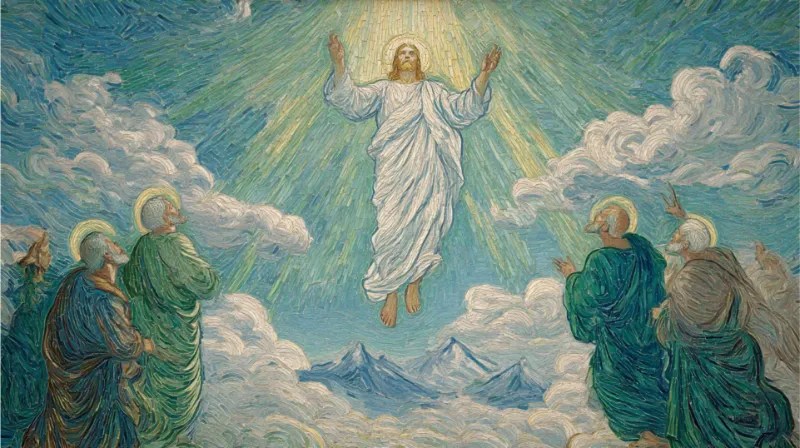
Catholics profess in the Apostles’ Creed that Christ “will come again to judge the living and the dead.” That coming, as the Church teaches it, is public and final. The angels at the Ascension told the apostles that Jesus “will come in the same way as you saw him go into heaven” (Acts 1:11). They watched him go, and the whole world will see him come: “as the lightning comes from the east and shines as far as the west, so will be the coming of the Son of Man” (Matthew 24:27).
The Catechism of the Catholic Church teaches that “since the Ascension Christ’s coming in glory has been imminent,” though no one knows the day or the hour (Catechism 673; Matthew 24:36). So we live ready, without a calendar. The Catechism ties the rising of the dead to that same coming: “the resurrection of the dead is closely associated with Christ’s Parousia,” and it quotes 1 Thessalonians 4:16 to show it (Catechism 1001). All the dead, “of both the just and the unjust,” will rise before the Last Judgment (Catechism 1038), when, in Jesus’ words, “all who are in the tombs will hear his voice and come out” (John 5:28–29). One return, one general resurrection, one judgment. Catholic teaching has no separate earlier coming for believers.
How do Catholics read 1 Thessalonians 4:17?
As Scripture, and as a picture of Christ’s final coming. Paul writes: “For the Lord himself will descend from heaven with a cry of command, with the voice of an archangel, and with the sound of the trumpet of God. And the dead in Christ will rise first. Then we who are alive, who are left, will be caught up together with them in the clouds to meet the Lord in the air, and so we will always be with the Lord” (1 Thessalonians 4:16–17).
Three things in it shape the Catholic reading. The first is why Paul wrote. He was answering grief, and he ends, “Therefore encourage one another with these words” (4:18). His question is whether the dead will share in Christ’s coming; the timing of a tribulation never comes up. The second is the sound of it. This is a loud and public event, with a cry of command and a trumpet. The third is the order. The living are caught up at the same moment the dead rise, and that is the general resurrection the Church places at Christ’s return.
Some biblical scholars also hear an ancient custom in the words “to meet the Lord.” When a ruler arrived, the people of a city went out to meet him and escorted him back in. The Anglican scholar N. T. Wright puts it this way: “having gone out to meet their returning Lord, they will escort him royally into his domain.” Read like that, believers rise to meet Christ as he comes and return with him, rather than being taken away from the earth.
Do Catholics believe Christians will go through the tribulation?
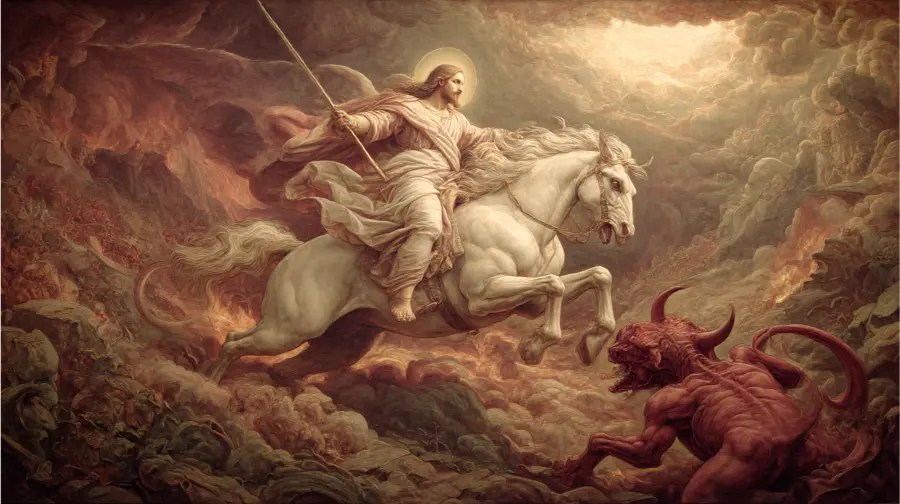
Yes, and the Catechism says so plainly: “Before Christ’s second coming the Church must pass through a final trial that will shake the faith of many believers.” It is a hard sentence, and the Church does not soften it. The trial is a deception, “the supreme religious deception is that of the Antichrist,” in which people are offered “an apparent solution to their problems at the price of apostasy from the truth” (Catechism 675). Yet the same pages show where the road ends. The Church “will enter the glory of the kingdom only through this final Passover, when she will follow her Lord in his death and Resurrection” (Catechism 677). She goes the way he went.
Catholics find the same order in the Gospels and in Paul. Jesus spoke of “great tribulation, such as has not been from the beginning of the world until now” (Matthew 24:21), and said that “immediately after the tribulation of those days” the Son of Man would appear and “gather his elect from the four winds” (Matthew 24:29–31). Paul told the Thessalonians that the day of the Lord and “our being gathered together to him” would not come “unless the rebellion comes first, and the man of lawlessness is revealed” (2 Thessalonians 2:1–3).
That puts the gathering of believers after the final trial, nearer the post-tribulation view than the others. Still, Catholic teaching does not use that framework. It sets no seven-year Tribulation and gives no timetable for the last days.
Do Catholics believe in the millennium?
Not as a future thousand-year reign of Christ on earth. Revelation 20:4 tells of martyrs who “came to life and reigned with Christ for a thousand years,” and some second-century Christians took it literally. Justin Martyr wrote that he and others expected “a resurrection of the dead, and a thousand years in Jerusalem,” and he was honest enough to add that “many who belong to the pure and pious faith, and are true Christians, think otherwise” (Dialogue with Trypho 80). Christians disagreed about it even then. Augustine read the thousand years as the present age of the Church: “the Church even now is the kingdom of Christ, and the kingdom of heaven” (City of God 20.9). His reading shaped Western teaching for centuries, and the Catholic position is often called amillennial.
The Catechism says the Church “has rejected even modified forms of this falsification of the kingdom to come under the name of millenarianism” (Catechism 676). Behind that line stands a decree of the Holy Office of 21 July 1944. It was asked whether Christ will “come visibly to rule over this world” before the final judgment, and it answered: “The system of mitigated Millenarianism cannot be taught safely.”

Is Mary’s Assumption a kind of rapture?
No. Pope Pius XII defined in 1950 that Mary, “having completed the course of her earthly life, was assumed body and soul into heavenly glory.” The Assumption is about one person at the end of her life, not believers taken from the earth before a tribulation. The Catechism calls it “a singular participation in her Son’s Resurrection and an anticipation of the resurrection of other Christians” (Catechism 966), a resurrection it places at Christ’s return. In Mary the Church sees, ahead of time, what that day will bring to all who belong to him.
Whatever we believe about the timing, Paul’s promise is the same for every Christian who has stood beside a grave: “and so we will always be with the Lord.” He told the Thessalonians what to do with it, and his words still hold: “Therefore encourage one another with these words.”

Related reading
- What does the Bible say about the rapture?
- The signs of Jesus’ second coming
- Judgment Day in the Bible


Leave a Reply