
 English
 Chinese
 Dutch
 Arabic
 Spanish
 Portuguese
 Russian
 French
 Italian
 German
 Japanese
59 does not appear in the Bible as a number with any meaning. Psalm 59, on the other hand, was written on the worst night of David’s life to that point, and it is worth the visit.
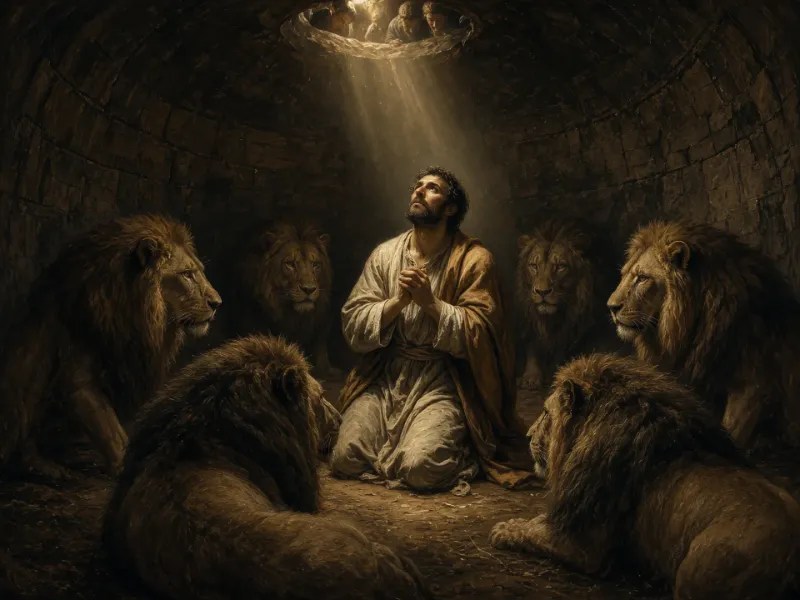
The night behind the psalm
The superscription gives the setting, which is unusual and specific: When Saul had sent men to watch David’s house in order to kill him.
The narrative is in 1 Samuel 19. Saul sends men to surround the house and take David in the morning. Michal, David’s wife and Saul’s daughter, lets him down through a window and puts an idol in the bed with goats’ hair at its head so the search party will think he is ill.
So the psalm is written by a man who spent a night knowing there were people outside waiting for daylight.
What he says
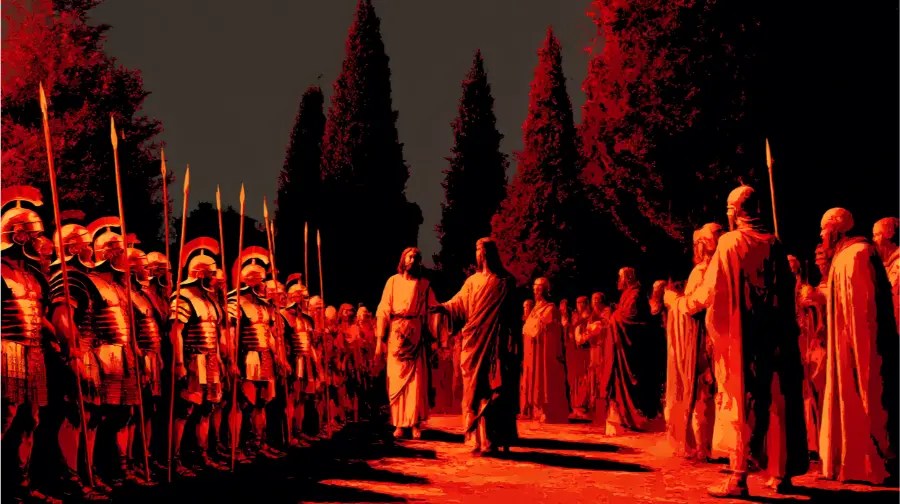
It opens with no preliminaries: Deliver me from my enemies, O God; be my fortress against those who are attacking me. (Psalm 59:1)
Then an image that anyone who has lain awake will recognise: They return at evening, snarling like dogs, and prowl about the city. (Psalm 59:6)
He repeats that line later, unchanged. The psalm circles back to it because that is what a night like that does.
And then the turn, which is the reason the psalm survives:
But I will sing of your strength, in the morning I will sing of your love; for you are my fortress, my refuge in times of trouble. (Psalm 59:16)
In the morning. Written by someone who did not yet know whether he would see one.
The part usually left out
Honesty requires noting that Psalm 59 also contains requests that no one reads aloud comfortably. David asks God to consume his enemies in wrath, and not to kill them too quickly lest his people forget.
The psalms of this kind are difficult and there is no use pretending otherwise. What can be said is that Scripture preserves them rather than tidying them, and that the man saying these things is saying them to God instead of doing them himself. The whole prayer is a handing over of something he had the men and the motive to act on.
That is not the last word on the subject, but it is a real one.
Where 59 actually appears
As a count, and rarely. It turns up in the census lists and totals of the Old Testament in the way any number does, and nothing is built on it.
Scripture does use a few numbers symbolically, and shows which by repetition and comment. Seven runs through creation, the festivals and Revelation. Forty marks testing. Twelve counts the tribes and then the apostles. Three appears at the resurrection.
Systems that assign a meaning to every number work from outside the text. Some borrow from gematria, a real rabbinic practice but not a biblical instruction. Most copy one another.
If 59 keeps appearing
Usually the cause is attention rather than providence. Once a figure has been noticed it gets noticed again, and the hundreds of other numbers were never counted.
Underneath there is generally something specific. Scripture’s instruction is to say it rather than to decode it: Do not be anxious about anything, but in every situation, by prayer and petition, with thanksgiving, present your requests to God. (Philippians 4:6)
And if it happens to be a bad night, Psalm 59 is better company than any number.
Frequently asked
Does the number 59 mean anything in the Bible?
No. It appears as a plain count and carries no symbolism.
What is Psalm 59 about?
Its superscription places it on the night Saul sent men to watch David’s house in order to kill him (1 Samuel 19). It ends with a promise to sing in the morning.
Why does Psalm 59 ask for terrible things?
It contains requests that are hard to read aloud. Scripture preserves them rather than tidying them, and the man saying them is handing them to God rather than acting on them himself.
Which numbers do carry meaning in Scripture?
Chiefly seven, forty, twelve and three, and in each case the meaning is built by the text’s own repeated use rather than assigned from a chart.
More from this seriesBiblical NumerologySee all 53 articles

Leave a Reply