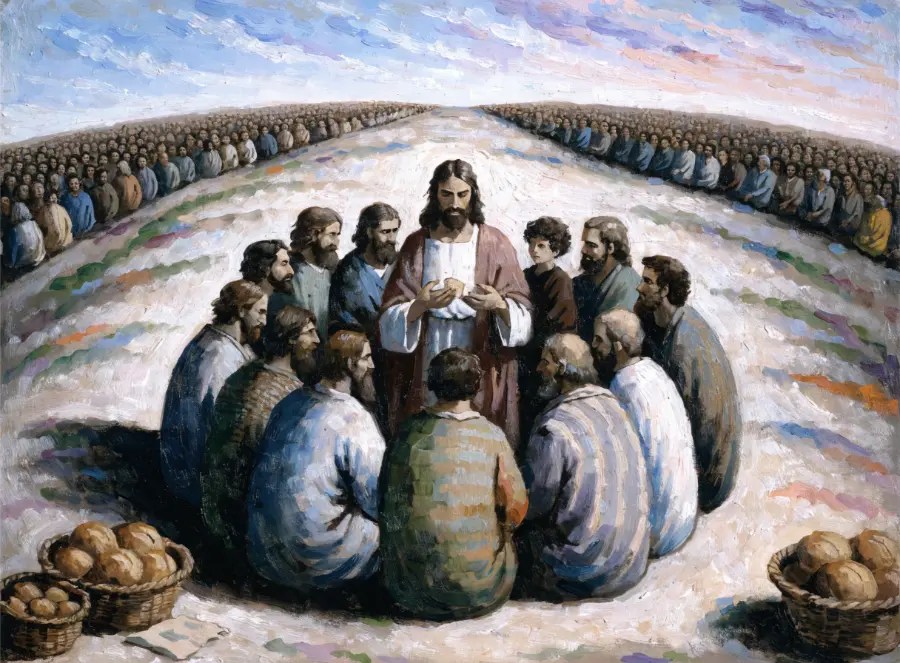
How much is Jesus worth? Exploring the True Worth of Christ


  • Jesus is a source of hope, strength, and comfort for those lost in despair.
  • He offers salvation, redemption, and the possibility of eternal life in heaven.
  • His message of love, peace, and treating others with kindness is a model to emulate.
  • The true worth of Jesus lies in the hearts and souls he touches, the lives he changes, and the inspiration he continues to provide.
  • He is a treasure that offers hope and joy to all who seek him.

What does the Bible say about Jesus’ worth?

The Scriptures speak of Jesus’ incomparable worth in many beautiful ways. From the very beginning, we see Jesus’ divine nature affirmed. The Gospel of John opens by declaring, “In the beginning was the Word, and the Word was with God, and the Word was God” (John 1:1). This establishes Jesus’ eternal existence and equality with God the Father.

Throughout his earthly ministry, Jesus demonstrated his supreme worth through his teachings, miracles, and perfect life. He claimed divine authority, saying “I and the Father are one” (John 10:30). His disciples recognized his unique identity, with Peter confessing, “You are the Christ, the Son of the living God” (Matthew 16:16).

But it is perhaps at the cross where we see Jesus’ infinite worth most clearly revealed. There, the sinless Son of God gave his life as a ransom for many (Mark 10:45). As Paul writes, “God demonstrates his own love for us in this: While we were still sinners, Christ died for us” (Romans 5:8). The worth of Christ is such that his sacrifice is sufficient to atone for the sins of all humanity.

In his resurrection and exaltation, Jesus is given “the name that is above every name” (Philippians 2:9). He is crowned with glory and honor (Hebrews 2:9) and takes his place at the right hand of the Father. The book of Revelation gives us a glimpse of the worship Jesus receives in heaven, where myriads of angels proclaim, “Worthy is the Lamb, who was slain, to receive power and wealth and wisdom and strength and honor and glory and praise!” (Revelation 5:12).

The Bible reveals Jesus as the “image of the invisible God” (Colossians 1:15), the exact representation of God’s being (Hebrews 1:3). In him, all the fullness of God was pleased to dwell (Colossians 1:19). There is no higher worth than this – Jesus embodies the very nature and glory of God himself. Let us marvel at this great mystery and treasure Christ above all else! (Charlesworth, 2008, 2009; Phạm, 2022)

How can we measure the value of Jesus’ sacrifice on the cross?

How can we begin to fathom the immeasurable value of our Lord’s sacrifice on Calvary? It is a mystery that surpasses human understanding, yet one that touches the very heart of our faith. Let us humbly approach this question, knowing that we can only glimpse the edges of its powerful meaning.

We must recognize that Jesus’ sacrifice is of infinite worth because of who he is – the eternal Son of God. As the Scriptures tell us, “For you know that it was not with perishable things such as silver or gold that you were redeemed… but with the precious blood of Christ” (1 Peter 1:18-19). The value of his sacrifice stems from his divine nature united with his true humanity.

We can also consider the scope of what Jesus accomplished on the cross. His death atoned not just for one person or one nation, but potentially for all of humanity throughout history. As John writes, “He is the atoning sacrifice for our sins, and not only for ours but also for the sins of the whole world” (1 John 2:2). The universal efficacy of Christ’s sacrifice points to its immeasurable worth.

Jesus’ sacrifice reconciles us to God, bridging the infinite chasm that sin had created between humanity and our Creator. Paul tells us, “For if, while we were God’s enemies, we were reconciled to him through the death of his Son, how much more, having been reconciled, shall we be saved through his life!” (Romans 5:10). The value of restored communion with God is beyond calculation.

We might also reflect on the eternal consequences of Jesus’ sacrifice. It secures for us not just forgiveness, but eternal life in God’s presence. Jesus himself said, “For God so loved the world that he gave his one and only Son, that whoever believes in him shall not perish but have eternal life” (John 3:16). How can we measure the worth of unending joy in God’s kingdom?

We cannot fully measure or comprehend the value of Jesus’ sacrifice. It is as vast as God’s love for us. But we can respond with heartfelt gratitude, living lives that reflect the immense worth of what Christ has done for us. Let us join with the heavenly host in proclaiming, “Worthy is the Lamb, who was slain, to receive power and wealth and wisdom and strength and honor and glory and praise!” (Revelation 5:12). (Charlesworth, 2009; Thắng, 2023; Wright, 2008)

In what ways does Jesus’ worth impact our daily lives as Christians?

The supreme worth of Jesus Christ is not merely a theological concept, but a living reality that should permeate every aspect of our daily lives as his followers. Let us consider how his incomparable value shapes our existence.

Recognizing Jesus’ worth should inspire our worship and devotion. When we truly grasp who Christ is and what he has done for us, our hearts naturally overflow with praise and thanksgiving. This attitude of worship should color all our days, not just our Sunday gatherings. As Paul exhorts us, “And whatever you do, whether in word or deed, do it all in the name of the Lord Jesus, giving thanks to God the Father through him” (Colossians 3:17).

Jesus’ worth also gives us a new perspective on our own identity and value. Knowing that the Son of God loved us enough to die for us assures us of our infinite worth in God’s eyes. This frees us from seeking validation through worldly success or others’ opinions. Instead, we can live with the quiet confidence of those who know they are deeply loved children of God.

Christ’s supreme value should shape our priorities and decision-making. When we truly believe that Jesus is the “pearl of great price” (Matthew 13:46), we will be willing to subordinate all other concerns to following him. This might mean making sacrifices in our careers, relationships, or personal comfort for the sake of God’s kingdom. But as Jesus promised, “Seek first his kingdom and his righteousness, and all these things will be given to you as well” (Matthew 6:33).

The worth of Christ also impacts how we view and treat others. Recognizing that Jesus died for all people helps us see the inherent dignity in every human being, regardless of their background or circumstances. This should motivate us to show Christ-like love and compassion to everyone we encounter, from family members to strangers on the street.

Finally, Jesus’ infinite value gives us an unshakable hope, even in life’s darkest moments. When we face trials, suffering, or loss, we can cling to the truth that we have a Savior whose worth and love far outweigh any earthly trouble. As Paul reminds us, “For our light and momentary troubles are achieving for us an eternal glory that far outweighs them all” (2 Corinthians 4:17).

How does Jesus’ worth compare to worldly wealth and possessions?

In a world that often measures value in terms of material possessions and financial success, we must constantly remind ourselves of the incomparable worth of our Lord Jesus Christ. The contrast between worldly riches and the true wealth we have in Christ could not be starker.

Jesus himself addressed this issue directly, warning us, “Do not store up for yourselves treasures on earth, where moths and vermin destroy, and where thieves break in and steal. But store up for yourselves treasures in heaven, where moths and vermin do not destroy, and where thieves do not break in and steal. For where your treasure is, there your heart will be also” (Matthew 6:19-21). Here, our Lord points out the transient nature of earthly wealth compared to the eternal value of heavenly riches.

We must remember that all worldly possessions, no matter how precious they may seem, are ultimately temporary. As the apostle Peter reminds us, we were not redeemed with perishable things like silver or gold, but with the precious blood of Christ (1 Peter 1:18-19). The worth of Jesus, manifested in his sacrificial love, far exceeds any material wealth we could accumulate.

While worldly riches often bring anxiety and the constant fear of loss, the wealth we have in Christ brings peace and security. Jesus assures us, “Peace I leave with you; my peace I give you. I do not give to you as the world gives. Do not let your hearts be troubled and do not be afraid” (John 14:27). This peace, which surpasses all understanding, is of far greater value than any earthly treasure.

Let us also consider that worldly wealth, while it may provide temporary comfort or status, cannot address our deepest needs. It cannot forgive our sins, heal our spiritual wounds, or grant us eternal life. Only Jesus, through his infinite worth and saving work, can meet these fundamental human longings. As he said, “What good will it be for someone to gain the whole world, yet forfeit their soul?” (Matthew 16:26).

Finally, we must remember that our attitude toward material possessions can be a reflection of our understanding of Christ’s worth. When we truly grasp the surpassing value of knowing Christ, we will hold loosely to worldly goods, seeing them as tools for serving God and others rather than as ends in themselves. Like the apostle Paul, may we be able to say, “I consider everything a loss because of the surpassing worth of knowing Christ Jesus my Lord, for whose sake I have lost all things. I consider them garbage, that I may gain Christ” (Philippians 3:8).

What role does faith play in understanding Jesus’ true worth?

Faith is absolutely essential in grasping the true worth of our Lord Jesus Christ. For the infinite value of the Son of God is not something we can measure with our physical senses or comprehend fully with our limited human intellect. It is through the eyes of faith that we begin to perceive the matchless beauty and worth of our Savior.

The author of Hebrews tells us that “faith is confidence in what we hope for and assurance about what we do not see” (Hebrews 11:1). This spiritual vision allows us to look beyond the surface and see Jesus for who he truly is – the eternal Word made flesh, full of grace and truth (John 1:14). Without faith, we might see only a historical figure or a wise teacher. But with faith, we recognize the King of kings and Lord of lords.

It is faith that enables us to personally experience and benefit from Christ’s infinite worth. As Paul writes, “For it is by grace you have been saved, through faith—and this is not from yourselves, it is the gift of God” (Ephesians 2:8). Our faith connects us to the saving work of Christ, allowing his immeasurable value to be applied to our lives. Through faith, what Christ has done becomes efficacious for us.

Faith also plays a crucial role in helping us maintain a proper perspective on Jesus’ worth amidst the challenges and distractions of daily life. In a world that constantly bombards us with competing values and false promises, it is our faith that keeps us anchored to the supreme worth of Christ. As we nurture our faith through prayer, Scripture, and fellowship with other believers, we grow in our appreciation of Jesus’ incomparable value.

Faith is not static but dynamic. As we walk with the Lord and experience his faithfulness, our faith grows, and with it, our understanding of Christ’s worth deepens. The apostle Peter encourages us to “grow in the grace and knowledge of our Lord and Savior Jesus Christ” (2 Peter 3:18). This growth in faith leads to an ever-expanding vision of Jesus’ glory and value.

Finally, let us remember that faith itself is a gift from God, not something we can manufacture on our own. We must humbly ask the Lord to increase our faith, like the man who cried out to Jesus, “I do believe; help me overcome my unbelief!” (Mark 9:24). As we do so, we can trust that God will open the eyes of our hearts to see more and more of the “unsearchable riches of Christ” (Ephesians 3:8).

May the Lord grant us all a faith that continually marvels at the infinite worth of Jesus Christ, allowing this truth to transform our lives and draw us ever closer to him. (Heritier, 2023; Sabau, 2022; Switkiewicz, 2023)

How have Christian thinkers and theologians historically viewed Christ’s value?

Throughout the centuries, Christian thinkers and theologians have consistently affirmed the supreme and infinite value of Jesus Christ. From the early Church Fathers to modern theologians, there has been a powerful recognition of Christ’s unique worth as both fully divine and fully human.

The Church Fathers, in particular, emphasized Christ’s role as the incarnate Word of God, the Logos through whom all things were created. St. Athanasius wrote that “the Word of God came in His own Person, because it was He alone, the Image of the Father, Who could recreate man made after the Image.” This highlights the invaluable role of Christ in restoring humanity’s relationship with God.

Medieval theologians like St. Thomas Aquinas further developed the concept of Christ’s infinite value. Aquinas argued that because Christ’s human nature was united with his divine nature, his actions and sufferings had infinite merit. This formed the basis for understanding Christ’s sacrifice on the cross as sufficient atonement for all of humanity’s sins.

The Reformers, while differing on many points of theology, maintained a high Christology that emphasized Christ’s supreme worth. Martin Luther spoke of Christ as our “greatest treasure,” while John Calvin described him as the “mirror of election” in whom we see God’s gracious choice of humanity.

In more recent times, theologians have continued to explore the depths of Christ’s value. Karl Barth, for instance, centered his entire theological system on the person of Christ, seeing him as the one Word of God to humanity. Hans Urs von Balthasar developed a powerful theology of Christ’s beauty and glory, inviting us to be captivated by the Lord’s splendor.

What unites these diverse thinkers across the centuries is a shared conviction that in Jesus Christ, we encounter the fullness of God’s love and the key to understanding our own existence. As Pope Benedict XVI beautifully expressed, “Being Christian is not the result of an ethical choice or a lofty idea, but the encounter with an event, a person, which gives life a new horizon and a decisive direction.”

This historical view of Christ’s value reminds us that our faith is not primarily about rules or rituals, but about a living relationship with the One who is “the way, the truth, and the life” (John 14:6). It challenges us to continually rediscover the treasure we have in Christ and to orient our lives around his incomparable worth.(Merkle, 2022, pp. 411–431; Shymanovych, 2023)

What are the spiritual and eternal implications of Jesus’ worth?

The spiritual and eternal implications of Jesus’ worth are powerful and far-reaching, touching every aspect of our existence and destiny. At the heart of Christian faith is the conviction that in Christ, we encounter the very love of God made flesh, a love that transforms our present reality and shapes our eternal future.

Jesus’ infinite worth means that in him, we find the fullness of God’s revelation to humanity. As the letter to the Hebrews declares, “In these last days he has spoken to us by his Son, whom he appointed heir of all things, and through whom also he made the universe” (Hebrews 1:2). This implies that our spiritual journey is fundamentally about knowing Christ more deeply, for in him we come to know the Father.

The worth of Christ also has powerful implications for our salvation. His perfect life, sacrificial death, and glorious resurrection are of infinite value, sufficient to atone for the sins of all humanity and to reconcile us to God. As St. Paul writes, “For our sake he made him to be sin who knew no sin, so that in him we might become the righteousness of God” (2 Corinthians 5:21). This means that our eternal destiny is secure not because of our own merits, but because of the priceless gift of Christ’s righteousness.

Christ’s worth implies that our spiritual growth and sanctification are rooted in our union with him. As we abide in Christ, we are gradually transformed into his likeness, participating in his divine nature (2 Peter 1:4). This process is not merely about moral improvement, but about a powerful spiritual renewal that affects our entire being.

Eternally, the worth of Christ means that our ultimate destiny is to be with him and to share in his glory. As Jesus prayed, “Father, I want those you have given me to be with me where I am, and to see my glory” (John 17:24). This promise gives us hope beyond death and assures us that our final state will be one of unimaginable joy and fulfillment in the presence of our Lord.

The implications of Christ’s worth extend even to the renewal of all creation. As St. Paul writes, through Christ God will “reconcile to himself all things, whether things on earth or things in heaven, by making peace through his blood, shed on the cross” (Colossians 1:20). This cosmic vision reminds us that the value of Christ’s work extends far beyond individual salvation to the restoration of all things.

In practical terms, recognizing the spiritual and eternal implications of Jesus’ worth should lead us to a life of worship, gratitude, and joyful obedience. It should inspire us to center our lives on Christ, to seek his will in all things, and to live in the light of eternity. As Pope Francis often reminds us, our relationship with Christ should overflow into love for our neighbors and care for creation, as we seek to embody the values of God’s kingdom in the here and now.

The spiritual and eternal implications of Jesus’ worth invite us to a life of continual wonder and discovery. As we grow in our appreciation of Christ’s infinite value, we are drawn ever deeper into the mystery of God’s love, a journey that will continue throughout eternity.(Budiman & Panggarra, 2024; Merkle, 2022, pp. 411–431; Patricia & Baholy, 2023)

How should Jesus’ worth influence our priorities and decision-making?

The recognition of Jesus’ incomparable worth should have a powerful and transformative impact on our priorities and decision-making. It calls us to a radical reorientation of our lives, placing Christ at the center of all we do and aligning our choices with his will and values.

Acknowledging Jesus’ worth should lead us to prioritize our relationship with him above all else. As our Lord himself taught, “Seek first the kingdom of God and his righteousness, and all these things will be added to you” (Matthew 6:33). This means that our primary concern in life should be to know Christ more deeply, to love him more fully, and to serve him more faithfully. It challenges us to examine our use of time, energy, and resources, asking whether they reflect this fundamental priority.

In our decision-making, the worth of Christ should serve as the ultimate reference point. We should continually ask ourselves, “Does this choice honor Christ? Does it align with his teachings and example?” This applies not only to major life decisions but also to the small, everyday choices that shape our character and witness. As St. Paul exhorts us, “Whatever you do, whether in word or deed, do it all in the name of the Lord Jesus” (Colossians 3:17).

Jesus’ worth should also influence how we view and use material possessions. Recognizing that Christ is our greatest treasure helps us maintain a proper perspective on worldly goods. It frees us from the tyranny of consumerism and enables us to use our resources generously for the good of others and the advancement of God’s kingdom. As Pope Francis often reminds us, we are called to a “culture of encounter” that prioritizes people over things and solidarity over selfishness.

The worth of Christ should shape our relationships and how we treat others. Seeing the image of God in every person and remembering that Christ died for all should lead us to treat everyone with dignity and respect. It should motivate us to forgive as we have been forgiven, to show compassion to the marginalized, and to work for justice and peace in our communities.

In our vocations and daily work, Christ’s worth calls us to excellence and integrity. Whatever our profession or role, we are ultimately working for the Lord (Colossians 3:23-24). This perspective can infuse even mundane tasks with meaning and purpose, as we seek to glorify Christ in all we do.

The worth of Jesus should also influence how we approach suffering and challenges. Knowing that Christ suffered for us and that he promises to be with us always can give us strength and hope in difficult times. It reminds us that our trials are temporary and that they can be opportunities for growth and witness.

Finally, recognizing Jesus’ worth should shape our view of the future and our eternal destiny. It should inspire us to live with an eternal perspective, investing in what will last beyond this life. As C.S. Lewis wisely observed, “Aim at heaven and you will get earth thrown in. Aim at earth and you get neither.”

In practical terms, allowing Jesus’ worth to influence our priorities and decision-making might mean:

  • Setting aside regular time for prayer, Scripture reading, and worship
  • Seeking spiritual counsel when facing important decisions
  • Being intentional about serving others and sharing the gospel
  • Simplifying our lifestyles to free up resources for kingdom purposes
  • Cultivating virtues that reflect Christ’s character
  • Courageously standing for truth and justice, even when it’s costly

In what ways can we express our appreciation for Jesus’ immeasurable worth?

Expressing our appreciation for Jesus’ immeasurable worth is a lifelong journey of love, devotion, and service. It involves not just our words, but our entire lives as we seek to honor and glorify the One who is beyond all value. Here are some meaningful ways we can express our appreciation for Christ’s worth:

  1. Worship and Adoration: Perhaps the most fundamental way to express our appreciation is through heartfelt worship. This includes not only our participation in communal liturgy but also our personal times of prayer and praise. As we contemplate Christ’s beauty and majesty, we are drawn to express our love and gratitude. This can take many forms – singing, silent adoration, contemplative prayer, or spontaneous words of praise. The Psalms provide a rich resource for expressing our awe at God’s greatness.
  2. Study and Meditation: We show our appreciation for Christ by seeking to know him more deeply. This involves diligent study of Scripture, reflection on Christian teachings, and prayerful meditation on the mysteries of faith. As we grow in our understanding of who Christ is and what he has done for us, our appreciation deepens and finds new expressions.
  3. Obedience and Discipleship: Jesus said, “If you love me, keep my commands” (John 14:15). One of the most powerful ways we can express our appreciation for Christ’s worth is by striving to live according to his teachings. This involves a daily commitment to follow in his footsteps, to embody his love, and to pursue holiness. It’s not about perfection, but about a sincere desire to please the One we love.
  4. Service and Compassion: Christ’s own life was characterized by selfless service and compassion for others. We express our appreciation for him when we follow his example, reaching out to those in need with practical help and Christ-like love. As Jesus taught, “Whatever you did for one of the least of these brothers and sisters of mine, you did for me” (Matthew 25:40).
  5. Witness and Evangelization: When we truly appreciate something of great worth, we naturally want to share it with others. Sharing the good news of Christ with others – through our words and the witness of our lives – is a powerful expression of our appreciation for his worth. This doesn’t mean aggressive proselytizing, but rather a gentle and respectful sharing of the hope that is within us (1 Peter 3:15).
  6. Stewardship and Generosity: Recognizing Christ’s supreme worth should impact how we view and use our resources. We can express our appreciation by being generous with our time, talents, and treasure in ways that advance God’s kingdom and help those in need. This might involve financial giving, volunteering, or using our skills in service of the Church and community.
  7. Cultivating Virtues: Striving to develop Christ-like character is another way to express our appreciation. This involves cooperating with the Holy Spirit to cultivate virtues such as love, joy, peace, patience, kindness, goodness, faithfulness, gentleness, and self-control (Galatians 5:22-23). As we grow in these virtues, we become living reflections of Christ’s worth.
  8. Forgiveness and Reconciliation: Jesus placed great emphasis on forgiveness and reconciliation. We honor his worth when we forgive others as we have been forgiven, and when we work to heal broken relationships. This can be challenging, but it’s a powerful testimony to the transforming power of Christ’s love.
  9. Creation Care: Appreciating Christ’s worth extends to caring for the world he created and loves. As Pope Francis has emphasized in Laudato Si’, our care for the environment is intimately connected to our love for God and neighbor.
  10. Joyful Endurance: Finally, we express our appreciation for Christ’s worth by joyfully enduring trials and persecutions for his sake. When we stand firm in faith despite difficulties, we declare that Christ is more precious to us than comfort or worldly approval.

In all these ways and more, may our lives become a living doxology, a continuous expression of gratitude and love for the One who is worthy of all praise. As St. Ignatius of Loyola prayed, “Take, Lord, and receive all my liberty, my memory, my understanding, and my entire will, all that I have and possess. You have given all to me. To you, O Lord, I return it. All is yours, dispose of it wholly according to your will. Give me your love and your grace, for this is sufficient for me.”(Budiman & Panggarra, 2024; Patricia & Baholy, 2023; Sauder, 2011, p. 61)

How does recognizing Jesus’ worth affect our relationships with others?

Recognizing the supreme worth of Jesus Christ has powerful implications for how we relate to others. It transforms our perspective, reshaping our attitudes and behaviors in ways that reflect Christ’s love and values. Here’s how this recognition can affect our relationships:

  1. Seeing Others Through Christ’s Eyes: When we truly grasp Christ’s worth, we begin to see others as he sees them – as bearers of God’s image, infinitely valuable and worthy of love and respect. This perspective challenges us to look beyond surface differences, social status, or personal preferences, and to recognize the inherent dignity of every person. As Pope Francis often reminds us, we are called to encounter Christ in the face of the other, especially in the poor and marginalized.
  2. Loving Sacrificially: Christ’s self-giving love on the cross sets the standard for our relationships. Recognizing his worth inspires us to love others not just when it’s easy or convenient, but sacrificially. This might mean putting others’ needs before our own, forgiving when it’s difficult, or reaching out to those who are hard to love. As Jesus taught, “Love one another as I have loved you” (John 15:12).
  3. Practicing Forgiveness: Understanding the immeasurable worth of Christ’s forgiveness towards us should motivate us to extend that same forgiveness to others. This doesn’t mean ignoring injustice, but it does mean letting go of bitterness and seeking reconciliation where possible. As the parable of the unforgiving servant teaches us (Matthew 18:21-35), having received God’s forgiveness, we are called to forgive others generously.
  4. Cultivating Humility: Recognizing Christ’s supreme worth naturally leads to humility. When we understand that our worth comes from being loved by God rather than our own achievements or status, it frees us from the need to prove ourselves or look down on others. This humility can transform our relationships, making us more open, approachable, and willing to serve.
  5. Promoting Unity: Christ’s prayer for his followers was “that they may be one as we are one” (John 17:11). Recognizing Jesus’ worth should lead us to prioritize unity and reconciliation in our relationships, especially within the Christian community. This doesn’t mean ignoring genuine differences, but it does mean seeking common ground and treating one another with love and respect even when we disagree.
  6. Sharing the Good News: When we truly appreciate Christ’s worth, we naturally want to share this treasure with others. This affects our relationships by making us more intentional about sharing our faith, not in a pushy or judgmental way, but with gentleness and respect. It means being ready to give a reason for the hope that we have (1 Peter 3:15) and living in a way that makes the gospel attractive.
  7. Serving Others: Christ’s example of servant leadership, culminating in washing his disciples’ feet, sets the pattern for our relationships. Recognizing his worth leads us to serve others humbly and joyfully, not seeking recognition but simply out of love. This attitude can transform family relationships, friendships, and even professional interactions.
  8. Pursuing Justice: Jesus’ teachings and actions consistently emphasized care for the marginalized and oppressed. Recognizing his worth should lead us to actively pursue justice and equality in our relationships and society. This might involve standing up against discrimination, working to alleviate poverty, or advocating for the voiceless.
  9. Practicing Hospitality: Christ’s inclusive love, welcoming sinners and outcasts, challenges us to practice radical hospitality in our relationships. This means opening our hearts and homes to others, especially those who are different from us or who might be overlooked.


Discover more from Christian Pure

Subscribe now to keep reading and get access to the full archive.

Continue reading

Share to...