
 English
 Chinese
 Dutch
 Arabic
 Spanish
 Portuguese
 Russian
 French
 Italian
 German
 Japanese
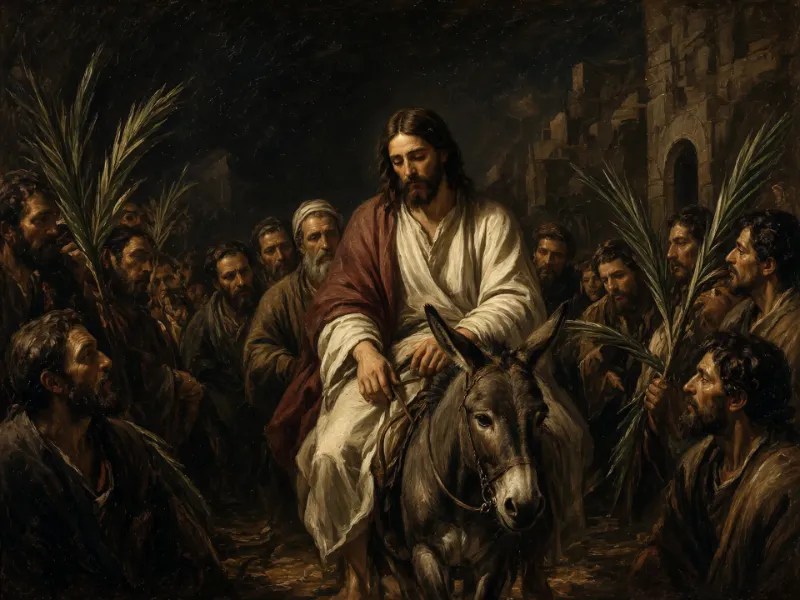
The Story in Our Hearts: Uncovering the Timeless Truth and Surprising Power of the Apostles’ Creed
In the fourth century, the great bishop and saint, Ambrose of Milan, described the Apostles’ Creed with a beautiful intimacy. He called it a “spiritual seal, our heart’s meditation and an ever-present guardian; it is, unquestionably, the treasure of our soul”.¹ For nearly two thousand years, these words have been more than a simple prayer or a list of doctrines. They have been a song sung by the global family of faith, a firm anchor in the storms of doubt, and a faithful summary of the story of God’s love that we carry in our hearts.²
The Creed is a gift, handed down through generations as a faithful echo of the apostles’ own teaching.¹ It stands as the “irreducible minimum of the Christian faith,” a declaration of the core truths that have united believers across continents and centuries.⁴ In a world of shifting beliefs and deep uncertainty, the Creed offers clarity, heritage, and a powerful sense of belonging to something ancient, true, and unshakable.
This exploration will journey through the rich history and deep meaning of this sacred text. We will uncover the beautiful legends of its origins and the historical reality of its formation in the fires of the early Church. We will walk through its powerful phrases, examine its place in the great traditions of Christianity, and see why its clear, foundational truths are more necessary today than ever. This journey is an invitation to move beyond mere recitation and to discover how this ancient story can become the living, breathing treasure of our own souls.
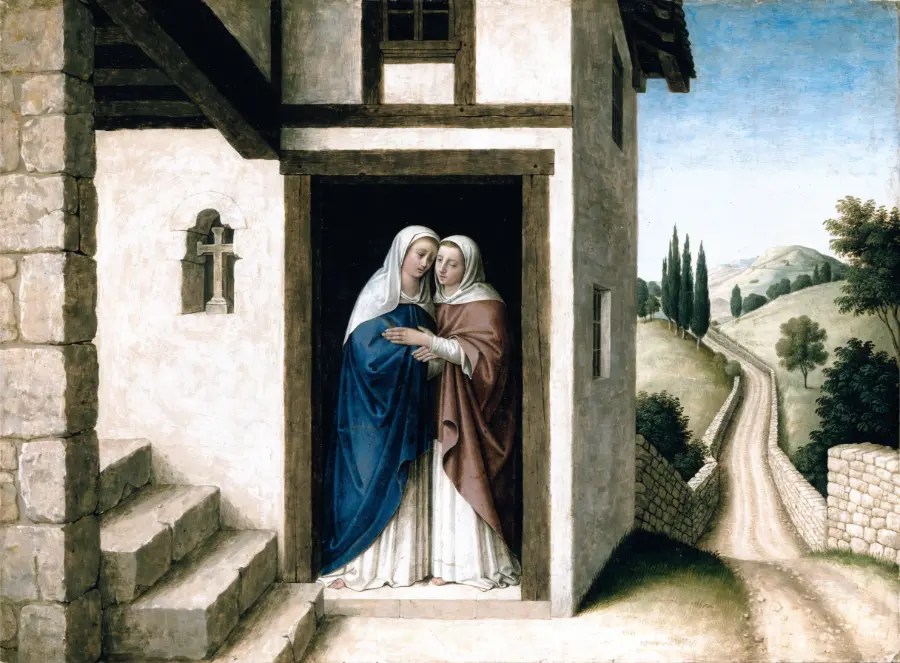
Did the Twelve Apostles Really Write the Creed?
For centuries, a beautiful and cherished tradition has been passed down through the Church. The story tells that on the very day of Pentecost, as the Holy Spirit descended in tongues of fire, the twelve apostles were divinely inspired to compose the Creed together. In this sacred moment, it was believed that each apostle contributed one of the twelve articles of faith, creating a perfect and complete summary of the gospel message.⁵ This legend, which gained widespread belief throughout the Middle Ages, was mentioned by influential Church Fathers in the late fourth century. Ambrose of Milan spoke of the Creed as being “pieced together by twelve workmen,” and Rufinus of Aquileia wrote that it was the joint work of the apostles on Pentecost.⁵
While this legend is powerful and inspiring, historical evidence suggests a different, though no less miraculous, story of the Creed’s origin. Rather than being written in a single moment, the Creed developed organically over the first few centuries of the Church’s life, growing out of the very heart of its worship and mission.⁷ Its roots lie in what the early Church called the “Rule of Faith” (
regula fidei). This was an unwritten summary of the core teachings of the apostles—about the Father, the Son, and the Holy Spirit—that circulated as early as AD 100.⁵ Church leaders like Irenaeus, Tertullian, and Origen referred to this common body of truth as “the teaching of the church preserved unaltered and handed down in unbroken succession from the apostles”.⁵
This Rule of Faith became a practical tool in the life of the early especially in the sacrament of baptism. Before a new convert, or catechumen, could be baptized, they had to confess their faith. In Rome, around the year AD 200, a bishop would ask a series of questions: “Dost thou believe in God the Father almighty?” “Dost thou believe in Christ Jesus, the Son of God…?” “Dost thou believe in the Holy Spirit, the holy and the resurrection of the flesh?”.⁷ The candidate’s simple affirmation, “I believe,” was a powerful public declaration. This baptismal formula, recorded by early writers like Hippolytus, became known as the “Old Roman Creed” and is the direct ancestor of the Apostles’ Creed we know today.⁵ Over the next several centuries, this text was refined until it reached its final, familiar form in southwestern France around the eighth century.⁸ By the twelfth century, it was officially acknowledged as the universal profession of faith for the entire Western Church.⁸
This historical journey reveals a truth that is perhaps even more powerful than the legend of the twelve authors. The question of who physically penned the words is less important than the source of their authority. The Creed is called the “Apostles’ Creed” not because they were its co-authors, but because it is universally recognized as a “faithful summary of the apostles’ faith”.¹ Its words contain the very heart of the apostolic gospel, the truth handed down from Jesus to His disciples and faithfully guarded by the Church. Its name is not a claim about its literary origins, but a powerful statement about its theological authority. It is “apostolic” because it faithfully proclaims the apostles’ message, making it a direct and unbroken link to the foundational truths of Christianity.²
Why Was the Creed Created in the First Place?
The Apostles’ Creed was not formed in a peaceful, academic library; it was forged in the crucible of a young Church facing immense challenges. It was born in a time of “external threat, internal division, and danger of heresy,” and it served two vital purposes: to be a shield against false teaching and a symbol of unity for believers.³ Its primary function was to serve as a clear “yardstick of correct belief,” allowing the faithful to easily distinguish truth from error.¹³
The most major threat the early Creed confronted was a pervasive and dangerous heresy known as Gnosticism.⁵ The Gnostics taught a complex set of beliefs that struck at the very heart of the gospel. They believed that the physical, material world was evil and had been created not by the one true God, but by a lesser, flawed deity. Consequently, they denied that the supreme God would ever take on a physical body or that our own evil bodies could be resurrected.² Salvation, for them, was not about forgiveness of sins but about obtaining secret knowledge (
gnosis) available only to a spiritual elite.
Nearly every line of the Apostles’ Creed can be read as a direct and powerful refutation of these Gnostic errors.
- The Creed begins, “I believe in God, the Father almighty, Creator of heaven and earth.” This single line affirms that the good, physical world was made by the one, all-powerful God, directly contradicting the Gnostic belief in an evil creator god.⁵
- It continues by anchoring Jesus firmly in human history: “…born of the Virgin Mary, suffered under Pontius Pilate, was crucified, died and was buried.” This list of tangible, historical, and physical events was a direct counter to the Gnostic idea that Christ was a pure spirit who only appeared to be human but did not truly suffer or die.²
- Finally, the Creed proclaims belief in “the resurrection of the body.” This was a radical and defiant statement against the Gnostic contempt for the physical world. It declared that our bodies are not evil prisons to be escaped from, but are good creations that matter to God and will be redeemed and made new.⁵
Beyond being a defensive shield, the Creed was also a powerful tool of unity. In an era before printing presses, when most Christians did not own a personal copy of the Scriptures, this short, simple, and memorizable summary provided a “common language” of faith.¹⁰ It ensured that a believer being baptized in Rome, a family praying in Gaul, and a soldier converted in North Africa were all confessing the same foundational truths.³ It was a practical instrument for discipleship, helping new Christians to retain sound theology and to feel connected to the one, universal Church.²
This original purpose explains the Creed’s focused brevity. A person examining it for the first time might wonder why it omits certain important doctrines, such as the nature of the sacraments, the structure of the Church, or the inspiration of Scripture.⁵ The answer lies in its historical context as a baptismal confession. It was never intended to be an exhaustive encyclopedia of every Christian belief. Instead, it was designed to be a map of the essential, non-negotiable truths—the very beliefs that were under attack and were considered necessary for salvation.¹⁴ It powerfully answers the fundamental question: “What must one believe to be called a Christian?” Its brevity is not a flaw, but a feature, providing the foundational outline of the faith that protects every believer from getting lost from the very beginning of their journey.

What Do We Actually Mean When We Say “He Descended into Hell”?
Of all the phrases in the Apostles’ Creed, perhaps none has caused more confusion or concern than the statement, “He descended into hell.” It can conjure images of Jesus suffering further torment after the cross, but this is a misunderstanding of the original language and the powerful theology behind the words.
It is crucial to clarify that the “hell” mentioned here is not the place of eternal punishment for the damned where Satan resides.¹⁰ The original Latin phrase,
ad inferos, and its Greek equivalent, which uses the word hades, both refer to the “abode of the dead” or simply “the grave”.⁹ This was the general state or realm that, before Christ’s resurrection, was understood to be the destination of all souls after death, whether righteous or unrighteous. To avoid this very confusion, many modern translations of the Creed now render the line as “he descended to the dead”.⁸
The theological meaning of this descent is rich and layered. Primarily, it is a powerful affirmation that Jesus’s death was real. He did not merely appear to die or faint on the cross; He entered fully into the human condition of death.¹⁷ His spirit was separated from His body, just as it is for all who die. Some early Church Fathers, like Rufinus, even suggested that the phrase was simply a stronger way of saying He “was buried,” emphasizing the finality of His death.⁹
But the descent was not an act of defeat; it was an act of triumph. It signifies that Christ’s victory over sin and death is absolute and extends even to the realm of the dead itself. Ancient Christian tradition, drawing from passages like 1 Peter 3:19, taught that Christ went to this realm to proclaim His victory and to liberate the souls of the righteous—figures like Abraham, Moses, and David—who had died in faith and were awaiting their Savior.¹⁸ He entered the stronghold of death and broke its gates from the inside. It is worth noting that this clause was a later addition to the Creed, first appearing in texts from the late fourth century and not becoming a standard part of the text until around AD 650.⁵ Its inclusion, however, solidified a belief that was already a cherished part of Christian teaching.
Beyond the theological technicalities lies a deeply comforting pastoral truth. This phrase is the ultimate statement of Christ’s solidarity with humanity. He did not just die for us; He experienced death as we do, entering the very state that we fear most. He walked through the “dark valley” of the shadow of death so that we would never have to face it alone or without hope.¹⁹ His descent transforms this line from a confusing historical footnote into a powerful promise. It tells us that there is no place—not even the grave—where His love and power cannot reach. He has conquered death from within, ensuring that for all who are in Him, the grave is not a final destination but a passageway to resurrection.
How Does the Apostles’ Creed Differ from the Nicene Creed?
Alongside the Apostles’ Creed, the Nicene Creed stands as one of the great foundational statements of the Christian faith. Although they share the same core beliefs, they arose from different historical contexts and were designed to serve different purposes, resulting in important differences in their language and liturgical use.
The two creeds have distinct origins. The Apostles’ Creed, as we’ve seen, grew organically out of baptismal confessions used in the Western particularly in Rome. It was intended as a personal declaration of faith, which is why it begins with “I believe…”.²⁰ Its purpose was to provide a simple, memorable summary of essential beliefs for new Christians. The Nicene Creed, on the other hand, was formulated by two great ecumenical councils of bishops—the Council of Nicaea in 325 and the Council of Constantinople in 381. It was designed to be a definitive and universal statement for the entire East and West, which is why it begins with the collective “We believe…”.⁵ Its specific purpose was to combat the Arian heresy, a widespread and dangerous teaching that denied the full divinity of Jesus Christ, claiming He was a created being and not co-eternal with the Father.⁸
Because of its anti-heretical purpose, the Nicene Creed is much more detailed and theologically precise, especially concerning the identity of Jesus and the nature of the Trinity. It uses specific philosophical language to leave no room for misinterpretation. For example, where the Apostles’ Creed simply states belief in “Jesus Christ, his only Son, our Lord,” the Nicene Creed expands this with a series of powerful clauses: “…eternally begotten of the Father, God from God, Light from Light, true God from true God, begotten, not made, one in being with the Father” (or consubstantial in Latin, homoousios in Greek).²¹ This last phrase, “one in being with the Father,” was the definitive statement that affirmed Christ’s full divinity and dealt a fatal blow to Arianism.⁸ The Nicene Creed also offers a more developed statement about the Holy Spirit, calling Him “the Lord, the Giver of Life, who proceeds from the Father and the Son”.²²
These different origins have led to different roles in the Church’s worship. Traditionally, the Apostles’ Creed is the creed of baptism and is used in daily prayer services, known as the Daily Office, in traditions like the Anglican and Catholic churches.²¹ The Nicene Creed is historically the great creed of the Eucharist, or Holy Communion, recited during the main Sunday worship service in Catholic, Orthodox, Anglican, and many other liturgical traditions.²¹ It is worth noting, however, that in the modern Catholic Mass, the Apostles’ Creed is now permitted as an alternative, particularly during the seasons of Lent and Easter.²¹
Table 1: The Two Great Creeds at a Glance
The following table places the two creeds side-by-side, highlighting the key additions in the Nicene Creed that were formulated for greater theological precision.
| Article of Faith | The Apostles’ Creed | The Nicene Creed |
|---|---|---|
| The Father | I believe in God, the Father almighty, Creator of heaven and earth. | We believe in one God, the Father, the Almighty, maker of heaven and earth, of all that is, seen and unseen. |
| The Son | I believe in Jesus Christ, his only Son, our Lord, who was conceived by the Holy Spirit and born of the Virgin Mary. | We believe in one Lord, Jesus Christ, the only Son of God, eternally begotten of the Father, God from God, Light from Light, true God from true God, begotten, not made, one in being (consubstantial) with the Father. Through him all things were made. For us and for our salvation he came down from heaven… |
| The Passion | He suffered under Pontius Pilate, was crucified, died, and was buried; he descended into hell. | For our sake he was crucified under Pontius Pilate; he suffered death and was buried… |
| The Resurrection | On the third day he rose again from the dead. He ascended into heaven and is seated at the right hand of God the Father almighty. | …and rose again on the third day in accordance with the Scriptures. He ascended into heaven and is seated at the right hand of the Father. |
| The Judgment | From there he will come to judge the living and the dead. | He will come again in glory to judge the living and the dead, and his kingdom will have no end. |
| The Holy Spirit | I believe in the Holy Spirit… | We believe in the Holy Spirit, the Lord, the giver of life, who proceeds from the Father and the Son. With the Father and the Son he is adored and glorified. He has spoken through the Prophets. |
| The Church | …the holy catholic Church, the communion of saints… | We believe in one, holy, catholic and apostolic Church. |
| Salvation/Eternity | …the forgiveness of sins, the resurrection of the body, and the life everlasting. Amen. | We acknowledge one baptism for the forgiveness of sins. We look for the resurrection of the dead, and the life of the world to come. Amen. |
What is the Catholic Church’s Stance on the Creed?
Within the Catholic the Apostles’ Creed is not merely an ancient prayer; it is held as a foundational treasure of the faith. The Catechism of the Catholic Church gives it a place of special honor, calling it “the ancient baptismal symbol of the Church of Rome”.¹ Its immense authority, the Catechism explains, flows from the fact that it is considered “the Creed of the Roman the See of Peter, the first of the apostles, to which he brought the common faith”.¹ It is revered as a “faithful summary of the apostles’ faith,” a direct link to the Church’s very origins.¹
The Creed’s importance is most powerfully demonstrated by its role as the architectural blueprint for the Church’s primary teaching document. The entire first section of the Catechism of the Catholic Church, titled “The Profession of Faith,” is structured around the twelve articles of the Apostles’ Creed.¹⁵ Each fundamental truth of the faith—from the nature of God to the mystery of redemption and the work of the Holy Spirit—is explained as an unfolding of the articles of the Creed. This shows that the Creed is not just one prayer among many, but the very framework through which the Catholic faith is taught and understood. It functions, as the Catechism notes, as “the oldest Roman catechism”.²⁵
This foundational role means the Creed is woven into the very fabric of Catholic devotional and liturgical life.
- The Holy Rosary: This beloved and widespread Catholic devotion begins with the recitation of the Apostles’ Creed. This practice grounds the meditative prayer of the Rosary in the fundamental, objective truths of the faith, ensuring that devotion is always connected to sound doctrine.²¹
- The Rite of Baptism: The Creed remains central to the sacrament of baptism. Often, in a question-and-answer format that echoes its ancient origins, those being baptized (or their parents and godparents) profess their faith by responding to the articles of the Creed. It is also used during the Easter Vigil and at other times when the faithful renew their baptismal promises.²¹
- The Mass: Although the Nicene Creed is the traditional and more common profession of faith recited on Sundays and major feast days, the Roman Missal gives general permission for the Apostles’ Creed to be used in its place. This is considered especially appropriate during the liturgical seasons of Lent and Easter, which have a strong focus on baptism and conversion.²¹
The Creed’s role in the Catholic Church thus extends far beyond that of a simple statement of belief. It functions as the spiritual DNA of Catholic teaching and identity. Just as DNA provides the foundational code that structures a living organism, the Apostles’ Creed provides the essential framework that structures the entire body of Catholic doctrine in the Catechism. This “code” is then replicated and expressed throughout the Church’s life, from its most formal liturgy in the Mass to its most personal devotions like the Rosary. It is the source code from which Catholic identity, teaching, and prayer are continually expressed and passed on to each new generation.
How Do Protestant and Orthodox Christians View the Creed?
Although the Apostles’ Creed originated in the ancient Western its influence has extended far beyond the bounds of Catholicism, playing a major but varied role across the different branches of Christianity.
The vast majority of Protestant denominations that have roots in the 16th-century Reformation embrace the Apostles’ Creed as a core statement of their faith. Traditions such as Lutherans, Anglicans/Episcopalians, Presbyterians/Reformed, and Methodists all accept and regularly use the Creed in their worship and teaching.⁸ The Reformers themselves held it in the highest esteem, seeing it not as a man-made tradition to be discarded, but as a precious and accurate summary of Scripture’s essential message. The Heidelberg Catechism, a foundational document for the Reformed tradition, uses the Apostles’ Creed as the very outline for what all Christians must believe for salvation.²⁸ For Protestants, the Creed has “ministerial authority”; that is, like the moon reflecting the sun, it faithfully reflects the light of Scripture, which alone has ultimate “magisterial authority”.²
Of course, there are some minor variations and points of discussion among Protestants. Some denominations, like the United Methodist officially permit the omission of the line “He descended to the dead” (or “hell”) due to its potential for confusion.⁸ The phrase “holy catholic Church” can also be a stumbling block for those who mistakenly associate it only with the Roman Catholic Church. To avoid this, some Protestant traditions, particularly in the Lutheran stream, have historically substituted the phrase “holy Christian church”.¹² In all cases, however, the word “catholic” in the Creed is understood in its original sense, meaning “universal”—referring to the one, global body of Christ across all times and all places.¹² Even in historically “non-creedal” traditions like many Baptist churches and Churches of Christ, which often operate under the slogan “no creed but Christ,” leaders and theologians will readily affirm that they agree with the
doctrinal content of the Creed, even if they do not recite it as part of their formal worship.³⁰
The view from the Eastern Orthodox Church is quite different. Although the Orthodox would agree with the theology expressed in the Apostles’ Creed, they do not use it in their liturgy or as an official prayer of the Church.¹³ The reason is not theological but historical and jurisdictional. The Apostles’ Creed is seen as a local creed of the Western with its specific origins in Rome.³² The Orthodox Church exclusively uses the Nicene-Constantinopolitan Creed, which was affirmed by the great ecumenical councils of the fourth century. Because these councils represented the authority of the entire, undivided Church—both East and West—the Nicene Creed is considered the one, true universal symbol of faith.³² The non-use of the Apostles’ Creed is therefore a matter of adhering to the authority of the ecumenical councils, not a rejection of the Creed’s orthodox teachings.
This divergence reveals the fascinating and complex ecumenical role the Apostles’ Creed plays. It serves as one of the most important theological bridges connecting Roman Catholicism and Protestantism. As a shared heritage that predates the Reformation, it highlights the vast common ground upon which both traditions stand.³ Yet, its very identity as a
Western creed makes it a quiet marker of the historical and liturgical divergence between the Christian West (Catholic and Protestant) and the Christian East (Orthodox). It is a symbol of unity for some and a sign of separate historical paths for others, reflecting the rich and complicated story of the global Christian family.
Do Christians Today Still Believe What the Creed Says?
Reciting the Apostles’ Creed connects modern believers to an ancient stream of faith. But does the average person in the pews today actually hold to the specific, powerful truths articulated in the Creed? Recent statistical studies from respected research organizations like Pew Research Center, Barna Group, and Lifeway Research paint a complex picture: while a majority of Americans identify as Christian, there is a major and growing gap between that identity and a firm grasp of core Christian doctrine.
According to a major 2023-24 Pew Research study, 62% of U.S. Adults still identify as Christian, and an even larger majority (83%) believe in God or a universal spirit.³⁴ On the surface, this suggests a nation with a strong Christian foundation. But when researchers ask more specific questions that align with the articles of the Creed, a widespread doctrinal confusion becomes apparent. This “Creedal Gap” reveals that many who identify as Christian hold beliefs that are inconsistent with the historic, orthodox faith summarized in the Creed.
Consider the following areas of belief:
- The Trinity: A 2020 study by Lifeway Research and Ligonier Ministries found that while 72% of Americans affirm the basic definition of the Trinity, their understanding is often flawed. The same study revealed that a shocking 59% of self-identified evangelicals believe the Holy Spirit is an impersonal “force” rather than a personal being. A third of all Americans believe that God the Father is more divine than Jesus, a view that directly contradicts the doctrine of the Trinity.³⁶
- The Deity of Christ: The same study found that 52% of U.S. Adults agree with the statement, “Jesus was a great teacher, but he was not God”.³⁷ This belief, while respectful of Jesus as a moral figure, denies the central claim of the Creed and of Christianity itself.
- The Resurrection: Belief in the resurrection remains relatively strong, but it is not as solid as one might assume. The 2020 Lifeway study found that two-thirds (66%) of Americans believe the biblical accounts of Jesus’ bodily resurrection are completely accurate.³⁷ But an earlier study noted that only 47% of evangelicals “strongly agree” with this statement, indicating a softness in conviction even among the most committed believers.³⁸
- Salvation by Grace: The Creed affirms the “forgiveness of sins” as a gift. Yet, a 2014 Lifeway study found that 71% of Americans believe that people must contribute their own effort to earn their salvation.³⁶ This reflects a drift away from the biblical doctrine of salvation by grace through faith alone.
Table 2: A Snapshot of American Faith: The Creedal Gap
This table starkly visualizes the chasm between the historic affirmations of the Creed and the current beliefs of many Americans. It transforms abstract percentages into a compelling case for the enduring need for clear, foundational teaching.
| Creedal Doctrine | What the Creed Affirms (Simplified) | The Statistical Reality (% of U.S. Adults/Evangelicals) | Source |
|---|---|---|---|
| The Trinity | One God exists as three co-equal Persons: Father, Son, and Holy Spirit. | 72% agree with the definition of the Trinity, BUT… 59% of Evangelicals say the Holy Spirit is a force, not a person. 33% of Americans say the Father is more divine than Jesus. | Lifeway 36 |
| Deity of Christ | Jesus Christ is God’s only Son, our Lord. | 52% of Americans agree Jesus was a great teacher, but not God. | Lifeway 37 |
| The Resurrection | On the third day, Jesus rose again from the dead. | 66% of Americans believe the biblical accounts of the resurrection are completely accurate. | Lifeway 37 |
| Salvation by Grace | We receive forgiveness of sins through Christ. | 71% of Americans believe people must contribute their own effort to salvation. | Lifeway 36 |
| Exclusivity of Christ | Jesus is the only Son, our Lord. | 45% of Americans believe there are many ways to get to heaven. | Lifeway 36 |
Why Has the Creed’s Popularity Faded in Some Churches?
The doctrinal confusion and the “Creedal Gap” evident in modern society did not arise in a vacuum. They are, in many ways, the direct and predictable result of a gradual fading of creedal confession and catechesis in some corners of the Church over the last two centuries. Several historical and cultural shifts contributed to this decline.
One of the most major factors was the rise of the “no creed but the Bible” or “no creed but Christ” movements, particularly in 19th-century America. These movements, which gave birth to traditions like the Churches of Christ, were often born from a sincere and admirable desire to restore the “purity” of the New Testament church and to cast off the denominational divisions that seemed to be fueled by competing human-made creeds.³⁰ This effort to prioritize Scripture, however, sometimes led to a broad suspicion of
all historical confessions of faith, even those, like the Apostles’ Creed, that were universally held as accurate summaries of biblical teaching.²
In the early 20th century, the conflict between theological modernism and fundamentalism further complicated the role of creeds. As liberal theology began to question and deny core biblical truths like the virgin birth and the resurrection, fundamentalists rose to defend the faith. In this heated battle, some evangelicals became wary of anything that felt like “dead religion” or empty tradition. The focus shifted heavily toward the necessity of a personal conversion experience and a literal interpretation of the Bible, which, while vital, sometimes came at the expense of appreciating the wisdom and necessity of historical, communal confessions of faith.³⁸
More recently, in some contemporary church cultures, the emphasis has shifted toward emotional expression and a desire for “authenticity” in worship.³⁸ For some, the corporate recitation of a set text like the Creed can feel like “mindless repetition” that stifles a genuine, personal expression of faith.⁴⁰ The focus moves from what “we believe” as a historic community to how “I feel” in a present moment.
The connection between these trends and the doctrinal confusion seen in surveys is undeniable. The widespread uncertainty about the Trinity, the deity of Christ, and the nature of salvation is the predictable consequence of de-emphasizing the very tools that the Church created to prevent such confusion. The creeds and catechisms were designed to be guardrails, summarizing the clear teachings of Scripture to keep believers firmly on the path of truth. When generations of Christians are not taught using these time-tested guides, it is natural that many will drift into theological error. The current “Creedal Gap” is a powerful testament to the fact that neglecting the Creed is not without consequence; it directly impacts the health and clarity of the Church’s belief.
How Can Saying the Creed Transform My Personal Faith?
The Apostles’ Creed is more than a historical artifact, a theological shield, or a statistical benchmark. At its heart, it is a tool for personal transformation—a way for the grand truths of the gospel to take root in our individual lives. Its power is unleashed when we move from simply reciting the words to allowing them to shape our hearts.
The Creed begins with a powerful personal declaration: “I believe.” As many have reflected, this is not the same as saying, “I think,” or, “I acknowledge that…” It is not mere intellectual assent to a list of facts, but a pledge of personal trust, loyalty, and allegiance.⁴ When we say “I believe,” we are making a choice, a decision to say “yes” to God and to the truth He has revealed. It is a statement about a relationship, not just a set of propositions.⁴¹
This personal declaration becomes a powerful anchor in the storms of life. In moments of crisis, pain, or doubt, when our own thoughts are chaotic and our own words fail us, the ancient words of the Creed can provide a firm place to stand. One person shared a powerful testimony of a time when his wife and newborn child were in desperate medical situations. In his fear and uncertainty, he found he could not form his own prayers. Instead, he clung to the words he knew by heart: the Lord’s Prayer and the Apostles’ Creed. They were a rock of stability when his own strength had crumbled, words spoken by centuries of saints that he could hold onto.²³ The Creed gives us words when we have none.
The Creed can be read not as a dry list of doctrines, but as a beautiful song of God’s love. Many believers have found that reflecting on the love behind each phrase transforms its meaning.⁴²
- “I believe in God, the Father almighty, creator…” becomes a joyful confession that we are not cosmic accidents, but were created in love by a good Father.⁴²
- “I believe in Jesus Christ, his only Son…” becomes a breathtaking acknowledgment that God loved the world so much that He was willing to become one of us, to walk among us, and to die for us.⁴³
- “I believe in the Holy Spirit…” becomes a comforting assurance that God’s love has been poured into our hearts and that His presence dwells with us always, uniting us to the “communion of saints”.⁴²
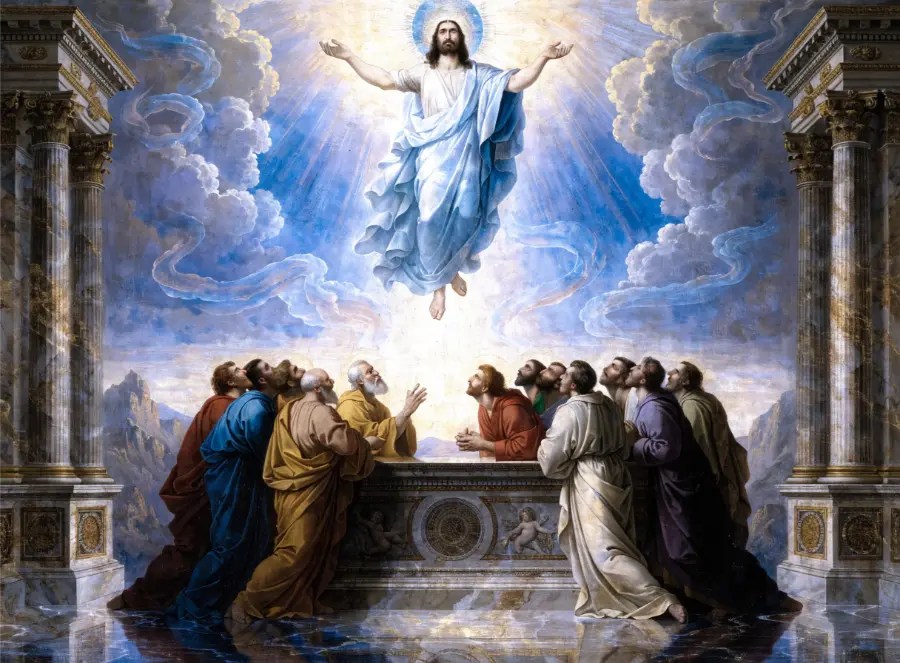
The Creed connects our small, individual stories to God’s great, overarching story of redemption. It provides the epic narrative, from the dawn of creation to the hope of “life everlasting,” and invites us to find our place within it.² When we confess these truths, we are reminded that our lives are not random or meaningless, but are part of a divine plotline filled with purpose and hope. It is as if Jesus, in His ascension, passed the baton of His story to the Church, and in reciting the Creed, we take that baton and continue the race.⁴⁴
This reveals the Creed’s deepest transformative power. It is not just a list of beliefs to be affirmed, but a story to be inhabited. The difference is like looking at a map of a city versus actually living in that city, walking its streets, and knowing its people. When we regularly and thoughtfully confess the Creed, it begins to form us. It reminds us of our true identity: we are beloved creatures of a loving Creator; we are redeemed sinners saved by a gracious Lord; we are Spirit-filled members of a global family. It shifts the foundation of our identity away from our fleeting feelings or circumstances and onto the eternal, unshakeable reality of who God is and what He has done for us.
Conclusion
The journey of the Apostles’ Creed is the story of the Christian faith in miniature. It began as a simple profession whispered at the waters of baptism, grew into a mighty shield that defended the Church from confusion, and remains today a timeless treasure for believers around the world. It is a testament to God’s faithfulness, who has preserved the core of the apostolic message through centuries of change and challenge.
This ancient text is far more than a historical relic. In an age of doctrinal ambiguity, it offers stunning clarity. In a culture of radical individualism, it offers powerful community. In a world of uncertainty, it offers a firm foundation. It is a gift that defines our faith, defends its truths, and unites us with the great “communion of saints” who have confessed these same words throughout history.
Let us, then, embrace this gift. Let us recite the Creed not by rote, but with reverence and reflection, allowing its truths to sink from our heads into our hearts. Let us claim it as our own, so that it may become for us what it was for Saint Ambrose and countless souls since: a “spiritual seal, our heart’s meditation and an ever-present guardian.” For in these simple, powerful words, we find the story of our salvation, the anchor for our souls, and the precious treasure of our faith.¹


Leave a Reply