
 English
 Chinese
 Dutch
 Arabic
 Spanish
 Portuguese
 Russian
 French
 Italian
 German
 Japanese
Juliana is not in the Bible, but Julia is — greeted by name in the last chapter of Romans. And the woman who made Juliana matter in English wrote the first book in the language known to be by a woman.
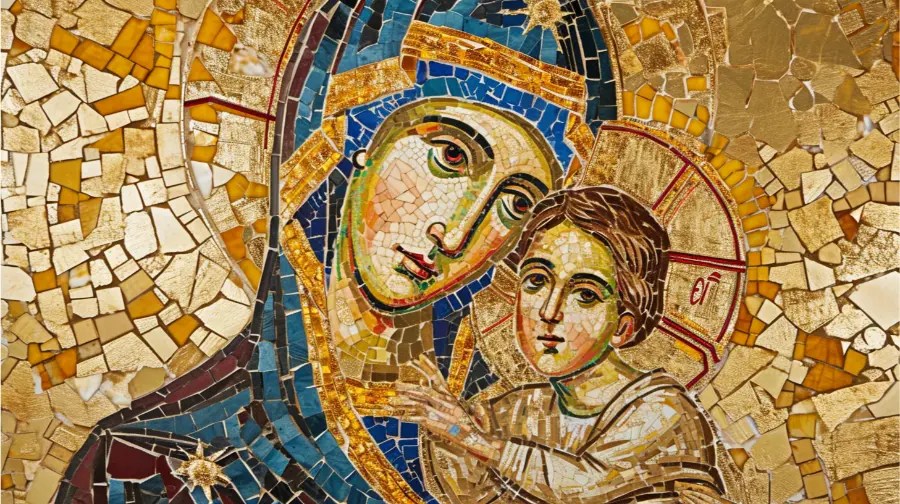
What the name means
Juliana is the feminine of Julianus, itself from Julius — the Roman family name of the gens Julia, the clan of Julius Caesar.
Like most Roman names it says which household a person belonged to rather than what they were like. Julia, Julie, Gillian and Jill are all relatives.
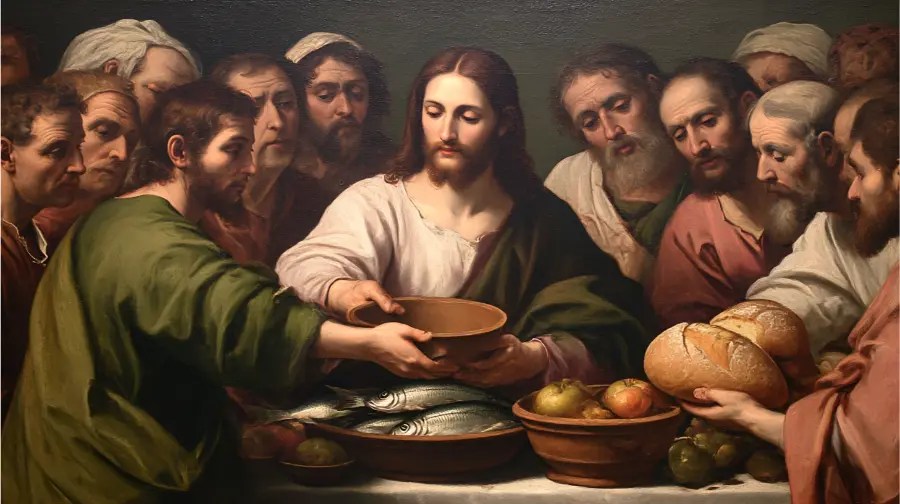
The Julia in Romans
The nearest the name comes to Scripture is one line: Greet Philologus, Julia, Nereus and his sister, and Olympas and all the Lord’s people who are with them. (Romans 16:15)
That is her entire appearance, and the company matters. Several names in that chapter — Philologus, Nereus, Olympas — are the kind borne by slaves and freed people in Rome, and Julia was extremely common among women connected to the imperial household, including freed slaves who took the family name.
Paul had never visited the city and greets twenty-six people by name.

Julian of Norwich
Her actual name is unknown. She is called Julian after the church of St Julian in Norwich, to which her cell was attached — an anchorite’s room with a window into the church and a window onto the street.
In May 1373, at about thirty, she was gravely ill and believed to be dying. During that illness she received a series of visions, recovered, and spent the next two decades thinking about them before writing the longer account.
Revelations of Divine Love is the earliest surviving book in English known to be written by a woman.

What she actually says
The sentence everyone knows is this one: all shall be well, and all shall be well, and all manner of thing shall be well.
Quoted alone it sounds like consolation of the cheapest kind. In its setting it is not.
She is pressing a hard question — why sin was permitted at all — and she does not receive an explanation. What she reports being told is that sin is necessary, and that all shall be well. She writes plainly that she wanted more and did not get it.
The line is an answer withheld, restated three times until it will hold weight. She knew perfectly well that it did not explain anything, and she wrote it down anyway.
She also writes about God in maternal terms — Christ as our mother — at a length and with a directness unusual for her century, and derived from a reading of the incarnation rather than from sentiment.
Verses for a Juliana
Greet Philologus, Julia… (Romans 16:15) — the whole of the name’s appearance, and the reason a directory of the faithful exists at all.
As a mother comforts her child, so will I comfort you. (Isaiah 66:13)
And we know that in all things God works for the good of those who love him. (Romans 8:28) — the verse Julian’s famous line is usually paired with, and which is similarly harder than its reputation.

A blessing for Juliana
May we ask the hard question and accept not being answered.
May we say the true thing three times until it holds.
And may we be content, like Julia, to be one name in somebody else’s list.
Frequently asked
Is Juliana a biblical name?
Not directly. Julia is — greeted in Romans 16:15 — and Juliana is the feminine of Julianus, from the same Roman family name.
What does Juliana mean?
It belongs to the Julian family, the clan of Julius Caesar. Roman names of this kind say which household a person came from.
Who was Julian of Norwich?
An anchorite whose real name is unknown; she is called after the church her cell adjoined. She received visions during a grave illness in 1373 and wrote Revelations of Divine Love, the earliest surviving book in English known to be by a woman.
What does “all shall be well” mean?
It is an answer withheld rather than an explanation. She asked why sin was permitted, did not receive a reason, and recorded the line — three times over — knowing it explained nothing.


Leave a Reply