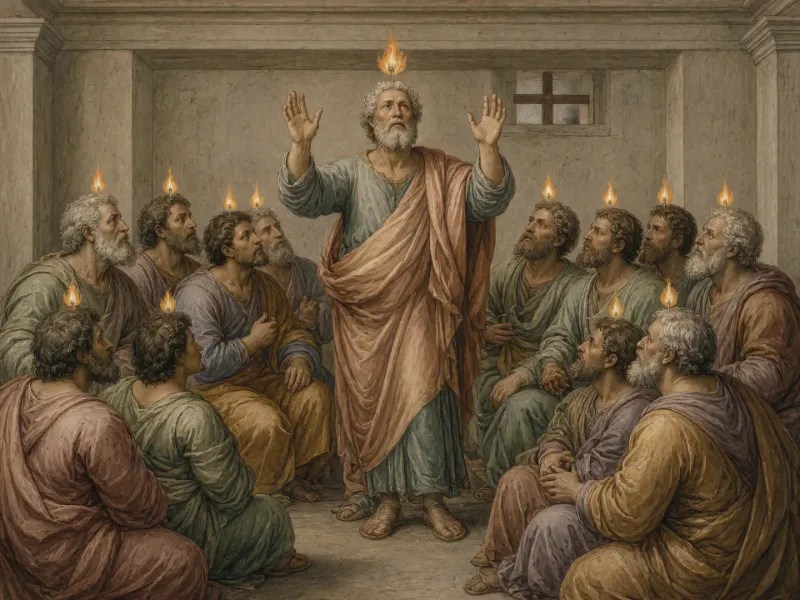
Esta entrada é a parte 2 de 70 da série Estudo Bíblico: Os Leões Brancos são Mencionados na Bíblia?
Christian Pure Team
Bibliography:
Berman, M. (2013). Georgia Through Its Legends, Folklore, and People.
Dimitrieva, O. (2024). I.S. Shmelyov’s Last Supper: the image of bread and wine in the epic The Sun of the Dead. Russian Language at School.
Fernández-Caparrós, A. (2021). Horses and Cowboys on the Contemporary American Stage: The Horse as Prop in Sam Shepard’s Kicking a Dead Horse and Sarah Ruhl’s Late: a cowboy song. Studies in Theatre & Performance, 43, 91–107.
Grumett, D. (2017). Book Review: Tradition and Reform: Sarah Withrow King, Animals Are Not Ours (No, Really, They’re Not): An Evangelical Animal Liberation Theology. The Expository Times, 128, 251–252.
Hwang, J.-B. (2007). A New Confession of Faith With an EcoTheology and a FatherCentred Trinitarianism: a Critical Study of the 2ist Century Confession of Faith of the Presbyterian Church of Korea. International Review of Mission, 96, 128–141.
Klangwisan, Y. (2016). The third body: Cixous’ feminine trinity. Hecate, 42, 84.
Landingham, M. V. (1993). The Dying and the Dead in Gratian’s Decretum. Comitatus-a Journal of Medieval and Renaissance Studies, 24.
Lorencec, L. G. C. (2019). Understanding the natural ancient origin of oil versus a biblical Genesis Flood origin of oil.
Moore, M. R. (2008). Black Black Patriarchy, and the Brilliant Queer: Competing Masculinities in Langston Hughes’s Blessed Assurance. African American Review, 42, 493.
PRAKASH, R. (2022). ANIMAL SYMBOLS IN THE HEROIC STONES NAṬUKAṞKAḶIL VILAṄKUC CIṈṈAṄKAḶ(#). Muallim Journal of Social Science and Humanities.
Carpenter, E. (1959). Alcohol in the Iroquois dream quest. American Journal of Psychiatry, 116, 148–151.
Carpenter, E. (1981). Alcohol in the Iroquois Dream Quest. RES: Anthropology and Aesthetics, 1, 84–87.
Skrzypaszek, J. (2012). Conversion and Identity in the Context of the Seventh-Day Adventist Faith Tradition.
Sweetser, E. (2013). and Chartres¯: Religious spaces as performative real-space blends.
Calabi, F. (2024). I sogni di Giuseppe il Patriarca e le visioni della sua sposa Aseneth. Materiali Di Estetica. Terza Serie.
Gevaryahu, G. (2010). Ketovet Ka’aka (Leviticus 19:28): Tattooing or Branding? Jewish Bible Quarterly, 38.
Hendel, R. J. (2011). Joseph: A Biblical Approach to Dream Interpretation. Jewish Bible Quarterly, 39, 231.
Hołubowski, R. (2019). Sen nasz powszedni a śnienie nasze niezwykłe. Czy Bóg może objawiać się przez sny. 18, 55–68.
Lenard, M. (2014). The Gospel of Amy: Biblical Teaching and Learning in Charles Dickens’ Little Dorrit: Christianity and Literature, 63, 337–355.
Miller, T. (2011). Writing Dreams to Good: Reading as Writing and Writing as Reading in Chaucer’s Dream Visions. Style, 45, 528.
Nicol, G. G. (2020). Can a Prophet be Trusted. . . or Not?. . . And, If Not Always, When? The Expository Times, 132, 43–44.
Noegel, S. B., Bar, S., & Schramm, L. J. (2001). A Letter That Has Not Been Read: Dreams in the Hebrew Bible.
Schoenfeld, D. (2007). Madness and Prophecy: Dreams, Texts, and the Power of Rabbinic Interpretation. Pastoral Psychology, 56, 223–235.
Stenschke, C. (2014). Dabbesheth – Dreams and Dream Interpretation. Volume 6 of Encyclopedia of the Bible and Its Reception, Dale C. Allison, Hans-Josef Klauck, Volker Leppin, Choon-Leong Seow, Hermann Spieckermann, Barry Dov Walfish and Eric Ziolkowski, (Eds.)¯: book review.
Inscreva-se agora para continuar a ler e ter acesso ao arquivo completo.