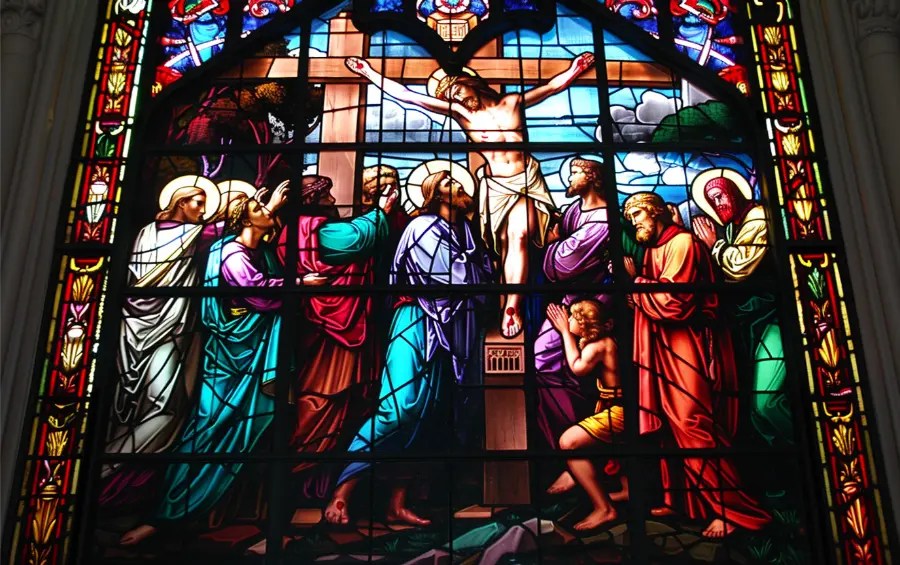
Facts & Statistics about Mary, mother of Jesus


  • Mary, the mother of Jesus, is a figure of extraordinary love and strength, revered across various Christian and world religions.
  • Her parents, Saints Joachim and Anne, dedicated her to God at a young age, reflecting a life of faith leading to her acceptance of God’s will during the Annunciation.
  • Mary holds more titles than anyone else in history, each representing different aspects of her role in salvation and her relationship with humanity.
  • She is honored in various traditions, including Islam, and remains a source of inspiration in art and music, while also being a model of faith for all believers.

A Mother’s Love: 10 Inspiring Facts and Truths About Mary

In the story of our faith, there are figures who stand like towering mountains, their peaks touching the heavens, and there are those who feel as close and as comforting as a familiar path through a quiet wood. Mary, the mother of Jesus, is somehow both. She is the woman chosen by God for the most extraordinary role in human history, exalted above all angels and saints.¹ Yet, she remains profoundly human, a mother whose love, courage, and quiet strength resonate in the heart of every believer. She is not a distant, historical figure, but a living, loving presence—our mother, given to us by Christ Himself from the Cross.

Her story is one of surprising depth and universal appeal, touching hearts not only across every Christian tradition but even in other great world religions.² To know her is to know her Son better. To understand the facts and truths about her life is to uncover a treasure of faith, hope, and love. Let us embark on a journey to discover this remarkable woman, not just through what we know, but through what her story reveals about God’s incredible love for each of us.

Who Were Mary’s Parents and What Was Her Childhood Like?

Although the Gospels introduce us to Mary at the moment of the Annunciation, a beautiful and ancient tradition, held dear by the Church for centuries, gives us a loving glimpse into the family that prepared her for her incredible destiny. This tradition tells us that Mary’s “yes” to God was not a single, isolated moment, but the beautiful fruit of a life that was consecrated to Him from the very beginning.

Her parents are known to us as Saints Joachim and Anne.³ Their story is one of deep piety and patient faith. Like many of God’s chosen ones in the Old Testament, such as Abraham and Sarah or Hannah, the mother of the prophet Samuel, Joachim and Anne were an elderly couple who bore the deep sorrow of being childless.⁵ Their desire for a child was not just a personal wish, but a powerful spiritual longing. They prayed fervently, promising that if God blessed them with a child, they would dedicate that child to His service. Mary’s birth was their miracle, a direct and loving answer to their faithful prayers.⁶

True to their vow, when Mary was just three years old, her parents brought her from their home in Nazareth to the great Temple in Jerusalem. There, they presented her to the priests, consecrating her to God’s service in a powerful act of love and trust.¹ In this holy place, among other children dedicated to the Lord, Mary’s life was set apart. Tradition also holds that she took a personal vow of virginity, a radical and uncommon choice for a young Jewish woman of her time, which signaled the unique path God had prepared for her.¹

Despite this extraordinary calling, Mary’s life was one of powerful humility. She was, by all accounts, a “poor girl in an insignificant town” 7, living a simple and hidden life. Church tradition suggests she was skilled in the domestic arts of her day, such as weaving and embroidery, painting a picture of a diligent, quiet, and faithful soul preparing for a destiny she could not yet imagine.⁶

These traditional accounts, though not found in the Bible, reveal a vital spiritual truth. They show that Mary’s world-changing acceptance of God’s will was the culmination of a lifetime of faith. The narrative of her parents’ barrenness deliberately echoes the great stories of the Old Testament, signaling that her birth was a pivotal moment in salvation history, carefully orchestrated by God. Her consecration in the Temple shows a pre-existing, radical commitment. Therefore, when the Archangel Gabriel appeared to her, he was speaking to a soul already prepared, a heart already living a life of deep prayer and dedication. Her famous fiat—”let it be done”—was the beautiful and logical conclusion to every small “yes” she had already given to God in the quiet moments of her hidden life. This is a source of immense encouragement for us all, teaching that our own ability to say “yes” to God in the big moments of our lives is built upon the foundation of our small, daily acts of faith, prayer, and love.

How Many Names Does Mary Have? (The Answer is Astounding!)

It is a fascinating statistic that Mary, the humble girl from Nazareth, is the woman with more names and titles than any other person in history.⁹ This is not just a piece of trivia; it is a powerful testament to the countless ways that the faithful, over two millennia, have experienced her powerful intercession and motherly love. Each title is like a facet on a diamond, revealing a new aspect of her beauty and her role in our lives. These names form a vast web woven from Scripture teaching, poetry, and the personal experiences of believers around the world.¹⁰

Her titles can be understood in several beautiful categories. First are the Dogmatic Titles, which are foundational names that protect the core truths of our faith. These include Богородицей (a Greek word meaning “God-bearer” or Mother of God), Blessed Virgin Mary, Immaculate Conception, and Queen Assumed into Heaven.¹ Then there are the

Biblical and Early Church Titles, which flow directly from the pages of Scripture or the devotion of the earliest Christians. These include “Full of Grace,” from the angel’s greeting; “Queen Mother,” drawing on the ancient Israelite tradition of the king’s mother being the queen (Gebirah); and the poetic title “Star of the Sea” (Stella Maris), a name given by St. Jerome.²

A third category includes the beautiful Poetic and Devotional Titles, many of which are found in prayers like the Litany of Loreto. These titles, such as “Mystical Rose,” “Tower of Ivory,” and “Ark of the Covenant,” use rich Old Testament symbolism to help us contemplate her virtues and her purity.¹⁴ Finally, there are the beloved

Apparition Titles, which tie Mary to a specific time and place where she has appeared to her children, showing her ongoing care and concern. Names like Our Lady of Guadalupe, Our Lady of Lourdes, and Our Lady of Fatima remind us that she is a mother who is always near.⁷

A Mother’s Many Names
Title Origin & Meaning What This Means for Us
Mother of God A dogmatic title from the Council of Ephesus (431 AD), affirming that her Son, Jesus, is truly God.12 Mary gives us Jesus, our Savior, and shows us the incredible dignity God bestows on humanity by choosing one of us to be His mother.
Queen of Heaven Based on the biblical tradition of the Queen Mother (Gebirah); as the mother of the King of Kings, she holds a place of honor.13 She has a mother’s powerful influence in heaven and can present our prayers and needs directly to her Son, the King.
Star of the Sea An ancient devotional title (Stella Maris) used by sailors who looked to the stars for navigation in dark and stormy seas.11 In the storms and darkness of our own lives, she is a steady beacon of hope who lovingly guides us to the safe harbor of heaven.
Untier of Knots A popular modern devotional title, she helps us with life’s most tangled problems, struggles, and sins.15 We can confidently turn to her with all our anxieties, family problems, and personal failings, trusting that she will patiently help us find a solution.

The very history of these titles tells a story. It reveals the Church’s own growing relationship with Christ over 2,000 years. The earliest titles are personal and rooted in the Gospels, like “Blessed” and “Mother of my Lord”.¹³ Then came the great dogmatic titles, born from the need to defend the true faith. The title

Богородицей was formally adopted not just to honor Mary, but to protect the essential truth that Jesus is one divine person against heresy.¹² Honoring Mary became a powerful way to profess the true faith in her Son.

Later, as the faith matured, the poetic and devotional titles blossomed, showing the heart of the Church contemplating the beautiful mysteries it had defined with its mind. Finally, the explosion of apparition titles in the modern era reveals a faith that experiences Mary as an active, present, and even local mother, intervening in specific places and times to care for her children. This journey shows that our relationship with Mary is meant to be dynamic and personal. She meets us exactly where we are, whether we need a defender of truth, a model of virtue, or a mother’s comforting presence in our own particular struggle.

Was Mary a Theologian and a Musician?

It is easy to imagine Mary as a quiet, simple, and passive young woman. But the Gospels, though brief in their descriptions of her, reveal a spirit of astonishing depth and intellect. When we look closely at her words, we discover not just a humble servant, but a powerful theologian and a gifted musician whose song of praise continues to shake the world.

The most powerful evidence of this is her beautiful hymn, the Magnificat, recorded in the Gospel of Luke (Luke 1:46-55).¹⁹ This is no simple prayer of thanks; it is a masterpiece of theological insight and prophetic fire. Mary proclaims a “revolution,” singing of a God who “scatters the proud,” “brings down rulers from their thrones,” and “lifts up the humble”.²⁰ These are not the words of a timid girl, but of a prophet who understands the very heart of God’s plan for salvation history. Her song also reveals her deep knowledge of the Scriptures. It is beautifully woven with themes and phrases from the Old Testament, especially the prayer of Hannah in the First Book of Samuel, showing that Mary was a woman who prayed with and deeply meditated on the Word of God.²⁰ For centuries, artists have intuitively understood this, often depicting Mary at the Annunciation as literate and studious, holding a book of Scripture.²⁰

This powerful song also suggests something beautiful about her soul: Mary may have been a musician at heart.²¹ When she needed to express the deepest truths of her being—her joy, her awe, her understanding of God’s mercy—her chosen medium was music.²¹ This paints a tender picture of the home in which Jesus was raised. It is fascinating to note that Jesus Himself quoted from the Psalms—the ancient hymnbook of Israel—more than any other book of the Old Testament. One can easily imagine that His love for this sacred music was first instilled in Him by His mother, who sang to Him before He was born and filled their home in Nazareth with songs of praise.²¹

The Magnificat completely reframes our understanding of Marian virtues like meekness and humility. In our world, these qualities are often mistaken for weakness or passivity. But in Mary, they are the very source of her prophetic strength. It is precisely because she is humble—because she has completely emptied herself of pride with the words, “Behold, I am the handmaid of the Lord”—that she can be completely filled with God’s spirit and see the world through His eyes. Her prophetic voice is so powerful потому что her heart is so humble. She embodies the great paradox of Christian strength: true power flows from total surrender to God. This is an incredibly empowering message for us. It teaches that we do not need to be loud, proud, or powerful in the eyes of the world to make a difference. If we, like Mary, cultivate a humble heart and a deep relationship with God, He can speak His powerful truths through us, too.

What Does the Catholic Church Teach About Mary?

For Catholics, the teachings about Mary are not complicated rules to be memorized, but beautiful truths that shine a brighter light on her Son, Jesus. They are gifts that help us understand the mystery of our salvation more deeply. Although these beliefs can sometimes be a point of confusion for other Christians, they all flow from one central reality: the Incarnation. Because God chose to enter our world through Mary, she holds a unique and honored place in His plan.²² The Catholic Church holds four foundational beliefs about her, known as the Marian Dogmas.

  1. Mary, the Mother of God (Богородицей): This is the most ancient Marian dogma, formally defined at the Council of Ephesus in 431 AD.²⁴ At its heart, this title is all about Jesus. It joyfully proclaims that the baby Mary conceived, carried, and gave birth to was not just a holy man or a prophet, but was truly God Himself, the Second Person of the Holy Trinity who became man for our salvation.¹² To call Mary the “Mother of God” is one of the clearest ways we can profess our faith that Jesus is fully divine.
  2. Mary’s Perpetual Virginity: This dogma teaches that Mary remained a virgin before, during, and after the birth of Jesus.¹ This belief highlights the miraculous and utterly unique nature of the Incarnation. Jesus’s conception was not the result of a human act, but a direct and divine intervention of the Holy Spirit in human history.²⁷ When the Bible mentions the “brothers of Jesus,” the Church has always understood this in the context of ancient language, where words for “brother” were also used for cousins and other close relatives. The fact that Jesus, while dying on the cross, entrusted His mother’s care to the Apostle John, rather than to any other sons, is powerful scriptural evidence that she had no other children.²²
  3. The Immaculate Conception: This beautiful doctrine, proclaimed a dogma in 1854, teaches that Mary, by a singular grace from God and in view of the merits of her Son, was preserved free from the stain of original sin from the very first moment of her conception.¹ This does not mean she didn’t need a Savior. Rather, it means the grace of Christ’s future sacrifice on the Cross was applied to her at her conception in a unique way.²⁶ God prepared her to be a perfectly pure and holy vessel—a new “Ark of the Covenant”—fitting to carry God Himself in her womb.
  4. The Assumption: This dogma, defined in 1950, declares that at the end of her earthly life, Mary was “assumed body and soul into heavenly glory”.¹ Her body, which had been the sacred tabernacle of the Son of God, was not permitted to suffer the corruption of the grave. She was granted, in advance, the same bodily resurrection that is promised to all the faithful at the end of time.

When we look at these four truths together, they tell a magnificent story—the story of our own salvation. They are not just isolated facts about Mary. The title Mother of God tells us about the прошлом—the historical reality that God became man for us. The Immaculate Conception tells us about благодать—the incredible power of Christ’s redemption to conquer sin completely. The приснодевство Марии tells us about sanctity—the unique holiness of God’s presence in the world. And the Assumption points us to our будущем—the glorious promise of our own resurrection and eternal life with God. Mary is the first to receive the full fruits of her Son’s victory, and in her, we see the beautiful destiny that awaits all who follow Him. She is the living icon of this entire story of hope.

How is Mary Honored in Other Christian Traditions?

While devotion to Mary is most visible in the Catholic love for the Mother of Jesus is a beautiful, shared heritage that crosses many denominational lines. Understanding how she is honored in other traditions can deepen our own appreciation for her and build bridges of Christian unity.

Католическая церковь Православных церквях hold Mary in extremely high honor, a reverence that mirrors Catholic devotion in many ways.²⁹ They too use the ancient and powerful title

Богородицей, “God-bearer,” and consider her to be the highest of all more honorable than the angels themselves.⁵ They celebrate her “Dormition,” or “falling asleep,” on August 15, which is their understanding of her glorious Assumption into heaven.³⁰ A key difference lies in their understanding of her sinlessness. The Orthodox believe that Mary was born with a fallen human nature, just like every other human being. But through her perfect and constant cooperation with God’s grace, she

выбрал never to commit a personal sin.³² This perspective beautifully emphasizes the power of human free will working in harmony with God’s grace on the path to holiness.

The story of Mary within Протестантизм is more complex and has changed over time. It is a surprising fact for many today that the first Protestant Reformers held Mary in very high esteem.³⁴ Martin Luther, for example, continued to believe in her perpetual virginity and even her Immaculate Conception. John Calvin referred to her as the “Mother of God” and criticized those who dismissed these traditional beliefs out of hand.³⁵

Over the centuries, But many Protestant traditions grew wary of Marian devotion, fearing it could slide into “Mariolatry,” or the worship of Mary, which is due to God alone.³⁵ They worried that honoring Mary could distract from Christ’s unique role as the one mediator between God and humanity. The core of this disagreement often comes down to fundamental questions about salvation. Catholic and Orthodox doctrines that highlight Mary’s active “yes” to God—her cooperation with His plan—can seem to conflict with the core Protestant principles of salvation by

Sola Gratia (grace alone) and Sola Fide (faith alone).³⁴

The different Christian perspectives on Mary are often a reflection of deeper theological questions: How does God’s grace work in our lives? And what is the role of the human person in their own salvation? Catholic and Orthodox traditions see Mary as the “New Eve”.³ Just as the first Eve’s “no” was a real, consequential human act, Mary’s “yes” was a real, free, and necessary act of human cooperation with God’s plan. In this, she becomes the perfect model, or icon, of the which is also called to say “yes” to God and bring Christ into the world. Some streams of the Protestant tradition, emphasizing God’s “irresistible grace,” view Mary more as a passive recipient of God’s plan, chosen to be a vessel but without the same level of active cooperation.³⁴ Understanding this fundamental difference allows for a more charitable and intelligent dialogue between Christians, recognizing that the conversation about Mary is really a conversation about the very nature of grace and our relationship with God.

Does Mary Appear in Other World Religions?

In what is surely one of the most surprising and beautiful facts about her, Mary’s influence extends far beyond the bounds of Christianity. She is a figure of immense reverence and love in Islam, holding a place of honor that is truly astonishing. For many Christians, discovering this shared love for Mary can be a powerful and eye-opening experience.

In Islam, Mary is known as Maryam, and she is considered the greatest woman in all of creation.² Her stature is so high that an entire chapter of the Quran, Surah 19, is named in her honor—a distinction given to no other woman.² The Quran explicitly affirms the miraculous virgin conception of her son, Isa (the Arabic name for Jesus), and recounts the story of the annunciation in a way that is remarkably similar to the Gospel of Luke.²

The titles given to Maryam in Islam are also stunning in their parallels to Christian belief. She is called Tahira, which means “one who has been purified.” Islamic tradition holds that Maryam and her son Isa were the only two people in creation to have never been touched by Satan at any point.² This belief in her unique purity resonates deeply with the Catholic doctrine of the Immaculate Conception. She is also called

Siddiqah, “she who believes sincerely and completely,” and Qanitah, “she who is constantly submissive to God in prayer”.²

This shared reverence is not a theological coincidence. It suggests that the story of Mary—her purity, her faith, and her unique role in salvation history—contains a universal spiritual truth that resonates deeply with the human heart, even across different doctrinal frameworks. Despite the major theological differences between Christianity and Islam, particularly concerning the divine nature of Jesus, both faiths converge on the exceptional holiness of His mother. For Islam to honor her so highly in its sacred text is an extraordinary testament to her global spiritual importance. This shared love for Mary can serve as a powerful point of connection, a bridge for mutual respect, dialogue, and peace between two of the world’s great religions. Beyond Islam, she is also held in high regard in the Baháʼí and Druze faiths, further cementing her status as a figure of universal appeal.²

How Many People Visit Mary’s Shrines Each Year?

If we want to see Mary’s powerful and ongoing presence in the world today, we need only look at the numbers. The statistics on pilgrimage to Marian shrines are nothing short of awe-inspiring, a modern testament to a faith that is alive and active. These are not just historical sites; they are vibrant centers of prayer and conversion that draw tens of millions of people every single year.

The sheer scale of this phenomenon is breathtaking. When combined, the major Marian shrines around the globe welcome well over 30 million pilgrims annually.³⁸

  • Католическая церковь Basilica of Our Lady of Guadalupe in Mexico City stands as one of the most visited holy sites in the entire world. An incredible 20 million pilgrims journey there each year to pray before the miraculous image of Mary left on the cloak of St. Juan Diego.³⁹
  • In Portugal, the Sanctuary of Our Lady of Fátima, where Mary appeared to three young shepherd children, attracts around 6 million faithful annually.³⁹
  • Католическая церковь Sanctuary of Our Lady of Lourdes in France, famous for its healing waters, draws over 5 million pilgrims each year seeking physical and spiritual renewal.³⁹
  • In Brazil, the Basilica of the National Shrine of Our Lady of Aparecida, the second-largest Catholic church in the world, receives 8 million visitors a year.³⁸

What makes these statistics even more powerful is the humble origin of these sacred places. These global centers of faith were not established by the decrees of popes or the plans of theologians. They were born from God’s preference for the small and the lowly. They began with the simple, trusting “yes” of a poor Aztec man in Mexico (St. Juan Diego), a young peasant girl in France (St. Bernadette Soubirous), and three little shepherd children in Portugal.¹⁶

These modern-day statistics serve as a living, breathing confirmation of the very words Mary herself proclaimed in her Magnificat over 2,000 years ago. She sang, “He has lifted up the lowly… From now on all generations will call me blessed.” The story of these shrines is a modern-day parable of the mustard seed. From the tiniest seeds of faith, planted in the hearts of the most humble and unlikely people, God has grown mighty trees whose branches now shelter millions upon millions of souls. This connects the ancient words of Scripture to our modern world in a tangible, data-driven way. It shows us that God’s promises are still being fulfilled today, and that Mary’s motherly care is a real, active force that continues to draw countless people to her Son.

How Did Mary Inspire the World’s Greatest Art and Music?

For two millennia, Mary has been a muse for the human spirit. Her story of grace, sorrow, and love has inspired an immeasurable treasury of art and music, some of the most beautiful creations in the history of civilization.⁴⁰ This immense cultural legacy is another powerful sign of her enduring importance.

The artistic journey begins in the earliest days of the faith. The very first images of Mary are found painted on the walls of the Roman Catacombs, dating back to the 2nd century. These simple frescoes depict a real historical woman holding her child, a testament to the early Christians’ belief in the Incarnation.⁴⁰ After Christianity was legalized in the 4th century, Marian art blossomed. Magnificent mosaics and icons began to adorn the great basilicas of Rome, like Santa Maria Maggiore.³⁸

Over the centuries, art became a way for the Church to teach and contemplate the mysteries of Mary’s life. In the Byzantine era, she was often depicted as the majestic Богородицей, an enthroned Queen, emphasizing her divine motherhood and royal dignity.⁴² During the Renaissance, masters like Michelangelo and Leonardo da VincLet us explore d her powerful humanity. Michelangelo’s heartbreaking

Pietà, showing Mary cradling the body of her crucified Son, captures her sorrow with a tenderness that still moves us to tears.⁴³ Different artistic styles were developed to express specific theological truths: the

Sedes Sapientiae (“Throne of Wisdom”) shows Christ seated on His mother’s lap as the source of all wisdom, Although the Mater Misericordiae (“Mother of Mercy”) depicts Mary sheltering the faithful under her protective cloak.¹¹

The world of music has been equally inspired. Timeless Gregorian chants like the Salve Regina (“Hail, Holy Queen”) have echoed in monasteries and cathedrals for over a thousand years.⁴⁵ Classical composers from every era have been moved to write settings of the “Ave Maria.” And this inspiration is not limited to the past. In a wonderful modern example, the Irish rock band U2’s powerful song “Magnificent” was directly inspired by Mary’s revolutionary song of praise, the Magnificat.⁴⁷ Countless contemporary hymns continue to be written, showing that her story still speaks to the hearts of musicians today.⁴⁸

The history of Marian art reveals a beautiful dialogue between two powerful truths: Mary’s majesty and her maternity. The Church has always been engaged in a holy effort to capture both her role as the exalted Queen of Heaven and her identity as our intimate, approachable mother. The greatest Marian art holds these two realities in a grace-filled tension. We see her on a magnificent throne, surrounded by angels, reminding us of her royal power; yet we also see her holding her child with a palpable, human tenderness that speaks directly to our hearts.⁴² This art teaches us how we should approach her in our own prayer: with the deep reverence due to a Queen, and with the complete confidence and intimacy we would show to our own loving mother.

What Are Some Surprising Traditions About Mary?

Beyond the great dogmas and famous artworks, the Church’s love for Mary has woven itself into the fabric of daily life, creating a delightful story of charming customs and surprising facts. These traditions reveal a faith that is not just for Sundays, but one that sanctifies the ordinary moments of our world.

Did you know that Mary has her own birthday party on the Church calendar? She is one of only three people—along with Jesus and St. John the Baptist—whose birthday is celebrated as a feast day (September 8th).⁵⁰ In parts of Europe, this day was traditionally linked to the end of summer and the start of the harvest. In France, winegrowers would call it “Our Lady of the Grape Harvest” and bring their best grapes to the church to be blessed.⁵⁰

Nature itself has been named in her honor. Many beautiful flowers are traditionally associated with Mary, reflecting her purity and virtue. The Rosary is often called a “crown of roses,” and a lovely legend says that the delicate blue Forget-me-not flower first sprang up as a reminder of the color of Mary’s loving eyes.⁹

Mary has even left her mark on the map of the United States. Many are surprised to learn that some famous American places were originally named for her. The city of Los Angeles was founded with the much longer name, “El Pueblo de Nuestra Señora la Reina de los Ángeles,” which means “The Town of Our Lady the Queen of the Angels.” And when the Catholic missionary Father Jacques Marquette explored the great central river of our continent, he named it the “River of the Immaculate Conception,” a name we now know as the Mississippi.⁹

Some of the most famous landmarks in the world are also tied to her. The magnificent Basilica of Santa Maria Maggiore in Rome was built following a miraculous summer snowfall that Mary requested in a dream.⁹ And the world-renowned Sistine Chapel, with Michelangelo’s famous ceiling, is officially dedicated to Mary under her title of the Immaculate Conception.⁹

These charming customs are more than just historical trivia. They are a powerful sign of an incarnational faith—a faith that sees God’s presence not as separate from our world, but as dwelling within it. Because God became flesh in the womb of Mary, the material world itself can become a place to encounter His grace. By associating Mary with the changing of the seasons, the blooming of a flower, or the founding of a city, our ancestors in the faith were “baptizing” the everyday world. They were showing us how to find God everywhere. These traditions encourage us to live an integrated faith, where our love for God and His mother can permeate everything we do and see, turning the ordinary into the sacred.

Why Is Mary a Perfect Model of Faith for Us Today?

After exploring the incredible facts, statistics, and traditions surrounding Mary’s life, we arrive at the most important question of all: what does she mean for us, here and now? The answer is simple and powerful. Mary is the perfect model of what it means to be a Christian, and she is our loving spiritual mother, who walks with us on our own journey of faith.⁵¹

Her entire life was defined by a courageous and unwavering trust in God. From the terrifying and confusing moment of the Annunciation to the heart-shattering sorrow at the foot of the Cross, her life was a continuous “yes” to God’s mysterious plan.⁵² This was not a blind or unthinking faith. The Gospels tell us twice that Mary “kept all these things, pondering them in her heart”.¹⁹ Her faith was deep and contemplative. She wrestled with the great mysteries of her life, but in the end, she always chose to trust in God’s goodness and love.

Most beautifully, she is not just a model to admire from a distance. She is our mother. In one of His final acts on the Cross, Jesus looked at Mary and the Apostle John and said, “Woman, behold your son,” and to John, “Behold, your mother” (John 19:26-27). In that moment, the Church has always understood that Jesus gave His own mother to be the mother of all believers.⁴ She cares for us, protects us, and prays for us with what one Orthodox writer beautifully called “motherly boldness”.³³ Her entire life, and everything the Church teaches about her, is meant to do one thing: point us directly to her Son, Jesus.²⁶

It can be easy to look at Mary’s perfection—her sinlessness, her perfect faith—and feel a sense of discouragement, as if she is an impossible standard we could never live up to. But the true spiritual understanding is exactly the opposite. Her perfection is not meant to discourage us; it is the very source of our greatest encouragement. Think of it this way: if you were lost in the wilderness, you would not want a guide who was just as lost as you are. You would want a guide who knows the path perfectly.

Mary has successfully completed the journey of discipleship that we are all on. She has reached the destination. Because she is our mother, her victory is not something she holds over us; it is a triumph she wants to share with us. Her perfect union with her Son in heaven gives her the power and the burning desire to help us, her children who are still struggling on the way. We should never be afraid to approach her because of our sinfulness. On the contrary, her very purity is what makes her the “Refuge of Sinners”.¹⁴ She is the one person who can understand our weakness with a mother’s compassion, without ever having been weakened by it herself. Her perfection is not a wall that separates us from her. It is a strong, loving hand reaching down to lift us up and lead us home to her Son.


Больше на Christian Pure

Оформите подписку, чтобы продолжить чтение и получить доступ к полному архиву.

Читать дальше

Поделиться...