 Chinese
  English
  Dutch
Dutch  Arabic
  Spanish
  Portuguese
  Russian
  French
  Italian
  German
  Japanese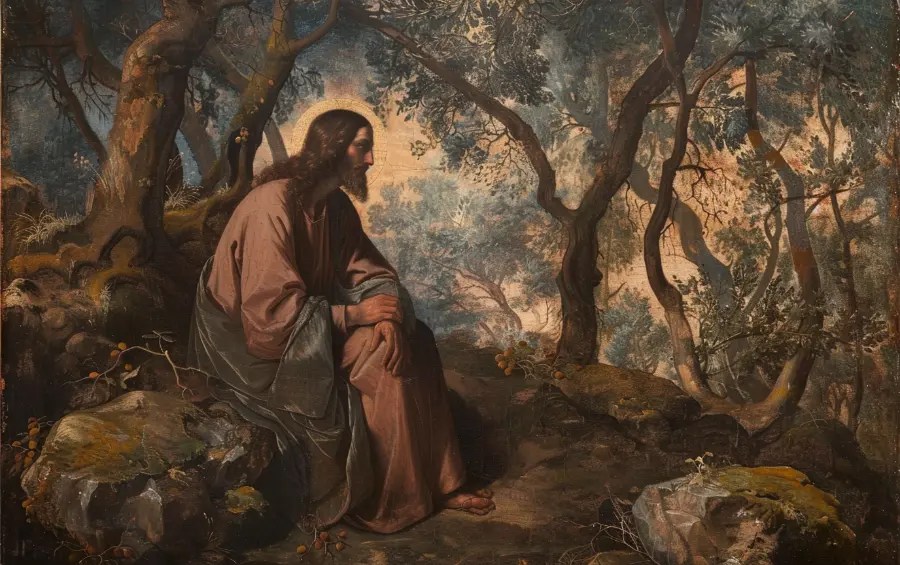
Continue reading with a subscription
Get unlimited access to all our premium content and exclusive features.
Enjoy unlimited access, cancel anytime.

Is Hadley a biblical name? After careful examination of the sacred scriptures, I can say with confidence that Hadley is not a biblical name in the traditional sense. It does not appear in the canonical texts of either the Old or New Testament. But we must remember that the absence of a name from scripture does not diminish its potential for spiritual significance or its capacity to reflect the divine image in which we are all created. I am deeply…
Get unlimited access to all our premium content and exclusive features.
Enjoy unlimited access, cancel anytime.
Amatullah, N. A. A. A., Najiyah, N. L. N. N., & Rohmaniyah, I. (2023). Intertextuality and Late Antiquity in Michael E. Pregill’s Interpretation of the Worship of the Golden Calf in Surah ThÄÂhÄÂ: 83-97. Jurnal Studi Ilmu-Ilmu Al-Qur an Dan Hadis.
Archibald, E. (2015). Bathing for Beauty in the Middle Ages. 53–71.
Cornell, C. (2019). Names of God in the Hebrew Bible. Oxford Research Encyclopedia of Religion.
Costache, D. (2013). Making Sense of the Creed with the Church Fathers.
Davidenko, P. A., & Teplykh, G. I. (2021). Features of teaching the course Epistles of St. Paul in a modern theological school: Problems and prospects. Issues of Theology.
Faith, C., Marshall, H., Lotz, J., Wilks, J., & Lynch, C. (2016). Evangelical Quarterly An International Review of Bible and Theology in Defence of the Historic Christian Faith.
Hadley, J. (2015). Ars Gratia Artis: The Freedom of the Arts in the Twentieth-Century Liturgical Reform and Today. Studia Liturgica, 45, 176–198.
Hall, T. L. (2003). American Religious Leaders.
In-Park. (2022). Reception of the Bible during the Eighteenth Century. The Oxford Handbook of the Bible in Korea.
IonuÈ›, V. (2024). ORTHODOX TEACHING ON TIME. Icoana Credintei.
Juzwik, M., Witte, R., Burke, K., & Prins, E. (2024). White Christian Nationalism, Biblical Proof Texting, and Literacy Curriculum and Instruction. Reading Research Quarterly.
Lee, A. (2018). Cross-Textual Interpretation as Postcolonial Strategy in Bible Translation in Asia. The Oxford Handbook of Postcolonial Biblical Criticism.
马拉尼亚克,A. (2023)。《基督教会的合一:使徒教父的诠释》。《索菲亚:人文与宗教研究公报》。
Mathews, E. G., Amar, J. P., & Mcvey, K. E. (1994). Selected Prose Works: Commentary on Genesis, Commentary on Exodus, Homily on Our Lord, Letter to Publius (The Fathers of the Volume 91).
Miller, P. (2003). Is There a Harlot in This Text? Hagiography and the Grotesque. The Cultural Turn in Late Ancient Studies, 33, 419–435.
Nchimunya, E. B. B. (2016). The Rights of a Girl-Child: The Significance of the Zambian Humanism and the Catholic Social Teaching for a Girl-Child Education in Zambia.
Osmushina, A. (2020). SOCIO-PHILOSOPHICAL SUBSTANTIATION OF THE THEORY OF JUSCTICE IN THE HOLY BIBLE AND IN THE TEACHINGS OF THE CHURCH FATHERS, M. LUTHER, J. CALVIN. Intelligence Innovations Investment.
Pawlikowski, J. (2022). Mordecai Would Not Bow Down: Anti-Semitism, the Holocaust, and Christian Supersessionism. By Timothy P. Jackson. Oxford: Oxford University Press, 2021. Pp. 288. 74.00 (cloth); 72.99 (digital). ISBN: 9780197538050. The Journal of Law and Religion, 37, 412–415.
Potoczny, M. R. (2020). The Theological Significance of Analogy Language in the Teaching of Syriac Fathers and its Impact on Theology of Today. Journal for The Study of Religions and Ideologies, 19, 199–209.
Renard, J. (2012). Fighting Words: Religion, Violence, and the Interpretation of Sacred Texts.
Rojek, P. (2024). Analytic patristics. Studies in East European Thought.
Sæbø, M., Machinist, P., & Ska, J. (2013). From modernism to post-modernism (the nineteenth and twentieth century).
Sarab’janov, V. (2013). Patronal’nye izobrazenija v programme rospisej Spasskoj cerkvi Evfrosin’eva monastyrja v Polocke. Zograf, 87–106.
Sedgwick, T. (2014). On moral teaching and the church¯: advances in ecumenical understanding. Journal of Ecumenical Studies, 49, 537–552.
Shoboiki, A. S. (2019). Mothers, Daughters and Othermothers: The Significance of Storytelling in Shaping my Identity as an African Woman.
Shostak, O. (2024). NATIVE AMERICAN HISTORIC MEMORY VS CATHOLIC TRADITIONAL DISCOURSE IN LOUISE ERDRICH’S NOVELS. Astraea.
Simic, K. (2017). Liturgical poetry in the Middle Byzantine period: Hymns attributed to Germanos I, Patriarch of Constantinople (715-730).
Sobré, J. M. (1987). The voice of God in medieval Catalan literature. 63, 143–148.
Stinchcomb, J. (2020). Judith H. Newman. Before the Bible: The Liturgical Body and the Formation of Scriptures in Early Judaism. New York: Oxford University Press, 2018. xiii + 178 pp. AJS Review, 44, 427–429.
The Voices Of Morebath Reformation And Rebellion In An English Village. (2022).
Vanhoozer, K., Bartholomew, C. G., Treier, D. J., & Wright, N. (2005). Dictionary for theological interpretation of the Bible.
Vassiliadis, P. (2019). The Holy and Great Synod of the Orthodox Church: Problems and its Ecclesiological Significance\*.
Zolotukhina, N., & Vlasova, T. V. (2023). The First Words about Justice in Russia (Izbornik 1076 and Bee). Rossijskoe Pravosudie.
Aguboshim, F. C. (2021). An exploration into the conceptual, factual and biblical significance of names. World Journal of Advanced Research and Reviews.
Akkuş, H. H., & Richardson, B. T. (2023). Bible Translations for Turkish-Speaking Muslims: Contemporary Considerations. The Bible Translator, 74, 431–452.
Amzallag, N., & Yona, S. (2019). A New Meaning of [inline-graphic 01](#)(#)(#)(#) in Biblical Hebrew: Evidence from the Theological Conflict in Isaiah 33:14. The Hebrew Student, 60, 175–189.
Beckman, G. (2003). Judith M. Hadley. The Cult of the Asherah in Ancient Israel and Judah: Evidence for a Hebrew Goddess. University of Cambridge Oriental Publications 57. Cambridge: Cambridge University Press, 2000. xv, 262 pp. AJS Review, 27, 105–106.
Beckman, J. (2015). Toward the Meaning of the Biblical Hebrew Piel Stem.
Ben-Noun, L. (2002). [Characteristics of anthrax: its description and biblical name–Shehin](#)(#)(#)(#). Harefuah, 141 Spec No, 4–6, 124.
Bowen, M. L. (2017). Their Anger Did Increase Against Me: Nephi’s Autobiographical Permutation of a Biblical Wordplay on the Name Joseph. Interpreter: A Journal of Mormon Scripture, 23.
Brenner, A. (2001). Prophets and Daniel.
Burton, M. E. (2017). Semantics of glory¯: a cognitive, corpus-based approach to Hebrew word meaning.
Cavaco, T. (2023). Almeida Bible—Keeping a Heritage Alive: The Historical Path and Current Challenges of a Seventeenth-Century Translation. The Bible Translator, 74, 148–161.
Cleaver, B. (2023). 口头圣经翻译及其在圣经翻译未来的作用。《圣经翻译者》,74,5–20。
Connoway, I., & Malherbe, J. (2023). Making Sense of Destruction: A Frame-Semantic Analysis of šḥt in the Hebrew Bible. Journal for Semitics.
Dapila, F. N. (2023). 穆斯林与基督徒翻译的帕萨勒语圣经:一项比较研究。《圣经翻译》,74,415–430。
Denzey, N. (2016). Biblical Allusions, Biblical Illusions: Hollywood Blockbuster and Scripture. Journal of Religion and Film, 8, 11.
Deutsch, A. (2016). The Separability of Morphological Processes from Semantic Meaning and Syntactic Class in Production of Single Words: Evidence from the Hebrew Root Morpheme. Journal of Psycholinguistic Research, 45, 1–28.
Długosz, N. (2023). Kto, kiedy i gdzie w Żywocie św. Konstantyna-Cyryla – klucz do lektury. Poznańskie Studia Slawistyczne.
Emerton, J. (1997). Congress volume¯: Cambridge, 1995.
Esterhuizen, L. (2019). Decolonising biblical trauma studies¯: the metaphorical name Shear-jashub in Isaiah 7:3ff read through a postcolonial South African perspective. Old Testament Essays, 31, 522–533.
Gordon, R. P. (2007). The God of Israel.
Hadley, Autry, J. L., & Lovett, E. O. (2012). SCANTILY CLAD SLIMES PARADE CITY ’ S STREETS Annual Night Shirt.
Hadley, C. (1947). NEWS AND NOTES. Journal of Politics, 1, 324–328.
Hadley, J. (2000). The Cult of Asherah in Ancient Israel and Judah: Evidence for a Hebrew Goddess.
Heny, H. (2021). Studi Eksegesis Terhadap Kata ‘Tanpa Alasan’ (εἰκῇ ) Pada Kata ‘Marah’ Dalam Matius 5:22 Menurut Naskah Byzantium Dan Komparasinya Terhadap Novum Testamentum Graece (Nestle-Aland Edisi Ke-27). Kaluteros Jurnal Teologi Dan Pendidikan Agama Kristen.
Hospitals and Urbanism in Rome, 1200–1500. Carla Keyvanian. Brill’s Studies in Intellectual History 251; Brill’s Studies on Art, Art History, and Intellectual History 12. Leiden: Brill, 2015. xvi + 448 pp. $194. (n.d.).
Iskandar, J., Daliman, M., Sugiyarto, K., Sukarna, T., & Ming, D. (2024). Biblical Study: The Proper Name of ×™×â€Ã—•×â€(Yahweh) that his People Forgot Based on Jeremia 23:23–24. European Journal of Theology and Philosophy.
Junker, J. (2016). The Hebrew Folktale History Genre Meaning.
Karacan, H., & Butt, A. (2021). The Antiquity of Kurmanji Kurdish and the Biblical Book of Nahum. 5, 90–96.
Kastner, I. (2016). Form and Meaning in the Hebrew Verb.
Lemanski, J. (2022). Dead Souls and Open Vessel. Is There a Need for a New Meaning of the Hebrew Word nefeš? Verbum Vitae.
Malka, O. (2021). On the Meaning of ×â€Ã–µ×¢Ö´×™×“ in Biblical Hebrew: Between Summoning Witnesses and Imposing Oaths. Vetus Testamentum, 1–22.
Merz, J. (2023). Bible Transmediation in Theory and Practice. The Bible Translator, 74, 213–230.
Mills, & Edward, J. (2015). Ezra & the Law in History & Tradition by Lisbeth Fried. International Social Science Review, 90, 9.
Morphological structure mediates the notional meaning of gender marking: Evidence from the gender-congruency effect in Hebrew speech production. (2019). Quarterly Journal of Experimental Psychology, 72, 389–402.
Naʾaman, N. (2024). Biblical Gilgal: A Common Place Name or a Cult Site near Jericho? Tel Aviv, 51, 59–72.
Olecka, A. (2024). Biblical name in Belarusian and Polish idioms. Studia Białorutenistyczne.
Olivero, V. (2023). Diachrony and the Meaning of the Preposition בֵּין in Ancient Hebrew. The Hebrew Student, 64, 151–159.
Panayotopoulou-Doulaveras’, V. (2013). The Hero Reborn? Representations of Achilles in Early- Modern Greek Verse Literature.
Shefer, H. (2018). The meaning and development of the Hebrew scalar modifier kexol. Topics in Linguistics, 19, 38–56.
Shor, L., & Inbar, A. (2019). The meaning of zehu in spoken Israeli Hebrew: Scandinavian Studies in Language.
Spronk, K. (2018). THE HUMAN BEING AS THE IMAGE OF GOD AND SLAUGHTERED IN THE NAME OF GOD: A BIBLICAL SUBVERSION OF ANCIENT AND MODERN CONCEPTS OF HUMAN DIGNITY. Scriptura.
Sukarna, T. (2021). Biblical Study on the Controversy of the Name of YHWH in Exodus 6: 3 (2). European Journal of Theology and Philosophy.
Vyazovskaya, V. V. (2024). N.S. LESKOV’S VIEWS TO A NAME (ONOMASTIC COMMENTARY). Proceedings of Southern Federal University. Philology.
Waddell, R. (2018). Spirit Hermeneutics or Biblical Interpretation by Any Other Name. Journal of Pentecostal Theology.
Wormald, M., Roberts, N., & Gifford, T. (2009). Ted Hughes¯: From Cambridge to Collected.
Zaluchu, S. E. (2021). Lowalangi: From the name of an ethnic religious figure to the name of God. HTS Teologiese Studies/Theological Studies.
