
 Arabic
 English
 Chinese
 Dutch
 Spanish
 Portuguese
 Russian
 French
 Italian
 German
 Japanese

10 Wonderful Truths About Jesus Every Child Should Know
Have you ever wondered about Jesus? Maybe you’ve seen pictures of him, heard stories in or sung songs about his love. It’s natural to have questions. In fact, asking big questions is one of the best ways to get to know someone, especially someone as amazing as Jesus. It’s a sign that your heart is curious and wants to understand more, and that is a wonderful thing.¹
This isn’t just a history lesson. This is an invitation to meet a person—the most important person who ever lived. We’re going to explore some incredible truths about him that might surprise you. We’ll discover that the Son of God lived a life that was, in many ways, a lot like yours. He was part of a family, he had brothers and sisters, he learned a job, and he had to do chores.³ He felt deep emotions, just like we do, from joy and love to anger at injustice and even anxiety about the future.³
Getting to know Jesus is the greatest adventure you can ever take. It’s about discovering a friend who is powerful enough to create the universe but loves you enough to know your name. He is a friend who understands you completely because he also lived, laughed, and even cried on this earth. So let’s begin this journey together and uncover some of the most wonderful truths about Jesus that every child should know.
Was Jesus’s Name Special, or Was It Common Like “Joe”?
When we think about the Son of God, we might imagine he would have a name that sounds powerful and unique, a name that no one else had. But one of the first surprising things we learn about Jesus is that God chose a different path, one filled with beautiful humility.
The Surprising Humility in His Name
The name “Jesus” was actually one of the most common names for a boy in first-century Israel.⁵ It was the Hebrew name
يشوع (a form of Joshua), and it was as popular back then as names like “Joe,” “Chris,” or “Brian” are today.⁶ This simple fact tells us something powerful about Jesus’s character. He didn’t come to Earth seeking fame or special status. From the very beginning, his name showed that he was approachable and relatable. God chose for His Son to enter the world not with a name that set him apart with a name that made him one of us, reflecting a deep and gentle humility.⁶ It was a name chosen by God himself, delivered to Mary by the angel Gabriel, showing that this commonness was a deliberate part of a divine plan.⁶
The Powerful Meaning Hidden in His Name
Even though the name was common, its meaning is anything but ordinary. The name يشوع means “Yahweh saves” or “the LORD saves”.⁵ Hidden within this everyday name was the secret of Jesus’s entire mission on Earth. Every time his friends called for him, every time his family spoke his name, they were unknowingly declaring the deepest truth of the gospel: God saves His people. This reveals a beautiful paradox at the heart of the Christian faith. We often think that greatness must be loud, rare, and attention-grabbing. But God shows us a different way. He veiled His magnificent plan of salvation in the humility of a common name, teaching us that true greatness is found not in being prominent in being loving and accessible. For every child, this is a powerful reminder that you don’t need a fancy name or special status to be incredibly loved and important to God.
What About the Name “Christ”?
It’s also important to know that “Christ” wasn’t Jesus’s last name.⁵ It is a title. “Christ” comes from the Greek word
كريستوس, which means “Anointed One”.⁵ This is the same meaning as the Hebrew word
المسيح. In ancient Israel, kings, priests, and prophets were anointed with oil as a sign that they were chosen by God for a special purpose. So, when we call him Jesus Christ, we are making a powerful declaration. We are saying that he is Jesus, the المسيح—the long-awaited King and Savior promised by God throughout the Old Testament, who came to rescue the world.⁷
What Was Jesus’s Childhood Like? Did He Have to Do Chores?
It can be easy to think of Jesus only as an adult, teaching crowds and performing miracles. But for 30 years, he lived a quiet, normal life—a life that sanctified, or made holy, the ordinary experiences that every child goes through.
A Real Family in a Real Town
Jesus grew up in a real family, with all the noise and busyness that comes with it. The Bible tells us he was not an only child. He had four half-brothers named James, Joses (or Joseph), Simon, and Judas, as well as at least two half-sisters.⁶ Imagine having the Son of God as your older brother! He lived with his family in Nazareth, a small town in the region of Galilee.⁶ Nazareth wasn’t a famous or glamorous place; in fact, some people looked down on it. In the Gospel of John, when a man named Nathanael hears that the Messiah is from Nazareth, he asks, “Can anything good come from Nazareth?”.³ This just shows, once again, that Jesus came from humble beginnings, which surprised many who expected a king to come from a grand city.
Learning a Trade: The Carpenter’s Son
Jesus’s earthly father, Joseph, was a craftsman, and in those days, sons almost always learned their father’s trade.⁴ Jesus was known in his hometown as “the carpenter” and “the carpenter’s son”.⁵ The Greek word for this job,
تيكتون, could mean someone who worked with wood it could also refer to a builder who worked with stone or other materials.⁸ This means Jesus knew what it felt like to work hard with his hands. He would have learned patience, discipline, and the satisfaction of building something strong and useful. He knew the feeling of a long day’s work and the simple dignity of a trade learned from a father.
A “Hidden” but Not an Empty Childhood
The Bible doesn’t share many stories from Jesus’s youth, which is why these are often called his “hidden years.” But this silence doesn’t mean his childhood was empty; it was full of the things that shape us all. We know his parents, Mary and Joseph, were devout Jews who raised him in a home centered on God’s love.⁸ They faithfully followed their religious customs, like traveling to Jerusalem each year for the great festival of Passover.⁹ The Gospel of Luke gives us a beautiful summary of these years, saying, “And the Child grew and became strong in spirit, filled with wisdom; and the grace of God was upon Him”.⁸ This tells us that Jesus had to grow and learn, just like any other child.
The choice to leave these years “hidden” is profoundly meaningful. It tells us that the 30 years of ordinary life—of being part of a family, learning a trade, living in a community, and being obedient to his parents—were just as important to God’s plan as his three years of public ministry. This is a comforting and beautiful truth. It means that a child’s everyday life—going to school, doing homework, helping with chores, playing with friends—is seen and valued by God. Jesus didn’t just come to perform miracles; he came to live a full human life, making every part of our own lives a holy space where we can meet him.
The Time Jesus Went Missing
The one detailed story we have from Jesus’s childhood is both amazing and very relatable. When he was 12 years old, his family went to Jerusalem for Passover. When the festival was over, they started the long journey home with a large group of relatives and friends. After a full day of travel, Mary and Joseph realized Jesus wasn’t with them.³ Imagine their panic! They rushed back to the city and searched for three days.
They finally found him in the Temple, sitting with the most learned religious teachers, listening to them and asking them questions. The Bible says that “all who heard him were amazed at his understanding and his answers”.⁹ When his worried mother asked why he had done this, Jesus replied with the first words of his recorded in Luke’s Gospel: “Why were you searching for me? Did you not know that I must be in my Father’s house?”.¹⁰ This shows that even as a boy, he had a unique understanding of who he was. Yet, the story also shows he was a real kid who could cause his parents a lot of stress! And what did he do next? He went home with them to Nazareth and “was obedient to them,” showing his respect for his earthly parents.¹⁰
What Did Jesus Look Like, and Does It Matter?
When we close our eyes and try to picture Jesus, what do we see? For many of us, the images that come to mind are from famous paintings, movies, or Sunday school pictures. These often show a man with long, light-brown hair, fair skin, and blue eyes.³ Although these artists created beautiful works to help us think about Jesus, it’s important to remember that these are just their ideas. They are not historical portraits.
A More Accurate Picture
So, what did Jesus really look like? The Bible gives us two very important clues: his ethnicity and his homeland. Jesus was a first-century Jewish man who grew up in the Middle Eastern region of Galilee.³ Based on this, he would have looked like other men from that area and time. He most likely had olive-toned or darker skin, dark brown or black hair, and dark eyes.³ He was of Jewish descent, and his appearance would have reflected his heritage.⁶
The Bible’s Surprising Silence
What’s most fascinating is what the Bible ولا يقوله say. In all the Gospels, there is not a single description of Jesus’s physical features—not his height, his hair color, or the color of his eyes.⁶ This silence is clearly intentional. In fact, the one time the Old Testament gives a prophecy about the Messiah’s appearance, it says the opposite of what we might expect. The prophet Isaiah wrote, “He had no beauty or majesty to attract us to him, nothing in his appearance that we should desire him” (Isaiah 53:2).⁶ This suggests that Jesus was an ordinary-looking man. He didn’t use striking physical looks to draw people to himself; he used his words, his love, and his actions.
This lack of description is one of God’s most beautiful and loving gifts to us. By not defining Jesus’s exact physical features, God made him universally relatable. It means that people from every country, every culture, and every race can see themselves in Jesus. If the Bible had described him with specific features, some people might feel he “belongs” more to one group than another. But because he is not physically defined, Jesus belongs to everyone. His undefined appearance is a radical statement of inclusivity. It prevents us from making an idol of his physical image and forces us to focus on what truly matters: his heart, his character, and his sacrificial love. No matter what you look like, you are made in the image of God, and Jesus came to be the Savior for all of humanity.

ما هي اللغات التي تحدث بها يسوع؟
The world Jesus lived in was a vibrant crossroads of cultures and languages, and like many people in that region, he was likely multilingual.¹³ His ability to speak different languages was not just a practical skill; it was a beautiful reflection of his mission to bring God’s love to all people, breaking down every barrier that divides us.
Aramaic: The Language of Home and Heart
Jesus’s primary language, the one he spoke every day with his family and friends in Nazareth, was Aramaic.⁶ This was the common tongue of the people in Galilee, a Semitic language closely related to Hebrew.¹³ The Gospels give us precious glimpses of Jesus speaking this intimate language. For example, when he prayed to God, he used the tender word
أبا, an Aramaic term for “Father” that is similar to calling one’s dad “Daddy”.¹³ When he healed a little girl, he gently said, “Talitha kum,” which means, “Little girl, I say to you, get up”.¹⁵ These preserved words show us the personal, heartfelt language Jesus used in his most compassionate moments.
Hebrew: The Language of Scripture
As a devout Jew who grew up attending synagogue, Jesus would have also been fluent in Hebrew.¹³ Hebrew was the sacred language of the Jewish faith, the language in which most of the Old Testament was written. The Gospel of Luke tells us that Jesus read from a Hebrew scroll of the prophet Isaiah in the synagogue.¹³ His ability to discuss and debate the Scriptures with the most educated religious leaders of his day demonstrates his deep knowledge of this holy language.¹³
Greek: The Language of the Wider World
It is also highly probable that Jesus knew Koine Greek.⁶ Greek was the international language of the Roman Empire, used for commerce, government, and communication between different ethnic groups. Think of it like English is in many parts of the world today.¹⁴ Knowing Greek would have allowed Jesus to communicate with people who were not from Judea, such as the Roman centurion who asked for his servant to be healed or Pontius Pilate, the Roman governor who presided over his trial.⁶
His ability to speak these different languages is deeply symbolic. It shows that Jesus didn’t wait for people to come to him on his terms. He met them where they were. He could speak the intimate language of a child’s home (Aramaic), the sacred language of the temple (Hebrew), and the public language of the outsider (Greek). This is a beautiful picture of a Savior whose love crosses all boundaries—cultural, social, and linguistic. It’s a powerful reminder that no matter what language you speak or where you are from, Jesus understands you perfectly. He speaks the language of your heart.
What Was Daily Life Like for Kids in Jesus’s Time?
To truly understand Jesus, it helps to picture the world he lived in. Life for a child in first-century Nazareth was very different from today, yet some things—like family, chores, and play—are timeless. By stepping into his world, we can see how Jesus understands the fabric of our own lives.
A Simple Home
A typical home in Jesus’s time was simple and built to be practical. Most families lived in houses made from clay bricks or stones, often consisting of just one main room.¹⁸ These homes had dirt floors and a flat roof made of packed earth and branches, which was a very useful space. Families would use the roof for storing tools and food, for sleeping on hot nights, or just as a place to sit and talk in the cool of the evening.¹⁸ It was common for extended families—grandparents, aunts, uncles, and cousins—to live close together, sharing their lives and resources. Sometimes, the family’s animals, like a donkey or a few sheep, would be brought into a lower level of the house at night for safety.¹⁸
Food and Meals
The food people ate was wholesome but much less varied than what we have today. The staple of every meal was bread, usually made from barley or wheat flour, which the women of the house would bake fresh each day.¹⁸ Their diet also included plenty of vegetables grown in local gardens, such as beans, lentils, onions, and cucumbers.¹⁸ They enjoyed seasonal fruits like figs and pomegranates, as well as nuts and honey.¹⁸ Fish was a common source of protein, especially for those living near the Sea of Galilee meat was a rare treat reserved for special feasts and celebrations.¹⁸
الملابس
Clothing was simple and functional, designed for a life of work and activity. Most clothes were made from wool spun from the family’s sheep or from linen. Both men and women wore a basic inner garment called a tunic, which was like a long, loose-fitting shirt that reached to the ankles.¹⁸ They would tie it at the waist with a belt or sash, which also served as a handy pouch for carrying small items. Over the tunic, they would wear a heavier cloak for warmth, especially at night or in colder weather. On their feet, they wore simple sandals made of leather to protect them from the rocky ground.¹⁸
School and Chores
Life for children involved both learning and responsibility. Around the age of five or six, Jewish boys like Jesus would begin their education at the local synagogue.¹⁸ Their main textbook was the Bible itself, and they would learn to read and memorize the sacred scriptures. Girls, on the other hand, were typically educated at home, learning from their mothers all the skills needed to manage a household, from cooking and weaving to caring for younger children.¹⁸ All children were expected to help with family chores, which might include fetching water from the village well, tending to the animals, or helping in the fields or the family workshop.
By being born into this tangible world of simple homes, shared meals, and daily work, Jesus made the ordinary parts of life holy. He understands what it’s like to live in a family, to eat a simple meal, to learn, and to work. When we talk to him about our day, he’s not a distant God who can’t relate; he is a friend who lived it, too.

What Are Miracles, and Why Did Jesus Perform Them?
The Gospels are filled with stories of Jesus doing amazing things—healing the sick, calming a raging storm, and even bringing people back from the dead. These incredible events are called miracles, and they are much more than just exciting stories. They are powerful windows that let us see the heart of God.
More Than a Magic Trick
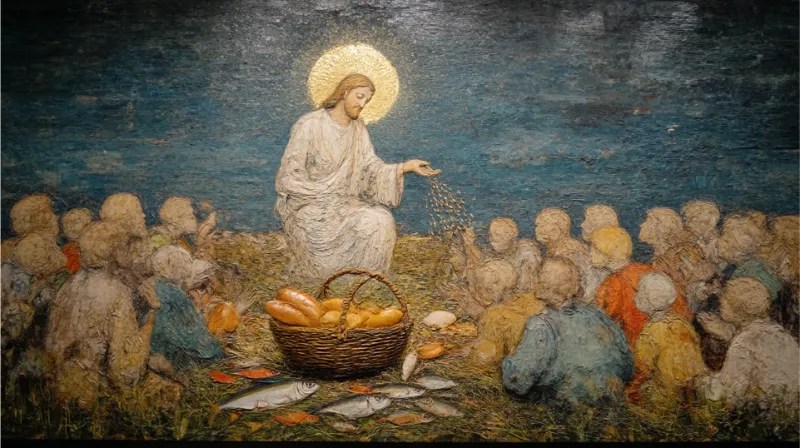
It’s important to understand what a miracle is. It’s not a magic trick that has a secret explanation or a clever illusion.¹⁹ A miracle is a supernatural event, something that goes beyond the normal laws of nature and can only be done by the power of God.²⁰ When Jesus turned water into wine or fed 5,000 people with a tiny lunch, he wasn’t tricking anyone. He was showing that the power of God, the Creator of the universe, was at work through him.
Why Did He Do Them?
Jesus didn’t perform miracles to become a celebrity or to impress people.¹⁹ The Bible shows us two powerful reasons for his miraculous works, and both are rooted in love.
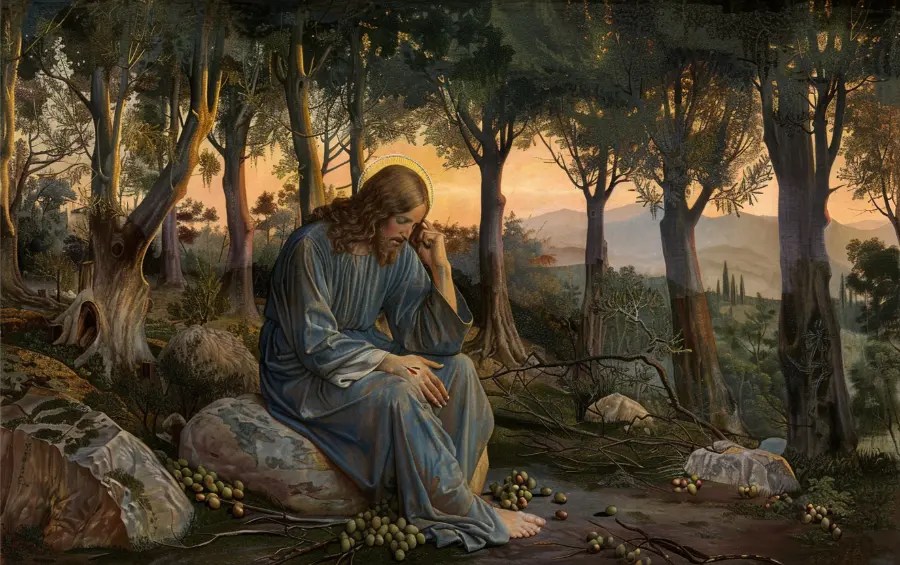
Jesus performed miracles to show his deep compassion. Many of his miracles began when he saw someone who was hurting. He saw a blind man who had never seen the sunrise, a grieving mother who had lost her only son, or a hungry crowd with nothing to eat. In these moments, his heart was filled with love and pity, and he acted to relieve their suffering.²³ His miracles flowed from his immense care for people in their pain.
The miracles were signs to reveal who he is. The Gospel of John calls Jesus’s miracles “signs” because they pointed to a deeper reality: that Jesus is the Son of God.¹⁹ They served as powerful evidence that his claims were true. By calming a storm, he showed he had power over creation. By healing the sick, he showed he had power over disease and brokenness. By forgiving sins and raising the dead, he showed he had God’s ultimate authority over sin and death itself.²⁰
Stories of His Power and Love
Each miracle tells us something special about Jesus. When four friends had so much faith that they tore a hole in a roof to lower their paralyzed friend to Jesus, he didn’t just heal the man’s legs; he first said, “Your sins are forgiven”.²⁵ This showed that his greatest mission was to heal our souls. When he fed a massive crowd of over 5,000 people with just five loaves of bread and two fish from a little boy’s lunch, he showed that he can take the small gifts we offer and do incredible things with them.²⁵ These stories are not just historical events; they are living truths about a God who loves us, provides for us, and has the power to overcome any challenge we face.
| Miracle Story | ما حدث | What It Shows Us About Jesus |
|---|---|---|
| Turning Water into Wine (John 2:1-11) | Jesus turned plain water into the best wine at a wedding. | He cares about our everyday joys and even our small embarrassments. He brings celebration and abundance to our lives.19 |
| Calming the Storm (Matthew 8:23-27) | Jesus commanded a terrifying storm to be still, and it obeyed. | He has power over everything in creation and can bring peace to the “storms” of fear and anxiety in our lives.23 |
| Healing the Paralyzed Man (Mark 2:1-12) | Friends lowered a man through a roof, and Jesus not only healed his body but also forgave his sins. | He values friendship and faith, and he has the power to heal not just our bodies, but our souls by forgiving us.23 |
| Feeding the 5,000 (John 6:1-15) | Jesus multiplied a boy’s small lunch of five loaves and two fish to feed a huge crowd. | He can take the small things we offer him and do great things. He is the “Bread of Life” who satisfies our deepest spiritual hunger.25 |
| Raising Lazarus (John 11:1-46) | Jesus brought his friend Lazarus back to life after he had been dead for four days. | He is more powerful than death itself. He weeps with us in our sadness and offers us the promise of eternal life with him.26 |
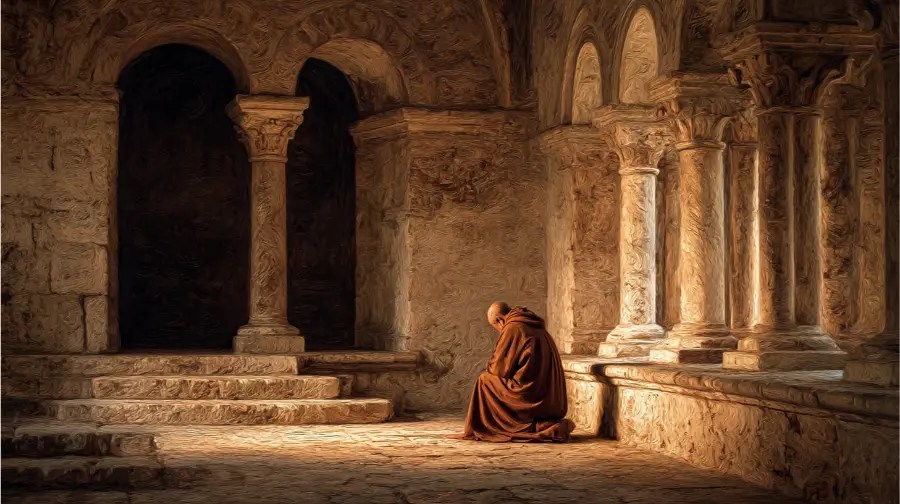
Who Was Mary, Jesus’s Mother, and Why Is She So Important?
In the story of God’s love for the world, there is a special place for a young woman whose courage and faith changed history forever. She is Mary, the mother of Jesus, and understanding her helps us understand Jesus even more.
A Real Girl with a Special Calling
It’s easy to think of Mary as a quiet figure in a stained-glass window it’s important to remember that she was a real person.²⁸ She was a young Jewish girl who lived in the town of Nazareth.²⁹ Tradition tells us her parents’ names were Joachim and Anne.²⁸ She was living a normal life, engaged to be married to Joseph, when God chose her for the most incredible and important mission ever given to a human being.
Mary’s Brave “Yes”
The Bible tells the beautiful story of the Annunciation, when the angel Gabriel appeared to Mary with a message from God: she was chosen to be the mother of the Savior.²⁹ This news was both wonderful and frightening. Mary’s response was one of perfect faith and breathtaking courage. She said, “Behold, I am the servant of the Lord; let it be to me according to your word”.²⁹ This simple “yes” to God’s plan, trusting him completely even when she couldn’t see the whole picture, is a powerful model for all of us.³⁰ Mary teaches us that faith isn’t about having all the answers; it’s about trusting the One who does. Her faith was not just about
فعل things for God about allowing God to do amazing things من خلال her.
Jesus’s First and Best Disciple
Mary’s role didn’t end at Jesus’s birth. She was his very first follower, his first and best disciple. The Gospel of Luke says that she “kept all these things, reflecting on them in her heart”.³¹ She watched her son grow, listened to his teachings, and followed him with unwavering love. Her faithfulness was never clearer than at the end of his life. When most of the other disciples had scattered in fear, Mary stood bravely at the foot of the cross, sharing in her son’s suffering.³¹ She is the ultimate model of what it means to be a faithful follower of Christ through good times and bad.³⁰
A Mother for All of Us
In one of his last acts on the cross, Jesus looked down at Mary and his beloved disciple, John. He said to Mary, “Woman, behold, your son!” and then to John, “Behold, your mother!”.³² From the earliest days, the Church has understood this as a precious gift. In that moment, Jesus gave Mary to all of us to be our spiritual mother.³⁰ Just as a mother loves, protects, and guides her children, Mary cares for us. We can talk to her in prayer, like when we pray the Hail Mary, asking for her help. She is a powerful friend in heaven who always, always points us toward a deeper love for her Son, Jesus.²⁸
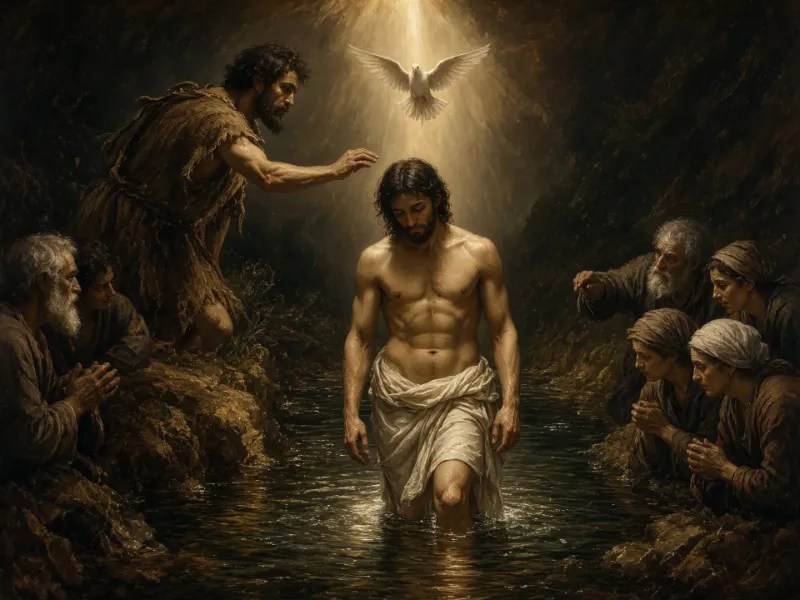
How Does the Catholic Church Teach Us to Be Close to Jesus in a Special Way?
For centuries, Christians have sought ways to feel closer to Jesus. The Catholic Church teaches that Jesus gave us a very special and powerful gift that allows us to have a unique and intimate union with him. This gift is called the Eucharist.
A Special Meal: The Last Supper and the Mass
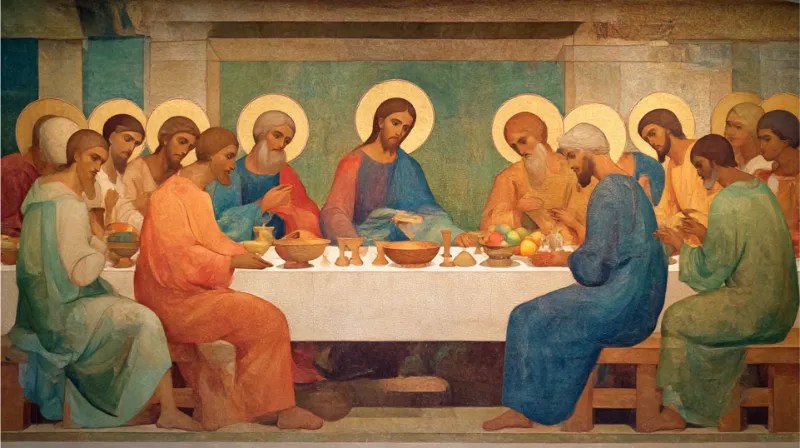
This beautiful gift began at the Last Supper, the final meal Jesus shared with his apostles before he died. During that meal, Jesus took bread and wine and did something that changed the world forever. He said, “Take this, all of you, and eat of it, for this IS my body.” Then he took a chalice of wine and said, “Take this, all of you, and drink from it, for this IS the chalice of my blood”.³³ He did not say the bread and wine were
كـ his body and blood or that they were رموز. He stated clearly that they نكون his Body and Blood.³³ Catholics believe that when we celebrate Mass, we are not just re-enacting that meal; we are participating in that same moment.
The Real Presence: Jesus Is Truly Here
The core of Catholic teaching on the Eucharist is the belief in the الحضور الحقيقي.³⁴ Catholics believe that during the Mass, through the power of God’s Holy Spirit and the words of the priest, the bread and wine are truly transformed into the Body, Blood, Soul, and Divinity of Jesus Christ.³⁴ Although they still look, taste, and feel like bread and wine to our senses, their deepest reality—their substance—has become Jesus himself.³⁶ This is a powerful mystery of faith. We cannot fully understand how it happens with our human minds we believe it because it is what Jesus himself taught us.³³ This teaching is a foundational part of the
تعليم الكنيسة الكاثوليكية, which explains the truths of the faith.³⁷
This belief is the tangible way the Church experiences Jesus’s promise to his followers: “I am with you always, to the end of the age” (Matthew 28:20). After Jesus ascended to heaven, his followers could have felt alone. The Eucharist is God’s beautiful solution to this separation. It transforms a potential absence into a real, continuous, and loving presence.
Holy Communion: A Hug from the Inside
Because Jesus is truly present in the Eucharist, receiving Holy Communion is the most intimate way a person can be united with him on earth. It is more than just a memory; it is a true encounter.³⁵ When a person receives Communion, they are welcoming the living Jesus into their very heart and soul. It is a moment of powerful love that nourishes our spirit, just as food nourishes our body. This is why Catholics show great reverence for the Eucharist, for example, by genuflecting (bending the knee) toward the tabernacle, the special box where the consecrated Hosts are kept.³⁴
Adoration: Spending Quiet Time with Jesus
This belief also leads to a beautiful form of prayer called Eucharistic Adoration. In many Catholic churches, a consecrated Host is placed in a special golden stand called a monstrance, so that people can come and spend quiet time in prayer before the real presence of Jesus.⁴⁰ It is a powerful way to sit face-to-face with the Lord, to share your joys and sorrows, and to simply rest in his love.³³ It provides a concrete answer to the deep human desire to be close to the one we love.
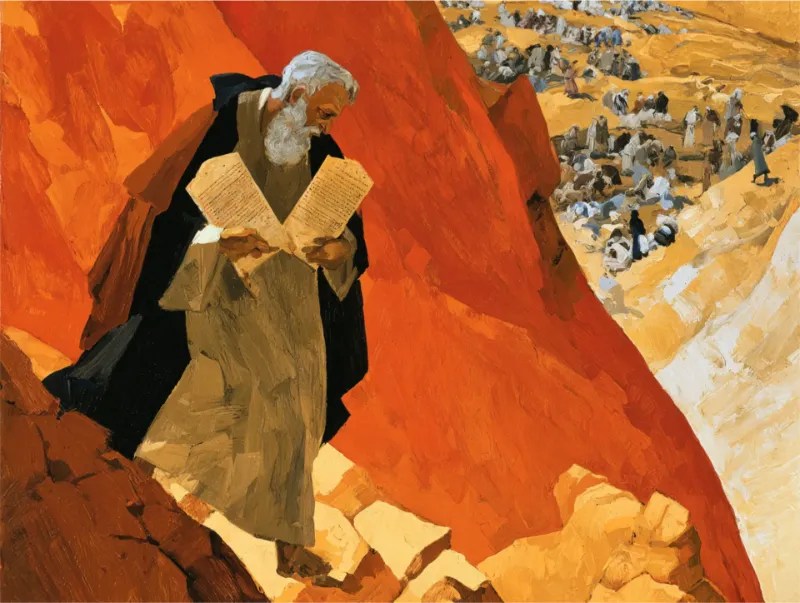
Why Can’t We See Jesus Today?
This is one of the most honest and important questions anyone can ask. Many people, especially children, feel a deep longing to see Jesus with their own eyes. Sometimes it can feel sad or confusing that we can’t just walk and talk with him the way his disciples did.⁴² It is a beautiful desire that comes from a heart that truly loves Jesus, and it’s a question that deserves a thoughtful answer.
An Analogy: Feeling the Wind
Let’s think about it this way: you can’t see the wind, can you? You can’t hold it in your hands or take a picture of it. But you know the wind is real. You can feel its gentle breeze on your skin, you can see the leaves on the trees dancing because of it, and you can hear it rustling through the grass.⁴² In a similar way, we may not be able to see Jesus with our physical eyes right but we can know he is with us. We can feel his peace and love in our hearts when we pray, and we can see his work all around us—in the beauty of a sunset, in the love of our family, and in every act of kindness we witness or share.
A Better Gift: The Holy Spirit
Before Jesus ascended into heaven, he told his disciples something very surprising. He said, “It is to your advantage that I go away, for if I do not go away, the Helper will not come to you. But if I go, I will send him to you” (John 16:7).⁴² Jesus was talking about the Holy Spirit. He knew that while his physical body could only be in one place at one time, the Holy Spirit could be with
الجميع, في كل مكان, all at once. He wasn’t leaving his friends alone; he was giving them an even greater gift—his own Spirit to live inside them.
From an External Friend to an Internal Presence
Jesus’s ascension into heaven wasn’t a departure; it was a change in how he is present with us. He went from being a friend who walked beside his disciples to a friend who lives داخل the hearts of all who believe in him.⁴² This is an even closer and more intimate friendship. We can talk to him anytime, anywhere, simply by praying. He is always listening.¹
This invites us into a new way of “seeing.” When the resurrected Jesus appeared to his disciple Thomas, who had doubted, he said, “Blessed are those who have not seen and yet have believed” (John 20:29). This wasn’t a scolding. It was an invitation to a deeper kind of relationship, one built on the trust of the heart, not just the proof of the eyes. Faith is like learning to use our “heart’s eyes.” We learn to see Jesus not with our physical sight through the lens of love, trust, and prayer. We see him in the Bible, we feel him in our hearts, and we recognize his presence in the love that connects us all.

What Is the Most Important Thing to Know About Jesus?
We have explored so many wonderful truths about Jesus—his common name with a powerful meaning, his ordinary childhood, his mission of love, and his amazing miracles. All of these facts are like puzzle pieces. When we put them all together, they create one big, beautiful picture that reveals the single most important thing anyone can ever know.
The Heart of the Story
The most important thing to know about Jesus is لماذا he came. He wasn’t just a great teacher or a miracle worker. He is the Son of God, and he came to Earth for one ultimate reason: to show us the breathtaking, unconditional, and never-ending love of God the Father.¹ Every story, every teaching, and every miracle is a chapter in this great love story between God and humanity.
The Great Rescue Mission
At the center of that love story is a great rescue mission. The Bible teaches that our sins—the wrong things we do, say, and think—create a separation between us and a perfectly holy God. We could never fix this separation on our own. But God loved us so much that he sent his only Son to do for us what we could not do for ourselves.⁴³ Jesus, who lived a perfect, sinless life, willingly took the punishment for all our sins upon himself when he died on the cross. This was the ultimate act of sacrificial love—the Creator dying for his creation so that we could be forgiven and brought back to him.
The Greatest Miracle
But the story doesn’t end in the darkness of the cross. The greatest and most glorious miracle of all happened three days later. Jesus rose from the dead, conquering sin and death forever.²⁷ His resurrection is the ultimate proof that everything he said is true.³⁹ It is the foundation of our Christian faith and the source of our greatest hope—the hope that because he lives, we too can have a new life here on earth and eternal life with him in heaven.
An Invitation to Friendship
So, what is the most important truth about Jesus? It is that this powerful, loving, and victorious Savior knows you, loves you, and invites you into a personal friendship with him today.¹ He wants to be part of your life—to celebrate with you when you’re happy, to comfort you when you’re sad, and to guide you every day. The most amazing fact about Jesus isn’t just something you learn; it’s someone you know. He is a living person who is waiting for you to talk to him, to trust him, and to welcome him into your heart. That is the greatest truth of all.


اترك تعليقاً