
 Arabic
 English
 Chinese
 Dutch
 Spanish
 Portuguese
 Russian
 French
 Italian
 German
 Japanese
Three churches have refused to bear arms for as long as they have existed, and since the 1930s they have been called the historic peace churches: the Mennonites, with the Amish who share their roots, the Religious Society of Friends, whom most of us know as Quakers, and the Church of the Brethren. Jehovah’s Witnesses also refuse to go to war, and they speak of their stand as neutrality, while Seventh-day Adventists ask their members to serve, if they serve at all, without a weapon. The Catholic, Orthodox, Lutheran and Reformed churches, the Church of England and the Southern Baptist Convention teach that a Christian may fight in a just war, and several others, the United Methodist Church and the Assemblies of God among them, leave the decision to each member’s conscience.
Four of these churches, from four very different families, reach for the same promise from the prophet Isaiah: “they shall beat their swords into plowshares, and their spears into pruninghooks: nation shall not lift up sword against nation, neither shall they learn war any more” (Isaiah 2:4). The Dutch Mennonites wrote it into their confession at Dordrecht in 1632, the Quakers who wrote to King Charles II in 1660 ended their declaration on it, Jehovah’s Witnesses give it as the first reason they do not go to war, and the Catholic Catechism closes its teaching on peace with the same lines. Where we part is over when the promise comes true. Some of us hear Isaiah calling the followers of Jesus to lay the sword down now, and others hear him describing the world that Christ will bring when he returns. Until that day, they say, a government may defend its people, and Christians may serve in that defence and grieve that it is needed.
| الكنيسة | May its members bear arms? | بكلماتها الخاصة |
|---|---|---|
| كنيسة المينونات في الولايات المتحدة الأمريكية | لا | “We do not prepare for war, or participate in war or military service” |
| الأميش | لا | They hold the Dordrecht Confession (1632): “put the sword into the sheath” |
| الكويكرز (جمعية الأصدقاء) | No; some American yearly meetings also support members who serve | Britain Yearly Meeting, from 1660: “All bloody principles and practices we do utterly deny” |
| كنيسة الإخوة | No, but it respects members who serve | “All war is sin” |
| شهود يهوه | No; strictly neutral | “Jehovah’s Witnesses don’t go to war” |
| السبتيون | Asked not to enlist (“not a test of church membership”); unarmed if they serve | “A noncombatant position” |
| كاثوليكي | Yes, in a just war; objectors respected | “Legitimate defense by military force” under “rigorous conditions” |
| الكنيسة الأرثوذكسية في أمريكا | Yes, as a lesser evil; clergy may not bear arms | “It must always be repented of” |
| Coptic Orthodox Diocese of the Southern US | نعم | “The Church allows military service” |
| اللوثرية | Yes, in a just war | “To engage in just wars, to serve as soldiers” |
| كنيسة إنجلترا | نعم | “To wear weapons, and serve in the wars” |
| المشيخية والإصلاحية | Yes, on just occasion | “Upon just and necessary occasion” |
| المعمدانية الجنوبية | Yes, in a just war | “The historic, Christian principles of the just war tradition” |
| الميثودية المتحدة | Each member’s conscience | “Examine their own consciences” |
| الناصريون | Each member’s conscience | Does not “bind the conscience of its members” |
| جيش الخلاص | Yes, and objectors supported | “Mandatory military service” or “enlist voluntarily” |
| كنائس الله | Each member chooses | “A combatant, a noncombatant, or a conscientious objector” |
| Oneness Pentecostal (UPCI) | Each member’s conscience | “Serve as conscientious objectors and not bear arms,” or serve |
| Evangelical (NAE) | Believers differ | “Believers have long differed” |
| تلاميذ المسيح | Conscience; opposed the Iraq war | “The God-given right of conscience” |
| كنيسة المسيح المتحدة | Opposes war as an institution | “Move beyond Just War thinking” |
| قديسو الأيام الأخيرة | نعم | “Many Latter-day Saints choose to join the military” |
| كنائس المسيح | لا يوجد بيان مشترك | Pacifism “pervasive though not universal” until the First World War |
أداتنا المجانية، قارن بين الطوائف المسيحية, sets any two of 23 churches side by side on war and military service and on 54 other questions.

What does the Bible say about Christians going to war?
The peace churches begin on the mountain where Jesus taught: “Ye have heard that it hath been said, An eye for an eye, and a tooth for a tooth: But I say unto you, That ye resist not evil,” and a few sentences later, “Love your enemies, bless them that curse you, do good to them that hate you, and pray for them which despitefully use you, and persecute you” (Matthew 5:38–39, 44). They go on to the night he was arrested, when one of the men with him drew a sword and cut off the ear of the high priest’s servant, and Jesus said, “Put up again thy sword into his place: for all they that take the sword shall perish with the sword” (Matthew 26:51–52). The Church of the Brethren and Jehovah’s Witnesses both quote that sentence, and Mennonite Church USA sets it beside its own words about Jesus, that “When threatened, he chose not to resist, but gave his life freely.” Before Pilate he said, “My kingdom is not of this world: if my kingdom were of this world, then would my servants fight” (John 18:36).
The churches that allow a just war read the same Gospels and notice the soldiers who were never told to leave the army. When soldiers asked John the Baptist what they should do, he told them, “Do violence to no man, neither accuse any falsely; and be content with your wages” (Luke 3:14), and Augustine of Hippo reasoned that if soldiering itself were the sin, John “would have replied, Throw away your arms; give up the service.” Paul calls the ruler “the minister of God to thee for good,” who “beareth not the sword in vain” (Romans 13:4), and the peace churches read that page as well. The Swiss Brethren who met at Schleitheim in 1527 wrote, “The sword is ordained of God outside the perfection of Christ,” meaning that God gave the sword to the magistrate and gave something else to the disciple. So both sides agree that God has put the sword in the ruler’s hand, and they part over whether a follower of Jesus may be the one who carries it.
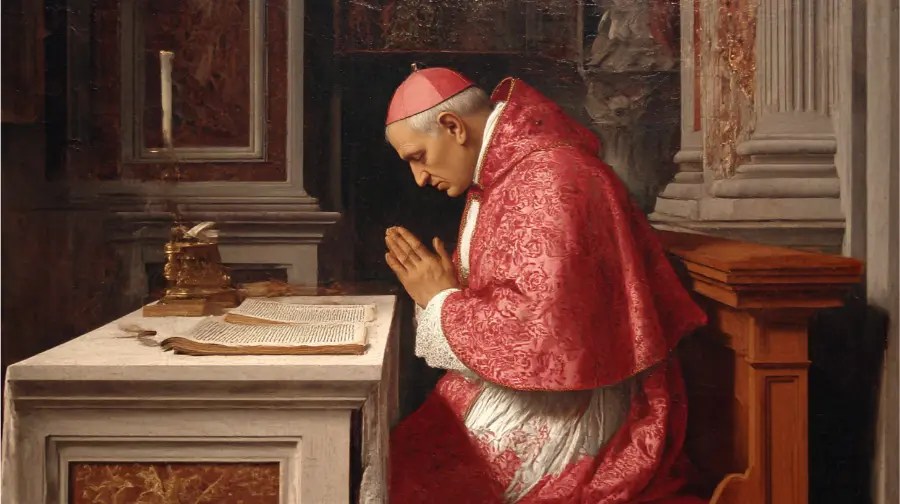
What is a historic peace church?
The name was first used for a meeting at Newton, Kansas, in November 1935, the “Conference of Historic Peace Churches.” The Global Anabaptist Mennonite Encyclopedia calls them “the three denominations which have for centuries held the position that the New Testament forbids Christian participation in war and violence,” and it says that the Mennonites, the Friends and the Brethren arose separately, in the 16th, 17th and 18th centuries, until the two world wars drew them together to stand by young men who refused to fight and to find them other service in place of the army. The Amish keep the same refusal but are not named separately; they grew from the same Swiss Anabaptist roots as the Mennonites.

Why do Mennonites and the Amish refuse to fight?
Both families descend from the Anabaptists of the sixteenth century, who had many martyrs, and the refusal is as old as their movement. In 1632 the Dutch Mennonites at Dordrecht confessed “that the Lord Christ has forbidden and set aside to His disciples and followers all revenge and retaliation, and commanded them to render to no one evil for evil, or cursing for cursing, but to put the sword into the sheath,” and the same article tells them to pray for their enemies and to “feed and refresh them whenever they are hungry or thirsty.”
The Amish of today still hold that confession, and the Young Center for Anabaptist and Pietist Studies at Elizabethtown College says that “The Amish affirm the eighteen articles of faith written in the Dordrecht Confession,” that candidates for baptism review them, and that they include “distinctive Amish beliefs such as nonviolence, excommunication, and shunning.” It also tells us why the Amish live apart: “In Amish eyes, the kingdoms of this world, which use coercion, differ from the peaceable kingdom of God.”
Mennonite Church USA says in its Confession of Faith in a Mennonite Perspective, adopted in 1995, “As disciples of Christ, we do not prepare for war, or participate in war or military service,” and its commentary carries the refusal out into the world: “Our peace witness also includes peacemaking and working for justice.” Mennonites have not always agreed on how far that witness should reach. In 1990 John R. Burkholder, writing in the Global Anabaptist Mennonite Encyclopedia, described Mennonite ethics moving beyond the older teaching toward more active service and witness for justice, and he wrote, “More and more, the language of nonviolence is replacing that of nonresistance.” Nonresistance is the older word, and it comes from “resist not evil.”
Not every conference made that move. The Conservative Mennonite Conference, which took the Dordrecht Confession as its statement of faith when it began in 1910 and is now called the Rosedale Network of Churches, says in its Statement of Doctrine of 1991 that God’s people “follow Christ in the way of love, peace, and non-resistance in relating to all people, including personal and national enemies.” The Amish, for their part, keep the separation from the world that their confession describes.
In the Second World War, the same encyclopedia reports, 46.2 per cent of all conscripted Mennonites in America chose alternative service, so more than half did not. In the Mennonite Church (MC), one branch of the family, the share was 59.2 per cent, and under the alternative service program begun again in 1952 it rose to 88 per cent. How the two families live their faith today is told in الأميش مقابل المينوناتيين.

What do Quakers believe about war?
Quakers of Britain Yearly Meeting keep in their book إيمان وممارسة الكويكرز the declaration that George Fox and other Friends gave to King Charles II in 1660: “All bloody principles and practices we do utterly deny, with all outward wars, and strife, and fightings with outward weapons, for any end, or under any pretence whatsoever, and this is our testimony to the whole world.” Britain Yearly Meeting calls this peace testimony “probably the best known and best loved of the Quaker testimonies,” and its book shows that Friends have lived it in more than one way. In the two world wars British Quakers “accepted non-combatant service with the armed forces,” did civilian service at home, or “went to prison for refusing any service which might assist the war effort, even fire-watching.”
In America the yearly meetings keep the same testimony and pray for Friends on both sides of it. The Evangelical Friends Church, Mid-America Yearly Meeting, puts the two together in its Faith and Practice of 2022: “We, therefore, as a church, unequivocally support young Friends who as conscientious objectors to war refuse military service,” and, “At the same time, we support and pray for individuals (and their families) serving in our Armed Forces.” Wilmington Yearly Meeting says much the same of Friends who “choose to join the armed forces,” holding them, with everyone else, “in prayerful concern.” What Friends believe about Christ himself is told in Do Quakers believe in Jesus?

Is the Church of the Brethren a peace church?
The Church of the Brethren traces its refusal back to its beginning in 1708, and its statement on war, adopted in 1948 and revised in 1957, 1968 and 1970, says, “The official position of the Church of the Brethren is that all war is sin and that we seek the right of conscientious objection to all war.” The Brethren have never set up an authoritative creed, and the same statement speaks gently of members who decide differently: “We recognize that some feel obligated to render full or noncombative military service and we respect all who make such a decision.”
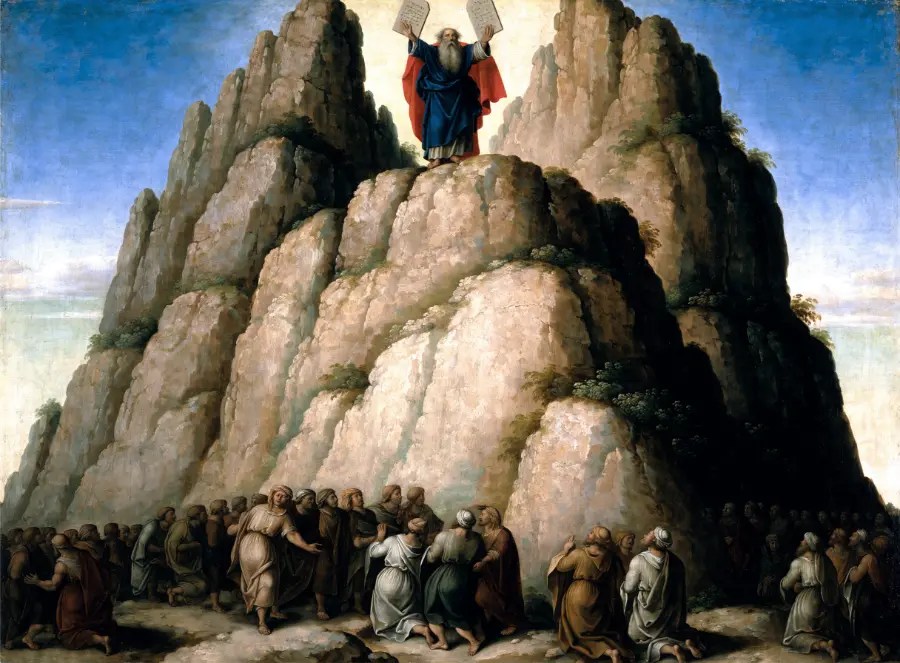
لماذا لا يشارك شهود يهوه في الحروب؟
Jehovah’s Witnesses say on their website, “For the following reasons, Jehovah’s Witnesses don’t go to war,” and they give four: obedience to God, who said his servants would “beat their swords into plowshares”; obedience to Jesus, who told Peter to return his sword to its place; love for one another, which makes them “an international brotherhood in which no one would ever wage war against his brother or sister”; and the example of the earliest Christians. They also keep “strictly neutral in political matters,” so they take no side in a nation’s wars and no side against them, and they “do not protest against military actions or interfere with those who choose to serve in the armed forces.” The wider beliefs behind that stand are set out in بماذا يؤمن شهود يهوه؟

Do Seventh-day Adventists serve in the military?
The Seventh-day Adventist Church was organized in 1863, in the middle of the American Civil War, and by 1864 the federal government had recognized it as noncombatant, a stand it has kept ever since. Its statement on war, first approved in 1954 and reaffirmed in 1972, says that partnership with Christ “causes Seventh-day Adventists to advocate a noncombatant position, following their divine Master in not taking human life, but rendering all possible service to save it.” The church’s president, Ted N. C. Wilson, wrote in 2018 that the church “encourages its members not to join the military,” but that this “is not a test of church membership.”
Desmond Doss, whom Wilson calls probably the best-known Adventist noncombatant, served as an army medic in the Second World War, saved the lives of 75 of his fellow soldiers on Okinawa, and became, in Wilson’s words, “the first, and one of only three conscientious objectors, ever to receive” the Congressional Medal of Honor. Wilson gave the church’s reason in one line: “we are here to save life, rather than take it.”

What is the just war teaching?
Augustine of Hippo was writing about just wars early in the fifth century, and he wrote of them with grief. In مدينة الله he answered those who said that “the wise man will wage just wars” with these words: “As if he would not all the rather lament the necessity of just wars, if he remembers that he is a man.” In 418 he wrote to Boniface, a Christian soldier, “Do not think that it is impossible for any one to please God while engaged in active military service,” and then laid a charge on him: “Peace should be the object of your desire; war should be waged only as a necessity.”
The Catholic Church teaches in its Catechism that “legitimate defense by military force” is subject to “rigorous conditions of moral legitimacy,” all of them at once: the damage done by the aggressor must be “lasting, grave, and certain,” every other means must have proved “impractical or ineffective,” there must be “serious prospects of success,” and the fighting “must not produce evils and disorders graver than the evil to be eliminated” (paragraph 2309). Of soldiers it says, “If they carry out their duty honorably, they truly contribute to the common good of the nation and the maintenance of peace” (2310), and it asks governments to “make equitable provision for those who for reasons of conscience refuse to bear arms” (2311).
The Orthodox Church in America teaches that “total pacifism is not only possible, it is the sign of greatest perfection, the perfection of the Kingdom of God,” and yet that “pacifism can never be a social or political philosophy for this world.” So it says, “When violence must be used as a lesser evil to prevent greater evils, it can never be blessed as such, it must always be repented of, and it must never be identified with perfect Christian morality,” and it notes that the Orthodox Church “forbids the bearing of arms to its clergy.” The Coptic Orthodox Diocese of the Southern United States answers more briefly that “the Church allows military service as this is mentioned and supported in the biographies of many of our saints who held military ranks.”

Which Protestant churches teach just war?
Lutherans confess in the Augsburg Confession, written by Melanchthon in 1530, that it is right for Christians “to engage in just wars, to serve as soldiers,” and the article shows how sharp the quarrel was three years after Schleitheim: “They condemn the Anabaptists who forbid these civil offices to Christians.”
The Church of England, the Presbyterians and the Southern Baptists say the same about the soldier, each in its own century. The Church of England says it most briefly: its Thirty-nine Articles, settled in 1562 and approved again in 1571, give it one line in Article XXXVII, “It is lawful for Christian men, at the commandment of the Magistrate, to wear weapons, and serve in the wars.” The Westminster Confession, the standard of the Presbyterian churches and part of the Presbyterian Church (U.S.A.)’s Book of Confessions, allows war “upon just and necessary occasion” (23.2). The Southern Baptist Convention, meeting in Indianapolis in June 2024, resolved to “affirm the historic, Christian principles of the just war tradition,” and kept its plea of 1969 that “those who for reasons of religious conviction are opposed to military service should be exempted from forced military conscription.”
The Episcopal Church in the United States took the Articles in a revised form in 1801, and its Article XXXVII asks only for “respectful obedience to the Civil Authority, regularly and legitimately constituted.” Its Book of Common Prayer of 1979 prints the line about weapons only in a note giving the original English text, and we found no statement of the Episcopal Church’s own on military service.
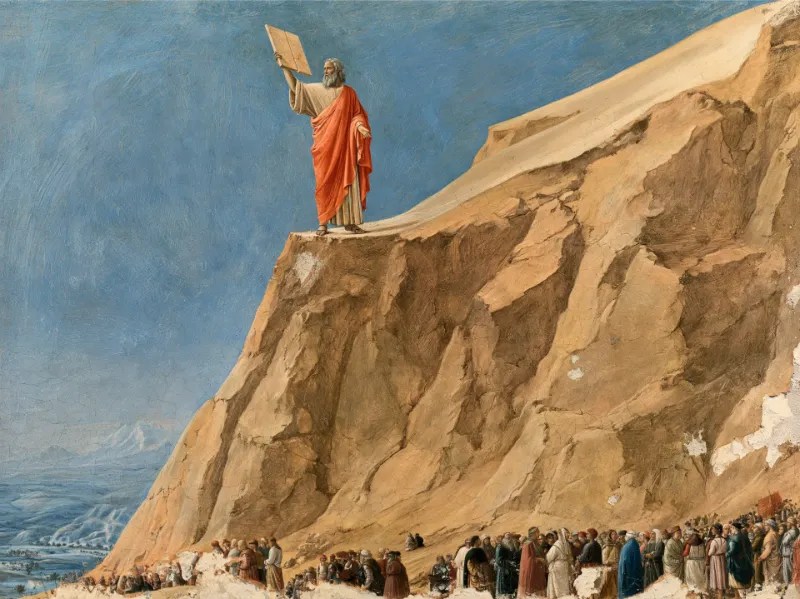
Which churches leave it to each member’s conscience?
Many churches teach peace without binding their members either way, and they honour the soldier and the objector alike. The Salvation Army says it in two sentences in its international positional statement on peacemaking: “The Salvation Army supports those Salvationists who are on mandatory military service or who decide to enlist voluntarily. The Salvation Army supports a right of conscientious objection to military service.” The United Methodist Church asks each member to “examine their own consciences” (Book of Discipline 2020/2024), and the Church of the Nazarene, in its Manual of 2023, does not “bind the conscience of its members” either way.
Pentecostals leave the choice to each member as well, and the Assemblies of God spells it out in its Constitution and Bylaws of 2023: it will insist “on the right of each member to choose whether to declare their position as a combatant, a noncombatant, or a conscientious objector.” The United Pentecostal Church International, a Oneness Pentecostal church, honours members who “serve as conscientious objectors and not bear arms” and asks those who serve to work “heartily, as to the Lord” (Colossians 3:23). The National Association of Evangelicals simply says that “Believers have long differed,” among other things on “whether Christians ought to participate in government-authorized force.”
Two mainline churches have spoken against particular wars or against war itself. The Christian Church (Disciples of Christ), in a General Assembly resolution of 2007 opposing the war in Iraq, “affirms the God-given right of conscience” and offers moral support to service members who, “on the grounds of Christian conviction, refuse deployment to Iraq.” The United Church of Christ, in its 1985 pronouncement “Affirming the United Church of Christ as a Just Peace Church,” said, “Since Just War criteria itself now rules out war under modern conditions, it is imperative to move beyond Just War thinking to the Theology of a Just Peace.”

What do Latter-day Saints and the Churches of Christ teach?
The Church of Jesus Christ of Latter-day Saints says in its Topics and Questions (2026), “Many Latter-day Saints choose to join the military to help defend their countries from possible threats and preserve their freedoms,” and it points those called to fight to Captain Moroni in the Book of Mormon, a “mighty warrior” who “did not delight in bloodshed.” The Churches of Christ have no central body to speak for them and no shared statement on military service. An essay published by Rochester Christian University recalls that pacifism “was a pervasive though not universal position of Restorationists and Churches of Christ up to the First World War era,” and it names David Lipscomb of Nashville among those who “refused to vote or fight in wars.”

When will the swords become plowshares?
Whatever our churches teach about the soldier’s duty, they wait for the same morning. The Catechism says that the threat of war will last “until Christ comes again,” the Latter-day Saints look for “His millennial reign, when wars will end,” and Mennonite Church USA rests in “the glorious hope of the peaceable reign of God.” The Friends who wrote to the king in 1660 said they would “earnestly desire and wait” for the kingdoms of this world to become “the kingdoms of the Lord and of his Christ.” Micah, who was given the same promise as Isaiah, carries it one verse further: “they shall sit every man under his vine and under his fig tree; and none shall make them afraid: for the mouth of the Lord of hosts hath spoken it” (Micah 4:4).

قراءة ذات صلة
- قارن بين الطوائف المسيحية: ما تعلمه 23 كنيسة حول 55 سؤالاً
- Quaker vs Mennonite beliefs, side by side
- شهود يهوه مقابل السبتيين: ليسا متطابقين
- Bible verses about Israel and war
- The Christmas Truce of 1914, in the soldiers’ letters
- صلوات من أجل السلام العالمي


اترك تعليقاً