What does the Bible say about the purpose and symbolism of marriage?
The Bible presents marriage as a sacred covenant instituted by God from the very beginning of creation. In Genesis, we read that God created man and woman in His own image and brought them together, saying “That is why a man leaves his father and mother and is united to his wife, and they become one flesh” (Genesis 2:24). This shows us that marriage is meant to be a powerful union of body, mind, and spirit between husband and wife.
Throughout Scripture, marriage is used as a powerful symbol of God’s faithful, covenant love for His people. The prophet Hosea portrays God as a loving husband to unfaithful Israel. In the New Testament, marriage becomes an image of Christ’s sacrificial love for the Church, His bride.
The purpose of marriage, as revealed in Scripture, is multifaceted. It is for companionship, as God said “It is not good for man to be alone” (Genesis 2:18). It is for mutual support and comfort, as we see in the beautiful poetry of Ecclesiastes: “Two are better than one…if either of them falls down, one can help the other up” (Ecclesiastes 4:9-10). And it is for the bringing forth of new life, as God commands the first couple to “be fruitful and multiply” (Genesis 1:28).
But beyond these practical purposes, Christian marriage has a powerful spiritual symbolism. It is meant to be a living icon of God’s love in the world – faithful, fruitful, and forever. As Pope Francis has said, “The image of God is the married couple: the man and the woman; not only the man, not only the woman, but both of them together.” In their daily acts of love, forgiveness, and self-gift, married couples make visible the invisible reality of God’s love. Living out this spiritual symbolism, however, is not always easy. The challenges of married life – communication, conflict resolution, balancing individual needs with the needs of the relationship – can be daunting. But it is in facing and overcoming these challenges that the true beauty and strength of Christian marriage is revealed. Through their commitment to each other and to God, married couples can become a living testimony to the transformative power of love.

How does marriage reflect the relationship between Christ and the Church?
The relationship between Christ and the Church is the ultimate model for Christian marriage. As St. Paul writes in his letter to the Ephesians: “Husbands, love your wives, just as Christ loved the church and gave himself up for her” (Ephesians 5:25). This parallel runs deep and offers powerful insights into both marriage and our relationship with God.
Just as Christ gave Himself completely for the Church, spouses are called to total self-gift to each other. This self-sacrificing love is at the heart of both marriage and the Christian life. It’s a love that always seeks the good of the other, that is patient and kind, that forgives and perseveres.
The unity of husband and wife reflects the mystical union of Christ and His Church. They become “one flesh,” just as we are united with Christ through baptism and the Eucharist. This unity is both physical and spiritual, encompassing the whole person.
Just as the union of Christ and the Church is fruitful, bringing forth new children of God, so too is marriage meant to be life-giving, both in the bearing and raising of children and in the couple’s service to the wider community.
The fidelity of Christian spouses mirrors Christ’s unwavering faithfulness to His Church. Even when we are unfaithful, Christ remains true to His promises. In the same way, married couples are called to a lifelong commitment that endures through all circumstances.
Finally, the intimate communion of marriage reflects the deep, personal relationship Christ desires with each of us. As Pope Francis has beautifully expressed, “God’s dream for his beloved creation ist to see it fulfilled in the loving union between a man and a woman, rejoicing in their shared journey, fruitful in their mutual gift of self.”

What are the spiritual benefits and responsibilities of Christian marriage?
Christian marriage offers powerful spiritual benefits to the couple, but it also comes with serious responsibilities. Let us first consider the blessings:
Marriage provides a unique path to holiness. Through their daily acts of love, forgiveness, and sacrifice for each other, spouses help sanctify one another. As they strive to love as Christ loves, they grow in virtue and become more Christ-like.
The sacrament of marriage is a continual source of grace for the couple. God’s love and power are constantly at work in their relationship, strengthening and sustaining them. This grace enables them to fulfill their vocation and face life’s challenges together.
Christian marriage offers the joy of intimate companionship rooted in faith. Spouses can share their spiritual journeys, pray together, and support each other in living out their Christian calling. This shared faith deepens their bond and gives meaning to their life together.
Now, let us consider the responsibilities:
Spouses have a sacred duty to help each other grow in holiness and reach heaven. They are called to be instruments of God’s love and grace in each other’s lives, encouraging and challenging one another to grow in faith and virtue.
Christian couples are called to be witnesses of God’s love to the world. Their faithful, life-giving love should be a sign of Christ’s love for the Church and a testament to the beauty of God’s plan for marriage.
They have a responsibility to create a domestic church in their home – a place where faith is nurtured, where prayer is central, and where Christian values are lived out and passed on to children.
Married couples are called to be open to life, cooperating with God in the creation of new human beings and taking on the awesome responsibility of raising children in the faith.
Finally, they have a duty to serve others beyond their family, extending the love they share to the wider community and especially to those in need.
As Pope Francis reminds us, “The sacrament of marriage is not a social convention, an empty ritual or merely the outward sign of a commitment. The sacrament is a gift given for the sanctification and salvation of the spouses.”

How can spouses grow closer to God through their marriage?
Marriage offers a unique and beautiful path for spouses to grow closer to God together. Here are some ways they can nurture their spiritual growth within their marriage:
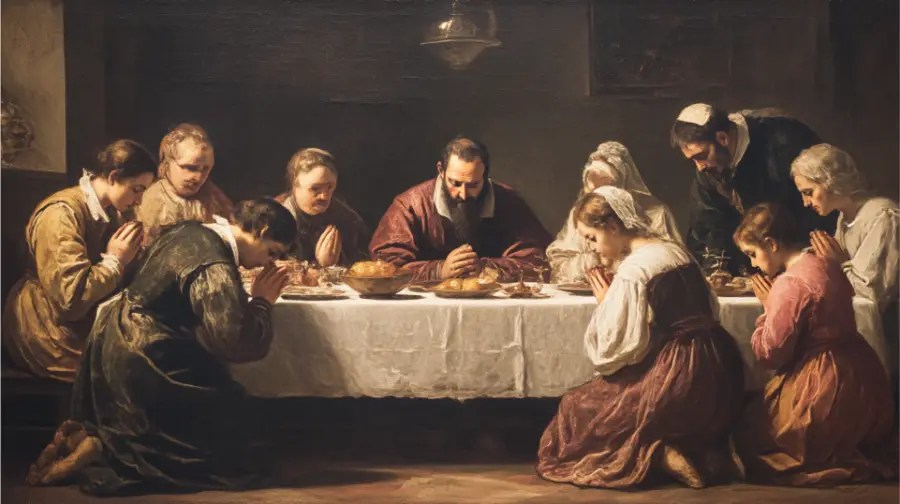
Prayer should be at the heart of Christian marriage. Couples can pray together daily, whether it’s grace before meals, reading Scripture together, or sharing their personal prayers with each other. As they open their hearts to God together, they also open more fully to each other.
Participating in the sacraments together, especially the Eucharist and Reconciliation, can powerfully strengthen both their marriage and their individual relationships with God. These encounters with Christ’s grace can heal, renew, and deepen their love.
Practicing forgiveness in their marriage allows spouses to experience more deeply God’s forgiveness and mercy. As they strive to forgive each other as God forgives us, they grow in understanding of God’s boundless love.
Serving others together as a couple can bring them closer to God and each other. Whether it’s volunteering at their parish or reaching out to those in need in their community, acts of service help them grow in charity and see Christ in others.
Striving to love each other as Christ loves – with patience, kindness, and self-sacrifice – helps spouses grow in holiness. Each act of selfless love for their spouse becomes an act of love for God.
Sharing their faith journey with each other – discussing spiritual readings, sharing insights from prayer, supporting each other through doubts – can deepen both their marital intimacy and their relationship with God.
As Pope Francis has said, “The spirituality of family love is made up of thousands of small but real gestures.” It’s in the daily acts of love, forgiveness, and self-gift that spouses grow closer to each other and to God.

What role does faith play in building a strong, lasting marriage?
Faith plays a crucial role in building a strong, lasting marriage. It provides the foundation, the nourishment, and the ultimate purpose for married love. Let us consider some specific ways faith strengthens marriage:
Faith gives marriage its deepest meaning. When couples understand their union as a vocation from God and a reflection of Christ’s love for the Church, it elevates their commitment beyond mere human affection or social convention. They see their love as part of God’s plan and their marriage as a path to holiness.
The grace that comes through faith empowers couples to live out their marriage vows. Fidelity, selflessness, and perseverance in difficult times become possible not just through human effort, but through God’s strength working in them.
Shared faith provides a common vision and set of values that unite a couple. When spouses are oriented toward the same ultimate goal – growing in love of God and neighbor – it aligns their priorities and decisions.
Faith offers comfort and hope in times of trial. Every marriage faces challenges, but faith reminds couples that they are not alone. They can turn to God in prayer, seek strength in the sacraments, and trust in God’s faithfulness even when their own love falters.
The practice of forgiveness, so essential to a lasting marriage, is rooted in faith. As spouses experience God’s mercy and forgiveness, they are better able to extend forgiveness to each other.
Faith communities provide crucial support for marriages. Involvement in a parish or faith group offers couples friendship, mentoring, and practical help that can sustain them through various stages of married life.
Finally, faith gives couples a perspective beyond this earthly life. Viewing their marriage in light of eternity helps them navigate temporal challenges and continually renew their commitment.
As Pope Francis beautifully expresses, “Faith allows us to appreciate the wonders that God works even in our weaknesses. It enables us to embrace the cross, trusting that behind the dark cloud of trials and difficulties, the sun is still shining.”

How does the covenant of marriage differ from secular views of relationships?
The covenant of marriage as understood in our Christian faith is fundamentally different from secular views of relationships in several important ways(LaFosse, 2022). At its core, Christian marriage is not merely a human institution or legal contract, but a sacred covenant established by God from the beginning of creation. As we read in the book of Genesis, “Therefore a man leaves his father and his mother and clings to his wife, and they become one flesh” (Genesis 2:24).
This covenant is marked by permanence, exclusivity, and sacredness that sets it apart from secular understandings. Where secular relationships may be seen as temporary arrangements based on mutual benefit or emotional fulfillment, Christian marriage is a lifelong commitment “until death do us part.” It is exclusive, uniting one man and one woman in a bond that excludes all others. And it is sacred, blessed by God as a reflection of Christ’s love for the Church.
Christian marriage is oriented toward purposes beyond the couple themselves – the procreation and nurturing of children, mutual sanctification of the spouses, and witness to God’s love in the world. Secular relationships, by contrast, may be more focused on individual fulfillment or practical considerations.
Perhaps most importantly, Christian marriage invites God to be at the center, recognizing that human love alone is not enough to sustain a lifelong union. As Pope Francis has said, “The love of Christ, which has blessed and sanctified the union of husband and wife, is able to sustain their love and to renew it when, humanly speaking, it becomes lost, wounded or worn out.”
So while there may be outward similarities, the covenant of Christian marriage differs profoundly in its divine origin, permanent nature, and spiritual purposes. It calls us to a higher vision of love and commitment, grounded in God’s grace.

What are God’s design and intentions for marriage according to Scripture?
Beloved brothers and sisters, when we look to Sacred Scripture, we see that God’s design for marriage is rich with meaning and purpose(LaFosse, 2022). From the very beginning, in the creation accounts of Genesis, we learn that marriage is part of God’s plan for humanity. “It is not good for the man to be alone,” God declares, and so He creates woman as a suitable partner (Genesis 2:18).
This tells us that marriage is intended to fulfill our deep need for companionship and intimacy. God designed man and woman to complement one another, to support and nurture one another in a bond of love. As the two become “one flesh,” marriage creates a new family unit that forms the foundation of society.
Procreation is another key purpose of marriage revealed in Scripture. God’s first command to the human couple is to “be fruitful and multiply” (Genesis 1:28). The gift of sexuality within marriage is oriented toward bringing new life into the world. Children are seen as a blessing from God, and parents are entrusted with the sacred task of raising them in faith and virtue.
But marriage in God’s design goes beyond mere reproduction. It is meant to be a school of love and holiness, where spouses help one another grow in faith and virtue. As St. Paul teaches, the love between husband and wife is to mirror Christ’s sacrificial love for the Church (Ephesians 5:25-33). In this way, Christian marriage becomes a living sign of God’s covenant love.
Scripture also reveals that marriage is intended to be permanent and exclusive. Jesus affirms the original plan of “the two becoming one flesh” and declares “what God has joined together, let no one separate” (Matthew 19:6). This permanence provides the stability needed for personal growth and family life.
Finally, we see in Scripture that marriage is meant to be a source of joy and delight. The Song of Songs celebrates the beauty of married love in poetic terms. A good marriage brings happiness and fulfillment, as Proverbs 18:22 states: “He who finds a wife finds a good thing and obtains favor from the Lord.”
In all these ways, God’s design for marriage as revealed in Scripture is one of powerful beauty and purpose – a lifelong covenant of love that nurtures life, fosters holiness, and reflects God’s own faithful love to the world.

How can Christian couples cultivate a Christ-centered marriage?
Cultivating a marriage centered on Jesus requires intentional effort and grace(LaFosse, 2022). It begins with recognizing that we cannot rely on our own strength alone, but must invite Christ to be at the heart of our relationship. As Jesus said, “Apart from me you can do nothing” (John 15:5).
Christian couples must pray together regularly. When spouses unite their hearts in prayer, they open themselves to God’s presence and guidance. Whether it’s grace before meals, evening prayers, or reading Scripture together, shared spiritual practices deepen intimacy with God and each other. Make time each day, even if brief, to pray as a couple.
Attending Mass together and receiving the Eucharist nourishes your marriage spiritually. Christ’s self-giving love in the Eucharist becomes a model for marital love. Regular participation in the sacraments, especially Reconciliation, brings healing and renewal to your relationship.
Studying Scripture together allows God’s Word to shape your values and decisions as a couple. Reflect on biblical models of marriage and apply the teachings to your own relationship. Join a couples’ Bible study if possible for mutual support and accountability.
Service to others as a couple, whether in your parish or community, strengthens your bond while living out Christ’s call to love our neighbor. Find ways to use your gifts together in ministry or volunteer work.
Forgiveness is essential in a Christ-centered marriage. As the Lord has forgiven us, we must forgive one another (Colossians 3:13). Practice asking for and granting forgiveness regularly, letting go of grudges and hurts with God’s help.
Cultivate virtues like patience, kindness, and self-control in your interactions. “Love is patient, love is kind” (1 Corinthians 13:4). See your spouse through God’s eyes, focusing on their inherent dignity as His beloved child.
Finally, seek support from the Christian community. Participate in marriage enrichment programs, find mentor couples, and surround yourselves with friends who support your commitment to a Christ-centered marriage.
Remember, a truly Christ-centered marriage is not about perfection, but about continually turning to Jesus together in times of joy and struggle. With His grace, your marriage can become a beautiful reflection of God’s faithful love.

What spiritual disciplines can help nurture intimacy in marriage?
Spiritual disciplines are powerful tools for nurturing intimacy in marriage, drawing couples closer to God and to each other(LaFosse, 2022). When practiced faithfully, these disciplines create a shared spiritual life that deepens emotional and physical intimacy as well.
Prayer is perhaps the most fundamental spiritual discipline for married couples. Praying together daily, even if only for a few minutes, opens your hearts to God’s presence and grace. Share your joys, concerns, and hopes with the Lord together. Intercessory prayer for each other and your family builds unity and compassion. Silent prayer or meditation together can create a powerful sense of shared peace and intimacy.
Scripture reading and reflection as a couple allows God’s Word to shape your relationship. Choose a passage to read together, then discuss its meaning and application to your marriage. The Psalms, Proverbs, and New Testament letters offer rich material for couples. Memorizing key verses together can provide encouragement in difficult times.
Practicing gratitude is a powerful discipline that fosters joy and appreciation in marriage. Share with each other daily what you’re thankful for, including specific qualities you appreciate in your spouse. Keep a gratitude journal as a couple to record God’s blessings.
Fasting together, whether from food or other comforts, can strengthen self-discipline and reliance on God. Use the time or resources saved through fasting to focus on prayer or service. This shared sacrifice can deepen your spiritual bond.
Regular participation in the sacraments, especially the Eucharist and Reconciliation, brings Christ’s healing and transforming presence into your marriage. Prepare for these sacraments together through examination of conscience and discussion.
Spiritual reading of inspiring Christian books on marriage and faith can provide fresh insights and motivation. Read aloud to each other or discuss a chapter together weekly. The writings of the saints offer timeless wisdom on love and holiness.
Retreats or days of recollection as a couple provide focused time to reconnect with God and each other away from daily distractions. Many parishes and retreat centers offer programs specifically for married couples.
Finally, the discipline of sacrificial service – to each other, your family, and your community – cultivates Christ-like love. Look for ways to put your spouse’s needs before your own. Serve together in a ministry or volunteer organization.
Remember, the goal of these disciplines is not rigid rule-following, but opening your hearts more fully to God’s love and allowing that love to flow through your marriage. Be patient and gracious with each other as you develop these practices together.

How does a biblical understanding of marriage impact issues like divorce and remarriage?
A biblical understanding of marriage as a permanent, exclusive covenant has major implications for how we approach the painful realities of divorce and remarriage(LaFosse, 2022). While these are complex and sensitive issues, we must approach them with both fidelity to Christ’s teachings and compassion for those who suffer.
Jesus affirms the permanence of marriage, declaring “what God has joined together, let no one separate” (Mark 10:9). He teaches that divorce and remarriage, except in cases of sexual immorality, constitute adultery (Matthew 19:9). This high standard reflects God’s original intention for marriage as a lifelong union.
At the same time, we must recognize that we live in a fallen world where the reality of sin and human weakness can fracture even the strongest relationships. The Church acknowledges that there are situations where separation may be necessary for safety or well-being. In such cases, pastoral care and support are essential.
For those who have experienced divorce, the Church calls us to approach them with compassion and sensitivity, avoiding judgement or exclusion. Pope Francis reminds us that “the divorced are not excommunicated” and should be fully integrated into the life of the Christian community. We must offer healing and hope, while upholding the ideal of marriage’s permanence.
Regarding remarriage after divorce, the Church maintains that a valid sacramental marriage cannot be dissolved. But there is a process of annulment which examines whether all the elements necessary for a valid marriage were present from the beginning. If an annulment is granted, the individuals are free to marry in the Church.
For those in irregular marital situations, such as civil remarriage without an annulment, the Church encourages ongoing participation in the faith community while refraining from receiving Communion. This is not a punishment, but a recognition of the discrepancy between their situation and the Church’s understanding of marriage.
A biblical view of marriage calls us to uphold its permanence and sanctity while extending Christ’s mercy to those who struggle. We must support couples in building strong marriages, work to prevent divorce where possible, and offer paths of healing and restoration for those affected by marital breakdown.
As Pope Francis has said, “No one can be condemned forever, because that is not the logic of the Gospel!” While holding to the ideal of lifelong marriage, we trust in God’s boundless mercy and seek to accompany all with love on the journey of faith.