
 German
 English
 Chinese
 Dutch
 Arabic
 Spanish
 Portuguese
 Russian
 French
 Italian
 Japanese
This page speaks of the deaths of children and of starvation. If you, or someone you love, is being pressed to fast to the point of harm, please speak to a doctor and to your own pastor, and in an emergency call your local emergency number.
On Friday 27 November 2026 a court in Mombasa found Paul Mackenzie guilty of the manslaughter of 123 of his followers who died fasting in Kenya’s Shakahola forest between January 2021 and September 2023. It was the fourth judgment against him in six weeks, and Kenya’s prosecutors called it “the final conviction”. He was already serving 200 years for the murder of 191 people, 190 of them children, and in the same week he was convicted of child cruelty and of terrorism-related offences. Mackenzie pleaded not guilty, and one of his lawyers said he would appeal after sentencing.
Those numbers belong to mothers, fathers and small children who went into the forest because a preacher told them that starving was the way to meet Jesus. Stephen Mwiti lost all six of his children there and could find and bury only his son Samuel. Every figure on this page is one of them, and beside the teaching that killed them stand the words of the Shepherd Mackenzie claimed to speak for: “I am come that they might have life, and that they might have it more abundantly” (John 10:10).
The four Shakahola judgments
Kenyan prosecutors brought separate cases, because the deaths involved different victims and different crimes, and each charge had to meet its own legal threshold, so the judgments came one after another, three of them in a single week.
| Datum | Court and judge | Charges | Verdict and sentence |
|---|---|---|---|
| 19 October 2026, sentence 6 November | High Court, Mombasa; Justice Diana Kavedza Mochache | Murder of 191 people, 190 of them children | Mackenzie and 28 others guilty. Mackenzie: 200 years, 100 for 183 murders by starvation and 100 for eight direct homicides, served one after the other. The 28 others: 10 to 160 years. The judge declined the death penalty the prosecution asked for. |
| 25 November 2026 | Tononoka Children’s Court, Mombasa; magistrate Nelly Chepchirchir | Cruelty to a child (five counts); assault causing actual bodily harm (one count) | Mackenzie and 11 followers guilty; he was acquitted of child torture. Sentencing due in December. |
| 26 November 2026 | Shanzu Law Courts, Mombasa; a magistrate | Organised criminal activity, radicalisation, facilitating a terrorist act, possessing an article connected with an offence under the Prevention of Terrorism Act, 2012 | Guilty. Sentencing on the radicalisation charges due in December. |
| 27 November 2026 | High Court at the Mombasa Law Courts; Justice Alex Ithuku | Manslaughter, charged on 238 counts against Mackenzie and 95 others in January 2024 | Mackenzie and 18 others guilty on all 123 counts, 10 others on 104 counts, his wife Rhoda Mumbua Maweu on one count; 60 acquitted, and the prosecutors intend to appeal those acquittals. Sentence after submissions from both sides and from the victims’ families. |
What strikes us, reading the judgments together, is how plainly the judges set aside the defence that everyone fasted of their own free will. Justice Mochache, in a judgment that took eight hours to read, found that the deaths came from an organised system of teaching and orders, and at sentencing she called the killings “cold and calculated”. The manslaughter trial alone ran from January 2024, with 95 witnesses and at least 375 exhibits, and on Friday Justice Ithuku found that Mackenzie “gave the directions to fast to death … the order in which people were to die, directed the faithful move to secluded fasting places, and took part in what followed these deaths”. The defendants had said they went to Shakahola to buy land; the prosecution answered that freedom of religion is not absolute and cannot justify acts that cause death, and the court convicted them.
How many died at Shakahola
We will probably never have one number for Shakahola, because many of the dead could not be named and some could not even be examined. Each verdict counts only the victims its case could prove, so the figures in the news measure different things. The manslaughter charges named 238 people, for example, and the court convicted on 123 of those deaths.
| Anzahl | Was gezählt wird | Who gave it |
|---|---|---|
| 191 | People Mackenzie and 28 others were convicted of murdering: 182 children and one adult who died of starvation, and eight children killed directly | High Court, Mombasa, October and November 2026 |
| 123 | Adults whose manslaughter Mackenzie was convicted of on 27 November 2026 | High Court, Mombasa, November 2026 |
| 238 | Deaths named in the manslaughter charges; post-mortems found that 129 of them were from starvation, while 86 bodies were mostly skeletal, so the cause of death could not be established | Office of the Director of Public Prosecutions; The Star |
| 429 | Bodies exhumed from the forest by September 2023 | Daily Nation, 2023; the Kenya National Commission on Human Rights gave the same toll in 2024 |
| 448 | Bodies recovered from Shakahola when the search was completed | Kenya National Commission on Human Rights, as cited by Africa Briefing in November 2026 |
| 52 | Further bodies found at a nearby village, over which Mackenzie was charged in January 2026 | DW, October 2026 |
| Etwa 500 | Mackenzie’s suspected victims in all | berichtete Reuters |
From a church in Malindi to the forest
It began as a church in a seaside town. Mackenzie founded Good News International Ministries in Malindi in 2003, and over sixteen years thousands of people followed him in branches across Kenya and watched his sermons on his own television station. He told them that schooling was evil and that hospitals were against the doctrine, and he called the new digital identity cards the mark of the devil. The authorities knew his name long before the graves: he was arrested in 2017 and acquitted, and in 2019, when his Malindi church was shut down, he was arrested in connection with the deaths of two children and released on bail. He took his people into the Shakahola forest, to a ranch of about 800 acres, where, witnesses said, he named the forest Jangwani and its villages after places in the Bible.

A survivor, Peter Shukrani, who was rescued after he fell ill, told the BBC, “We lived a quiet normal life, fasting for a few days then having a small meal.” Later the courts found that he taught everyone there to fast until they died, children first, then the women, and finally the men, with Mackenzie himself, prosecutors said, meant to die last. Burials in the forest were called “weddings”, and the dead “were celebrated as having wedded with Jesus”. One of his co-accused said Mackenzie told them that anyone who “resisted the directive to fast must be forced to go to heaven through kicks and blows”.
Francis Wanje lost eight of his family in the forest, two grandchildren among them, and he went to the police in March 2023. From April 2023, after a rights group alerted the authorities, the police found emaciated survivors and shallow graves, and later that year President William Ruto said he took responsibility, as head of state, for the government’s failure to prevent the deaths.
What Kenya’s churches said
Kenya’s churches were quick to say that Shakahola was not theirs. When a Senate committee examined the deaths, the National Council of Churches of Kenya, the Evangelical Alliance of Kenya and the Kenya Conference of Catholic Bishops all told it that what happened at Shakahola was a crime, not religion. The Catholic bishops’ submission was read by Fr Wilybard Lagho of the Diocese of Malindi, Mackenzie’s own town: “There was massive security failure in preventing the Shakahola massacre and the same government has lost the moral authority to investigate the matter.” The bishops warned that regulating religious bodies would “very likely open up the different religions to manipulation by different groups, especially to politicians”. The Evangelical Alliance asked that the case “should not be generalized but treated as a separate and exclusive incidence even though grievous”. The churches were right that this was a crime, and right too that the state had failed to stop it; the harder question, which they have argued over ever since, is what a church owes the people a preacher leads astray.

That question became a law in draft. A presidential task force set up in May 2023 led to a Religious Organisations Bill, presented in the Senate in September 2024 and approved in draft by the cabinet in July 2025. It would create a commission over churches, require them to register, and set fines of up to 10 million shillings or up to five years in prison for certain offences. Some church leaders welcomed accountability; in 2024 the Evangelical Alliance’s secretary general, Kepha Nyandega, said, “Being accountable is biblical; even Jesus was accountable to God.” Others opposed the bill as written. Hudson Ndeda of the Church and Clergy Association of Kenya said, “The Constitution is clear that state and religion shall be separate,” and Deliverance Church International asked Parliament, “Wasn’t Shakahola a consequence of failure to implement existing laws rather than a vacuum in the law?” A Nairobi pastor, Matthew Okeyo, said, “I don’t have a problem with regulation … My problem is how it is being done.”
Fasting in the Bible, and the fast Mackenzie preached
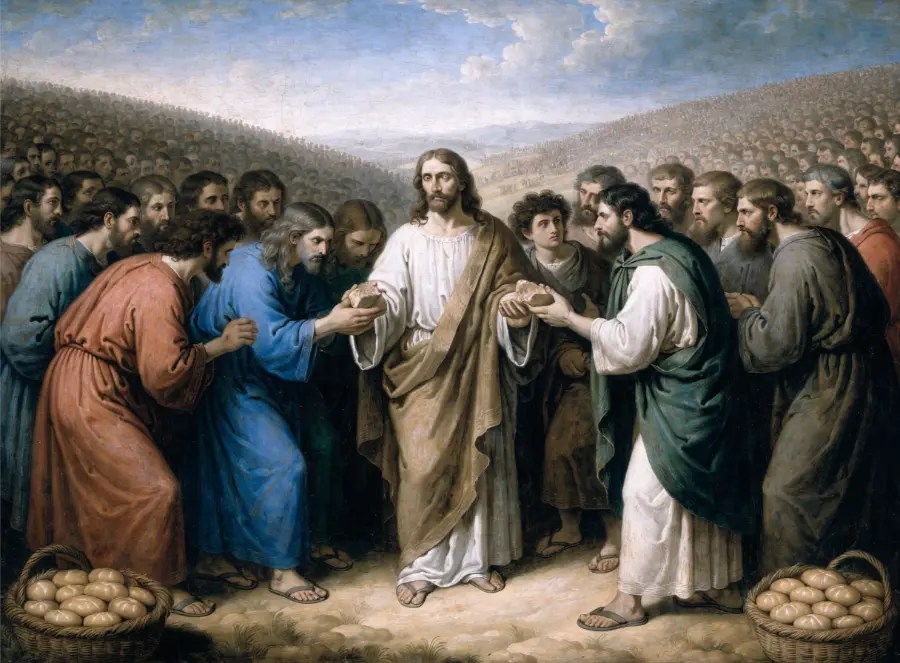
Fasting is old and good in the life of God’s people, and that is part of what makes Shakahola so painful: something holy was bent into a weapon. Our Lord himself fasted in the wilderness, “and when he had fasted forty days and forty nights, he was afterward an hungred” (Matthew 4:2). The tempter came to him with shortcuts. First he urged bread, and Jesus answered, “Man shall not live by bread alone, but by every word that proceedeth out of the mouth of God” (Matthew 4:4). Then he took him into the holy city, set him on the pinnacle of the temple and quoted a psalm to him, “cast thyself down”, as if God’s promise were a reason to throw away his life, and Jesus answered, “Thou shalt not tempt the Lord thy God” (Matthew 4:6–7). Christ’s own fast ended in hunger and in obedience, never in a death he chose for himself to force heaven’s door.

Jesus taught his disciples to fast quietly, “that thou appear not unto men to fast, but unto thy Father which is in secret” (Matthew 6:18), and through Isaiah God had already said what kind of fast pleases him: “to loose the bands of wickedness, to undo the heavy burdens, and to let the oppressed go free … to deal thy bread to the hungry” (Isaiah 58:6–7). The fast God chooses feeds people. When Paul was on a storm-driven ship with 275 others, about to be wrecked, he saw they had gone fourteen days without eating, and he begged them all, “Wherefore I pray you to take some meat: for this is for your health” (Acts 27:34). Christians who fast today do it in that spirit, for a day or a season, and our guide to Christian fasting sets out how the churches keep their fasts.
Mackenzie’s preaching also rested on a coming end that his followers had to starve to reach in time, and Jesus closed that door as well: “But of that day and hour knoweth no man, no, not the angels of heaven, but my Father only” (Matthew 24:36). In the same sermon he warned that “there shall arise false Christs, and false prophets” (Matthew 24:24), and on the mountain in Galilee he had already told his disciples that they would know false prophets by their fruits (Matthew 7:15–20). We have seen the fruit of Shakahola.
Hardest of all to read is that the children were sent first. Jesus said, “Suffer the little children to come unto me, and forbid them not: for of such is the kingdom of God” (Mark 10:14), and then he took them up in his arms and blessed them. The courts have now named what was done to them. What remains for us is to pray for the families of Malindi and Kilifi who are still waiting for a name on a grave, for survivors like Peter Shukrani, for fathers like Stephen Mwiti, and to keep in our hearts the one who said, “I am the good shepherd: the good shepherd giveth his life for the sheep” (John 10:11).



Schreibe einen Kommentar