
 French
  English
  Chinese
  Dutch
Dutch  Arabic
  Spanish
  Portuguese
  Russian
  Italian
  German
  Japanese
 Category 1: God’s Divine Compassion and Protection
These verses reveal God’s deep and personal commitment to defending, protecting, and providing for the widow.

Psalm 68:5
« Il est le père des orphelins, le défenseur des veuves, Dieu dans sa demeure sainte. »
Réflexion : The experience of widowhood can create a profound sense of dislocation and vulnerability, as a core human connection is severed. This verse speaks directly to that emotional void. It reframes God’s identity not as a distant, abstract power, but as an intimate Protector who steps into the empty space. It is a divine promise of secure attachment, assuring the widow that her core need for safety, value, and belonging is seen and met by God himself.

Psaume 146:9
« L'Éternel protège les étrangers, il soutient l'orphelin et la veuve, mais il renverse la voie des méchants. »
Réflexion : To be “watched over” by God is to be held in His constant, mindful attention. Grief and the anxieties of solitary life can feel incredibly isolating, as if one is invisible. This verse is a powerful counter-narrative. It promises that the widow is not forgotten but is actively sustained and upheld, suggesting a continuous divine presence that provides the emotional and spiritual strength needed to navigate each day.

Deutéronome 10:18
“He defends the cause of the fatherless and the widow, and loves the foreigner, giving them food and clothing.”
Réflexion : This verse connects God’s grand, impartial justice with His tender, personal love. Defending a “cause” is about ensuring fairness and restoring rights, which speaks to the deep human need for dignity and respect. The addition of “loves” and providing “food and clothing” shows that God’s care is not merely legalistic but deeply personal and practical, addressing both the need for justice in the soul and the tangible needs of the body.

Proverbs 15:25
“The LORD tears down the house of the proud, but he maintains the widow’s boundaries.”
Réflexion : The imagery here is powerful. A “boundary” provides a sense of safety, identity, and personal space. After a great loss, these personal boundaries can feel violated or erased. God promises to be the guardian of the widow’s sacred space—her home, her integrity, her emotional well-being. He actively protects her from the intrusions of the arrogant and powerful, preserving her dignity and sense of self.
Jeremiah 49:11
“‘Leave your fatherless children; I will keep them alive. Your widows can trust in me.’”
Réflexion : This is a direct, tender command from God to a dying people, spoken directly into the heart of their greatest anxiety: “What will happen to my family when I’m gone?” It is a profound call to release the burden of anxious control and to place one’s ultimate trust in God’s covenant faithfulness. For the widow, this is a foundation for her security—the assurance that her trust is not misplaced, but is held by the One who promises life and provision.

Luke 18:7-8
“And will not God bring about justice for his chosen ones, who cry out to him day and night? Will he keep putting them off? I tell you, he will see that they get justice, and quickly.”
Réflexion : Spoken at the end of the Parable of the Persistent Widow, these words from Jesus validate the cries of a heart in anguish. The feeling of being unheard or forgotten in grief is a heavy burden. Jesus affirms that these cries are not lost in the void; they are heard and valued by God. This promise of “quick” justice speaks to God’s eagerness to restore and heal, offering hope that the season of injustice and pain is not permanent.
Category 2: The Community’s Mandate for Justice and Care
These verses articulate the non-negotiable responsibility of God’s people to actively care for and seek justice for widows.

Jacques 1:27
« La religion pure et sans tache, devant Dieu notre Père, consiste à visiter les orphelins et les veuves dans leurs afflictions, et à se préserver des souillures du monde. »
Réflexion : This verse defines the very heartbeat of a living faith. “To look after” is not a passive sentiment; it is an active, intentional movement toward those in distress. It breaks the painful isolation that so often accompanies loss. This verse diagnoses a spiritually healthy heart as one that is moved by empathy and compelled to act, transforming abstract belief into tangible love that affirms the dignity and worth of the vulnerable.

Exode 22:22-24
“Do not take advantage of the widow or the fatherless. If you do and they cry out to me, I will certainly hear their cry. My anger will be aroused, and I will kill you with the sword; your own wives will become widows and your children fatherless.”
Réflexion : This is one of the most sobering and morally clear commands in Scripture. It establishes a sacred protective order around the widow. The emotional weight here is immense; God identifies so closely with the widow’s pain that her cry becomes His own. The severe consequence reveals a profound truth: to harm the vulnerable is to attack the very character of God, and He will personally and fiercely intervene to right that wrong.

Deutéronome 24:19
« Quand tu moissonneras ton champ, et que tu oublieras une gerbe dans le champ, tu ne retourneras point la chercher : elle sera pour l'étranger, pour l'orphelin et pour la veuve, afin que l'Éternel, ton Dieu, te bénisse dans tout le travail de tes mains. »
Réflexion : This law beautifully integrates compassion into the very fabric of daily economic life. It is not about a handout but about creating systems of dignity and provision. Forgetting a sheaf becomes an opportunity for grace. This practice cultivates a community mindset of abundance rather than scarcity, reminding people that their own prosperity is intrinsically linked to their generosity toward those who are vulnerable.

Ésaïe 1:17
« Apprenez à faire le bien, recherchez la justice, protégez l'opprimé, faites droit à l'orphelin, défendez la veuve. »
Réflexion : This is a call to moral and emotional development—a command to “learn” empathy and to “seek” justice. It implies that compassion is a skill to be honed. “Pleading the case” means using one’s own voice, strength, and influence on behalf of someone who may have lost theirs. It is a summons to move beyond mere pity and become an active advocate, restoring the agency and honor of the widow in the community.

Zacharie 7:9-10
« Ainsi parlait l'Éternel des armées : Rendez véritablement la justice, et ayez l'un pour l'autre de la bonté et de la miséricorde. N'opprimez pas la veuve et l'orphelin, l'étranger et le pauvre, et ne méditez pas le mal l'un contre l'autre dans votre cœur. »
Réflexion : This passage links justice with the internal virtues of “mercy and compassion.” It suggests that true societal health flows from the moral and emotional state of its people. Oppressing the widow is presented not just as a single bad act, but as a symptom of a heart that has grown cold and calculating. The command is a call to cultivate an inner orientation of tenderness, which naturally prevents acts of exploitation.

1 Timothy 5:3
“Give proper recognition to those widows who are really in need.”
Réflexion : The word “recognition” (or “honor”) is deeply significant. It means more than just providing financial aid; it means to see, to value, and to esteem. In a world where a widow might feel she has lost her social standing, this command instructs the church to actively restore her sense of worth and place within the community. It’s a call to treat her with the dignity and respect she is due as a person of value.

1 Timothy 5:16
“If any woman who is a believer has widows in her care, she should continue to help them and not let the church be burdened with them, so that the church can help those widows who are really in need.”
Réflexion : This verse reveals a multi-layered system of support, starting with the family. It underscores the profound moral responsibility that kinship entails. Psychologically, it reinforces the idea that the first and most natural source of attachment and care should be the family unit. This allows the broader community—the church—to focus its resources on those who are truly alone, ensuring no one falls through the cracks.
Category 3: The Widow’s Exemplary Faith and Resilience
These verses showcase the powerful faith, agency, and courage of widows in the biblical narrative.

Luke 21:1-4 (The Widow’s Offering)
“…He also saw a poor widow put in two very small copper coins. ‘Truly I tell you,’ he said, ‘this poor widow has put in more than all the others. All these people gave their gifts out of their wealth; but she, out of her poverty, put in all she had to live on.’”
Réflexion : In a world that measures worth by abundance, Jesus honors the widow’s profound act of trust. Her gift, born of scarcity, reveals a heart wholly surrendered to God. This act defies a victim mindset. By giving all she had, she asserted her spiritual agency and her identity as a valued participant in God’s work, not merely a person defined by her lack. Her courage challenges our own notions of security, revealing that true wealth is found not in what we keep, but in the trust with which we give.
Luke 2:36-37 (Anna the Prophetess)
“There was also a prophet, Anna… She was very old; she had lived with her husband seven years after her marriage, and then was a widow until she was eighty-four. She never left the temple but worshiped night and day, fasting and praying.”
Réflexion : Anna models a life repurposed by devotion. Rather than allowing loss to define the end of her story, she transforms her grief and solitude into a channel for profound spiritual intimacy and service. Her constant presence in the temple signifies a life re-centered around God. She demonstrates that widowhood, while a state of loss, can also be a unique platform for deep purpose, wisdom, and influential spiritual leadership.
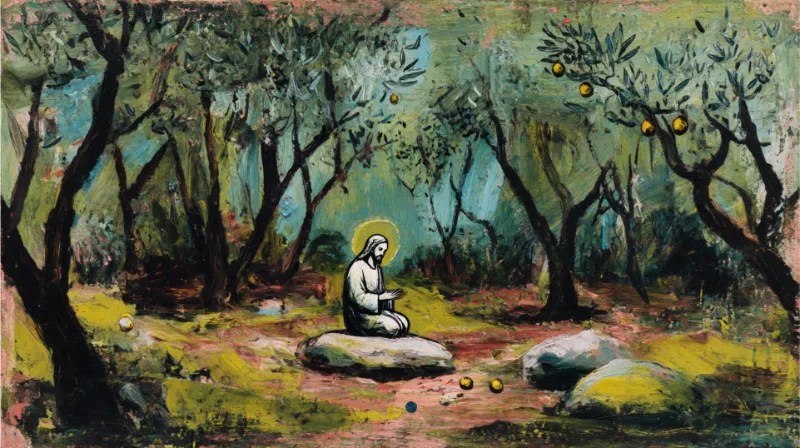
1 Kings 17:12-16 (The Widow of Zarephath)
“‘As surely as the LORD your God lives,’ she replied, ‘I don’t have any bread—only a handful of flour in a jar and a little olive oil in a jug. I am gathering a few sticks to take home and make a meal for myself and my son, that we may eat it—and die.’”
Réflexion : This woman’s response to Elijah captures the raw despair and hopelessness that can accompany extreme hardship. Yet, in her moment of utter destitution, she chooses radical, counter-intuitive obedience. Her story is a testament to the incredible courage it takes to act in faith when all emotional and physical evidence points to despair. Her vulnerability becomes the very stage for God’s miraculous provision, demonstrating that our greatest acts of faith are often born from our deepest places of need.

Ruth 1:16 (Ruth’s Loyalty to Naomi)
« Ruth répondit : Ne me presse pas de te laisser, de retourner loin de toi ! Où tu iras j'irai, où tu demeureras je demeurerai ; ton peuple sera mon peuple, et ton Dieu sera mon Dieu. »
Réflexion : This story is built on the shared loss of two widows, Naomi and Ruth. Ruth’s declaration is one of the most powerful expressions of loyal love and commitment in all of literature. She chooses to bind her own future to the fate of her bereaved mother-in-law. Her words model a profound truth: healing from loss is often found not in isolation, but in forging new, covenantal relationships. It is in choosing to belong to one another that they find their path to redemption.

2 Kings 4:1-7 (The Widow’s Oil)
“The wife of a man from the company of the prophets cried out to Elisha, ‘Your servant my husband is dead, and you know that he revered the LORD. But now his creditor is coming to take my two boys as his slaves.’… Elisha said…’Go around and ask all your neighbors for empty jars. Don’t ask for just a few.’”
Réflexion : This widow does not suffer in silence; she cries out for help, demonstrating the wisdom in seeking community support. Her miracle begins with what she already has: a little oil. God’s provision often multiplies the small acts of faith we are willing to offer. Her obedience in gathering jars—an act of hope before any evidence of provision—shows a resilience of spirit, a refusal to let her desperate circumstances have the final say.

Luke 18:3-5 (The Persistent Widow)
“And there was a widow in that town who kept coming to him with the plea, ‘Grant me justice against my adversary.’ For some time he refused, but finally he said to himself, ‘Even though I don’t fear God or care what people think, yet because this widow keeps bothering me, I will see that she gets justice…’”
Réflexion : Jesus presents this widow as a hero of tenacious faith. She is not passive; she is a relentless advocate for her own cause. Her persistence is not portrayed as annoying but as exemplary. She embodies the psychological fortitude of refusing to accept injustice. Jesus uses her to teach us to pray with that same unyielding spirit, assuring us that our persistence is not a bother to God but a demonstration of our deep and abiding trust in His ultimate goodness.
Category 4: Warnings Against Exploitation and Neglect
These verses deliver stern warnings to those who would mistreat or overlook the needs of widows.

Mark 12:40
“They devour widows’ houses and for a show make lengthy prayers. These men will be punished most severely.”
Réflexion : Jesus directs this scathing critique at religious leaders who use their spiritual authority as a cover for exploitation. “Devouring widows’ houses” is a visceral image of financial and emotional violation. It exposes the deepest hypocrisy: projecting piety while preying on the vulnerable. The severe punishment promised highlights a divine principle: the greater the position of trust, the more severe the judgment for its abuse.

Malachie 3:5
“‘So I will come to put you on trial. I will be quick to testify against sorcerers, adulterers and perjurers, against those who defraud laborers of their wages, who oppress the widows and the fatherless, and deprive the foreigners among you of justice…’”
Réflexion : In this passage, God himself takes the witness stand. The act of oppressing a widow is placed in the same category as other grievous societal and moral sins. This demonstrates that for God, social injustice is a deeply spiritual issue. The feeling of being voiceless is a profound pain for the oppressed; here, God promises to be their voice and their swift, powerful witness.

Ésaïe 10:1-2
« Malheur à ceux qui prennent des décrets iniques, à ceux qui prescrivent des ordonnances tyranniques, pour refuser justice aux pauvres et ravir leur droit aux malheureux de mon peuple, pour faire des veuves leur proie et piller les orphelins ! »
Réflexion : This is a condemnation not just of individual acts of cruelty, but of systemic injustice. It targets those in power who create laws and systems that inherently disadvantage the vulnerable. “Making widows their prey” is a chilling depiction of calculated, predatory behavior. It’s a reminder that evil can be institutionalized, and God’s heart for justice extends to demanding the reform of the very structures of society.

Jeremiah 7:6
“…if you do not oppress the foreigner, the fatherless or the widow and do not shed innocent blood in this place, and if you do not follow other gods to your own harm…”
Réflexion : Here, care for the widow is presented as a foundational pillar of a healthy relationship with God, as essential as avoiding idolatry. The verse implies that how we treat the most vulnerable members of our society is a direct reflection of our true worship. Neglecting the widow is not a neutral act; it is a step toward spiritual self-destruction (“to your own harm”).

Jérémie 22:3
« Voici ce que dit l'Éternel : Pratiquez la justice et l'équité. Délivrez l'opprimé de la main de l'oppresseur. Ne faites aucun tort, ne commettez aucune violence envers l'étranger, l'orphelin et la veuve, et ne versez pas de sang innocent dans ce lieu. »
Réflexion : This is an active command. It moves beyond merely avoiding harm (“do no wrong”) to pursuing positive action (“do what is just and right. Rescue…”). It calls for courage and intervention. For the community, this verse is a moral summons to be a place of refuge and safety. A healthy society is measured by its capacity to protect and rescue, not just to punish wrongdoers.

Acts 6:1
“In those days when the number of disciples was increasing, the Hellenistic Jews among them complained against the Hebraic Jews because their widows were being overlooked in the daily distribution of food.”
Réflexion : This verse is a vital picture of the early church grappling with practical, human failings. It shows that even a Spirit-filled community is not immune to neglect and unintentional bias. The beauty of the story is the response: the complaint was not suppressed but was heard and addressed constructively, leading to a new system of care (the appointment of deacons). It is a powerful model of a community mature enough to recognize its flaws and organize itself to better live out its core values of compassion and justice for all.


Laisser un commentaire