
 English
 Chinese
 Dutch
 Arabic
 Spanish
 Portuguese
 Russian
 French
 Italian
 German
 Japanese
Scripture never tells us how long Adam and Eve stayed in Eden, for Genesis 2–3 takes them from creation to expulsion without a single date. Cain, Abel and Seth are all born afterwards, and the first number in Adam’s life, 130 years at Seth’s birth, is counted outside the garden. Later writers answer anywhere from a few hours to seven years.
Genesis keeps no calendar in the garden, but it does let us see one evening there. After the fruit was eaten, Adam and Eve “heard the voice of the LORD God walking in the garden in the cool of the day” (Genesis 3:8), and hid among the trees. However long they had been there, that is the hour we are shown: God coming near, and the two people he made hiding from him.

Does the Bible say how long Adam and Eve were in the garden?
Genesis tells what happened in the garden in order, but it never says how much time passed. God “planted a garden eastward in Eden; and there he put the man whom he had formed” (Genesis 2:8). He commanded the man not to eat of “the tree of the knowledge of good and evil” (2:17). Adam named the animals (2:19–20), and God made the woman and “brought her unto the man” (2:22). Then the serpent spoke to the woman, she ate and “gave also unto her husband with her; and he did eat” (3:6). Finally God “drove out the man” and set cherubim at the east of the garden (3:24). In all of that, no verse counts days or years.
The first numbers come only after the expulsion, when Genesis 4:1–2 records the births of Cain and Abel and Genesis 5:3 says: “Adam lived an hundred and thirty years, and begat a son in his own likeness, and after his image; and called his name Seth.” Seth was born after Abel’s death (4:25), so the stay in Eden, the births of Cain and Abel and Abel’s life all fit within Adam’s first 130 years. That limit holds for the Hebrew text behind most English Bibles; in the Greek Septuagint, Adam’s age at Seth’s birth is 230 years.
Genesis also records a blessing given before the fall: “Be fruitful, and multiply, and replenish the earth” (1:28). Because no child is born until after the expulsion, many readers conclude that the stay was short. Jeff Miller of Apologetics Press (2019), for example, argues that Adam and Eve “could not have, therefore, been in the Garden for even 130 years,” and that “they were not even in the Garden long enough” to conceive a child. Scripture itself, though, does not draw that conclusion.

How long were Adam and Eve in the garden before they sinned?
Since Genesis is silent, Jewish and Christian writers have given their own answers, and they range from a few hours to several years.
| Source | Answer | Reference |
|---|---|---|
| Book of Jubilees | Seven years before the sin, then about six weeks more | Jubilees 3:15, 3:17, 3:32 |
| Babylonian Talmud | Created, sinned and expelled on the same day | Sanhedrin 38b |
| Irenaeus of Lyon | Fell on the sixth day, the day man was created | Against Heresies 5.23.2 |
| Augustine of Hippo | Sinned soon after Eve was created | The Literal Meaning of Genesis 9.4.8 |
| Dante | About seven hours | Paradiso 26.139–142 |
| James Ussher | Expelled on the day they entered, the tenth day of the world | Annals of the World |
| Ellicott’s Commentary | Probably longer than generally supposed | Note on Genesis 2:4 |
Seven years: the Book of Jubilees
The Book of Jubilees retells Genesis and dates its events in cycles of seven years. Britannica describes it as a pseudepigraphal work, outside the canon of Scripture, and dates its final form to about 100 BC. Jubilees says that “Adam and his wife were in the garden of Eden for seven years tilling and keeping it” (3:15). “After the completion of the seven years,” in the second month, “on the seventeenth day,” the serpent came to the woman (3:17). They left the garden “on the new moon of the fourth month” of the same year (3:32), about six weeks after the sin.
One day: the Talmud and Irenaeus
The Babylonian Talmud (Sanhedrin 38b) records a teaching of Rabbi Yohanan bar Hanina that divides the day of Adam’s creation into twelve hours. Eve is joined to Adam in the seventh hour, Adam receives the command in the ninth, sins in the tenth, is judged in the eleventh and leaves the garden in the twelfth. The teaching reads Psalm 49:12, “man being in honour abideth not” (49:13 in Hebrew Bibles), to mean that Adam did not spend even one night in the garden.
Irenaeus of Lyon, a second-century bishop, also placed the fall on the sixth day. In Against Heresies (5.23.2) he argues that Adam and Eve ate the fruit and came under death on the same day of the week on which Christ later died: Christ suffered “upon the day preceding the Sabbath, that is, the sixth day of the creation, on which day man was created.”
A short time: Augustine, Dante and Ussher
Augustine asked why Adam and Eve had no children until they left paradise. In The Literal Meaning of Genesis (9.4.8) he answers that the transgression took place soon after the woman was created, before the couple came together. In the same passage he notes that Scripture does not state how much time passed between their creation and the birth of Cain.
Dante went further and gave a precise figure, in the voice of Adam himself. In Paradiso 26, Adam tells Dante that he lived on the mountain of paradise “From the first hour to that which is the second, / As the sun changes quadrant, to the sixth” (lines 141–142, Longfellow’s translation), a stay of about seven hours.
James Ussher, the Anglican archbishop whose chronology dated creation to 4004 BC, also placed the expulsion on the day of entry. In his Annals of the World he suggested that God brought Adam and Eve into the garden after the first week, and wrote that it was “very probable, that Adam was turned out of Paradise the self same day that he was brought into it.” He placed that day on the tenth day of the world and linked it to the Day of Atonement.
A longer time: Ellicott’s Commentary
Other readers have allowed more time. Ellicott’s Commentary for English Readers, in its note on Genesis 2:4, says that “How long Adam and Eve enjoyed their simple happiness after their marriage is left untold,” but argues from Adam’s naming of the animals that “probably there was a longer time than is generally supposed spent in innocence.”
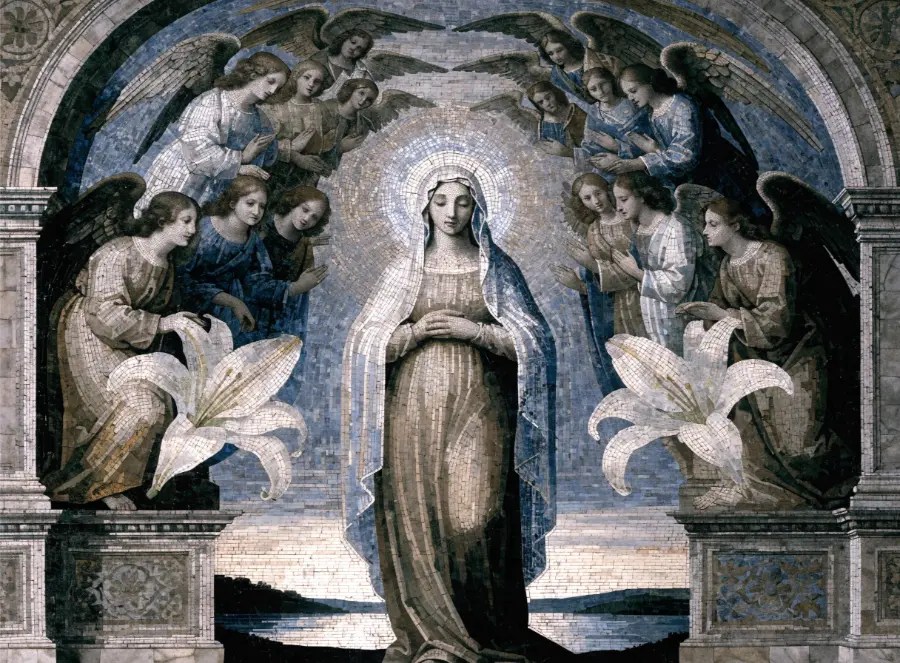
Was Adam in the garden before Eve?
In Genesis 2, Adam is there first. God put the man in the garden (2:15) and gave him the command about the tree (2:16–17) before the woman was made (2:21–22). 1 Timothy refers to this order: “For Adam was first formed, then Eve” (1 Timothy 2:13). Genesis does not say how long the interval was.
Jubilees does give numbers: Adam was brought into the garden after forty days, and his wife “on the eightieth day” (3:9). The book links these figures to the purification laws for a mother after the birth of a son or a daughter in Leviticus 12. In the Talmud’s account the interval is a few hours of the same day.
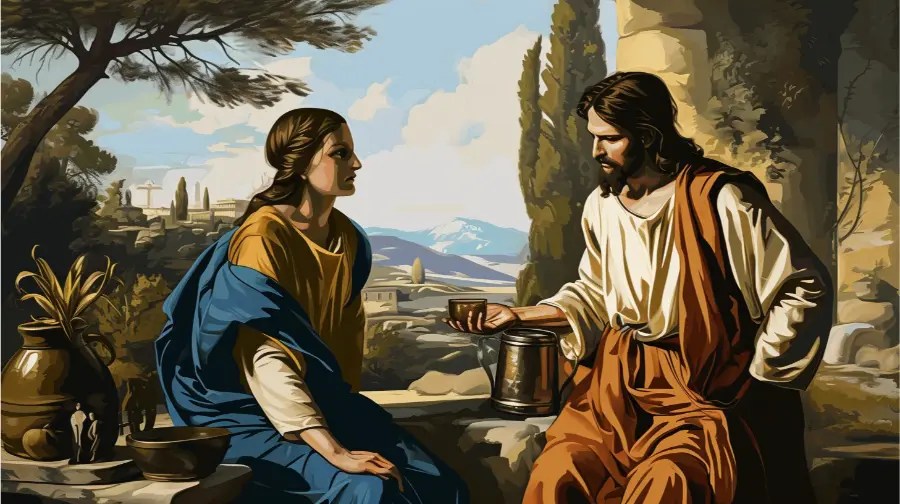
Did Adam and Eve have children in the Garden of Eden?
Genesis records no birth in the garden, and the first one comes after the expulsion: “And Adam knew Eve his wife; and she conceived, and bare Cain” (4:1). The text does not say outright that Cain was born outside Eden, but the story places his birth after Genesis 3:24. Jubilees agrees, saying that after leaving the garden “they had no son till the first jubilee” (3:34).
The great teachers of the Church believed that children were meant for the garden too. Augustine held that Adam and Eve would have had them in paradise if they had not sinned (City of God 14.23), but that “sin and its merited banishment from Paradise anticipated” it (14.26). Thomas Aquinas taught the same: “In the state of innocence there would have been generation of offspring for the multiplication of the human race” (Summa Theologiae I, question 98, article 1). The Talmud’s account in Sanhedrin 38b tells it differently, placing the births of Cain and Abel in the eighth hour of the day, before the sin.
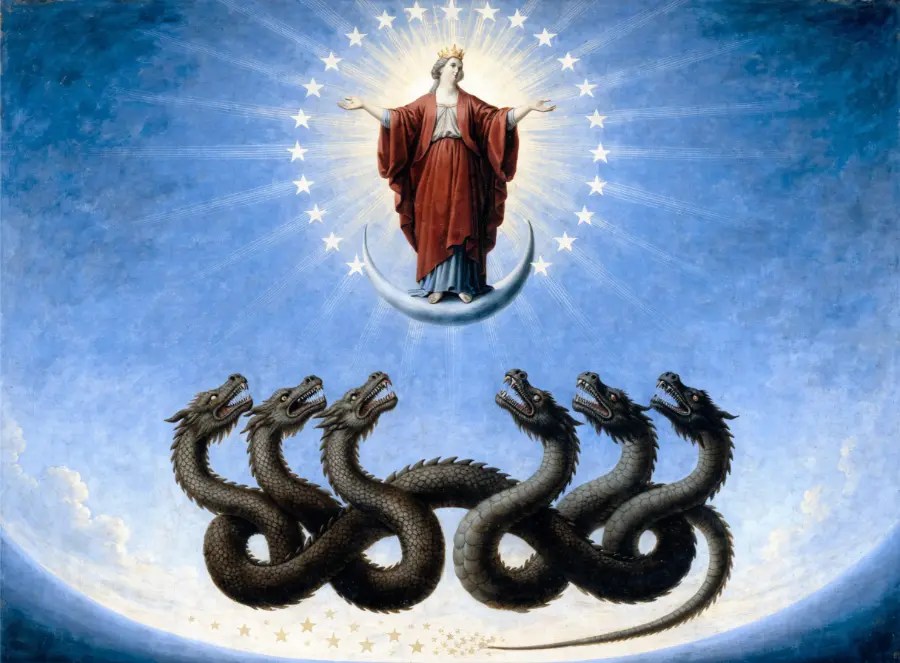
Catholic teaching on the time in Eden
The Catechism of the Catholic Church gives no length for the stay. In its section on the fall (paragraphs 385–421) it says: “The account of the fall in Genesis 3 uses figurative language, but affirms a primeval event, a deed that took place at the beginning of the history of man” (paragraph 390). It goes on to teach that after the first disobedience “Adam and Eve immediately lose the grace of original holiness” (399). Human nature, says paragraph 405, is “wounded in the natural powers proper to it, subject to ignorance, suffering and the dominion of death, and inclined to sin.”
What does the Quran say?
The Quran tells the story in three main passages (2:35–38, 7:19–25 and 20:115–123). God tells Adam, “dwell, you and your wife, in Paradise,” and forbids one tree; Satan deceives them and they are sent down to earth. None of these passages gives a length of time. A hadith in Sahih Muslim (854a) says that Adam was created on a Friday, entered Paradise on a Friday and was expelled on a Friday, without saying whether these were the same day.
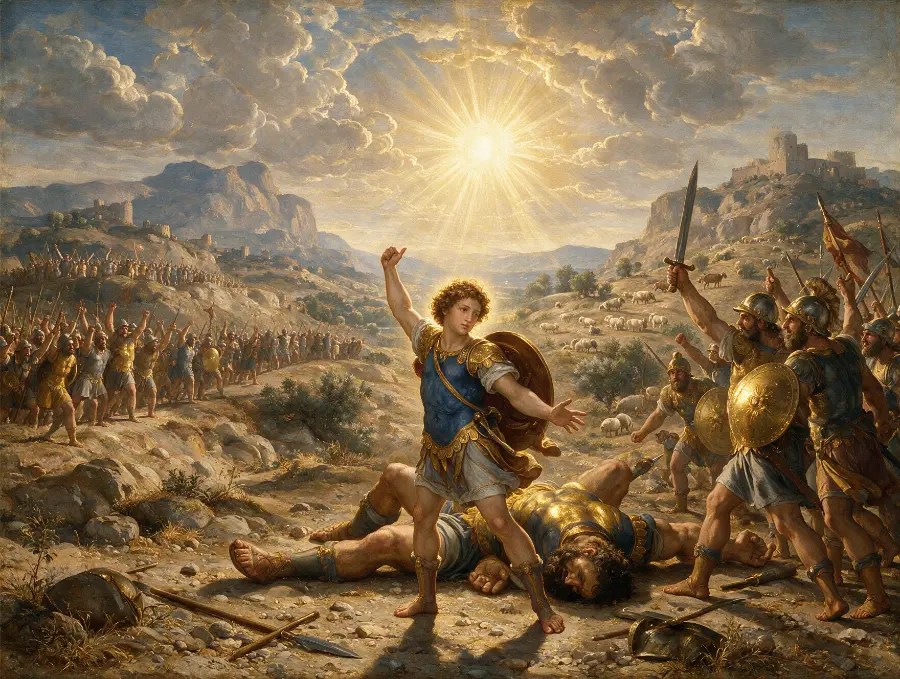
How long did Adam live after leaving the garden?
Genesis gives Adam’s whole lifespan: “all the days that Adam lived were nine hundred and thirty years: and he died” (5:5). Because Scripture does not say how long he spent in Eden, it does not say how many of those years he lived outside it. On the Jubilees timeline he left the garden in his eighth year and died in the year 930 (Jubilees 4:29), so he lived about 922 years outside it. Genesis gives no age for Eve and does not record her death.
Several early writers linked the 930 years to the warning of Genesis 2:17, “in the day that thou eatest thereof thou shalt surely die.” They read it with the saying that “one day is with the Lord as a thousand years” (2 Peter 3:8; compare Psalm 90:4). Jubilees says Adam “lacked seventy years of one thousand years” and so died within that “day” (4:30). Justin Martyr makes the same point in his Dialogue with Trypho (chapter 81), and Irenaeus reports it in Against Heresies 5.23.2. The argument explains why Adam died before reaching a thousand years, but it says nothing about how long he stayed in Eden.
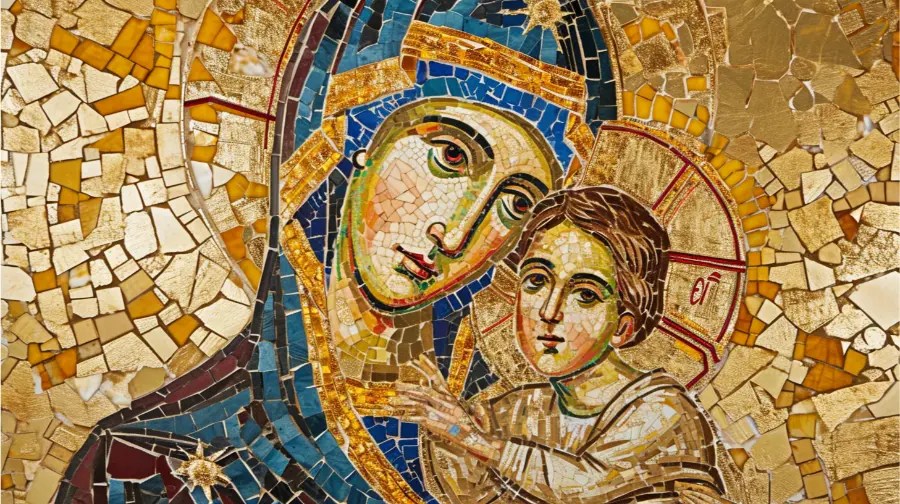
Where did Adam and Eve live after Eden?
God sent Adam out “to till the ground from whence he was taken” (Genesis 3:23), and placed the cherubim “at the east of the garden of Eden” (3:24). Genesis names no place for Adam and Eve’s new home. Cain later “dwelt in the land of Nod, on the east of Eden” (4:16). Jubilees says Adam and Eve “dwelt in the land of Elda in the land of their creation” (3:32). Genesis 2:10–14 describes a river that flowed out of Eden and divided into four, among them the Hiddekel and the Euphrates, but the location of Eden is not known.

How long ago was the Garden of Eden?
Scripture gives no date, so chronologists have added up the ages in the genealogies of Genesis 5 and 11 to estimate one. Ussher’s Annals placed creation at nightfall before 23 October 4004 BC, and Britannica notes that this date “was widely accepted in the Western world until the 19th century.” The Jewish calendar counts years anno mundi, from creation, and now generally dates it to 7 October 3761 BC. Britannica adds that “critical dates that underlie the calculations are uncertain.” The results also depend on which text is used, for the Septuagint gives Adam 230 years at Seth’s birth and Seth 205 years at the birth of Enos, where the Hebrew text has 130 and 105.
Every one of those reckonings is built from numbers Genesis gives after the gate closed, and inside the garden it keeps no dates at all. What it keeps is one evening, and the voice of God among the trees, calling the man who had hidden from him: “And the LORD God called unto Adam, and said unto him, Where art thou?” (Genesis 3:9).

Related reading
- Adam and Eve and the forbidden fruit
- Adam and Eve’s sons
- How many years from Adam to Jesus?
- The Council of Trent on original sin


Leave a Reply