
 English
 Chinese
 Dutch
 Arabic
 Spanish
 Portuguese
 Russian
 French
 Italian
 German
 Japanese
The Apostolic churches this page is about are Oneness Pentecostal churches, and the largest of them is the United Pentecostal Church International, the UPCI. They pray for the baptism of the Holy Spirit, they speak in tongues and they baptize believers by immersion, just as the Assemblies of God and the other Trinitarian Pentecostals do. Where they part from them is over God himself and the name spoken in baptism. Oneness Pentecostals believe in one God who has revealed himself as Father, Son and Holy Spirit, but they do not speak of three persons, and they baptize “in the name of Jesus Christ” (Acts 2:38) instead of in the name of the Father, the Son and the Holy Spirit. They also count the baptism of the Spirit, with tongues, as part of being born again, while the Assemblies of God teaches that it comes after the new birth. Not every church with Apostolic in its name is Oneness, as the history below shows.
Both churches go back to the same morning in Jerusalem, when the disciples “were all filled with the Holy Ghost, and began to speak with other tongues, as the Spirit gave them utterance” (Acts 2:4), and both teach that the same gift is for believers now. A few verses on, Peter told the crowd, “Repent, and be baptized every one of you in the name of Jesus Christ for the remission of sins, and ye shall receive the gift of the Holy Ghost” (Acts 2:38), and the two churches hear that sentence in different ways.
| Question | Apostolic (Oneness): UPCI | Trinitarian Pentecostal: Assemblies of God |
|---|---|---|
| God | One God, revealed as Father, in the Son and as the Holy Spirit; Jesus is “God manifested in flesh” | One God in three persons: Father, Son and Holy Spirit |
| Water baptism | Immersion of the repentant, “in the name of our Lord Jesus Christ” | Immersion of believers, in the name of the Father, Son and Holy Spirit |
| What baptism does | “For the remission of sins”; part of the new birth | Shows that believers have died and risen with Christ; “a representation, but not an impartation, of grace” |
| Spirit baptism and tongues | Part of the new birth; tongues the “initial sign” | After the new birth, for power; tongues the “initial physical sign” |
| Communion | “Literal bread and the fruit of the vine” as emblems of Christ’s body and blood; no rule on how often | A symbol, memorial and prophecy; open to anyone who confesses Christ; monthly is common |
| Foot washing | Kept as “a divine institution” | Not among its ordinances |
| How a person is saved | By grace through faith, obeying Acts 2:38 | By repentance and faith in Christ |
| Can salvation be lost? | Yes, by sin without repentance | Yes, by “willfully turning away from Christ” |
| Mary | Born of “the virgin Mary”; not called the mother of God | Its statement names only the virgin birth |
| Authority | The Bible alone; the General Conference governs | The Bible; the Statement of Fundamental Truths as a basis of fellowship |
Where Pentecostals and Oneness Pentecostals differ
Each answer is quoted from the church’s own documents or from one of our articles.
Trinity
Pentecostal
We therefore may speak with propriety of the Lord our God who is One Lord, as a trinity or as one Being of three persons, and still be absolutely scriptural.
Oneness Pentecostal (Apostolic)
Before the incarnation, this one true God manifested Himself in divers ways. In the incarnation, He manifests Himself in the Son, who walked among men. As He works in the lives of believers, He manifests Himself as the Holy Spirit.
Salvation
Pentecostal
Salvation is received through repentance toward God and faith toward the Lord Jesus Christ. By the washing of regeneration and renewing of the Holy Spirit, being justified by grace through faith, man becomes an heir of God, according to the hope of eternal life.
From Assemblies of God Statement of Fundamental Truths, truth 5, The Salvation of Man (Wayback copy)
Oneness Pentecostal (Apostolic)
We obey the gospel (II Thessalonians 1:8; I Peter 4:17) by repentance (death to sin), water baptism in the name of Jesus Christ (burial), and the baptism of the Holy Spirit with the initial sign of speaking in tongues as the Spirit gives the utterance (resurrection).
Holiness in this life
Pentecostal
Sanctification is realized in the believer by recognizing his identification with Christ in His death and resurrection, and by the faith reckoning daily upon the fact of that union, and by offering every faculty continually to the dominion of the Holy Spirit.
From Assemblies of God Statement of Fundamental Truths, truth 9, Sanctification (Wayback copy)
Oneness Pentecostal (Apostolic)
The birth of the Spirit makes a person a new creature. His old life is exterminated, obliterated, and buried; the power of sin in the flesh is destroyed.
From UPCI position paper 'Holiness' (General Board, 1977), 'Holiness in the New Testament Dispensation'
Baptism
Pentecostal
All who repent and believe on Christ as Saviour and Lord are to be baptized. Thus they declare to the world that they have died with Christ and that they also have been raised with Him to walk in newness of life.
Oneness Pentecostal (Apostolic)
The basic and fundamental doctrine of the general organization shall be the Bible standard of full salvation, which is repentance, baptism in water by immersion in the name of the Lord Jesus Christ for the remission of sins, and the baptism of the Holy Ghost with the initial sign of speaking with other tongues as the Spirit gives utterance.
Day of worship
Pentecostal
While we are not commanded to observe Sunday as the specific day of rest and worship, the principle of the Sabbath is that one day in seven should be set aside for physical and spiritual renewal.
From Assemblies of God (USA), topics page Observing the Sabbath (archived 2017)
Oneness Pentecostal (Apostolic)
From the earliest times, Christians have usually conducted their main worship services on Sunday. Early believers chose the day of Christ’s resurrection to emphasize that they were not under the old covenant, which the Sabbath symbolized, but under the new covenant, which His resurrection instituted.
The Tribulation
Pentecostal
Although God’s people may endure severe trials before the Lord comes, the Church will be raptured before the period called the Great Tribulation.
From Assemblies of God (USA), position paper The Rapture of the Church (1979)
Oneness Pentecostal (Apostolic)
While the UPCI allows diversity in views regarding the timing of the coming of the Lord, particularly with reference to the Tribulation, the expectation of the soon return of the Lord is integral to our identity as a movement.
From UPCI position paper 'The Coming of the Lord' (General Board, 2005)
Remarriage
Pentecostal
Where we recognize the right to divorce, we recognize the freedom to remarry. Even when those exceptions do not exist, divorced and remarried Christians belong to the people of God and should be treated as members of the body of Christ.
From Assemblies of God (USA), position paper Divorce and Remarriage (2024), summary
Oneness Pentecostal (Apostolic)
“Whosoever shall put away his wife, except it be for fornication, and shall marry another, committeth adultery” (Matthew 19:9). (See also Matthew 5:32.) When this sin has been committed, the innocent party may be free to remarry only in the Lord.
Contraception
Pentecostal
The Assemblies of God, finding no clear scriptural mandate, does not take an official stand on the appropriateness of contraception within a heterosexual marriage for purposes of regulating the number of children, determining the time of their birth, or safeguarding the health of the mother.
Oneness Pentecostal (Apostolic)
This means we should avoid abortion at every stage, including birth control methods that do not prevent conception but only prevent implantation of the fertilized egg. This would include some types of birth control pills (the mini-pill) and the intrauterine device (IUD).
To see what Oneness Pentecostals teach beside what Pentecostals teach on 55 questions, open our free tool, Compare Christian Denominations.
Is Apostolic the same as Pentecostal?
Apostolics are Pentecostals, and they tell the same beginning as the Assemblies of God does. The UPCI says it “emerged out of the Pentecostal movement that began with a Bible school in Topeka, Kansas, in 1901 and with the Azusa Street Revival in Los Angeles, California, in 1906.” The Assemblies of God starts its own history in the same two places, with the students at Charles Parham’s Bethel Bible School in Topeka who “began speaking in tongues at a prayer meeting on January 1, 1901,” and with William J. Seymour and the revival on Azusa Street that ran from 1906 to 1909.
In those first years the word Apostolic belonged to the whole movement. Parham spread the message through what the Assemblies of God’s history calls “his Apostolic Faith Movement,” and the revival of 1906 broke out in the “Apostolic Faith Mission at 312 Azusa Street.” Today the name is carried by Oneness churches such as the Apostolic Assembly of the Faith in Christ Jesus, which confesses that God “possesses an absolute and indivisible divinity,” and the UPCI’s own writings speak of “the apostolic doctrine.” Other churches call themselves apostolic in quite another sense, as our page on what “apostolic” means and how Apostolic churches differ from the Catholic Church explains, so when you meet a church with the name, it is worth asking what it teaches.
How did Oneness Pentecostals and the Assemblies of God part?
The parting began at a camp meeting at Arroyo Seco, in California, in April 1913. R. E. McAlister said in a sermon there that “the apostles invariably baptized their converts once in the name of Jesus.” That night, as the Assemblies of God tells it, John G. Scheppe received “a glimpse of the power of the name of Jesus,” and the next morning many “were rebaptized in the name of Jesus only.” People came to call it the “New Issue,” or “Jesus Only,” or Oneness Pentecostalism.
The Assemblies of God was founded the following spring, when about 300 delegates met at Hot Springs, Arkansas, from 2 to 12 April 1914, and they said then that they needed no “creed” beyond “the holy inspired Scriptures.” But the new teaching was spreading among their own ministers, and by 1916 “a significant minority of Assemblies of God ministers had identified with the emerging Oneness movement.” Its history says the leaders had to decide “whether to abandon traditional Trinitarian theology in favor of a modal monarchian view of the godhead (also called the “New Issue” or Oneness theology).” When the fourth General Council met in St. Louis, from 1 to 7 October 1916, it answered by adopting the Statement of Fundamental Truths, whose long article on God confesses the Trinity.
How the early church answered modalism
The UPCI dates its own beginnings to that same year: it “traces its organizational roots to 1916, when a large group of Pentecostal ministers began to unite around the teaching of the oneness of God and water baptism in the name of Jesus Christ.” It took its present form in 1945, when the Pentecostal Church Incorporated and the Pentecostal Assemblies of Jesus Christ merged, and that year it had 521 churches. By its own count in 2026 it has more than 49,000 churches and preaching points and 51,000 credentialed ministers, with more than six million constituents in 203 nations.
The UPCI is one of many Oneness bodies, which believe the same gospel and are ordered in different ways. In 1975 its General Conference said, “we have knowledge of forty, fifty, or more different factions, organizations, and/or groups who believe the same gospel,” and it called the UPCI “probably the largest group of this number.” The Apostolic Assembly of the Faith in Christ Jesus, for one, has bishops and calls the bishopric “the highest office work in the ministry.” Trinitarian Pentecostal churches differ among themselves in places too, and on this page the Assemblies of God, “one of the largest Pentecostal denominations in the United States,” speaks for them.
Do Apostolics believe in the Trinity?
Oneness Pentecostals speak of the Father, the Son and the Holy Spirit, but they do not confess three persons in God. The UPCI puts it this way: “There is one God, who has revealed Himself as Father; through His Son, in redemption; and as the Holy Spirit, by emanation. Jesus Christ is God manifested in flesh. He is both God and man.” A paper its General Board adopted in 2004 says that “All names and titles of the Deity—such as God (Elohim), Jehovah (Yahweh), Lord, Father, Word, and Holy Spirit—refer to one and the same being,” and that “We cannot speak of persons in the Godhead, but we can say Christ is a person who lived on earth.” The verse the UPCI sets beside its teaching is Paul’s word about Christ, “For in him dwelleth all the fulness of the Godhead bodily” (Colossians 2:9).
Its page on Oneness Pentecostalism says what this means for a sinner in a few plain lines: “The God against whom we sinned is the One who forgives us. God loved us so much that He came in flesh to save us. He gave of Himself; He did not send someone else.”
The Assemblies of God answers in its Statement of Fundamental Truths. God, it says, “has further revealed himself as embodying the principles of relationship and association as Father, Son, and Holy Spirit,” and so “We therefore may speak with propriety of the Lord our God, who is One Lord, as a Trinity or as one Being of three persons, and still be absolutely scriptural.” Then it adds, “The Father, the Son, and the Holy Spirit are never identical as to person; nor confused as to relation; nor divided in respect to the godhead; nor opposed as to cooperation.”
Both churches cite the same words of Moses for what they believe about God, “Hear, O Israel: The Lord our God is one Lord” (Deuteronomy 6:4). They agree that God is one, and they disagree over how the one God is Father, Son and Holy Spirit; the Scriptures each side reads on that are set out in our page on Pentecostals and the Trinity.

Why do Apostolics baptize in Jesus’ name?
Oneness Pentecostals take the words from Peter’s sermon at Pentecost and from the two places where Luke tells of believers who “were baptized in the name of the Lord Jesus” (Acts 8:16; 19:5). The United Pentecostal Church International baptizes only people who have repented, by immersion and in the name of Jesus Christ, and its Articles of Faith teach that baptism is “for the remission of sins.” The Articles say it “is only for those who have fully repented, having turned from their sins and a love of the world,” that it “should be administered by a duly authorized minister of the gospel,” and that it is given “in the name of our Lord Jesus Christ,” which they call “obeying and fulfilling Matthew 28:19.” So the UPCI holds that when it baptizes in the name of Jesus Christ, it is keeping the command Jesus gave, “baptizing them in the name of the Father, and of the Son, and of the Holy Ghost” (Matthew 28:19).
The Assemblies of God baptizes by immersion as well, and only those who “repent and believe on Christ as Savior and Lord,” so it baptizes no infants. In the water, its Statement says, believers “declare to the world that they have died with Christ and that they also have been raised with Him to walk in newness of life.” The Statement does not say which words are spoken, and the church grants that many of the baptisms in Acts name only Jesus. Assemblies of God churches baptize in the name of the Father, the Son and the Holy Spirit all the same, because to them the threefold name says who Jesus is: “By baptizing in the name of the Father, Son, and Holy Spirit,” one of them wrote in the magazine Influence in 2024, “we are confessing more about our faith in Jesus.”
For the Assemblies of God, baptism follows salvation and does not bring it: “Rather than a necessary step for salvation, water baptism is reserved for those who have already turned to God by faith,” and “Baptism is a representation, but not an impartation, of grace.” And on the question that began the split at Arroyo Seco, it says, “The Assemblies of God has strongly rejected the rebaptism of believers based on formulas, especially if the rebaptism was understood to be a rejection of the doctrine of the Trinity.”
Do you have to speak in tongues to be saved?
In the UPCI’s teaching, speaking in tongues as the Holy Spirit is received is part of being born again, while the Assemblies of God teaches that a person is born again first and receives the baptism of the Spirit, with tongues, afterwards. The UPCI teaches that a person is saved by grace through faith, and that faith obeys the gospel in three steps: repentance, baptism in the name of Jesus Christ, and the baptism of the Holy Spirit with speaking in tongues. In its own words, “Salvation comes by grace through faith based on the atoning sacrifice of Jesus Christ,” and “We obey the gospel” by “repentance (death to sin), water baptism in the name of Jesus Christ (burial), and the baptism of the Holy Spirit with the initial sign of speaking in tongues as the Spirit gives the utterance (resurrection).” The three steps follow the gospel itself, “the good news that Jesus died for our sins, was buried, and rose again,” so the believer dies to sin, is buried in the water and rises in the Spirit. In the UPCI’s teaching “the application of grace and the expression of faith come as a person obeys Acts 2:38, thereby receiving the new birth promised by Jesus,” and its Articles of Faith call the three together “the Bible standard of full salvation.”
The UPCI adds a word about believers who have not received all of this: “We do not reject those who have not received the complete New Testament experience, but we encourage them to receive everything God has for them.” A paper its General Board adopted in 2019 says, “We do not believe someone must belong to the UPCI to be saved or to have a valid ministry.”
The Assemblies of God teaches that “Salvation is received through repentance toward God and faith toward the Lord Jesus Christ,” and that “The inward evidence of salvation is the direct witness of the Spirit (Romans 8:16).” The baptism in the Holy Spirit comes afterwards, for it “is distinct from and subsequent to the experience of the new birth,” and with it comes “the enduement of power for life and service.” Every believer, it says, “should ardently expect and earnestly seek” the baptism that tongues accompany. The two churches even describe those tongues in nearly the same words: both say that the tongues of Spirit baptism and the gift of tongues Paul writes of in 1 Corinthians are the same in essence and different in purpose and use.
Can a saved person be lost?
The UPCI’s Articles of Faith teach that a Christian who sins against God and does not repent “will eventually be lost.” They put it this way: “A Christian must walk with God and keep himself in the love of God (Jude 21) and in the grace of God. When a person transgresses and sins against God and does not repent, he will eventually be lost and cast into the lake of fire.” The verse they lean on is Jude’s, “Keep yourselves in the love of God, looking for the mercy of our Lord Jesus Christ unto eternal life” (Jude 1:21).
The Assemblies of God also rejects the teaching that a saved person can never be lost, but it describes the danger in its own way. Its General Council “disapproves of the unconditional security position which holds that it is impossible for a person once saved to be lost,” and a paper of 2017 says that “The believer’s salvation may be forfeited or abandoned by willfully turning away from Christ.” The same paper says that believers who sin and turn back to Christ in repentance are “never needing to doubt their salvation,” and that “believers are not in a revolving door, moving in and out of the grace of God! They are secure in the hand of God.”
Both churches also ask their people for holy lives. The UPCI says, “We should live a holy life inwardly and outwardly,” and the Assemblies of God’s Statement quotes the line from Hebrews about “holiness without which no man shall see the Lord.” What holiness means for dress among United Pentecostals is the subject of our page on why United Pentecostals prefer dresses and skirts.
The Lord’s Supper and the washing of feet
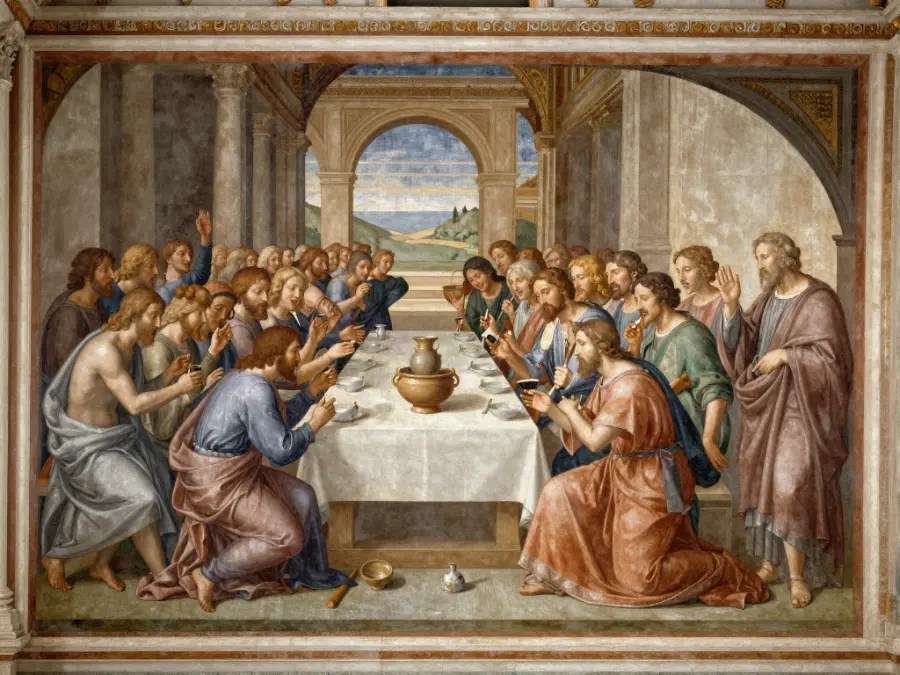
In the UPCI, Communion is taken with “literal bread and the fruit of the vine” as “emblems of His broken body and shed blood,” and its Articles of Faith say there is “a spiritual significance and blessing in partaking of the sacrament.” The Articles quote Jesus’ words at the Last Supper from Luke 22, and they do not say how often Communion is taken or who may receive it.
Oneness Pentecostals in the UPCI also wash one another’s feet, because Jesus told his disciples, “If I then, your Lord and Master, have washed your feet; ye also ought to wash one another’s feet” (John 13:14). Their Articles say, “This first example was given by our Lord, and it is a divine institution. It is well to follow His example and wash one another’s feet; thus manifesting the spirit of humility.” The Apostolic Assembly of the Faith in Christ Jesus washes feet “in combination or indistinctly with the Lord’s Supper as an act of humility and Christian fellowship,” and it keeps the table closed: “No person shall participate in this ceremony who is not a faithful church member or is not in full communion.”
The Assemblies of God names two ordinances in its Statement, baptism in water and Holy Communion, and foot washing is not one of them. It calls the Lord’s Supper “the symbol expressing our sharing the divine nature of our Lord Jesus Christ,” “a memorial of His suffering and death” and “a prophecy of His second coming,” and it says the Supper is “enjoined on all believers” until he comes, as Paul wrote: “For as often as ye eat this bread, and drink this cup, ye do shew the Lord’s death till he come” (1 Corinthians 11:26).
Its table is open to every believer, for “anyone who confesses Christ as Savior may receive the elements, regardless of church affiliation.” Congregations differ in how often they take it, though “observing the Lord’s Supper monthly is common.” The Assemblies of God “rejects the notion that observing Communion brings the saving grace it represents.”
E. N. Bell was the first general superintendent of the Assemblies of God. He spoke of the Lord’s Supper this way: “It is more than a memorial feast. Jesus is there in the Spirit to bless, quicken, uplift and heal.”
What do Oneness Pentecostals believe about Mary?
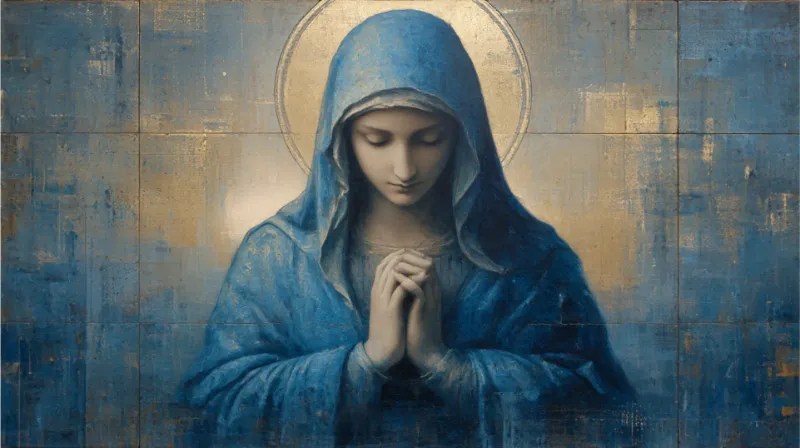
The UPCI confesses that Jesus was “born of the virgin Mary,” but it does not call her the mother of God, and its Articles of Faith say nothing of her beyond the virgin birth and Christ’s humanity. The Articles say that “Jesus on His Father’s side was divine, on His mother’s side, human,” and the 2004 paper on the humanity of Jesus says, “we cannot accept the trinitarian presuppositions and concepts of Chalcedon, nor do we endorse Chalcedon’s designation of Mary as the mother of God.” The same paper holds that Jesus was truly her son. Mary was not, in its words, an “incubator” for “divine flesh,” for “The genetic relationship of Christ to humanity was inherited through His mother, Mary.” Of her perpetual virginity, her assumption or prayer to her, the Articles say nothing at all.
The Assemblies of God’s Statement of Fundamental Truths never names Mary, though among the things “The Scriptures declare” about Jesus it lists “His virgin birth (Matthew 1:23; Luke 1:31,35),” and it says no more about her.
Where the UPCI and the Assemblies of God find their teaching
For the UPCI, the Bible alone is the authority: its Articles of Faith call it “the only God-given authority which man possesses,” and the church’s highest governing body is its General Conference. Everything the church teaches must, in the Articles’ words, “be based upon, and harmonize with, the Bible,” and the 2004 paper on the humanity of Jesus says that “it is preferable to pass over the ancient creeds and councils and go back to Scripture.” Under Scripture, each local church governs itself and “the congregation elects its pastor,” and the General Conference and the General Board speak for the whole church in papers like the ones quoted on this page. The UPCI’s 2019 paper on church government says how it understands that authority: “The church and its leaders are not infallible, for no authority is absolute except God’s, but God instituted the principle of church government and uses it to accomplish His purposes.”
The Assemblies of God opens its Statement with the same confidence in Scripture: “The Bible is our all-sufficient rule for faith and practice. This Statement of Fundamental Truths is intended simply as a basis of fellowship among us,” and it adds that “The phraseology employed in this statement is not inspired or contended for.” The founders had said in 1914 that they needed no creed, and two years later, with the questions of God and baptism before them, their General Council wrote this statement. The Statement now closes with the words, “These truths are non-negotiable beliefs that all Assemblies of God churches adhere to.”
However the two churches differ about baptism, both teach that the gift poured out at Pentecost is for believers now, and Peter said himself how far that promise reached: “For the promise is unto you, and to your children, and to all that are afar off, even as many as the Lord our God shall call” (Acts 2:39).

Related reading
- Pentecostal vs Baptist: how they differ on the Holy Spirit and tongues
- Assemblies of God vs Pentecostal: the Assemblies of God is a Pentecostal church
- Pentecostal vs charismatic vs evangelical
- 20 Bible verses about speaking in tongues
- What the Bible says about the Holy Trinity
- What Do Apostolic (Oneness) Pentecostals Believe?
- What Do Pentecostals Believe? Spirit Baptism, Tongues, Healing
- Baptism by Immersion or Sprinkling: How Each Church Baptizes


Leave a Reply