Baptism vs. Christening: What’s the Difference?


  • Christening and baptism are sacred acts symbolizing the welcoming into God’s family through water and the Holy Spirit, often used interchangeably in different Christian traditions.
  • The terms “”christening”” and “”baptism”” have distinct historical meanings, with christening originally linked to naming, while baptism emphasizes spiritual cleansing and new life in Christ.
  • Baptism is rooted in New Testament traditions, exemplified by Jesus, and is viewed variably across denominations as either necessary for salvation or a public declaration of faith.
  • Godparents play a crucial role in a child’s spiritual journey, supporting their Christian upbringing and embodying the communal nature of faith formation within the Church.

A Heartfelt Welcome: Understanding Christening and Baptism

Get ready to be uplifted! Exploring the beautiful traditions of christening and baptism is a wonderfully enriching experience, one that draws you closer to the very heart of your faith. These sacred acts, just brimming with meaning and steeped in history, are like precious milestones on your spiritual journey and for your family. I want to bring you clarity and a whole lot of encouragement today, as we uncover the incredible blessings and powerful truths God has woven into these practices. When you understand their special details, their amazing historical roots, and what they mean to different Christian families, your heart will overflow with appreciation for these divine moments God has planned for you.

What’s the Real Difference Between “Christening” and “Baptism”? Are They the Same Blessed Event?

For so many wonderful people and numerous churches today, the words “christening” and “baptism” are often used to describe the very same blessed event: that sacred moment of welcoming someone into God’s family through the beautiful, symbolic use of water and calling upon the Holy Spirit. Think of it like this: you might call the whole celebration a “wedding,” but the main event, the heart of it all, is the couple getting “married.” It’s so similar here! A “christening” is often the name for the special service where the powerful act of “baptism” happens.¹

The Church of England, for example, tells us so clearly, “There is no difference between a christening service and a baptism service. Some churches will use the word ‘baptism’ and some the word ‘christening’.”1 Isn’t that encouraging? The most important, blessed moment in either service is that precious act of baptism, when water is gently poured or wiped on the person’s head. And you know what? Other good sources agree, saying they’re really “different words for the same thing,” and that “nowadays, when people talk for a Christening, they’re really talking about Baptism”.²

If we look back into history, just for a moment, we see a little hint of a difference, especially when it came to giving a name. While today these words are mostly interchangeable, “christening” way back then had a special link to formally naming a child. It was often the very ceremony where a child received their Christian name right at the same time they were baptized.² Records show that “a baby’s christening used to be the naming ceremony (the bestowal of a Christian name) that accompanied the act of baptism”.² And the word “christen” itself, by the mid-15th century, grew to include the meaning “give a name to at baptism”.³

Here’s another little historical note: “christening” could sometimes be used for naming or dedicating things, like ships or new church buildings, while “baptism” was almost always just for people.² This wider use of “christening” showed its connection to identifying or formally dedicating something or someone.

But despite these historical shades of meaning, the main thing for us believers today is that both words point to that amazing, God-ordained moment of spiritual cleansing with water and dedicating oneself to Christ. It means a fresh start, a brand-new beginning with God!2 The way these words have journeyed through time shows how language can adapt. The fact that they’re mostly interchangeable with “baptism” maybe being the more theologically specific term in many places, tells us that the focus is strongly on the core spiritual event—the washing, the new birth, the entry into our Christian family—more so than just the naming ceremony alone, even though naming is still a treasured part of many of these services. The root of “christen,” meaning “to make Christian” 4, powerfully captures the life-changing heart of this event. It’s more than just a ritual; it’s a powerful shift in who you are, a belonging to Christ, marking a new chapter as a child of God and a member of His wonderful church.

Where Do the Words “Christening” and “Baptism” Come From, and What Wonderful Meanings Do They Hold?

The words “baptism” and “christening” themselves are like hidden treasures, full of rich history and beautiful meanings that light up the importance of this sacred tradition. When you understand where they come from, your appreciation for this holy practice will just soar!

The word “baptism” has its beginnings in the ancient Greek word baptizo (or baptizein). This expressive word means “to immerse,” “to dip in water,” or “to be poured out upon”.² It paints such a vivid picture of being completely surrounded, covered, or washed. The Greek baptizein literally means to “immerse, dip in water,” and could even be used in a figurative way to describe being “over one’s head,” like in debt, or thoroughly “soaked”.³ Isn’t it interesting that our English word “baptism” is a transliteration of the Greek? That means the Greek letters were basically turned into their English equivalents, instead of the word being a direct translation of its meaning into English.² This focus on the action of water—immersing or pouring—is right at the heart of the physical act of baptism.

“christening”—that has lovely origins in Old English. It comes from the word “cristnian,” which wonderfully and literally means “to make Christian”.³ This word points directly to the amazing outcome of the rite: becoming a Christian! It’s also very closely tied to the tradition of giving a “Christian name” to someone at their baptism.³ Historical sources tell us that “christen” as a verb, around the year 1200, meant “to baptize into the Christian church.” This came from the Old English “cristnian,” which itself came from “cristen,” meaning “Christian”.⁴ By the mid-15th century, its meaning had beautifully expanded to include “give a name to at baptism”.³ This really highlights the spiritual transformation and the new identity, including a name recognized in our faith family, that “christening” brings.

In their own special ways, both words turn our hearts and minds toward our Lord Jesus Christ. “Christening” actually has His name right in it, reminding us that this sacred act sets a person apart for Him. “Baptism,” with its powerful images of washing, renewal, and new life, connects us believers to the incredible events of Jesus’s own death and resurrection, a theme so beautifully shared in the New Testament.⁵

The origins of these words are so much more than just historical facts; they show us the core actions and the major identity shifts that happen in the ceremony. “Baptizein” highlights the action with water, a physical engagement, while “cristnian” emphasizes the outcome—becoming Christian and receiving a Christian identity, often marked by a name. These two aspects, the rite itself and its amazing result, are beautifully woven together. Understanding both roots gives us a fuller, richer picture of this sacred event. It’s a physical act filled with deep spiritual and communal importance, a declaration by God about the individual, and a welcoming into His family. The strong connection of “christening” with giving a “Christian name” 3 further emphasizes this new identity and sense of belonging in the Church. A name means uniqueness and the precious truth of being known personally by God. This adds such a deeply personal and communal dimension, as the individual isn’t just going through a ritual but is being personally identified, named, and lovingly welcomed into the family of faith.

What Does God’s Word, the Bible, Say About Baptism? Is It a Treasure from the Old or New Testament?

The practice of baptism shines so brightly in the New Testament, established by the incredible example and direct command of Jesus Christ Himself, even though we can see its symbolic roots in earlier traditions.

The New Testament story of baptism often starts with John the Baptist. He came as a powerful, prophetic voice, preparing the way for our Lord, and baptism was a central part of his ministry. He called people to a baptism of repentance in the Jordan River, encouraging them to turn from their sins and get their hearts ready for the coming Messiah.² The scriptures describe John’s mission as using baptism as a key sacrament of his messianic movement.⁷

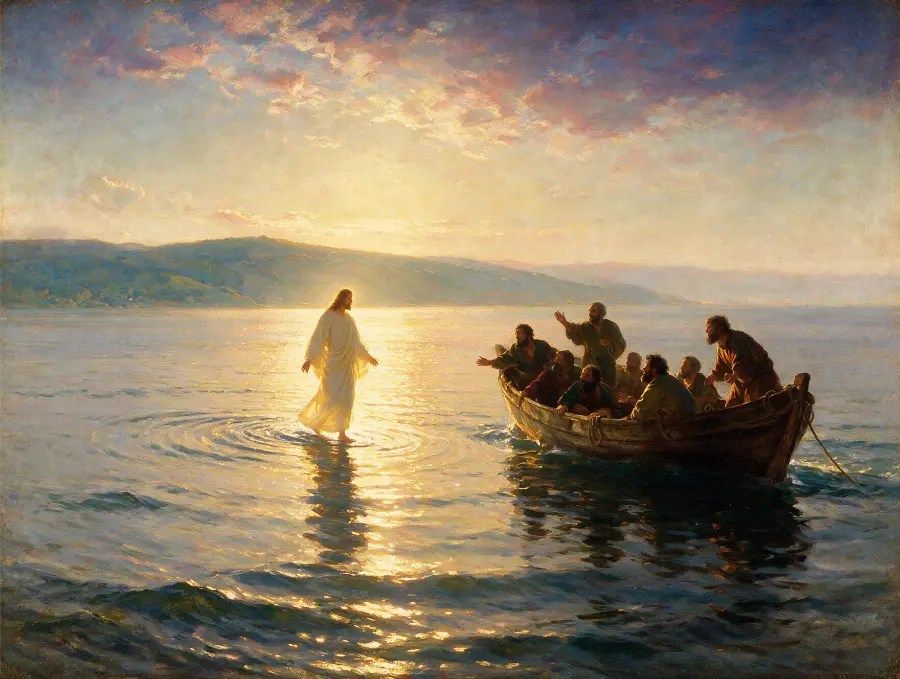
But the ultimate example for Christian baptism is found in Jesus Christ. Our Savior, though He was without sin, chose to be baptized by John in the Jordan River.⁸ He did this not because He needed to be cleansed from sin to identify with us, humanity, to fulfill all righteousness, and to set a wonderful example for all His followers.¹¹ After His triumphant resurrection, Jesus gave His disciples what we know as the Great Commission, a clear instruction that is the very foundation of Christian baptism: “Go therefore and make disciples of all nations, baptizing them in the name of the Father and of the Son and of the Holy Spirit” (Matthew 28:19). This direct command from our Lord is pointed to by so many Christian traditions as the main reason we practice baptism.⁶

After Jesus ascended to heaven, the early Church embraced this command with all their hearts. The Book of Acts is just filled with stories of people hearing the Gospel message, believing in Jesus, and then being baptized.⁹ On the Day of Pentecost, the Apostle Peter powerfully declared to the crowd, “Repent and be baptized, every one of you, in the name of Jesus Christ for the forgiveness of your sins. And you will receive the gift of the Holy Spirit” (Acts 2:38).⁹ For these early believers, baptism was a clear and immediate step of faith and obedience.

The New Testament also gives us such rich theological meaning for baptism. The Apostle Paul, in his letter to the Romans, beautifully explains that baptism symbolizes a believer’s deep union with Christ in His death, burial, and resurrection (Romans 6:3-4).⁸ Through baptism, we believers are understood to die to our old, sinful nature and are raised to walk in a brand-new life in Christ. Baptism is also connected with the washing away of sins (Acts 22:16) 20 and with “putting on Christ” (Galatians 3:27), which means a new identity and being covered in Him.¹⁴

While Christian baptism is fundamentally a New Testament sacrament, many theologians and traditions see glimpses or “types” of baptism in Old Testament events. These include the waters of Noah’s Ark, which saved Noah and his family; the miraculous parting of the Red Sea, allowing the Israelites to pass from slavery to freedom; and various ritual washings for purification that were part of the Old Covenant.⁵ These Old Testament stories, involving God’s deliverance and cleansing through water, are seen as foreshadowing the spiritual cleansing and new life offered through Christ in baptism.⁶ This understanding connects God’s saving acts throughout history, showing a consistent divine plan that leads right up to Christ. Baptism, therefore, isn’t seen as just an isolated ritual but as part of God’s grand, unfolding story of redemption.

Jesus’s own baptism and His command to His disciples after that mark such a pivotal moment. While it shares symbolic connections with earlier purification rituals 5, Christian baptism is distinct—it’s a new ordinance or sacrament set up for the New Covenant community. It signifies entry into discipleship and membership in the Body of Christ, establishing it as a foundational, Christ-ordained practice for everyone who follows Him. The universal acceptance of the Great Commission (Matthew 28:19) as the scriptural basis for the practice of baptism, even among denominations that might see some specifics differently, just underscores its importance. While interpretations might vary, the divine instruction to baptize remains a unifying directive from the Lord Himself.

Why Do Some Churches Joyfully Baptize Babies, While Others Wait Until Someone is Older? Exploring the Beautiful Beliefs.

The question of when baptism should happen—in infancy or later, when someone makes a personal profession of faith—is one area where Christian traditions have different, yet deeply held, beliefs. Both approaches come from a sincere desire to honor God’s Word and to see people grow in His amazing grace.

Believer’s Baptism (Waiting Until Older)

Many cherished Christian communities practice what’s known as “believer’s baptism.” The core belief here is that baptism is a deeply personal and public declaration of faith, meant for those who have reached an age where they can understand and have consciously decided to accept Jesus Christ as their Lord and Savior.⁵ It’s seen as an outward symbol of an inward transformation and commitment that has already happened in the believer’s heart.

Those who champion believer’s baptism often point to scriptural examples in the Book of Acts, where people first heard the Gospel message, responded with belief and repentance, and then were baptized (like in Acts 2:38).⁹ The thinking is that an infant isn’t yet capable of this level of understanding, repentance, or conscious decision-making.⁵ The symbolism of baptism, especially when it’s done by immersion, is seen as powerfully representing the believer’s identification with Christ’s death to sin and His resurrection to new life (Romans 6:3-4).⁵ This is understood as a conscious act of aligning oneself with Jesus. Churches that hold to believer’s baptism often offer a special ceremony called a “baby dedication.” In this service, parents publicly commit to raising their child in God’s ways, and the church congregation pledges its love and support in this wonderful endeavor.⁸

Infant Baptism (Joyfully Baptizing Babies)

Other beloved Christian traditions joyfully practice infant baptism. These churches baptize babies based on the belief that it’s God’s gracious way of welcoming them into His covenant family right from the very beginning of their lives.⁵ This practice is often seen as a beautiful sign of God’s initiative and His prevenient love, which reaches out to individuals even before they can respond.

A major theological reason for infant baptism in many of these traditions is the concept of original sin. It’s believed that baptism cleanses the child from original sin—that inherited human tendency toward sin that comes from Adam—thereby giving the child a fresh start in God’s grace and freeing them from the power of the Evil One.⁶

Covenant theology plays a huge role. Many who practice infant baptism see it as the New Covenant equivalent to circumcision in the Old Testament. Circumcision was performed on infant boys as a sign of their inclusion in God’s covenant people, Israel.¹¹ The argument follows that if children were included in the Old Covenant, they are meant to be included in the New Covenant through baptism. The promise of God, as stated in Acts 2:39 (“The promise is for you and your children”), is often brought up in support of this view.²â° proponents point to times in the Book of Acts where entire “households” were baptized (like in Acts 16:15, 33; 1 Corinthians 1:16), suggesting that infants and young children might have been included in these family baptisms.¹⁸ In the rite of infant baptism, parents and godparents make solemn promises on behalf of the child, committing to nurture them in the Christian faith. The expectation is that the child will later affirm these vows for themselves, often through a rite such as confirmation.¹

The discussion often touches on the relationship between faith and God’s grace. Believer’s baptism emphasizes conscious faith as a prerequisite. Some traditions that practice infant baptism believe that God can create faith in the heart of an infant through the act of baptism itself 28, while others see it as an entry into the covenant community where faith will be nurtured and later professed.¹⁵ This highlights different theological frameworks regarding God’s sovereignty and our human response, both seeking to honor God’s work and the importance of faith from distinct starting points.

It’s so important to recognize that both perspectives come from a deep love for children and a sincere desire to see them embraced by God’s grace and grow into a vibrant relationship with Him. The “household baptisms” mentioned in Scripture remain a point of varied interpretation. While some see them as clear evidence for including infants, others note the lack of explicit mention of babies and the frequent connection of these baptisms to the household’s prior belief.¹⁹ This shows how scriptural passages can be understood differently within broader theological frameworks, especially when the Bible doesn’t give an explicit directive on this specific matter.

What Did the Early Church Fathers, Those Great Pillars of Faith, Teach About Baptism, Especially for Our Little Ones?

The teachings of the early Church Fathers—those incredibly influential Christian theologians and writers who lived in the centuries right after the Apostles—give us such valuable historical insight into the practice of baptism, including the baptism of our precious little ones. Their writings show that baptizing young children was a recognized and, in many cases, encouraged practice in the early Church.⁷

Several key figures from this era spoke directly or indirectly about this:

  • Irenaeus (writing around 180 AD): A student of Polycarp, who was a disciple of the Apostle John himself, Irenaeus wrote that Jesus “came to save all through himself; all, I say, who through him are reborn in God: infants, and children, and youths, and old men”.²⁵ He connected Jesus’s command to baptize all nations with the power of regeneration, implying this new birth was for every age.²⁴
  • Hippolytus of Rome (writing around 215 AD): In his major work, The Apostolic Tradition, Hippolytus gave liturgical instructions that included this directive: “Baptize first the children, and if they can speak for themselves let them do so. Otherwise, let their parents or other relatives speak for them”.²⁵ This gives us a clear peek into early church practice!
  • Origen (writing around 248 AD): A brilliant scholar and theologian, Origen stated, “The Church received from the apostles the tradition of giving baptism even to infants”.²⁵ He explained that baptism was for the forgiveness of sins, and because everyone carries “innate strains of original sin,” infants also needed this cleansing through water and the Spirit.²⁴
  • Cyprian of Carthage (writing around 253 AD): Cyprian, a bishop, addressed a question about whether infants should wait until the eighth day after birth to be baptized (just like the timing of circumcision). He and a council of bishops concluded that God’s mercy and grace should not be denied to any newborn and that infants, having just been born, hadn’t committed personal sins but needed cleansing from the sin inherited from Adam. So, they could “approach more easily to receive the remission of sins”.²⁵
  • Gregory of Nazianzus (writing around 381 AD): This respected theologian urged parents to have their infant children baptized, arguing, “For it is better that they should be unconsciously sanctified than that they should depart unsealed and uninitiated”.²⁴ He drew a parallel to the Old Testament practice of circumcision, which was performed on infants before they could reason.
  • Augustine of Hippo (writing around 400 AD): One of the most influential theologians in Western Christianity, Augustine strongly defended infant baptism. He declared, “The Whole church holds this tradition”.²⁴ He taught that it was necessary to free infants from original sin, stating that “the baptism of infants is not superfluous, because those who are by their generation subject to this condemnation are by regeneration freed from that same condemnation”.²⁴

These Church Fathers generally understood infant baptism as a way to wash away original sin 24, bring children into Christ and His Church 25, give them the grace of the Holy Spirit 25, and faithfully continue what they believed to be a tradition from the apostles.²⁴

Tertullian, an earlier writer (early 3rd century), had a different opinion. He suggested that baptism for young children might be delayed, mainly because he was concerned about sins that could be committed after baptism, unless there was an urgent danger of death.²⁴ But he was somewhat unique in this specific view among his peers, and even he acknowledged the power of baptism to forgive sins.

A big theme in the Fathers’ support for infant baptism was the belief that it was a “tradition received from the apostles”.²⁴ Although the New Testament doesn’t have an explicit command to baptize infants, the conviction that this practice started with the apostles was strong in those early centuries, suggesting an unwritten or orally passed-down understanding. This highlights the role that tradition, alongside Scripture, played in shaping Christian practice for many. The doctrine of original sin also became a compelling theological reason for infant baptism; if infants are born affected by sin, then baptism was seen as the God-given remedy. Some Fathers drew parallels between Old Testament circumcision, given to infants as a sign of the covenant, and New Testament baptism, viewing it as the sign of the New Covenant appropriate for children of believers.²⁴ This provided a theological framework for including infants in God’s covenant community from their very earliest days.

What Actually Happens During a Baptism or Christening Ceremony? Unveiling the Sacred Steps and Symbols.

A baptism or christening ceremony is such a deeply meaningful and often joyous occasion, just overflowing with symbolism and sacred actions. Although the specific details can be a little different among Christian denominations, several core elements are commonly found, creating a beautiful story of faith and welcome.

The ceremony usually serves as a warm and joyful welcome for the person being baptized—whether it’s an infant, a child, or an adult—into the larger family of God, the Church. It often happens during a regular church service, allowing the entire congregation to share in the celebration and offer their wonderful support.¹

A central part of the service involves promises and a profession of faith. For adults or older children who can speak for themselves, this includes a public declaration of their personal faith in Jesus Christ and a commitment to follow His teachings.⁵ In the case of infants or very young children, parents and godparents make these solemn promises on the child’s behalf. They renounce sin and evil, affirm their belief in the core truths of the Christian faith (often by reciting a creed), and commit to raising the child within the teaching them about God’s incredible love and ways.¹

The most recognizable and absolutely essential act of the ceremony involves the use of water. This is done “in the name of the Father, and of the Son, and of the Holy Spirit,” following the command of Jesus in Matthew 28:19. The application of water can happen in several ways:

  • Immersion: This is when the person is fully submerged in water. It’s a common practice in Baptist traditions 8 and is an option in others. Immersion powerfully symbolizes dying to an old way of life and being raised with Christ to a brand-new life.⁵
  • Affusion (Pouring): In this method, water is poured over the head of the person being baptized. This is a very common practice in Catholic 6, Methodist 14, Presbyterian 10, and Anglican/Episcopal 29 traditions.
  • Sprinkling: Some traditions, like Methodist 10 and Presbyterian 10, also allow water to be sprinkled on the head. No matter the method, water is such a potent symbol of cleansing from sin, new birth, new life, and the refreshing presence of God’s life-giving Spirit.²

Beyond water, many traditions include other beautiful symbols that enrich the ceremony’s meaning 2:

  • Holy Oil (Chrism or Oil of Catechumens): Anointing with specially consecrated oil is a sign of strength, healing, consecration, and the amazing gift of the Holy Spirit. The person is set apart for God, just like how priests, prophets, and kings were anointed in biblical times. This practice is found in Catholic, Orthodox, Anglican/Episcopal, and Lutheran traditions. The oil of catechumens, sometimes applied to the chest, can symbolize strength against evil, while sacred chrism, often applied to the crown of the head, signifies God’s favor and the call to be a temple of His glory.³⁷ In the Orthodox the anointing with Chrism (Chrismation) happens right after baptism and is understood as the “seal of the gifts of the Holy Spirit”.¹³
  • White Garment: A white robe, gown, or cloth is often placed upon the newly baptized. This symbolizes purity, the new life received in Christ, being “clothed in Christ,” and joyful acceptance into God’s family.³⁷ It visually represents the new creation the person has become.
  • Baptismal Candle: A candle, often lit from a larger church candle (like the Paschal or Easter candle), is given to the baptized person or their family. This symbolizes Jesus Christ as the Light of the World and the call for the newly baptized to walk as a child of light, keeping the flame of faith alive in their heart.³⁷

Throughout the ceremony, the minister and the congregation offer prayers and blessings for the newly baptized, asking for God’s continued grace, the guidance of the Holy Spirit, and strength for the journey of faith.³⁸ Finally, the newly baptized are formally and joyfully welcomed as members of Christ’s Church.³⁶ In some traditions, like the Eastern Orthodox this welcome includes receiving Holy Communion right away, even for infants, signifying their full inclusion in the sacramental life of the Church from that very moment.¹³

A general outline of a baptism ceremony might include a warm welcome, introductions or a testimony (if it’s an adult), prayers and blessings, the renunciation of sin and profession of faith, the baptism with water in the Triune Name, followed by any additional symbolic actions like anointing or giving a white garment and candle, and then concluding with final prayers and a formal welcome into the church community.³⁶

The richness of the baptismal rite often engages multiple senses—the feel of water, the scent of oil, the sight of the white garment and flickering candle. This multi-sensory experience helps to impress the powerful spiritual realities upon the participants and the witnessing community, making the truths of faith more accessible and deeply felt.²³ the consistent emphasis on the ceremony happening within the church community, with the congregation actively participating and promising support, underscores that baptism is not merely a private act but an initiation into a community of faith, highlighting the Church’s vital role in nurturing belief.¹ Across the diverse practices, the use of the Trinitarian formula—baptizing “in the name of the Father, and of the Son, and of the Holy Spirit”—stands as a nearly universal constant, signifying that the act is performed under the authority and into the life of the Triune God.⁶

What is the Blessed Role of Godparents in Nurturing a Child’s Journey of Faith?

Godparents, also often called sponsors, have such a cherished and major role in our Christian tradition, especially when it comes to infant baptism. Chosen by the parents, they take on a sacred responsibility to support the child’s spiritual development and their wonderful journey of faith.¹

At the very heart of their role, godparents stand as witnesses during the baptism ceremony. They make solemn promises to God and before the whole church congregation, often right alongside the parents, about the child’s Christian upbringing.³â¹ In the Church of England, for instance, godparents make these promises on behalf of the infant and are themselves required to be baptized.¹ This act of bearing witness and making vows just underscores their deep commitment to the child’s spiritual well-being.

A primary responsibility of godparents is to actively participate in the child’s religious education and spiritual formation. This includes praying regularly for their godchild, helping them learn about the Christian faith, and setting a positive Christian example through their own lives.³â¹ They agree to support the child in their faith journey until the child is old enough to affirm their own faith, often at a service of Confirmation.⁴⁰ Their role is truly that of a spiritual mentor and a loving, supportive presence.

The specific requirements for being a godparent can vary among different Christian denominations. Generally, it’s expected that godparents are baptized Christians.¹ Some churches have more specific rules; for example, the Catholic Church typically requires godparents to be practicing Catholics who have been confirmed and are in good standing with the Church.⁴⁰ Similarly, the Orthodox Church usually requires godparents to be members in good standing of the Orthodox Church.⁴⁰ Other traditions, like Lutheran, Methodist, and some Reformed churches, might be more open to Christians from other denominations serving as godparents or sponsors, sometimes as a “Christian witness” alongside a godparent who is a member of the baptizing church.³â¹

The role of a godparent is meant to be so much more than just a ceremonial title; it’s a heartfelt commitment to nurture the godchild’s relationship with God and to encourage their growth in faith.³â¹ Even in church traditions that mainly practice believer’s baptism and therefore don’t have infant baptism, like Baptist churches, a similar idea of spiritual mentorship can exist. During baby dedication services, parents might choose “sponsors” or other committed adults who pledge to support the child’s spiritual upbringing and pray for them.⁴⁰

The institution of godparents beautifully reinforces the communal nature of faith formation. It signifies that the responsibility of raising a child in the Christian faith isn’t solely on the parents but is a shared endeavor, supported by the wider church family. Godparents act as a living link to the Church’s teachings and traditions, personally investing in passing on the faith. This system provides an additional layer of spiritual support, guidance, and accountability for the child, enriching their spiritual environment and demonstrating the church’s collective commitment to its younger members. The underlying concept of a dedicated sponsor or spiritual mentor who commits to nurturing another’s faith journey is a valued principle across many Christian traditions, whether that journey begins in infancy or at a later stage of life.

How Do Different Christian Family Churches (like Catholic, Baptist, Methodist, and More) Cherish and Practice Baptism or Christening?

Our Christian faith is like a beautiful, vibrant story , woven with diverse traditions, yet wonderfully united in its devotion to Jesus Christ. One area where this diversity shines is in the practice and understanding of baptism or christening. Although the core desire to honor Christ’s command and welcome individuals into His family is shared by all, the specific approaches can vary. The following table offers a little glimpse into how some of the major Christian family churches cherish and practice this sacred rite. It’s good to remember that even within denominations, local church practices can sometimes differ a bit.

Church FamilyPreferred Term(s)Baptizes Infants?Common Way of Using WaterView on Being Saved (Relation to Baptism)Role of Godparents/Sponsors
Catholic ChurchBaptism (Christening also used) 11Yes, fundamental practice 6Pouring (affusion) most common; immersion possible. Water poured 3 times.6Baptism is ordinarily necessary for salvation; removes original sin. (Acknowledges baptism of desire/blood).6Yes, must be practicing Catholics; support spiritual growth.6
Eastern Orthodox ChurchBaptism & Chrismation (always together) 26Yes, encouraged 26Full immersion, three times 26Incorporates into Church, new life in Trinity; Chrismation imparts Holy Spirit. Followed by Holy Communion. (Implicitly necessary for full initiation).13Yes, must be in good standing in Orthodox Church; significant role.26
Anglican/Episcopal ChurchBaptism (Christening often used interchangeably) 1Yes 29Immersion or pouring 29Full initiation into Christ’s Body; God establishes an indissoluble bond; forgiveness of sins. (Foundational, but not explicitly sole necessity for salvation).29Yes, must be baptized; speak on behalf of infants; support in Christian life.1
Lutheran ChurchBaptism 10Yes; believe God creates faith in the infant through baptism.28Sprinkling, pouring, or immersion are all valid.10A means of grace through which God creates/strengthens faith; not ABSOLUTELY necessary for salvation, but despising it endangers faith.28Godparents (Sponsors): Yes, pray for and help with Christian upbringing; should be Christians.10
Methodist ChurchBaptism (Ordinance & Sacrament) 14Yes 10Sprinkling, pouring, or immersion 14Initiates into church, incorporates into God’s acts of salvation, new birth; God’s grace bestowed. (Recognizes other Trinitarian baptisms).14Godparents (Sponsors): Yes, provide training leading to personal commitment to Christ; should be Christians.10
Presbyterian ChurchBaptism (Sacrament) 15Yes; expresses God’s initiative in choosing us.15Pouring or sprinkling most common; immersion allowed.10Sign and seal of covenant of grace; God claims us; not strictly necessary for salvation (would limit God’s sovereignty), but indispensable part of Christian life.15Sponsors (Godparents): Yes, family and congregation promise to contribute to Christian formation.15
Baptist ChurchesBeliever’s Baptism (Ordinance) 9No; baptism follows personal profession of faith. (Practice baby dedication instead).8Full immersion typically 8Baptism does not save; it’s an outward expression of faith already possessed. Salvation is by grace through faith alone.8Not in infant baptism context; sponsors may be involved in baby dedications.10

This table shows us a spectrum of understanding about baptism, especially when it comes to whether it’s a “sacrament” or an “ordinance.” Denominations that see baptism as a sacrament (like Catholic, Orthodox, Lutheran, Anglican, Methodist, Presbyterian) generally believe it’s a way God gives His grace. This understanding often supports practicing infant baptism, as it’s believed God’s grace can be active even before someone has conscious faith.⁶ On the other hand, traditions that see baptism as an ordinance (like Baptist churches) tend to view it as a symbolic act of obedience and public testimony that a person does after they’ve come to faith.¹â° This difference is key to understanding why practices vary, especially about when baptism happens and how effective it’s perceived to be.

Despite these differences, there are such powerful common threads! The use of water and calling on the Trinity (Father, Son, and Holy Spirit, just as Jesus commanded in Matthew 28:19) are nearly universal constants across all these diverse Christian expressions.⁶ This shared foundation is a major symbol of the underlying unity within Christianity, emphasizing that, no matter the varied interpretations, the core elements ordained by Christ are preserved. The role and requirements of godparents or sponsors often reflect a church’s understanding of its own nature (its ecclesiology) and what membership means. Churches with a strong emphasis on their specific denominational identity might have stricter requirements for those who will help guide a child in that particular faith tradition.⁴⁰ This shows that the role of godparents isn’t just about general Christian mentorship but can also be closely tied to bringing an individual into a specific faith community and its unique ways of expressing Christian belief.

Is Baptism a Heavenly Key? Understanding Its Role in God’s Plan for Salvation.

The question of baptism’s role in God’s amazing plan for salvation is one that sincere believers have prayerfully thought about for centuries, and different Christian traditions offer varying perspectives, all seeking to honor God’s Word.

Some Christian traditions teach that baptism is an essential way God gives saving grace. The Catholic for example, holds that baptism is ordinarily necessary for salvation.⁶ It’s understood as the primary sacrament of initiation that washes away original sin, brings individuals into Christ, and gives new life in the Holy Spirit.¹¹ This view often draws on scriptural passages like 1 Peter 3:21, which states, “Baptism…now saves you” 25, and Acts 2:38, which links repentance and baptism with the forgiveness of sins and receiving the Holy Spirit.¹⁸ Similarly, Lutheran theology affirms that baptism “saves” and is a means through which God creates or strengthens faith, although it’s also acknowledged that God’s saving power isn’t strictly limited to baptism, as we see with Old Testament believers saved without it.²⁸ For these traditions, baptism is often seen as an instrument of salvation, a channel through which God directly gives His saving grace.

On the other hand, many other Christian churches, especially within Baptist and broader evangelical traditions, teach that salvation is received by God’s grace alone, through faith in Jesus Christ alone, as shared in passages like Ephesians 2:8-9.⁸ From this perspective, baptism is understood as a profoundly important act of obedience and a public testimony that happens after an individual has been saved by faith. It’s a beautiful outward symbol of an inward reality—the new life already received in Christ—but it’s not the act that itself brings salvation.⁸ The emphasis is that “neither infant baptism nor adult baptism can save a person. We are saved by grace through faith and not by works”.¹⁸

Despite these differing views on the exact role of baptism in salvation, a crucial common ground is the centrality of faith in Jesus Christ. All these traditions affirm that a personal relationship with Jesus, rooted in faith, is absolutely fundamental to God’s plan of salvation. The New Testament consistently emphasizes faith as the condition for receiving God’s saving grace (for example, Romans 10:9).⁸

It’s also so important to acknowledge the vastness of God’s mercy. Even traditions that hold baptism as ordinarily necessary for salvation often recognize that God, in His sovereign love and justice, is not limited by the sacraments. Concepts like “baptism of desire” (for those who desire baptism but die before receiving it) or “baptism of blood” (for martyrs) acknowledge that God can save those who, through no fault of their own, are not formally baptized but sincerely seek Him and strive to do His will.⁶

Scriptural passages like Mark 16:16 (“Whoever believes and is baptized will be saved; but whoever does not believe will be condemned”) are interpreted differently. Some see a direct causal link between belief, baptism, and salvation. Others interpret baptism as the expected and obedient response of one who already believes and is saved, noting that the condemnation is linked to unbelief, not the absence of baptism alone.

The discussion often highlights a tension between a divine command (Jesus instructed His followers to baptize) and divine freedom. While baptism is a profoundly important ordinance or sacrament instituted by Christ, most traditions acknowledge God’s ultimate sovereignty and mercy, suggesting He is not strictly confined by the rite, even as it remains His ordained pathway for entry into the visible Church. For traditions that strongly emphasize baptism’s role in cleansing original sin 6, its perceived necessity, particularly for infants who cannot yet make a personal declaration of faith, becomes more pronounced. If infants are understood to be born with a nature affected by sin that creates a barrier to God, then baptism is seen as the crucial, God-given means to address this inherited state and bring them into His grace.

As a Believer, What’s the Most Important Blessing to Understand About Baptism for My Life and My Precious Family?

For you as a believer and for your precious family, baptism is so much more than just a ritual; it’s a powerful expression of God’s incredible love and a source of amazing blessings that will resonate throughout your entire life’s journey. Understanding these blessings can bring such immense encouragement and a deeper appreciation for this sacred act.

One of the most major blessings is the mark of belonging. Baptism is a beautiful and tangible sign that an individual belongs to Jesus Christ and is welcomed into His family, the Church.⁶ In some traditions, it’s understood that the newly baptized is “sealed by the Holy Spirit in Baptism and marked as Christ’s own for ever”.²â¹ This signifies a divine claim and an enduring spiritual identity rooted in Christ. Baptism essentially “brands us with the Triune name,” signifying our incorporation into the very life of God.¹⁷

Baptism also signifies a new beginning, a fresh start in a life lived in relationship with God.² It symbolizes a new birth, where old things have passed away and all things are made new in Christ. The baptized person is seen as rising with Christ as a “new creature” 6, empowered to “walk in newness of life”.¹⁹

Universally, baptism is recognized as a moment where God’s grace is profoundly present, and believers are connected to the life-giving power of the Holy Spirit.² Whether it’s viewed as the moment faith is initially given by God or as a response to faith already present, the presence and work of the Holy Spirit are affirmed.

Baptism is not an endpoint but rather the initiation into a lifelong journey of discipleship.² It marks the beginning of a path of following Jesus, learning His ways, growing in faith, and serving Him within the community of believers. As some traditions express, “In baptism, we are called to a new way of life as Christ’s disciples” 15, and “baptism, then, begins the discipling process”.¹⁶

For those baptized as believing adults, it serves as a powerful public declaration of their private decision to trust in and follow Jesus Christ as Lord and Savior.⁵ For infants, it is a powerful declaration by parents, godparents, and the church of their collective commitment to raise the child in the Christian faith, entrusting them to God’s loving care.

Baptism also beautifully symbolizes unity with Christ and with fellow believers. It signifies being united with Christ in His death and resurrection (Romans 6:3-4) and connects individuals to all other believers as members of the one Body of Christ (1 Corinthians 12:13).¹⁴

For families, embracing baptism is a deeply meaningful way to bring children into the sphere of God’s covenant love, to dedicate them to Him, and to commit as a family to walk in His light and truth. It establishes a legacy of faith, an intergenerational promise, claiming God’s faithfulness for their children and entrusting them to His guidance within the community of faith. The blessings of baptism—new life, union with Christ, the gift of the Spirit—are experienced “already” at the moment of baptism, yet their fullness is something the believer grows into throughout their life, a “not yet” that encourages ongoing spiritual development and active participation in the Christian journey.

Embracing the Journey: A Final Word of Encouragement

This journey through understanding christening and baptism reveals a practice that is just overflowing with history, theology, and powerful spiritual meaning. Whether it’s called christening or baptism, whether it’s given to an infant held in the loving arms of parents or to an adult making a personal stand for Christ, it is undeniably a precious gift from God, a visible sign of His invisible grace reaching right into our lives.

At its very heart, this sacred act speaks of new beginnings, of being washed clean, of belonging to God’s wonderful family, and of being empowered by the Holy Spirit for a life of faith and service. It connects us believers to Christ Himself—to His death, His resurrection, and His triumphant life. It also binds us to one another, creating a community of faith that spans generations and crosses every cultural boundary.

For those of you who have been baptized, it’s a call to remember the incredible grace you received and the promises that were made—either by you or on your behalf. It’s an invitation to live out the reality of that new identity in Christ each and every day. For parents thinking about baptism for your children, it’s an opportunity to embrace God’s covenant love for your family and to commit to nurturing those precious seeds of faith. For all believers, it’s a call to joyfully support others on their faith journey, celebrating every single step taken towards Christ.

May your understanding of this beautiful sacrament or ordinance deepen your love for God and His and may all who pass through these sacred waters continue to grow in the grace and knowledge of our Lord Jesus Christ, whose love for us is unfailing and whose promises are always true. Expect great things!


Discover more from Christian Pure

Subscribe now to keep reading and get access to the full archive.

Continue reading

Share to...