
 English
 Chinese
 Dutch
 Arabic
 Spanish
 Portuguese
 Russian
 French
 Italian
 German
 Japanese
These passages promise company in the trouble rather than a way out of it.
Isaiah has people passing through the waters, and the promise attached is I will be with you. Psalm 23 walks through the valley rather than around it. Joshua is told God will be with him wherever he goes, without a destination named. The rest of the material says where God is said to stand, what to do with the weight, and where to look. The sixteen verses below cover all four.
The ones that say through
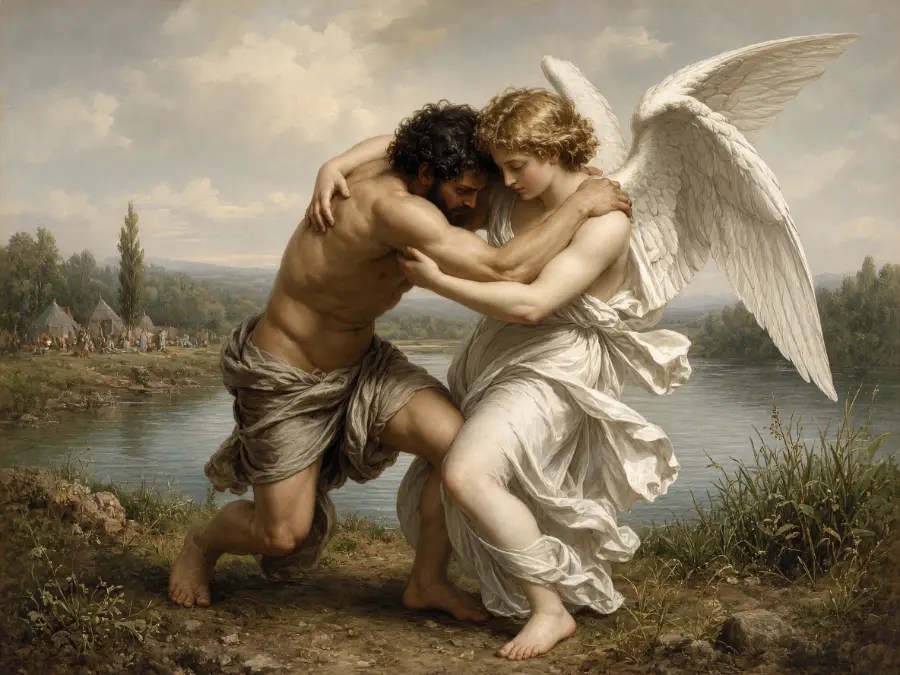
Isaiah 43:2
“When you pass through the waters, I will be with you; and when you pass through the rivers, they will not sweep over you.”
Reflection: When you pass through the waters, not if, and through rather than round. What Isaiah changes is who is standing in the water; the flames in the next clause are handled the same way.
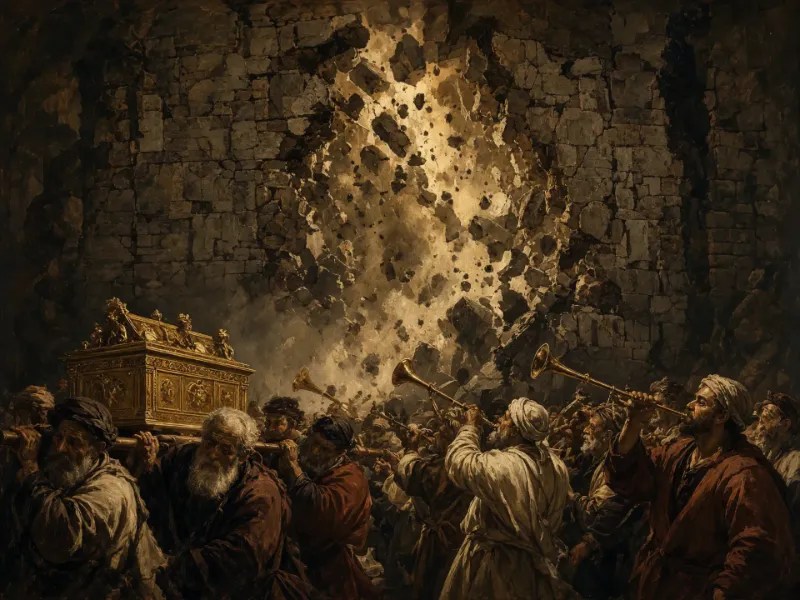
Psalm 23:4
“Even though I walk through the darkest valley, I will fear no evil, for you are with me; your rod and your staff, they comfort me.”
Reflection: The psalm switches from talking about God to talking to him at this verse. The first three verses are he leads and he restores; from the valley on it is you are with me, and it does not switch back.
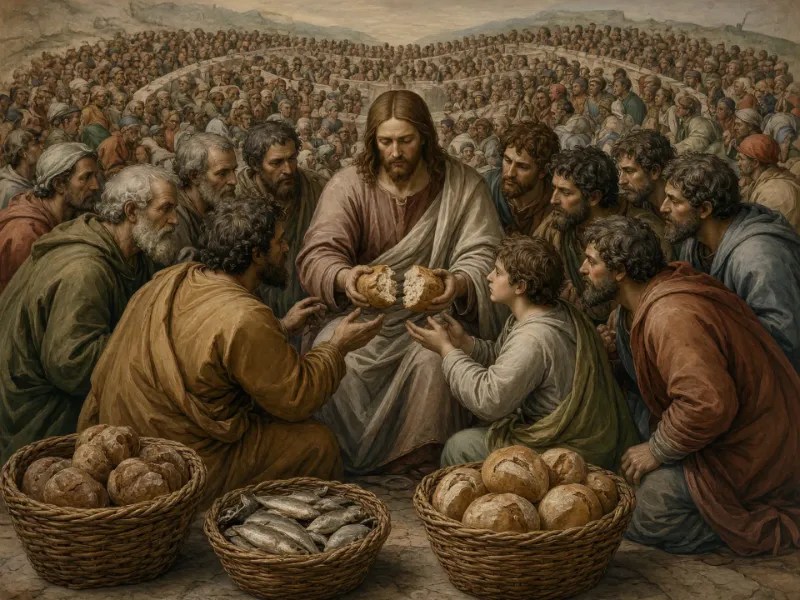
Deuteronomy 31:8
“The Lord himself goes before you and will be with you; he will never leave you nor forsake you.”
Reflection: Never leave you nor forsake you is quoted again in Hebrews 13:5, in the middle of an instruction about the love of money. The promise travelled well past its first setting.
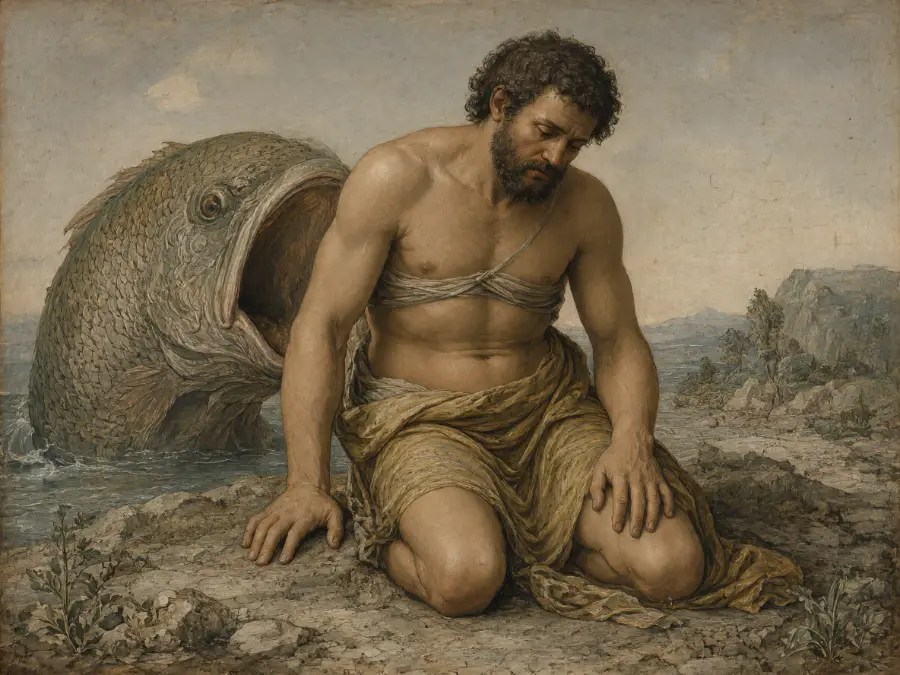
Joshua 1:9
“Have I not commanded you? Be strong and courageous. Do not be afraid; do not be discouraged, for the Lord your God will be with you wherever you go.”
Reflection: Wherever you go is deliberately unspecific. The promise is not tied to a destination, so it survives the destination turning out badly.
Where God is said to be standing
Psalm 34:18
“The Lord is close to the brokenhearted and saves those who are crushed in spirit.”
Reflection: Close comes before saves, and the order matters to anybody living in the gap between them. The psalm promises nearness first and rescue second, and does not say how long the first lasts.
Psalm 46:1-2
“God is our refuge and strength, an ever-present help in trouble. Therefore we will not fear, though the earth give way.”
Reflection: Therefore we will not fear is a conclusion the psalm reasons its way to. A few lines on there is a river whose streams make glad the city of God, set against a sea that is giving way.

Psalm 18:2
“The Lord is my rock, my fortress and my deliverer; my God is my rock, in whom I take refuge, my shield and the horn of my salvation.”
Reflection: Seven images in one verse, and most of them are things to stand behind or inside. David stacks them because no single one of them says enough.
Nahum 1:7
“The Lord is good, a refuge in times of trouble. He cares for those who trust in him.”
Reflection: This sits in a book about the fall of Nineveh, the city Jonah was sent to. The refuge is offered inside the judgment rather than at a distance from it.
What we are told to do with the weight
Psalm 55:22
“Cast your cares on the Lord and he will sustain you; he will never let the righteous be shaken.”
Reflection: A few verses earlier the psalmist wishes for the wings of a dove so he could fly away and be at rest. The instruction to hand the weight over comes after that wish rather than instead of it.
1 Peter 5:7
“Cast all your anxiety on him because he cares for you.”
Reflection: Because he cares for you is the only reason given. Peter does not argue that the worry is unreasonable; he says where to put it.
Matthew 11:28-30
“Come to me, all you who are weary and burdened, and I will give you rest. Take my yoke upon you and learn from me, for I am gentle and humble in heart.”
Reflection: A different yoke rather than no yoke. The promise is that the load changes shape, which is worth being exact about before handing the verse to somebody exhausted.
Philippians 4:6-7
“…and the peace of God, which transcends all understanding, will guard your hearts and your minds in Christ Jesus.”
Reflection: The peace is described as guarding the heart and mind, which is a defensive picture. It follows prayer, petition and thanksgiving rather than replacing them.
Where to look
Psalm 121:1-2
“I lift up my eyes to the mountains—where does my help come from? My help comes from the Lord, the Maker of heaven and earth.”
Reflection: The first line is a question and the second is the answer. Where does my help come from is asked before anything is asserted, which makes the verse a correction rather than a statement.
Proverbs 3:5-6
“Trust in the Lord with all your heart and lean not on your own understanding.”
Reflection: Lean is a physical word for what a tired person does. Proverbs does not promise an obvious path, only a straightened one.
Lamentations 3:22-23
“Because of the Lord’s great love we are not consumed, for his compassions never fail. They are new every morning.”
Reflection: Written in the ruins of a city God had allowed to fall. The writer does not say the disaster did not happen; he says it stopped short, and that is the whole of his evidence.
Romans 8:38-39
“For I am convinced that neither death nor life, neither angels nor demons, neither the present nor the future, nor any powers, neither height nor depth, nor anything else in all creation, will be able to separate us from the love of God that is in Christ Jesus our Lord.”
Reflection: Paul builds the list out of pairs, death and life, present and future, height and depth, so that nothing is left in between. The construction is designed to close the gaps.
What the preposition is protecting
None of these verses says the water will be diverted. Isaiah has people passing through it. The shepherd’s psalm keeps them in the valley for the length of the sentence. Nahum’s refuge sits inside a book about a city falling. What is promised in each case is company rather than an exit.
The grammar of Psalm 23 makes the point on its own. Three verses describe God in the third person, and the psalm switches to you at the moment the valley appears. For the related material, see Bible verses about enduring hard times.


Leave a Reply