
 English
  Chinese
  Dutch
Dutch  Arabic
  Spanish
  Portuguese
  Russian
  French
  Italian
  German
  Japanese
 The New Testament uses the word pastor, meaning shepherd, for church leaders only once, and it describes the same leaders more often as elders and overseers.
In Acts 20:28 and 1 Peter 5:2, the same group is called elders, told to shepherd the flock, and described as overseers. The letters say more about a leader’s character and duties than about a title. The twenty verses below cover where the word comes from, what is asked of the person, what the work is, what a congregation owes its leaders, and how heavy the work can be.
Where the word comes from
Ephesians 4:11-12
“And he gave the apostles, the prophets, the evangelists, the shepherds and teachers, to equip the saints for the work of ministry, for building up the body of Christ.”
Reflection: This is the only place the noun is used for church leaders, and in Greek “shepherds and teachers” share one article, so many read them as one group. The purpose clause is often read as saying these leaders equip the saints for the work of ministry, rather than doing all of it themselves.
Acts 20:28
“Pay careful attention to yourselves and to all the flock, in which the Holy Spirit has made you overseers, to care for the church of God.”
Reflection: Paul is speaking to the elders of the church in Ephesus (20:17). He tells them the Holy Spirit made them overseers, and the verb for care is the one used for shepherding.
1 Peter 5:2-3
“Shepherd the flock of God that is among you, exercising oversight, not under compulsion, but willingly, as God would have you; not for shameful gain, but eagerly; not domineering over those in your charge, but being examples to the flock.”
Reflection: Peter writes as a fellow elder (5:1) and gives three pairs, each naming a wrong motive before the right one: compulsion or willingness, gain or eagerness, domineering or example.

John 10:11
“I am the good shepherd. The good shepherd lays down his life for the sheep.”
Reflection: Peter later calls Jesus “the chief Shepherd” (1 Peter 5:4), and the other shepherds in these verses serve under him. The good shepherd is the one who lays down his life for the sheep.
What is asked of the person

1 Timothy 3:2-3
“Therefore an overseer must be above reproach, the husband of one wife, sober-minded, self-controlled, respectable, hospitable, able to teach, not a drunkard, not violent but gentle, not quarrelsome, not a lover of money.”
Reflection: Most of the qualifications concern character and household. “Able to teach” is the one that names a skill.
Titus 1:7-9
“For an overseer, as God’s steward, must be above reproach. He must not be arrogant or quick-tempered or a drunkard or violent or greedy for gain, but hospitable, a lover of good, self-controlled, upright, holy, and disciplined.”
Reflection: Paul writes a similar list to Titus in Crete as he does to Timothy in Ephesus. The repetition suggests a standard meant for every church.
1 Timothy 4:16
“Keep a close watch on yourself and on the teaching. Persist in this, for by so doing you will save both yourself and your hearers.”
Reflection: Paul tells Timothy to watch himself first and then the teaching. He treats the two as separate, and he expects both to matter for the people who hear.
James 3:1
“Not many of you should become teachers, my brothers, for you know that we who teach will be judged with greater strictness.”
Reflection: James includes himself: “we who teach.” Paul, by contrast, calls wanting the office of overseer a desire for “a noble task” (1 Timothy 3:1), and the two sayings sit together.
What the work is
2 Timothy 4:2
“Preach the word; be ready in season and out of season; reprove, rebuke, and exhort, with complete patience and teaching.”
Reflection: Out of season means when the timing is inconvenient. The next verse gives the reason: “the time is coming when people will not endure sound teaching” (4:3).

Titus 2:1
“But as for you, teach what accords with sound doctrine.”
Reflection: Sound translates a word meaning healthy. Paul judges teaching by whether it leads to healthy faith and conduct, and the rest of the chapter gives examples for older men, older women, younger people and slaves.

Proverbs 27:23
“Know well the condition of your flocks, and give attention to your herds.”
Reflection: The proverb is about actual flocks and herds. Knowing their condition means spending time among them regularly, and the image carries over to pastoral care.

1 Thessalonians 2:8
“So, being affectionately desirous of you, we were ready to share with you not only the gospel of God but also our own selves, because you had become very dear to us.”
Reflection: Paul says he shared both the gospel and “our own selves.” He had to leave Thessalonica by night after a riot (Acts 17:5-10), and he writes this to the church he left behind.
Jeremiah 3:15
“And I will give you shepherds after my own heart, who will feed you with knowledge and understanding.”
Reflection: God promises shepherds who will feed the people with knowledge. Jeremiah elsewhere condemns the shepherds who scattered the flock (23:1-2).
What a congregation owes

1 Thessalonians 5:12-13
“We ask you, brothers, to respect those who labor among you and are over you in the Lord and admonish you, and to esteem them very highly in love because of their work.”
Reflection: The respect is tied to the leaders’ work: “because of their work.” Paul asks for it to be given “in love.”

1 Timothy 5:17
“Let the elders who rule well be considered worthy of double honor, especially those who labor in preaching and teaching.”
Reflection: Double honor includes payment. The next verse quotes “You shall not muzzle an ox when it treads out the grain” and “The laborer deserves his wages” (5:18).

Galatians 6:6
“Let the one who is taught the word share all good things with the one who teaches.”
Reflection: Sharing “all good things” with the teacher is usually read as material support. The verse sits in a chapter about carrying one another’s burdens.

Hebrews 13:17
“Obey your leaders and submit to them, for they are keeping watch over your souls, as those who will have to give an account. Let them do this with joy and not with groaning.”
Reflection: The last clause concerns the congregation: leaders should be able to do their work with joy and not with groaning, “for that would be of no advantage to you.”
How heavy it gets

1 Corinthians 9:16
“For if I preach the gospel, that gives me no ground for boasting. For necessity is laid upon me. Woe to me if I do not preach the gospel!”
Reflection: Paul describes preaching as a necessity laid on him. He says this while explaining why he gave up his right to be paid by the Corinthians (9:12-18).
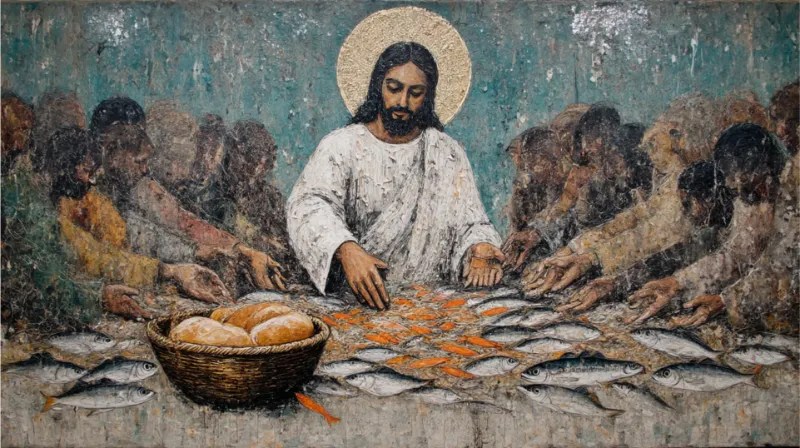
1 Peter 5:4
“And when the Chief Shepherd appears, you will receive the unfading crown of glory.”
Reflection: The crown is called unfading. Crowns given to victors in that world were wreaths of leaves, which withered.
Matthew 11:28-30
“Come to me, all who labor and are heavy laden, and I will give you rest. Take my yoke upon you, and learn from me, for I am gentle and lowly in heart.”
Reflection: The rest Jesus offers comes with a yoke, which he calls easy and light (11:30). The invitation is to all who labor and are heavy laden.
What the word is actually describing
Put the three words together and the picture is plain. An elder is an older, steadier person, an overseer watches over others, and a shepherd knows the condition of the flock. The qualifications Paul lists for Timothy and Titus are mostly about character and household.
The congregation has duties too. Hebrews asks members to let their leaders work “with joy and not with groaning,” Paul says elders who teach are worthy of double honor and their wages, and the letters ask churches to esteem leaders “because of their work.” For more on teaching, see Bible verses about education.


Leave a Reply