
 English
 Chinese
 Dutch
 Arabic
 Spanish
 Portuguese
 Russian
 French
 Italian
 German
 Japanese
The Bible describes yielding to God mostly in commands. Jesus says, “let him deny himself and take up his cross daily and follow me” (Luke 9:23). Paul writes, “present yourselves to God” (Romans 6:13), and James, “Submit yourselves therefore to God” (James 4:7).
Jesus prays on the Mount of Olives, “not my will, but yours, be done” (Luke 22:42). Paul asks for bodies presented “as a living sacrifice” (Romans 12:1), and John the Baptist says of Jesus, “He must increase, but I must decrease” (John 3:30). Psalm 55:22 says, “Cast your burden on the LORD,” and 1 Peter 5:7 joins “casting all your anxieties on him” to humbling oneself under God’s hand.
Losing one’s life to follow Jesus

Luke 9:23
“And he said to all, ‘If anyone would come after me, let him deny himself and take up his cross daily and follow me.’”
Reflection: Jesus says this just after Peter calls him “the Christ of God” and Jesus foretells that the Son of Man must suffer, be killed and be raised (9:20-22). Luke says it was spoken “to all”, and his version adds “daily”, which Matthew 16:24 and Mark 8:34 do not have. The next verse gives the reason: “whoever loses his life for my sake will save it.”
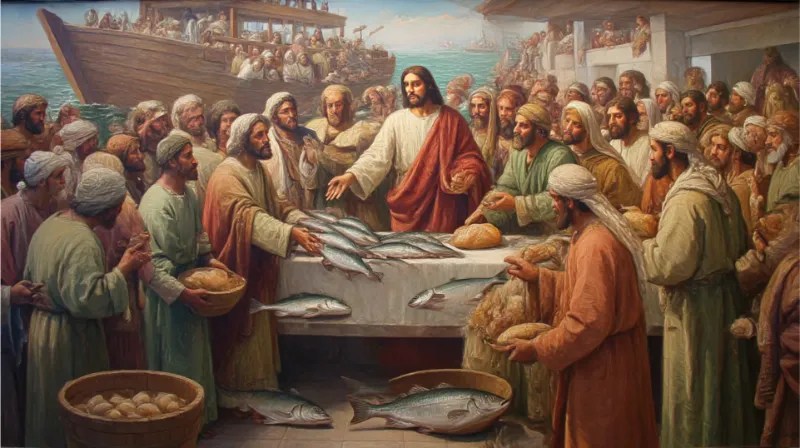
John 12:24
“Truly, truly, I say to you, unless a grain of wheat falls into the earth and dies, it remains alone; but if it dies, it bears much fruit.”
Reflection: The saying follows Jesus’ announcement, “The hour has come for the Son of Man to be glorified” (12:23). Verses 25 and 26 apply the picture to his followers: “whoever hates his life in this world will keep it for eternal life,” and “If anyone serves me, he must follow me.”
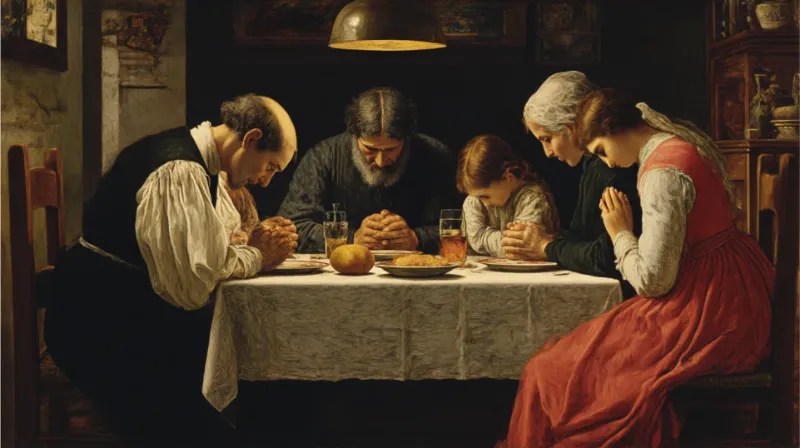
Galatians 2:20
“I have been crucified with Christ. It is no longer I who live, but Christ who lives in me. And the life I now live in the flesh I live by faith in the Son of God, who loved me and gave himself for me.”
Reflection: Paul writes this in an argument about whether righteousness comes through the law (2:21). The verse before it reads, “through the law I died to the law, so that I might live to God.” Paul puts his crucifixion with Christ in the past, and describes the life that follows as lived “by faith in the Son of God, who loved me and gave himself for me.”
Asking God and yielding the request

Luke 22:42
“Father, if you are willing, remove this cup from me. Nevertheless, not my will, but yours, be done.”
Reflection: Jesus prays this on the Mount of Olives, after telling the disciples to “Pray that you may not enter into temptation” (22:40). He asks plainly for the cup to be removed and then, in the next sentence, yields the request to the Father. Matthew 26:39 records the prayer as “not as I will, but as you will.”
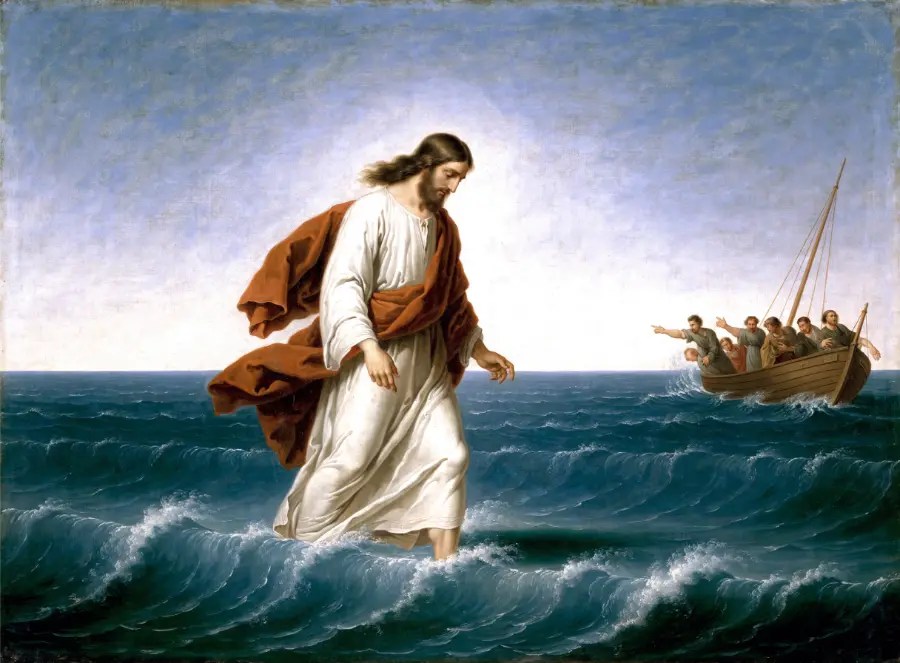
2 Corinthians 12:9-10
“But he said to me, ‘My grace is sufficient for you, for my power is made perfect in weakness.’ Therefore I will boast all the more gladly of my weaknesses, so that the power of Christ may rest upon me. For the sake of Christ, then, I am content with weaknesses, insults, hardships, persecutions, and calamities. For when I am weak, then I am strong.”
Reflection: Paul had pleaded with the Lord three times for a “thorn … in the flesh” to leave him (12:7-8); the passage does not say what the thorn was. The Lord’s reply does not grant the request, and Paul accepts it. In verse 10 he lists what he is content with “For the sake of Christ”: weaknesses, insults, hardships, persecutions and calamities.
Submitting and presenting oneself to God
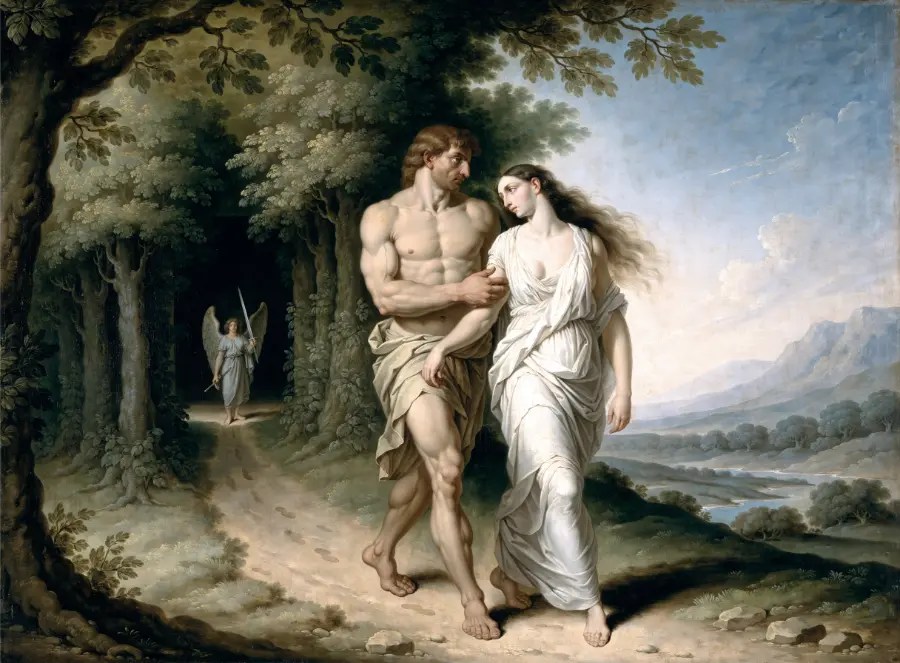
James 4:7
“Submit yourselves therefore to God. Resist the devil, and he will flee from you.”
Reflection: The “therefore” ties the command to the proverb James quotes in verse 6: “God opposes the proud but gives grace to the humble.” Submitting is followed by a list of actions: draw near to God, cleanse your hands, purify your hearts (4:8). The passage ends with the promise of verse 10, “Humble yourselves before the Lord, and he will exalt you.”

Romans 6:13
“Do not present your members to sin as instruments for unrighteousness, but present yourselves to God as those who have been brought from death to life, and your members to God as instruments for righteousness.”
Reflection: Paul has just told the Roman church to “consider yourselves dead to sin and alive to God in Christ Jesus” (6:11). The Greek verb translated present is paristēmi, the same verb Paul uses in Romans 12:1, and the King James Version renders this verse “yield yourselves unto God.” Paul sets out two masters for the same body, sin or God, and verse 14 gives the ground: “sin will have no dominion over you, since you are not under law but under grace.”
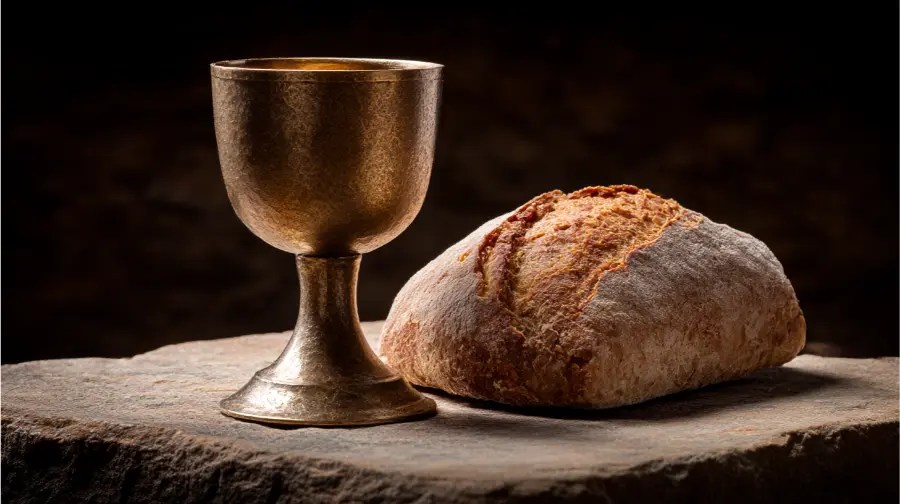
Romans 12:1
“I appeal to you therefore, brothers, by the mercies of God, to present your bodies as a living sacrifice, holy and acceptable to God, which is your spiritual worship.”
Reflection: The “therefore” and “by the mercies of God” point back to the first eleven chapters of the letter. The sacrifice Paul asks for is the whole body, offered alive rather than slain, and he calls this “spiritual worship.” Verse 2 continues the appeal: “Do not be conformed to this world, but be transformed by the renewal of your mind,” so as to discern “the will of God.”
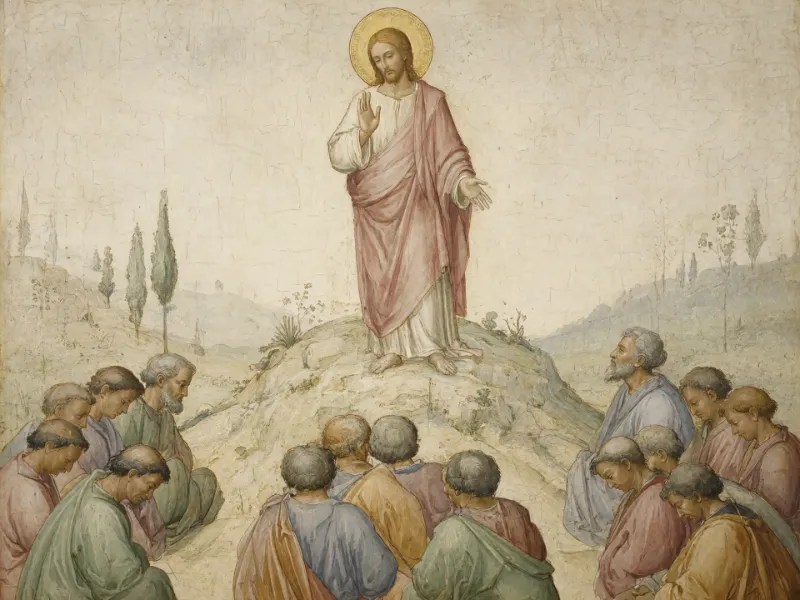
1 Corinthians 6:19-20
“Or do you not know that your body is a temple of the Holy Spirit within you, whom you have from God? You are not your own, for you were bought with a price. So glorify God in your body.”
Reflection: Paul writes this in a warning against sexual immorality, which he tells the Corinthians to flee (6:18). The body is a temple of the Holy Spirit, and it has a new owner: “You are not your own, for you were bought with a price.” The command that follows concerns the body itself: “So glorify God in your body.”
Acknowledging who is greater
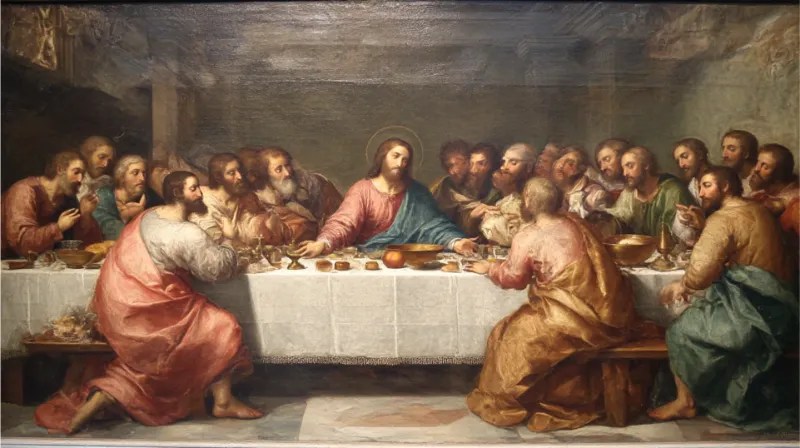
John 3:30
“He must increase, but I must decrease.”
Reflection: John the Baptist’s disciples come to him troubled that Jesus is baptizing and “all are going to him” (3:26). John answers that he is not the Christ but the friend of the bridegroom, who rejoices at the bridegroom’s voice, and says “this joy of mine is now complete” (3:29). The verse is his conclusion: his own following is meant to shrink as Jesus’ grows.

Isaiah 64:8
“But now, O LORD, you are our Father; we are the clay, and you are our potter; we are all the work of your hand.”
Reflection: The verse comes in a prayer of confession in which the people say “all our righteous deeds are like a polluted garment” (64:6). Having confessed, they call God their Father and potter and themselves the clay, the work of his hand. The next verse asks him to “remember not iniquity forever” and pleads, “we are all your people.”
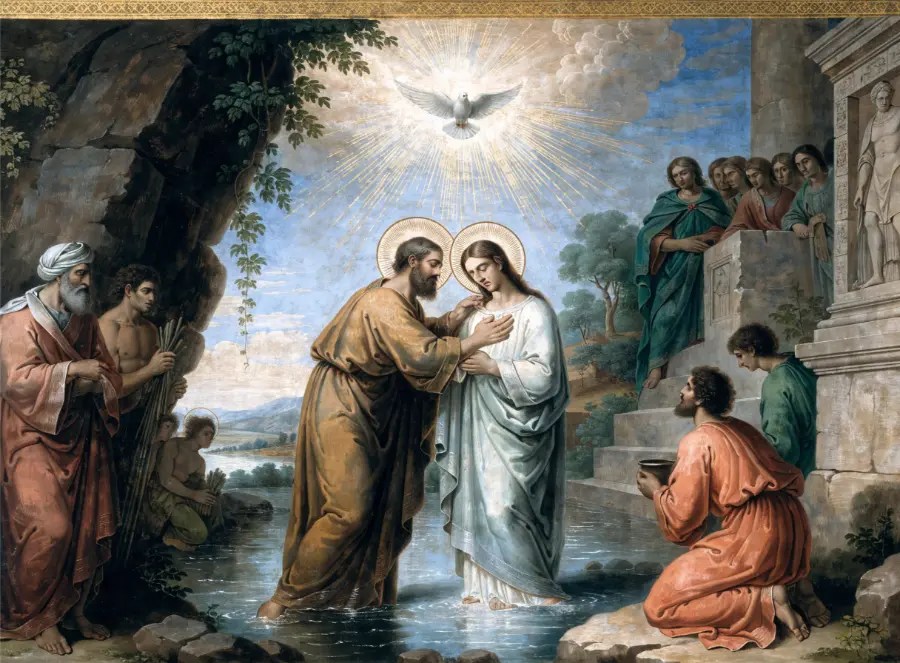
Psalm 131:1-2
“O LORD, my heart is not lifted up; my eyes are not raised too high; I do not occupy myself with things too great and too marvelous for me. But I have calmed and quieted my soul, like a weaned child with its mother; like a weaned child is my soul within me.”
Reflection: The heading calls this “A Song of Ascents. Of David.” The speaker, addressing the LORD, gives up pride and “things too great and too marvelous for me,” and describes a soul calmed and quieted like a weaned child with its mother. The third and last verse turns to the nation: “O Israel, hope in the LORD from this time forth and forevermore.”

Psalm 46:10
“Be still, and know that I am God. I will be exalted among the nations, I will be exalted in the earth!”
Reflection: The command follows a description of God ending wars: “he breaks the bow and shatters the spear; he burns the chariots with fire” (46:9). “Be still” is spoken where the fighting stops, and it is joined to knowing that God will be “exalted among the nations.” Verse 11 follows: “The LORD of hosts is with us; the God of Jacob is our fortress.”
Trusting God with burdens and anxieties
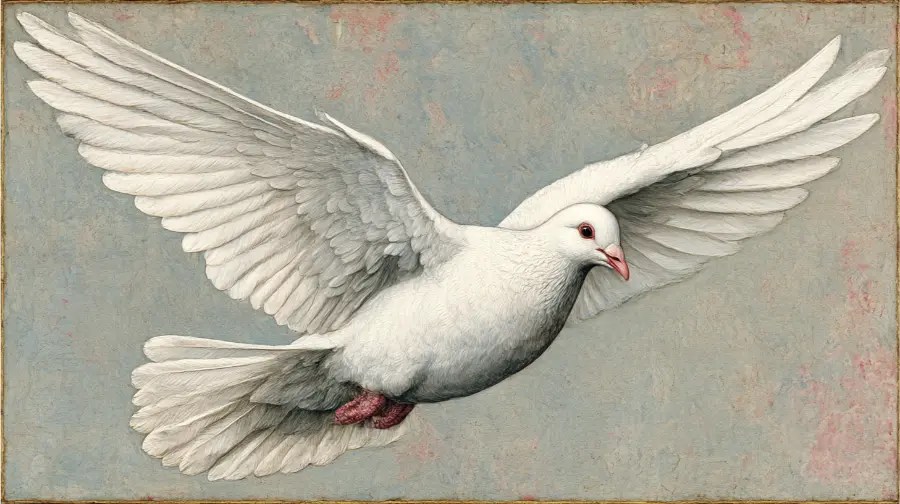
Matthew 11:28-30
“Come to me, all who labor and are heavy laden, and I will give you rest. Take my yoke upon you, and learn from me, for I am gentle and lowly in heart, and you will find rest for your souls. For my yoke is easy, and my burden is light.”
Reflection: Jesus has just thanked the Father for revealing “these things” to “little children” and said, “All things have been handed over to me by my Father” (11:25-27). The invitation has two parts: come to him for rest, then take his yoke and learn from him. He describes himself as “gentle and lowly in heart,” and the rest for the soul is promised to those who take the yoke.
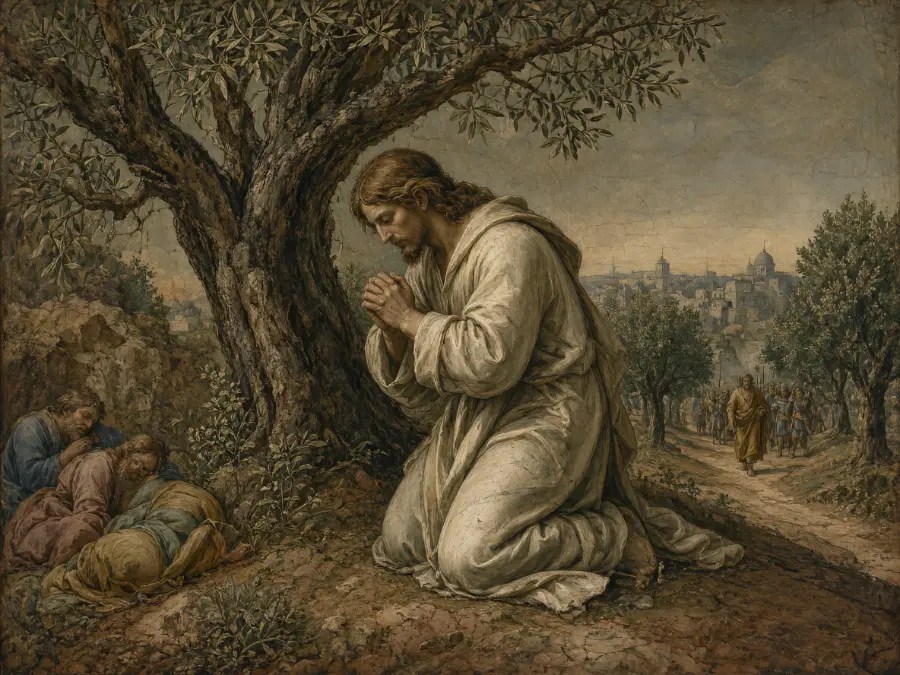
Psalm 55:22
“Cast your burden on the LORD, and he will sustain you; he will never permit the righteous to be moved.”
Reflection: The psalmist has been betrayed by a companion who “violated his covenant,” whose words “were softer than oil, yet they were drawn swords” (55:20-21). The command to cast the burden on the LORD comes straight after that description. The psalm closes with the speaker’s own decision: “But I will trust in you” (55:23).
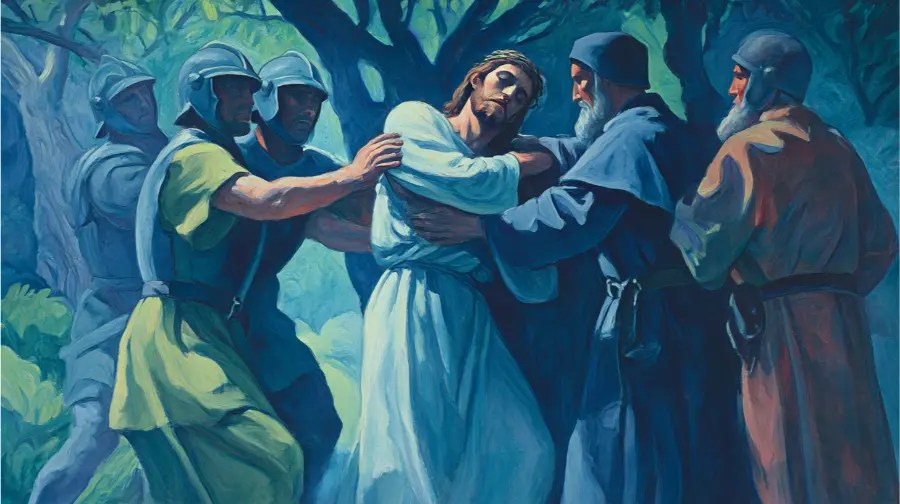
1 Peter 5:7
“Casting all your anxieties on him, because he cares for you.”
Reflection: In the English Standard Version this is not a separate sentence: “casting” continues verse 6, “Humble yourselves, therefore, under the mighty hand of God so that at the proper time he may exalt you.” Peter joins handing over anxieties to humbling oneself under God’s hand. Verse 5 has already quoted “God opposes the proud but gives grace to the humble,” the proverb James 4:6 also quotes.
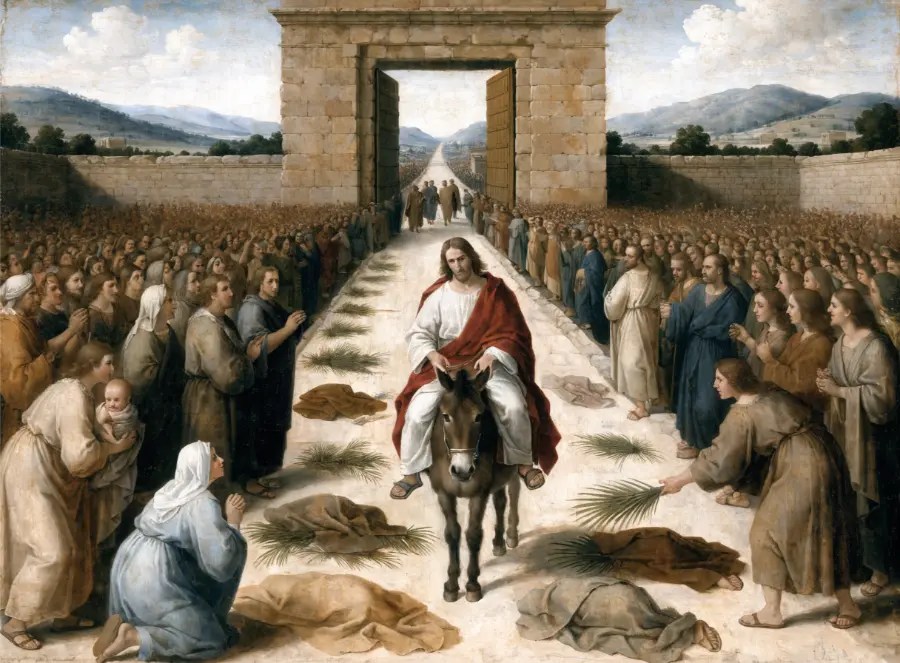
Proverbs 3:5-6
“Trust in the LORD with all your heart, and do not lean on your own understanding. In all your ways acknowledge him, and he will make straight your paths.”
Reflection: A father addresses “My son” (3:1), and trust “with all your heart” is set against leaning on one’s own understanding. Verse 7 repeats the point from the other side: “Be not wise in your own eyes; fear the LORD, and turn away from evil.” The straight paths are promised to the one who acknowledges God “in all your ways.”
Prayers of yielding to God
Luke 22:42, Psalm 131:1-2 and Isaiah 64:8 are addressed to God and can be prayed as written. Luke 22:42 makes a request and then yields it to the Father; Psalm 131:1-2 tells the LORD of a soul calmed and quieted; Isaiah 64:8 is a people’s confession that they are clay in the potter’s hand.


Leave a Reply