
 English
 Chinese
 Dutch
 Arabic
 Spanish
 Portuguese
 Russian
 French
 Italian
 German
 Japanese
Is Brian in the Bible?
No. The name Brian does not appear anywhere in the Bible — not in the Old Testament, not in the New Testament, not in any of its original languages. Brian is Irish, not Hebrew or Greek. It comes from a different people, a different time, and a different tongue.
But the absence of a name from Scripture says nothing about the person who carries it. God does not love us according to our names. He loves us because we are His. “I have called you by name; you are mine,” the Lord says through the prophet Isaiah (43:1). That promise belongs to every Brian who has ever lived.
A blessing card for Brian
Brian
means high
Irish, from Old Irish Brían
Not in the Bible
Humble yourselves before the Lord, and He will exalt you.
James 4:10 Berean Standard Bible
Brian, may the LORD bless you and keep you. Numbers 6:24
The card is on its way
Look for an email from Christian Pure in the next few minutes.
Where the Name Comes From
Brian comes from Old Irish — from the name Brían — and it most likely means “noble” or “high.” Some scholars connect it to the Celtic word bre, meaning “hill,” a word for elevation. Others read it as “strong” or “exalted.” The exact root is debated, but every proposed meaning points upward.
The name became famous through Brian Boru, the High King of Ireland, who united the country’s warring kingdoms and died at the Battle of Clontarf in 1014. Brian Boru was a patron of monasteries and churches. He was buried in the cathedral at Armagh. Through him, the name became bound to Irish Christian history — to a people who carried the Gospel to the edges of the known world when much of Europe had forgotten it.
In the centuries that followed, Brian spread from Ireland into England, Scotland, and eventually across every English-speaking country. It has no connection to biblical languages. But it carries real weight: the weight of a name earned in a land where monks copied Scripture by candlelight and missionaries sailed into the unknown.
What Scripture Says About Being “Noble” and “Lifted High”
The meaning of Brian — noble, high, exalted — runs through the Bible like a thread. But Scripture redefines every one of those words.
In the world’s understanding, nobility belongs to rulers and to those born into power. The Bible turns this upside down. Mary, carrying the Christ Child, sings that God “has brought down rulers from their thrones but has lifted up the humble” (Luke 1:52). James writes plainly: “Humble yourselves before the Lord, and he will lift you up” (James 4:10).
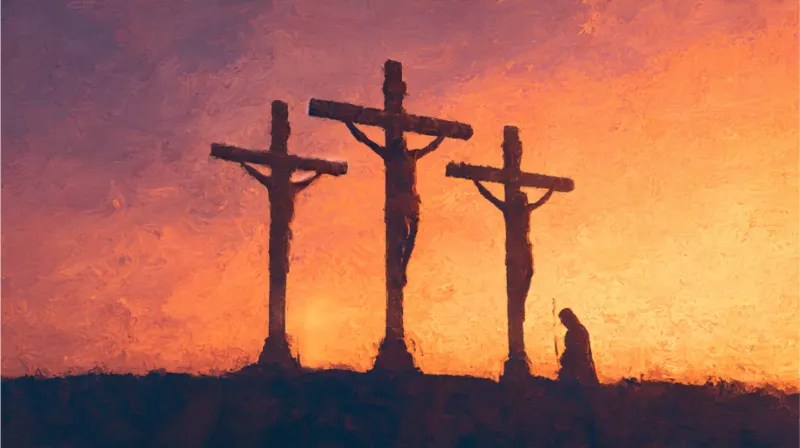
This is the pattern Scripture draws again and again: true exaltation comes through humility. Christ himself, “though he was in the form of God, did not count equality with God a thing to be grasped, but emptied himself, taking the form of a servant” (Philippians 2:6–7). He was lifted high — on a cross — and then exalted above every name.
Peter tells the baptized that they are “a chosen people, a royal priesthood, a holy nation, God’s special possession” (1 Peter 2:9). This is the nobility the Bible offers: not a birthright of blood, but a calling of grace. It belongs to every follower of Christ, whatever name they carry.
So while Brian does not appear in Scripture, its meaning points toward something Scripture takes seriously. The call to be noble, in the Bible, is never a call to stand above others. It is a call to kneel — and to be raised up by the One who kneels to wash our feet.
A Name and a Life
Dear brothers and sisters, a name does not make us holy. A name is a word spoken over us at birth, often with love, sometimes with hope. What makes us holy is the life we live under that name — the faithfulness, the service, the willingness to be brought low so that God may raise us up.
The name carries a good meaning, one the Christian tradition can honour. And for a patron in the faith, there are the Irish saints — to Brendan, to Columba, to Patrick, to Brigid — who carried Celtic names and carried the light of Christ across oceans and into dark centuries. Their names were not in the Bible. Their faith was.
May the Lord bless you and keep you. May He make His face shine upon you, and give you His peace.
Frequently asked
What does Brian mean?
The usual gloss is “noble” or “high,” though the origin is genuinely uncertain and that reading is a later smoothing rather than a settled etymology.
Is Brian related to Brianna?
Brianna is a feminine form built from Brian, and it inherits the same uncertainty about what the root originally meant.
What does the Bible say about nobility?
It reverses the word. 1 Corinthians 1:26 notes that not many of the first Christians were of noble birth, and the Bereans are called “of more noble character” for examining the Scriptures daily (Acts 17:11).
Related reading
- What Is the Aaronic Blessing?
- Riley Is Not in the Bible
- Bible Verses About Humility
- Is Your Name in the Bible? A Directory of 231 Names


Leave a Reply