
 English
 Chinese
 Dutch
 Arabic
 Spanish
 Portuguese
 Russian
 French
 Italian
 German
 Japanese
Christian churches are led in three main ways: by bishops, which is called episcopal government; by elders who govern together, which is presbyterian; or by each congregation for itself, which is congregational. The old word for how a church is ordered is polity, and most churches’ polity is one of these three or close to it. Catholics, the Eastern Orthodox and the Coptic Orthodox have bishops, and so do the churches of the Anglican Communion, the United Methodist Church and the Evangelical Lutheran Church in America, though they do not all mean the same thing by the word. The Presbyterian Church (U.S.A.) is governed by elders, meeting in a session for each congregation and in presbyteries and assemblies above it. The Southern Baptists, the United Church of Christ and the Churches of Christ leave the final say with the local church. A few churches fit none of the three: the Nazarenes and the Seventh-day Adventists call their government representative, and the Salvation Army, the Latter-day Saints and Jehovah’s Witnesses are each led from one worldwide centre.
Many of these churches would begin somewhere else, by saying that the church already has a head. Paul says it of Christ, “he is the head of the body, the church” (Colossians 1:18), and the Westminster Confession calls him “King and Head of his church.” So what we disagree about is who serves under him, and how. Peter, writing to the leaders of the young churches, described that service in words all of us read: “The elders which are among you I exhort, who am also an elder … Feed the flock of God which is among you, taking the oversight thereof, not by constraint, but willingly … Neither as being lords over God’s heritage, but being examples to the flock” (1 Peter 5:1–3).
| Church | Who leads | In its own words |
|---|---|---|
| Catholic | Bishops, with the pope at their head | The bishops are “the successors of the apostles” |
| Eastern Orthodox | Self-governing churches, each electing its bishops | “No one dominating authority” (Orthodox Church in America) |
| Coptic Orthodox | The Patriarch and bishops in synod | The Holy Synod is “the highest authority in the Church” |
| Anglican Communion | Bishops, in self-governing provinces | “Each province is autonomous” (Church of England) |
| United Methodist Church | Bishops, who appoint the pastors | Clergy “shall be appointed by the bishop” |
| Lutheran (ELCA) | Bishops elected by synods | “Each synod elects a bishop” |
| Lutheran (Missouri Synod) | An elected president; congregations govern themselves | The synod is “but an advisory body” |
| Presbyterian Church (U.S.A.) | Elders, in councils | “Governed by presbyters, that is, ruling elders and teaching elders” |
| Church of the Nazarene | Representative, with superintendents | Avoids “the extremes of episcopacy” and “unlimited congregationalism” |
| Seventh-day Adventist | Representative, up to the General Conference | “Authority rests in the membership” |
| Southern Baptist Convention | Each congregation | “An autonomous local congregation” |
| United Church of Christ | Each Local Church | “The autonomy of the Local Church is inherent” |
| Churches of Christ | The elders of each congregation | “No organization superior to the elders” |
| Disciples of Christ | Congregations, regions and general ministries in covenant | Each has its “self-governance” |
| Assemblies of God | Self-governing churches in a fellowship | “A cooperative fellowship” |
| United Pentecostal Church International | Each congregation, with its own pastor | “Basically congregational in structure” |
| Amish | Each church district | Authority “lies in the local district” (Amish Studies scholars) |
| Nondenominational | Each church for itself | No shared statement |
| Mennonite Church USA | Leaders called by the congregation and wider church | “The church calls, trains, and appoints” its leaders |
| Keystone Mennonite Fellowship | Ministers chosen by lot | “The use of the lot” |
| Quaker (Britain Yearly Meeting) | Area meetings, with no vote | “The area meeting is the primary meeting for church affairs” |
| Salvation Army | A General, elected by a High Council | “Its international leader” |
| Latter-day Saints | The President, with the First Presidency and the Twelve | The President is “a prophet, seer, and revelator” |
| Jehovah’s Witnesses | Elders in each congregation, under a Governing Body | “A body of elders supervises each congregation” |
Our free tool, Compare Christian Denominations, sets any two of 23 churches side by side on how they are led and on 54 other questions.
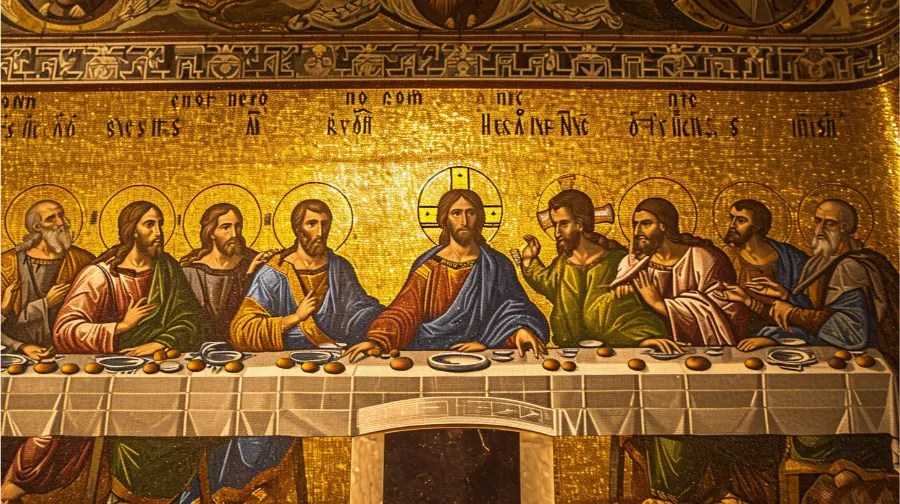
What does the Bible say about bishops and elders?
The New Testament has three names for the people who lead a church, and the United Pentecostal Church International sets them out in its paper on church government: “poimēn, pastor or shepherd; episkopos, bishop or overseer; and presbyteros, presbyter or elder.” Government by bishops is called episcopal after the second word, and Presbyterians are named after the third.
In Scripture the three names travel together. On his way to Jerusalem Paul “sent to Ephesus, and called the elders of the church” (Acts 20:17), and when they came he told them, “Take heed therefore unto yourselves, and to all the flock, over the which the Holy Ghost hath made you overseers, to feed the church of God” (Acts 20:28). The elders are overseers, and their work is a shepherd’s. He left Titus in Crete to “ordain elders in every city,” and went straight on, “For a bishop must be blameless, as the steward of God” (Titus 1:5, 7). Some churches read this as one office under three names. The Southern Baptists’ Baptist Faith and Message says, “Its two scriptural offices are that of pastor/elder/overseer and deacon,” and long before them Jerome wrote that “the apostle clearly teaches that presbyters are the same as bishops,” pointing to Paul’s greeting to Philippi “with the bishops and deacons” (Philippians 1:1), more than one bishop in a single church.
The churches with bishops notice who those letters were written to. As they see it, Timothy and Titus were sent to put elders in place, and the Coptic Orthodox Church calls Titus “the Bishop of Crete” and Timothy “the Bishop of Ephesus.” Catholics also hear Jesus’ words to Peter, “I will give unto thee the keys of the kingdom of heaven” (Matthew 16:19), and the Catechism of the Catholic Church says the Lord “gave him the keys of his Church and instituted him shepherd of the whole flock.”
Then there is the meeting at Jerusalem, when “the apostles and elders came together for to consider of this matter” (Acts 15:6). The Westminster Confession of Faith, a Reformed confession, takes from such meetings that “there ought to be such assemblies as are commonly called synods or councils.” Churches that govern by congregation notice who else was there when the answer went out: “Then pleased it the apostles and elders with the whole church” (Acts 15:22).
How did bishops come to lead the early churches?
One of the first Christian letters we have from after the apostles was written over this very question. About the year 96, perhaps earlier, the church at Rome wrote to the church at Corinth, because the Corinthians had put their leaders out of office. The letter has long been credited to Clement of Rome. The apostles, it reminds them, “gave instructions, that when these should fall asleep, other approved men should succeed them in their ministry,” and men appointed “with the consent of the whole church” could not justly be dismissed. Readers from almost every church find something of their own there: a Catholic or Orthodox reader finds succession from the apostles, a member of a self-governing congregation finds “the consent of the whole church,” and a Presbyterian notices that the letter passes from “the episcopate” to “those presbyters” as if they were one office.
Not long afterwards Ignatius, the bishop of Antioch, wrote to the churches on his way to Rome, where he died a martyr sometime between 98 and 117. “See that you all follow the bishop, even as Jesus Christ does the Father, and the presbytery as you would the apostles,” he told the Christians of Smyrna. There is more on him in Ignatius of Antioch, the bishop who wrote on his way to Rome.
Jerome, who died at Bethlehem in 420, explained another way how one bishop came to stand over the elders: “When subsequently one presbyter was chosen to preside over the rest, this was done to remedy schism.” So by his day two stories about bishops were already being told, one of men who succeed the apostles and one of an elder chosen by the others to keep the peace.
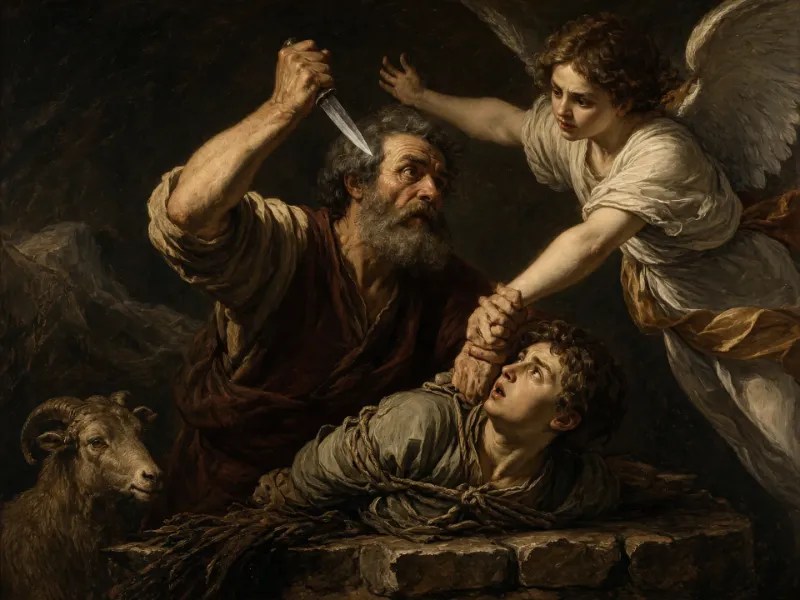
Which churches are led by bishops?
The Catechism of the Catholic Church teaches that “the Roman Pontiff, Peter’s successor, and the bishops, the successors of the apostles, are related with and united to one another,” and that the Pope “is the perpetual and visible source and foundation of the unity both of the bishops and of the whole company of the faithful.” Each bishop governs his own diocese, and the Catechism is careful to add that “the bishops should not be thought of as vicars of the Pope.” Whether the Bible speaks of a pope is taken up in Is the Pope in the Bible?
Eastern Orthodox Christians have bishops and no bishop over all the others. The Orthodox Church in America explains that the Orthodox Church is a unity of “local autocephalous or autonomous churches,” which “govern themselves, electing their own bishops and organizing their own lives,” so that “there is no one dominating authority in the Orthodox Church.” The Coptic Orthodox Church is led by its Patriarch with his bishops in the Holy Synod, which Bishop Mettaous, writing on the Coptic sacraments, calls “the highest authority in the Church.”
The churches of the Anglican Communion each have their own bishops, and the Church of England says that “Each province is autonomous, with its own system of governance.” The provinces are bound by no constitution or church law; what holds them together is a shared heritage and worship, the “bonds of affection” between their people, and the Archbishop of Canterbury, who “acts as a unique focus of unity.”
In the United Methodist Church the bishop chooses each church’s pastor, which many other churches leave to the congregation. The Book of Discipline of the United Methodist Church says, “Clergy shall be appointed by the bishop,” and though the bishop or district superintendent talks first with the congregation’s committee, “Consultation is not committee selection or call of a pastor.”
Two Lutheran churches in America answer differently. The Evangelical Lutheran Church in America has 65 synods, and “each synod elects a bishop to oversee its ministry and administration.” The Lutheran Church–Missouri Synod is led instead by an elected president, and its constitution says that “with respect to the individual congregation’s right of self-government it is but an advisory body.”
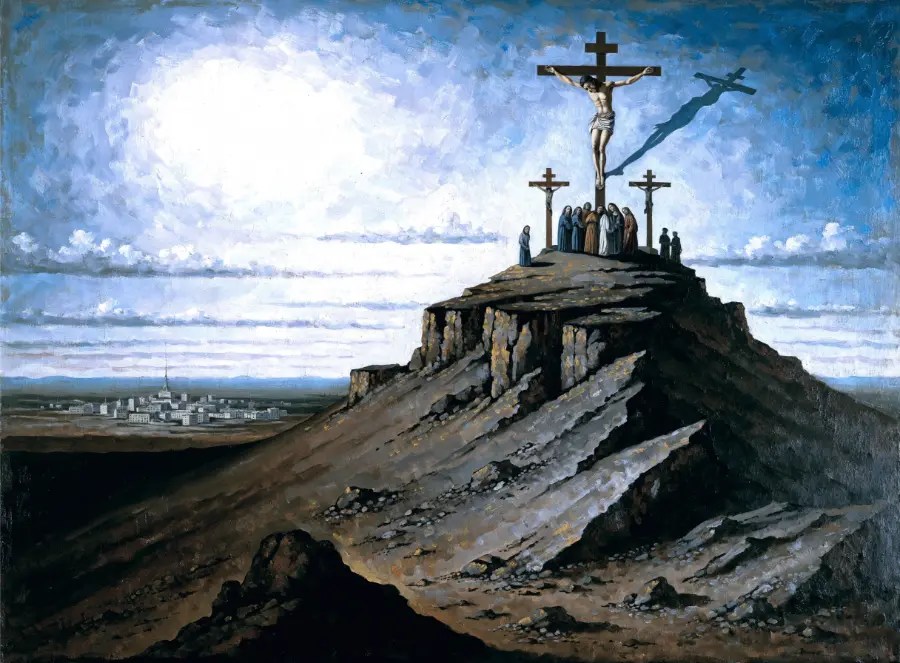
How does the Presbyterian Church (U.S.A.) govern by elders?
The Book of Order of the Presbyterian Church (U.S.A.) says, “This church shall be governed by presbyters, that is, ruling elders and teaching elders (also called ministers of the Word and Sacrament).” Ruling elders have that name, it says, “not because they ‘lord it over’ the congregation (Matt. 20:25), but because they are chosen by the congregation,” and in the next verse Jesus tells the twelve, “whosoever will be great among you, let him be your minister” (Matthew 20:26). The elders meet in “sessions, presbyteries, synods, and the General Assembly,” and “the act of one of them is the act of the whole church.” The Westminster Confession keeps every one of those councils humble: “All synods or councils, since the Apostles’ times, whether general or particular, may err; and many have erred.”
Protestants as a whole have no single answer to how a church is led, because Protestant churches stand in every family on this page; the Westminster Confession speaks for many Presbyterian and Reformed churches, and Lutherans, Anglicans, Methodists and Baptists each answer for themselves. How Presbyterian elders compare with Methodist bishops is set out in Methodist vs Presbyterian.
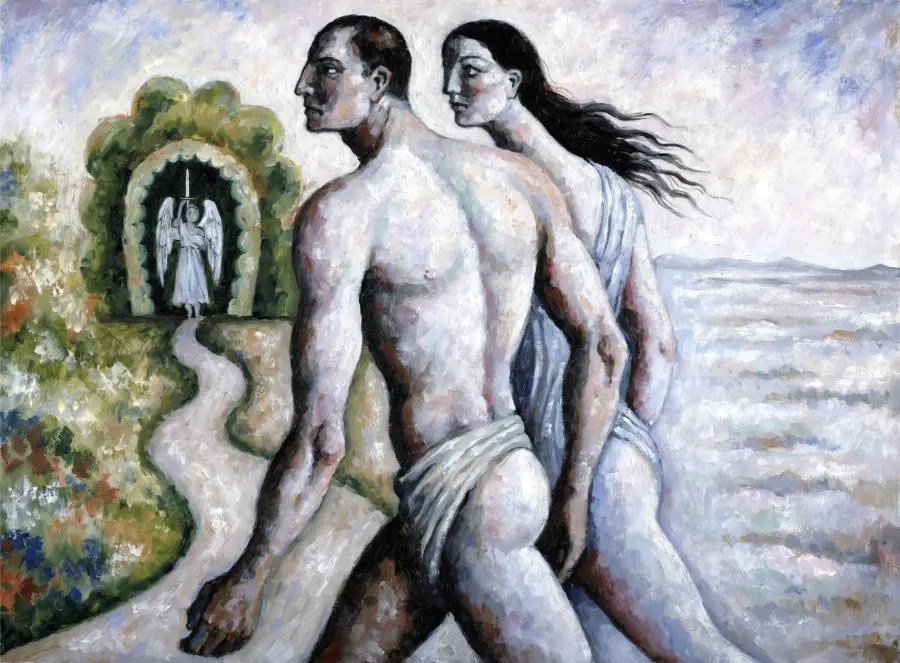
Which churches let each congregation govern itself?
In a large family of churches the local church decides for itself, under Christ, and in most of them it calls its own pastor. The Southern Baptists’ Baptist Faith and Message calls a church “an autonomous local congregation of baptized believers,” where “Each congregation operates under the Lordship of Christ through democratic processes.” Among the passages it lists for that article is Acts 6, where the whole multitude “chose Stephen” and six others (Acts 6:5).
The United Church of Christ puts it into its constitution: “The autonomy of the Local Church is inherent and modifiable only by its own action,” and each church may “call or dismiss its pastor or pastors by such procedure as it shall determine.” In the Churches of Christ, as Batsell Barrett Baxter writes in his tract on who they are, “There is no central headquarters of the church, and no organization superior to the elders of each local congregation.” The Disciples of Christ hold congregations, regions and general ministries together in covenant, and their Design gives each its own “self-governance,” yet says they “relate to each other in a covenantal manner.”
The Assemblies of God joins self-governing churches in a fellowship. Its constitution calls the General Council “a cooperative fellowship,” in which each church “has the right of self-government under Jesus Christ, its living Head,” and may “choose or call its pastor.” The United Pentecostal Church International, a Oneness Pentecostal church, says, “Because of the priesthood of all believers, the UPCI is basically congregational in structure rather than hierarchical, with each member having a voice.” Peter, in the same letter in which he wrote to the elders, called all believers “a royal priesthood” (1 Peter 2:9).
Among the Amish, say scholars at the Young Center for Anabaptist and Pietist Studies, “the ultimate authority for Amish life and practice lies in the local district.”
Nondenominational churches have no shared statement on how a church is led, since they belong to no denomination that could write one, so each congregation settles the question for itself.
How do Mennonites and Quakers make their decisions?
Mennonites differ by body, and their confessions say more about who leads than about where authority finally rests. Mennonite Church USA’s Confession of Faith says, “The church calls, trains, and appoints gifted men and women to a variety of leadership ministries on its behalf,” and when one of them is ordained, “The congregation and the wider church or conference share in this act.” The Keystone Mennonite Fellowship, a conservative body, holds that “God has delegated leadership in the church to men,” and when more than one man qualifies for ordination it casts lots, as the apostles did when “the lot fell upon Matthias” (Acts 1:26).
Quakers in Britain settle their church business in a wider meeting than the local one. Their book, Quaker faith & practice, says, “The area meeting is the primary meeting for church affairs in Britain Yearly Meeting,” and it describes that meeting as “a family of local meetings who gather for worship and spiritual enrichment.” Quaker meetings for church affairs “are also meetings for worship based on silence,” and nothing in them is put to a vote: “We do not vote in our meetings, because we believe that this would emphasise the divisions between differing views and inhibit the process of seeking to know the will of God.” Instead Friends accept “the sense of the meeting as recorded in the minute.”
What do Nazarenes and Adventists mean by representative government?
Two churches call their government representative, a road between bishops and congregations. The Manual of the Church of the Nazarene says, “The government of the Church of the Nazarene is representative, and thus avoids the extremes of episcopacy on the one hand and unlimited congregationalism on the other,” and its local churches belong to their district from the day they are organized. The Seventh-day Adventist Church Manual says that Adventist governance “recognizes that authority rests in the membership,” and it quotes Ellen White to show how the members’ voice climbs: “Every member of the church has a voice in choosing officers of the church. The church chooses the officers of the state conferences. Delegates chosen by the state conferences choose the officers of the union conferences, and delegates chosen by the union conferences choose the officers of the General Conference.”
Which churches are led from one worldwide centre?
Three churches are led from one centre for the whole world, and each has its own kind of centre. The Salvation Army is led by a General, and its international headquarters says, “The General of The Salvation Army is its international leader, elected by a High Council.” The founder, William Booth, was the first General; the first to be elected by a High Council was Edward Higgins, in 1929.
Latter-day Saints are led by a prophet. Their General Handbook says, “The President of the Church is a prophet, seer, and revelator. He is also the senior Apostle,” and that he is “the only person on earth authorized to exercise all priesthood keys,” for which it points to Jesus’ words to Peter about the keys. He leads with his counselors in the First Presidency, and together with the Quorum of the Twelve Apostles they have, “by unanimous voice,” the “authority to declare and interpret doctrine and establish policy for the Church.”
Jehovah’s Witnesses have elders in every congregation and one Governing Body that guides them all. Their official site says, “A body of elders supervises each congregation,” and guidance comes from “a Governing Body made up of longtime Witnesses who currently work at the world headquarters of Jehovah’s Witnesses in Warwick, New York, U.S.A.” For that guidance they point to the letter the Jerusalem meeting sent out to the churches (Acts 15:23–29).
A bishop in his diocese, a session of elders, a congregation deciding together and a Quaker meeting waiting in silence are each trying, in their own way, to do what Peter asked: to feed the flock of God without lording it over God’s heritage. And Peter gave every one of them the same hope to serve toward: “And when the chief Shepherd shall appear, ye shall receive a crown of glory that fadeth not away” (1 Peter 5:4).
Related reading
- Compare Christian Denominations: what 23 churches teach on 55 questions
- Presbyterian vs Baptist: infant baptism, elders and congregations compared
- PCUSA vs PCA: how the mainline and the conservative Presbyterian churches differ
- Methodist vs Baptist: baptism, salvation and who chooses the pastor
- Orthodox vs Catholic: how the two churches differ and why they split
- 21 Bible verses about elders and pastors
- What Do Quakers Believe? The Light of Christ in Everyone


Leave a Reply