
 English
 Chinese
 Dutch
 Arabic
 Spanish
 Portuguese
 Russian
 French
 Italian
 German
 Japanese
The word “pope” is not in the Bible, and no verse names the office. Catholics find it in Simon Peter, to whom Jesus said, “thou art Peter, and upon this rock I will build my church” (Matthew 16:18), and in the bishops of Rome who followed him, 267 popes in the Holy See’s own list.
The scene the Catechism ties to Peter’s keys is quieter than a throne. After the resurrection, by the Sea of Galilee, Jesus asks Peter three times, “lovest thou me?” Peter had denied him three times. Each time Peter answers, “thou knowest that I love thee,” and each time he is told, “Feed my lambs … Feed my sheep … Feed my sheep” (John 21:15–17). The command that Catholics see at the root of the papacy is a command to love and to feed.
Is the word “pope” in the Bible?
No. “Pope” comes from the Latin papa, from a Greek word for father, and for centuries it was not a title for one man. The Catholic Encyclopedia of 1911 records that in the East it was used of ordinary priests, that in the West it was given to bishops, and that “it was apparently in the fourth century” that it began to mark out the bishop of Rome. Even in the seventh century Saint Gall could still address a bishop of Cahors as papa. Gregory VII, the encyclopedia says, finally “prescribed that it should be confined to the successors of Peter.”
Some readers ask whether calling any man “father” goes against Jesus’ words, “call no man your father upon the earth: for one is your Father, which is in heaven” (Matthew 23:9). Paul’s own words show that the New Testament does not forbid the word itself. He wrote to the Corinthians, “though ye have ten thousand instructers in Christ, yet have ye not many fathers: for in Christ Jesus I have begotten you through the gospel” (1 Corinthians 4:15). And in the same breath as the saying about fathers, Jesus says, “be not ye called Rabbi,” and “Neither be ye called masters: for one is your Master, even Christ” (Matthew 23:8–10). His warning is against any teacher who takes the place of the one Father and the one Master. Christians differ over which titles cross that line, and the pope’s is one of the titles they weigh.
What does the Bible say about Peter that Catholics connect to the pope?
Three passages carry the weight. In the first, Peter answers Jesus’ question, “whom say ye that I am?” with “Thou art the Christ, the Son of the living God,” and Jesus replies, “thou art Peter, and upon this rock I will build my church; and the gates of hell shall not prevail against it. And I will give unto thee the keys of the kingdom of heaven” (Matthew 16:15–19). In the second, on the night before the cross, Jesus tells him, “I have prayed for thee, that thy faith fail not: and when thou art converted, strengthen thy brethren” (Luke 22:32). The third is the shore of Galilee and “Feed my sheep.”
The Catechism of the Catholic Church gathers all three into one sentence: “The Lord made Simon alone, whom he named Peter, the ‘rock’ of his Church. He gave him the keys of his Church and instituted him shepherd of the whole flock” (paragraph 881). It reads the keys as “authority to govern the house of God, which is the Church,” and adds that Jesus “confirmed this mandate after his Resurrection: ‘Feed my sheep’” (paragraph 553). Peter comes first in every list of the twelve, “The first, Simon, who is called Peter” (Matthew 10:2), and Catholics also point to the council in Jerusalem, where Peter rises to speak (Acts 15:7), though it is James who sums up: “Wherefore my sentence is, that we trouble not them, which from among the Gentiles are turned to God” (Acts 15:19). More on the verse itself is in what is the rock in Matthew 16:18?
The same Gospels do not hide Peter’s failures. The man who was told he would strengthen his brothers “called to mind the word that Jesus said unto him, Before the cock crow twice, thou shalt deny me thrice. And when he thought thereon, he wept” (Mark 14:72). At Antioch Paul says of him, “I withstood him to the face, because he was to be blamed” (Galatians 2:11). The rock was a forgiven man.
Was Peter the first pope?
The Catholic Church counts him as the first. The Holy See’s list of the popes begins with “Peter,” born at Bethsaida of Galilee, who died in 64 or 67, and goes on to Linus, Anacletus and Clement. The New Testament never calls Peter bishop of Rome, so the question turns on how the early church remembered its first years.
That witness is early. Clement of Rome, writing to Corinth near the end of the first century, remembered that “Peter, through unrighteous envy, endured not one or two, but numerous labours; and when he had at length suffered martyrdom, departed to the place of glory due to him.” In the next century Irenaeus of Lyons, who visited Rome in 177, listed the bishops of Rome in order, beginning: “The blessed apostles, then, having founded and built up the Church, committed into the hands of Linus the office of the episcopate. Of this Linus, Paul makes mention in the Epistles to Timothy.” And so he does. In the closing greetings of 2 Timothy, Paul writes, “Eubulus greeteth thee, and Pudens, and Linus, and Claudia, and all the brethren” (2 Timothy 4:21). The church historian Eusebius made the same link: “After the martyrdom of Paul and of Peter, Linus was the first to obtain the episcopate of the church at Rome.”
Read as they stand, Irenaeus and Eusebius count Linus as the first bishop of Rome after the apostles, and that is how Christians who do not count Peter as a pope read them: the apostles founded the church at Rome, and Linus was its first bishop. Catholics count Peter first. The Catholic Encyclopedia of 1911 points out that Irenaeus, in two other passages, “speaks of Hyginus as ninth Bishop of Rome, thus employing an enumeration which involves the inclusion of Peter as first bishop.” The witnesses are the same. The count depends on whether Peter is reckoned the first bishop of the city or the apostle who founded its church.
How do other Christians read these verses?
Orthodox and Protestant Christians honour Peter and read the same verses, but they do not find a papacy in them. The Orthodox Church in America answers in its own words: “In Matthew 16:18, the word ‘rock’ refers to Peter’s confession of faith, and not to Peter himself,” and it points to Paul’s words, “that Rock was Christ” (1 Corinthians 10:4). The Orthodox give the bishop of Rome a place of honour, and no more. The early councils, the same church writes, acknowledged the pope as “first among equals,” but “in no way envision the Bishop of Rome’s ‘primacy of honor’ as a ‘supremacy of jurisdiction.’”
The Lutheran confessions read Matthew 16 as words to all the apostles through Peter. “In all these passages, Peter is the representative of the entire assembly of apostles,” says the Treatise on the Power and Primacy of the Pope of 1537, and the church “has not been built upon the authority of a man. Rather, it has been built upon the ministry of the confession Peter made.” John Calvin, writing on the same verse, held that Christ “intended to associate with Peter all the godly that would ever exist in the world.” Presbyterian churches sum it up in the Westminster Confession: “There is no other head of the church but the Lord Jesus Christ.”
The readings meet more closely than they seem. The Catechism itself says, “On the rock of this faith confessed by St. Peter, Christ built his Church” (paragraph 424). Every Christian who says with Peter, “Thou art the Christ, the Son of the living God,” stands on that confession. Where Catholic, Orthodox and Protestant Christians part is over what Christ gave to Peter, and whether it passes to the bishops of Rome.
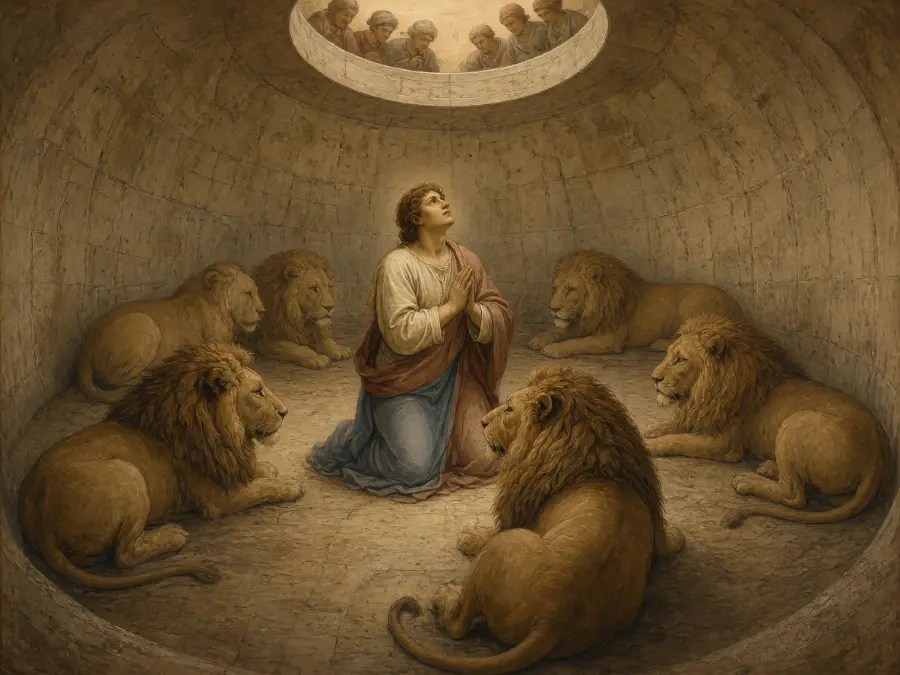
Is the pope Catholic or Christian?
Both. The pope is a Christian, the bishop of Rome and the head of the Catholic Church, which is the largest body of Christians in the world. The Pew Research Center found that about half of all Christians worldwide were Catholic in 2010, and the Vatican’s yearbooks counted just over 1.422 billion Catholics at the end of 2024. Catholics are Christians, and the pope is their chief shepherd on earth.
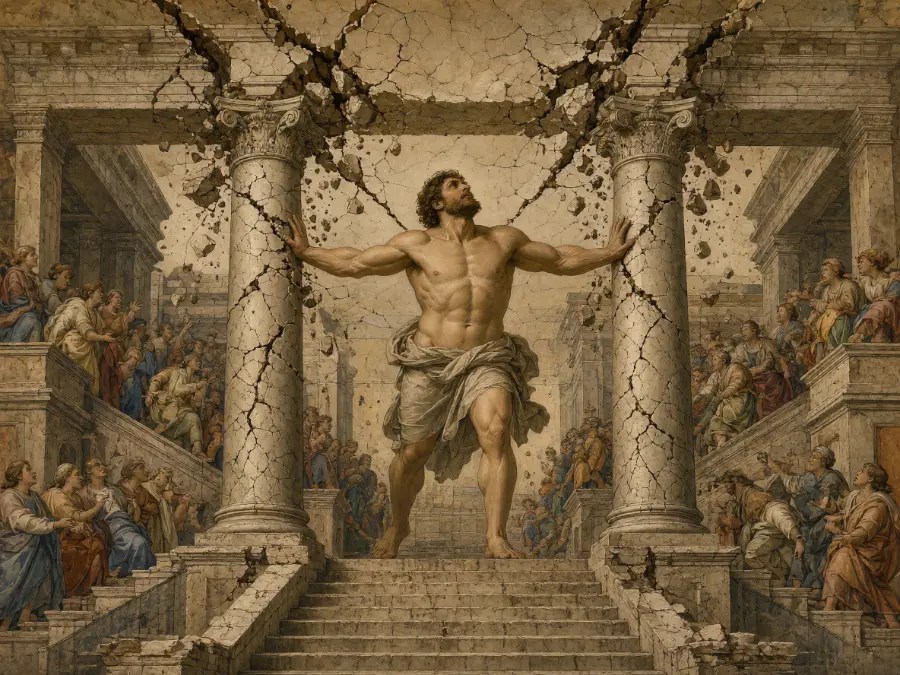
Is the pope infallible in the Bible?
Not in so many words. Catholics see it in Jesus’ prayer for Peter, “I have prayed for thee, that thy faith fail not: and when thou art converted, strengthen thy brethren” (Luke 22:32). The Catechism describes the gift in words that echo that charge. It limits infallibility to the moment when the pope, “as supreme pastor and teacher of all the faithful,” and as the one “who confirms his brethren in the faith,” proclaims “by a definitive act a doctrine pertaining to faith or morals” (paragraph 891). It does not mean the pope cannot sin. Peter wept, and the Gospel keeps his tears.
Orthodox and Protestant churches reject the doctrine. “Orthodoxy does not believe in the infallibility of the Pope of Rome, nor of any other individual,” the Orthodox Church in America answers. The Church of England’s Thirty-Nine Articles put Rome beside the other ancient churches: “As the Church of Jerusalem, Alexandria, and Antioch, have erred; so also the Church of Rome hath erred.” What infallibility covers, and when it has been used, is explained in facts about the Pope.
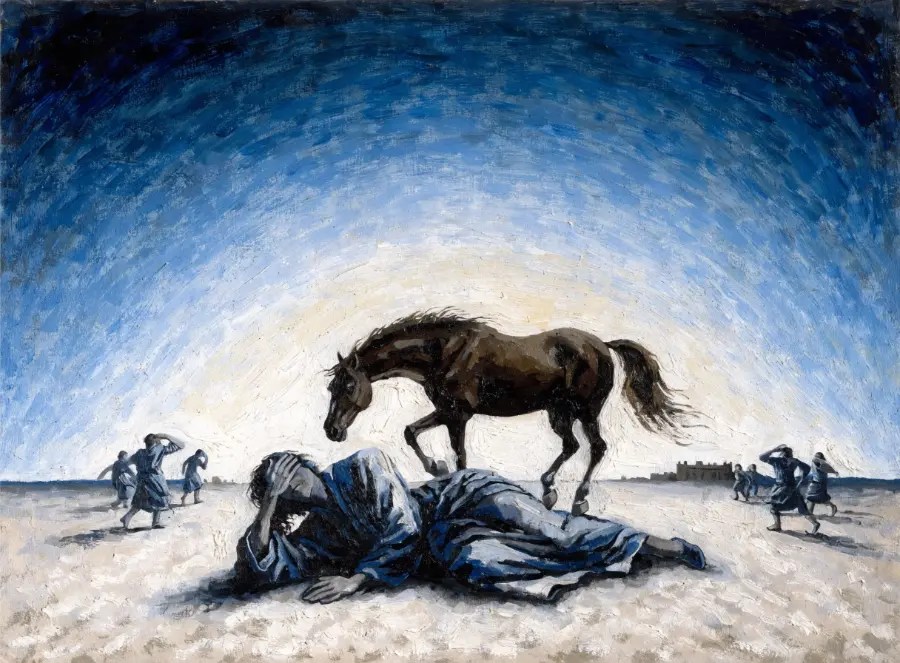
Who is the pope now, and how many popes have there been?
The pope is Leo XIV, born Robert Francis Prevost in Chicago on 14 September 1955 and elected on 8 May 2025. The Vatican calls him the first pope from the United States and the first Augustinian pope. He is the 267th pope in the Holy See’s list, which counts Peter as the first. The records of that long line, from the longest reign to the most common papal name, are gathered in how many popes have there been?
Peter himself, writing to the churches, did not call himself a ruler. “The elders which are among you I exhort, who am also an elder,” he wrote, and he handed on the charge he had received by the lake: “Feed the flock of God which is among you … neither as being lords over God’s heritage, but being examples to the flock” (1 Peter 5:1–3). The flock was never Peter’s, and it belongs to no pastor or church today. Christ still tends it, and of every shepherd he still asks first, “lovest thou me?” Peter’s letter ends that thought with a promise: “when the chief Shepherd shall appear, ye shall receive a crown of glory that fadeth not away” (1 Peter 5:4).
Related reading
- Facts about the Pope: Leo XIV, what a pope does and how he is chosen
- How many popes have there been? 267, from Saint Peter to Leo XIV
- What is the rock in Matthew 16:18?
- Why did Peter deny Jesus?
- Catholic vs Christian: Catholics are Christians who differ from Protestants
- Orthodox vs Catholic: how the two churches differ and why they split


Leave a Reply