
 English
 Chinese
 Dutch
 Arabic
 Spanish
 Portuguese
 Russian
 French
 Italian
 German
 Japanese
Yes, Catholics are Christians, and theirs is the largest church in the world. When people ask about “Catholic vs Christian,” they usually mean Catholics on one side and Protestant, evangelical or nondenominational Christians on the other. Both confess the Trinity and Jesus Christ as Savior. They differ most over authority, where Catholics look to the Pope and to Tradition as well as to Scripture, and over the sacraments, Mary and salvation.
The differences are real, and Catholics and Protestants have argued over them since the 16th century, but they argue as people baptized in the same name, the name of the Father, the Son and the Holy Spirit. The Catholic Church itself says that all who have been justified by faith in Baptism “have a right to be called Christians.”
| Question | Catholic Church | Most Protestant churches |
|---|---|---|
| What members call themselves | Catholic, a word meaning universal | Baptist, Lutheran, Methodist and so on, or just Christian |
| Who settles doctrine | The bishops with the Pope, from Scripture and Tradition | The Bible is the last word |
| Leader | The Pope, Bishop of Rome | None on earth over all churches |
| Communion | The bread and wine become Christ’s body and blood | Christ present (Lutherans) or remembered (Baptists) |
| Confession | To a priest, for serious sins, at least yearly | Private confession offered in some (Lutheran, Episcopal) |
| Mary and the saints | Catholics ask them for their prayers | Prayer is made to God alone |
| Justification and sacraments | Given in baptism; seven sacraments | By faith alone; two sacraments or ordinances |
| Books in the Bible | 73 | 66 |
| After death | Purgatory purifies some of the saved | Heaven or hell only |
Our free tool, Compare Christian Denominations, sets any two of 23 churches side by side on 55 questions.
Why “Christian” often means Protestant
In America, many people who describe their religion simply as “Christian” are Protestants. When Pew Research Center asks Americans their religion, some answer that they are “Christian” or “just Christian”: “roughly one-in-ten or more, on average, in recent surveys,” as Pew puts it. Pew counts them as Protestants, and people in nondenominational churches go into the same Protestant column. So a search for “Catholic vs Christian” sets Catholics beside that group.
The word “catholic” is older than any of these divisions. It means “universal,” as the Catechism of the Catholic Church explains, and it appears in Protestant prayer books too: in the Episcopal Church’s Book of Common Prayer, the Nicene Creed reads, “We believe in one holy catholic and apostolic Church.” Written with a small “c,” the catholic Church in that sense is the whole Church across the world. Written with a capital C, the Catholic Church is the communion of churches led by the Bishop of Rome, and by the Vatican’s count it had just over 1.42 billion baptized members in 2024.
“Roman Catholic” is another name for the same church, and Roman Catholics are Christians. The name comes from Rome, because, as the Catechism says, the local churches are “fully catholic through their communion with one of them, the Church of Rome.” The Catechism lists the Latin tradition, “principally the Roman rite,” alongside the Byzantine, Coptic, Syriac, Armenian, Maronite and Chaldean rites in use in the Church, so a Catholic may worship in an Eastern rite and still be in full communion with the Pope.
The Catholic Church counts Protestants as Christians too, and says so in its Catechism: “all who have been justified by faith in Baptism are incorporated into Christ; they therefore have a right to be called Christians.” It describes the Church as joined to baptized people who “do not profess the Catholic faith in its entirety.” As for the first Protestants, they did not think they were leaving Christianity. They believed they were correcting the one Church from within.
So if someone asks a Catholic, “are you Catholic or Christian?” the Catholic can answer “both,” and the same goes for the Pope, who is the head of the Catholic Church and so a Christian. The Orthodox churches of the East are a third large Christian family, separate from both.
What the two share
Catholics and most Protestants accept the same creed, the Nicene Creed. It confesses one God, Father, Son and Holy Spirit, and it calls Jesus “true God from true God,” born of the Virgin Mary, crucified, risen and coming again. Both baptize in the name of the Father, the Son and the Holy Spirit, and both read the same four Gospels and the same 27 books of the New Testament.
Even salvation, the question that split them in the 16th century, divides them less than it did. In 1999 the Catholic Church and the Lutheran World Federation signed their Joint Declaration on the Doctrine of Justification, and in it they said together that people are accepted by God “by grace alone,” through faith in Christ and not because of any merit of their own. The World Methodist Council joined it in 2006, the Anglican Consultative Council affirmed its substance in 2016, and the World Communion of Reformed Churches signed on in 2017. Not every Protestant agrees with it, though. Baptist and most evangelical churches took no part in it. The Lutheran Church–Missouri Synod is not a member of the Lutheran World Federation, and its seminaries judged that the declaration “does not settle the major disagreement between Lutheran theology and Roman Catholic theology on justification.”
The Pope and the question of authority
The deepest difference between them is over who has the last word. Catholics believe that God’s revelation comes to us through Scripture and through Tradition, the teaching the apostles handed on to their successors, the bishops, and that the bishops, united with the Pope, teach with authority. The Catechism traces the Pope’s office to Peter: “The Lord made Simon alone, whom he named Peter, the ‘rock’ of his Church. He gave him the keys of his Church.”
Protestants hold that the Bible alone is the final authority. Creeds and confessions matter to many Protestant churches, but they stand under Scripture and can be corrected by it, so no bishop or council has the last word, and Protestant churches do not accept the papacy. Southern Baptists, for example, describe each church as “an autonomous local congregation.” If you want the full case each side makes from Scripture and history, it is set out in Catholic vs Protestant.
Salvation: faith, baptism and good works
Both sides teach that salvation is a gift won by Christ, but they describe differently how it takes hold. “Justification is conferred in Baptism, the sacrament of faith,” the Catechism says, and Catholics believe grace makes a person inwardly just and grows through the sacraments and a life of love. The chief Lutheran statement of faith, the Augsburg Confession, which was presented to Emperor Charles V in 1530, says people are “freely justified for Christ’s sake, through faith.” Protestants believe God counts the sinner righteous because of Christ, and that good works follow as the fruit of that faith.
Both sides quote Paul’s words to the Ephesians, “For by grace you have been saved through faith. And this is not your own doing; it is the gift of God, not a result of works, so that no one may boast.” So Catholics and Protestants agree that no one earns salvation. Where they disagree is over what justification is. For Catholics, God makes the sinner inwardly just; for Protestants, God declares the sinner righteous for Christ’s sake and credits that faith as righteousness.
What a visitor notices at Mass
Sunday morning is where a visitor sees the difference first, because Catholics are “bound to participate in the Mass” on Sundays and holy days of obligation, and the Mass always includes Communion. At the consecration, Catholics believe, the bread and wine change into Christ’s body and blood, and the Church calls this “transubstantiation.” Protestant churches explain Communion differently, both from Catholics and from one another. Lutherans confess that Christ’s body and blood are truly present with the bread and wine, a “sacramental union,” as their Formula of Concord calls it; they reject transubstantiation, and they do not use the label “consubstantiation” that others often give them. Southern Baptists say that in the Lord’s Supper church members “memorialize the death of the Redeemer and anticipate His second coming.”
Then there is confession. Each Catholic, the Catechism says, “is bound by an obligation faithfully to confess serious sins at least once a year.” Some Protestant churches keep confession to a minister but do not require it. Lutherans keep private confession and absolution, though the Augsburg Confession says “an enumeration of all sins is not necessary,” and the Episcopal Book of Common Prayer has a rite called the Reconciliation of a Penitent, in which the penitent says, “I confess to Almighty God, to his Church, and to you.”
They part ways over Mary and the saints as well. The Catechism calls devotion to Mary “intrinsic to Christian worship” but says it differs in kind from the worship given to God, and Catholics ask Mary and the saints to pray for them. Protestants honor Mary as the mother of Jesus and remember the saints, but they pray to God alone. The Augsburg Confession says that “the memory of saints may be set before us, that we may follow their faith and good works,” and it points to Christ as the one Mediator, the phrase Paul uses in 1 Timothy 2:5. Catholics also pray for the dead, because they believe some of the saved are purified after death, in purgatory, before they enter heaven, while Protestant confessions such as the Westminster Confession recognize only heaven and hell.
Are Catholic and Protestant Bibles the same?
The New Testament is the same in both, and so is most of the Old, but Catholic Bibles have seven more Old Testament books, 73 in all against 66: Tobit, Judith, 1 and 2 Maccabees, Wisdom, Sirach and Baruch. Catholics call them deuterocanonical and read them as Scripture. Protestants call them the Apocrypha, and their churches treat them in different ways. The Westminster Confession of 1646, the standard of the Presbyterian churches, denies that they are inspired and gives them no authority in the church. The Church of England’s Thirty-nine Articles say the Church reads them “for example of life and instruction of manners; but yet doth it not apply them to establish any doctrine.” Luther included them in his German Bible, and he wrote that they “are not held equal to the Scriptures, but are useful and good to read.” How each list was settled is explained on the Catholic and Protestant Bibles page.
Can a Catholic go to a Protestant church?
Catholic teaching sets two limits when a Catholic attends a Protestant service. The first is that it does not take the place of Sunday Mass, since the obligation “is satisfied by assistance at a Mass which is celebrated anywhere in a Catholic rite.” The second is that a Catholic does not receive Communion there. The Catechism says the “ecclesial communities derived from the Reformation” have not kept the Eucharist in its fullness, chiefly because they lack the sacrament of holy orders, and so intercommunion with them “is not possible for the Catholic Church.” Canon law lets Catholics receive Communion from non-Catholic ministers only in churches whose sacraments it counts as valid, and that leaves out the Protestant ones.
Protestants, in turn, are welcome at Mass, and the US bishops’ guidelines greet them as “our fellow Christians,” but members of churches “not yet fully united” with Rome “are ordinarily not admitted to Holy Communion.” Canon law allows exceptions in danger of death or another grave necessity, for a Protestant who cannot reach his or her own minister, who asks freely and who shares the Catholic faith in the sacrament.
Can a Catholic marry a Protestant?
Yes, a Catholic can marry a Protestant with the Church’s permission. Under canon law the Catholic partner promises to do everything possible to have the children baptized and raised Catholic, and the Protestant partner makes no promise but must be told about the one the Catholic has made. The wedding normally takes place before a Catholic priest or deacon and two witnesses, though for serious reasons the bishop can dispense from that form, and then the couple may marry in the Protestant partner’s church. The Catechism says such marriages call for “particular attention on the part of couples and their pastors.”
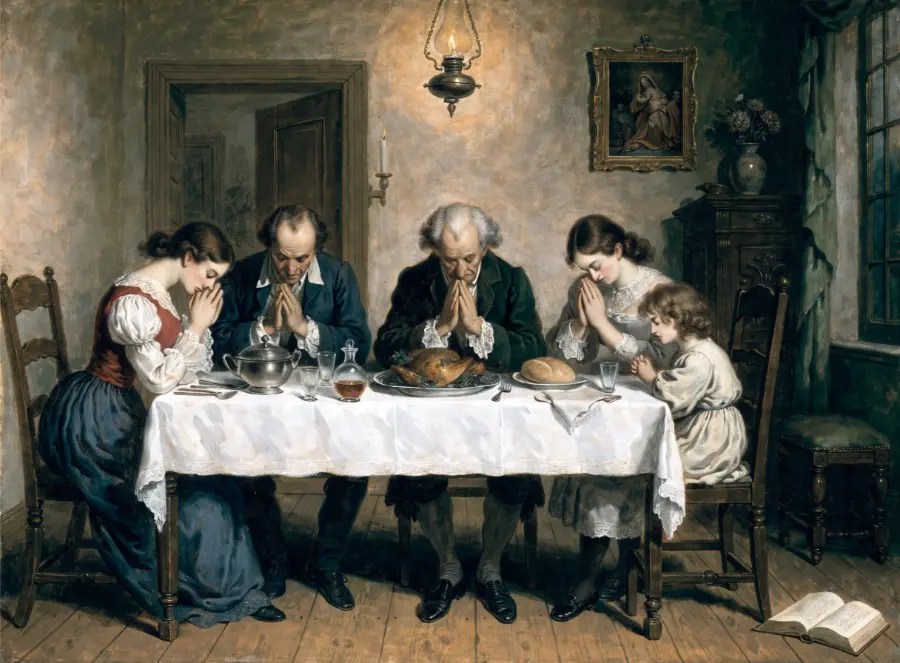
Lent, Ash Wednesday and the fish: Catholic or Christian?
Catholics keep Lent, and so do many Protestants, though not every church does. The Episcopal Church’s Prayer Book has an Ash Wednesday service in which the minister says, “Remember that you are dust, and to dust you shall return.” John Wesley dropped Lent for Methodists in 1784, but the United Methodist Church adopted its first official Ash Wednesday service in 1992, and it leaves the ashes optional. You can read which other churches keep the season in Do Protestants celebrate Lent?
The fish symbol belongs to all Christians and is far older than any of these divisions. Sometime between about AD 200 and 206 the North African writer Tertullian wrote, “we, little fishes, after the example of our ΙΧΘΥΣ Jesus Christ, are born in water,” and ΙΧΘΥΣ is the Greek word for fish.
Which is older?
Catholics trace their bishops in unbroken succession to the apostles, and so they date their church to the apostles themselves. The Orthodox churches trace their bishops to the apostles in the same way, and in 2007 a joint Catholic–Orthodox commission wrote that bishops receive their ministry “by the imposition of hands in the apostolic succession.” The Protestant churches began with the Reformation, which is dated from October 31, 1517, when Martin Luther sent out his Ninety-five Theses, and many of them were founded later still. Yet Protestants do not see that as the start of a new faith. The Augsburg Confession told Emperor Charles V that the Lutheran churches “dissent in no article of the faith from the Church Catholic, but only omit some abuses which are new,” and Catholics and Protestants still disagree about whether that was so.
However that question is settled, both still baptize into the one name, and long before the Reformation divided them, Tertullian wrote for every Christian: “we, little fishes, after the example of our ΙΧΘΥΣ Jesus Christ, are born in water.”
Related reading
- Catholic vs Protestant: the full comparison
- Catholic vs evangelical
- Catholic vs Orthodox
- Baptist vs Catholic
- Are there Catholic denominations?
- Why do Catholics “pray” to Mary?


Leave a Reply