
 English
 Chinese
 Dutch
 Arabic
 Spanish
 Portuguese
 Russian
 French
 Italian
 German
 Japanese
The Pope today is Leo XIV. Born Robert Francis Prevost in Chicago in 1955, he was elected on 8 May 2025, the first pope from the United States. As Bishop of Rome he heads the Catholic Church, which holds that each pope succeeds Saint Peter. Cardinals elect him, and he serves for life unless he resigns.
Behind the titles and the ceremony stands a simple charge. After the Resurrection Jesus asked Peter three times whether he loved him, and each time he gave him work to do: “Feed my lambs,” “Feed my sheep,” and again “Feed my sheep” (John 21:15–17). Catholics believe that charge passes from one bishop of Rome to the next. The word pope means father, and one of his historic titles is humbler still: Servant of the Servants of God.
Who is Pope Leo XIV?
Leo XIV is an Augustinian friar and a canon lawyer who spent much of his life in Peru, first as a missionary priest and later as a bishop. The Vatican’s biography describes him as the first pope from the United States of America and the first Augustinian pope in the Church’s history. He speaks English, Spanish, Portuguese, French and Italian, and he turned 71 on 14 September 2026.
| Year | Step |
|---|---|
| 1955 | Born in Chicago on 14 September |
| 1977 | Mathematics degree, Villanova University; enters the Order of Saint Augustine |
| 1982 | Ordained a priest in Rome on 19 June, while studying canon law |
| 1985 | Sent to the Augustinian mission in Chulucanas, Peru; later teaches and serves as a parish priest in Trujillo |
| 2001–2013 | Prior General of the Augustinians, worldwide |
| 2014–2015 | Ordained bishop for Chiclayo, Peru; becomes a Peruvian citizen |
| 2023 | Head of the Vatican office for bishops; created a cardinal on 30 September |
| 2025 | Elected pope on 8 May; inaugurated on 18 May |
His first words from the balcony of Saint Peter’s were “Peace be with all of you!” Two days later he told the cardinals he had chosen his name with Leo XIII in mind, the pope whose encyclical Rerum Novarum took up the social question in the first great industrial revolution. In the Vatican’s own numbering he is the 267th pope; the papacy’s other records, from the longest reign to the most used names, are gathered in how many popes there have been.
What does the Pope do?
He is first of all a bishop. The Code of Canon Law describes him in one sentence: “The bishop of the Roman Church, in whom continues the office given by the Lord uniquely to Peter, the first of the Apostles, and to be transmitted to his successors, is the head of the college of bishops, the Vicar of Christ, and the pastor of the universal Church on earth.”
The Catechism of the Catholic Church explains what that office is for. The Pope “is the perpetual and visible source and foundation of the unity both of the bishops and of the whole company of the faithful,” and he has “full, supreme, and universal power over the whole Church, a power which he can always exercise unhindered.” Canon law, which sets out that authority, also binds him to the other bishops: in his office he “is always joined in communion with the other bishops and with the universal Church.”
In practice that means a pope teaches, through encyclicals, homilies and addresses; governs, above all by naming bishops (“The Supreme Pontiff freely appoints bishops or confirms those legitimately elected”); and holds the Church together. The cardinals help him, and the offices of the Roman Curia handle the Church’s worldwide business in his name. He is also head of state of Vatican City.
What titles does the Pope have?
His one everyday title is Bishop of Rome. In 2019 Francis had the others moved to a separate page of the Vatican’s yearbook, the Annuario Pontificio, and since the 2020 edition they have been listed as historic titles. The 2024 edition gives them in this order:
- Vicar of Jesus Christ
- Successor of the Prince of the Apostles
- Supreme Pontiff of the Universal Church
- Patriarch of the West
- Primate of Italy
- Archbishop and Metropolitan of the Province of Rome
- Sovereign of Vatican City State
- Servant of the Servants of God
Patriarch of the West has been dropped and restored. Benedict XVI dropped it in 2006, and it reappeared in the 2024 yearbook, placed after Supreme Pontiff of the Universal Church, without any explanation from the Vatican press office at the time.
Where does the word pope come from?
From the Greek pappas, father, through the Church’s Latin papa. In the West the word was once used of bishops in general, and in the East of priests too. By the fourth century it was becoming the special title of the Bishop of Rome, and in the eleventh century Gregory VII, as the Catholic Encyclopedia puts it, “finally prescribed that it should be confined to the successors of Peter.”
Why do Catholics call Peter the first pope?
Because of what Jesus said to him. When Jesus asked his disciples, “But whom say ye that I am?”, Simon Peter answered, “Thou art the Christ, the Son of the living God.” Jesus replied:
“And I say also unto thee, That thou art Peter, and upon this rock I will build my church; and the gates of hell shall not prevail against it. And I will give unto thee the keys of the kingdom of heaven: and whatsoever thou shalt bind on earth shall be bound in heaven: and whatsoever thou shalt loose on earth shall be loosed in heaven.” (Matthew 16:18–19)
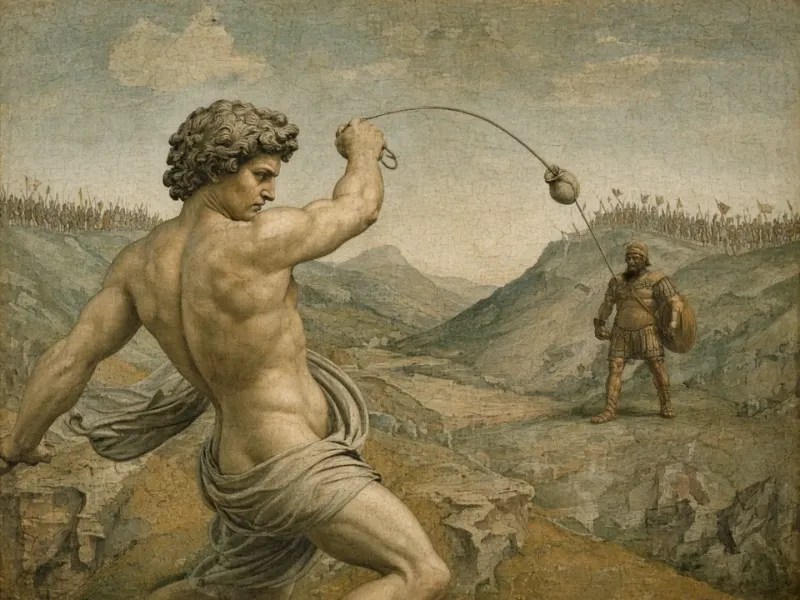
After the Resurrection, Jesus asked Peter three times whether he loved him, and three times gave him a charge: “Feed my lambs,” “Feed my sheep,” and again “Feed my sheep” (John 21:15–17).
The Catholic Church reads these words as the founding of an office. The Catechism says, “Because of the faith he confessed Peter will remain the unshakeable rock of the Church,” and it takes the keys to mean authority to govern the house of God, which Jesus confirmed when he told Peter to feed his sheep. In Catholic teaching that office continues in the bishops of Rome, so that each pope is Peter’s successor.
Other Christians read the same verses differently. The Orthodox Church in America teaches that in Matthew 16:18 “the word ‘rock’ refers to Peter’s confession of faith, and not to Peter himself.” The Catechism, too, links the rock with Peter’s faith: “On the rock of this faith confessed by St. Peter, Christ built his Church.” Presbyterian and Reformed churches confess, in the words of the Westminster Confession of Faith as revised in America and kept by the Orthodox Presbyterian Church, “There is no other head of the church but the Lord Jesus Christ. Nor can the pope of Rome, in any sense, be head thereof.” John 21 is read differently too. The Presbyterian commentator Matthew Henry (1662–1714) saw in the threefold question Christ restoring Peter after his denial, meant “to restore him to his apostleship … and to renew his commission,” and added, “What Christ said to him he said to all his disciples.” How those differences shaped the churches is told in Orthodox vs Catholic and Protestant vs Catholic.
How is a new pope chosen?
By a conclave of the cardinals, under the rules John Paul II set out in 1996 in Universi Dominici Gregis. Benedict XVI amended them twice: in 2007 he restored the two-thirds majority for every ballot, even in a final runoff between the two leading names, neither of whom may vote in it; in 2013 he let the cardinals begin sooner when all the electors are present. The steps run in this order:
- The see falls vacant when a pope dies or resigns.
- The cardinals wait fifteen full days for the electors to gather, and no more than twenty. They may begin sooner “if it is clear that all the Cardinal electors are present.”
- Only cardinals who have not turned 80 before the vacancy may vote, and the rules set the number of electors at no more than 120.
- The electors shut themselves in the Sistine Chapel, and everyone else is ordered out with the words Extra omnes.
- Each cardinal writes one name on a ballot headed Eligo in Summum Pontificem, “I elect as Supreme Pontiff,” and carries it to the altar with an oath: “I call as my witness Christ the Lord who will be my judge, that my vote is given to the one who before God I think should be elected.”
- A man needs two thirds of the votes of the electors present. There is one ballot on the first afternoon, then up to four a day. After a long deadlock, only the two leading names stay in the running, and two thirds are still needed.
- After each round the ballots are burned. Chemicals colour the smoke: black when no one has been elected, white when a pope has.
- The man elected is asked, “Do you accept your canonical election as Supreme Pontiff?” and then, “By what name do you wish to be called?” If he is already a bishop, he becomes pope the moment he accepts; if not, he is to be ordained a bishop immediately.
- The senior cardinal deacon announces the election from the balcony of Saint Peter’s Basilica, and the new pope gives his first blessing to the city and the world, Urbi et Orbi.
In 2025 the conclave opened on 7 May with 133 electors, more than the usual limit of 120; two thirds of them made 89 votes. Leo XIV was elected on the fourth ballot, on the afternoon of 8 May, and Cardinal Dominique Mamberti announced him from the central loggia of Saint Peter’s with the words Habemus Papam.
Is the Pope infallible?
Only in a narrow sense, and rarely. The First Vatican Council defined in 1870, in Pastor Aeternus, that “when the Roman pontiff speaks EX CATHEDRA, that is, when, in the exercise of his office as shepherd and teacher of all Christians, in virtue of his supreme apostolic authority, he defines a doctrine concerning faith or morals to be held by the whole church,” he possesses “that infallibility which the divine Redeemer willed his church to enjoy.” Every condition has to be met:
- he speaks as shepherd and teacher of all Christians;
- he uses his full apostolic authority;
- the subject is faith or morals;
- he defines a doctrine, to be held by the whole Church.
Most of what a pope teaches is not of this kind. The Catechism calls it ordinary teaching, given “without arriving at an infallible definition,” and asks Catholics to receive it with “religious assent,” which it describes as distinct from the assent of faith. It also says the bishops share the gift of infallibility when they teach together with the Pope, above all in an ecumenical council.
The clear modern case is 1950, when Pius XII defined that Mary, “having completed the course of her earthly life, was assumed body and soul into heavenly glory.” Pius IX’s definition of the Immaculate Conception in 1854 is usually counted as the other. The Jesuit theologian Thomas Rausch writes that papal infallibility has been “exercised only twice,” while others call those two the best-known cases of several.
Other Christians do not accept the doctrine. The Orthodox Church in America says plainly, “Orthodoxy does not believe in the infallibility of the Pope of Rome, nor of any other individual.” The same Westminster text holds that “All synods or councils, since the Apostles’ times, whether general or particular, may err; and many have erred.”
Can a pope resign?
Yes. Canon law requires that the resignation be “made freely and properly manifested but not that it is accepted by anyone.”
Benedict XVI used that right in 2013. On 11 February he told the cardinals that “my strengths, due to an advanced age, are no longer suited to an adequate exercise of the Petrine ministry,” and his papacy ended at eight in the evening on 28 February. He lived on as Pope Emeritus until his death on 31 December 2022.
Before him, the last pope to resign was Gregory XII in 1415, 598 years earlier, who stepped down at the Council of Constance so that the Western Schism, with its rival claimants, could end. In 1294 the hermit pope Celestine V resigned after five months, once the canon lawyer Cardinal Benedetto Caetani had settled that a pope could; Caetani was elected next, as Boniface VIII. Much earlier, in 235, Pontian resigned in exile in Sardinia so that Rome could have a pope.
Where does the Pope live?
In Vatican City. On 14 March 2026 Leo XIV moved into the papal apartment of the Apostolic Palace, the traditional home of the popes, which Francis had chosen not to use: from March 2013 he lived at the Casa Santa Marta. Until the move Leo XIV had lived in an apartment in the Palace of the Holy Office. He has also brought back the papal summer stays at Castel Gandolfo.
Vatican City covers 0.44 square kilometres, or 44 hectares, and its government calls it the smallest independent state in the world by both territory and population; 882 people lived there at the end of 2024. It exists because of the Lateran Treaty between the Holy See and Italy, signed on 11 February 1929, which gave the Holy See a territory of its own to secure its “absolute and visible independence.”
Who protects the Pope?
The Pontifical Swiss Guard, young Swiss soldiers in Renaissance uniform. The Guard counts its founding from 22 January 1506, when 150 Swiss soldiers entered the Vatican and were blessed by Pope Julius II, and it has guarded the pope and his residence ever since. On 6 May 1527, during the Sack of Rome, 189 guardsmen stood to protect Pope Clement VII, “most of them sacrificing their own lives.”
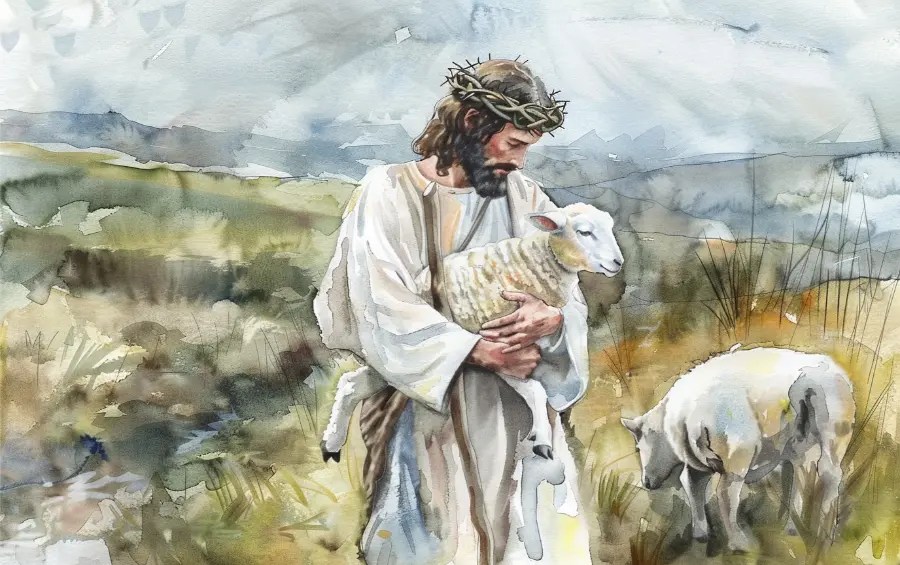
Guards in Renaissance uniform, a palace, a state of 44 hectares: all of it surrounds one man with a shepherd’s work to do. His first words to the crowd were “Peace be with all of you!” In Catholic belief the charge he carries is still the one Jesus gave to Peter: “Feed my sheep” (John 21:17).
Related reading
- How many popes have there been? The papacy in numbers
- Peter in the Bible: his journey with Jesus
- Orthodox vs Catholic: how the two churches differ and why they split
- Protestant vs Catholic: how their beliefs and worship differ
- The Vatican’s wealth
- Cathedral vs basilica vs church


Leave a Reply