
 English
 Chinese
 Dutch
 Arabic
 Spanish
 Portuguese
 Russian
 French
 Italian
 German
 Japanese
The Coptic Orthodox Church is the ancient church of Egypt, and it traces its beginning to St. Mark the Evangelist, who preached in Alexandria in the first century. Copts confess the Nicene Creed and keep seven sacraments. They baptize their babies by immersion, they receive the bread and cup of the altar as the Body and Blood of Christ, they honour the Virgin Mary as the Theotokos, the Mother of God, ever-virgin, and they read the Scriptures within the Holy Tradition handed down from the apostles and the fathers. The Greek, Russian and other Eastern Orthodox churches baptize their babies too, and confess the same Body and Blood and the same Mother of God. Where the two part is over the councils, for Copts accept three, Nicaea in 325, Constantinople in 381 and Ephesus in 431, and the Eastern Orthodox accept seven.
The council that stands between them is Chalcedon, in 451, and the quarrel was over the words it chose for Christ. Chalcedon confessed him “in two natures,” and the Copts, with the Syrian, Armenian, Ethiopian, Eritrean and Indian churches, kept to the phrase of their own St. Cyril of Alexandria, “The One Nature of God the Incarnate Logos.” The two families have lived apart ever since. Then in 1989 theologians from both met at a Coptic monastery in the Egyptian desert, and in 1990 they wrote that “both families have always loyally maintained the same authentic Orthodox Christological faith, and the unbroken continuity of the apostolic tradition, though they have used Christological terms in different ways.” Even so, the two churches are not yet in full communion.
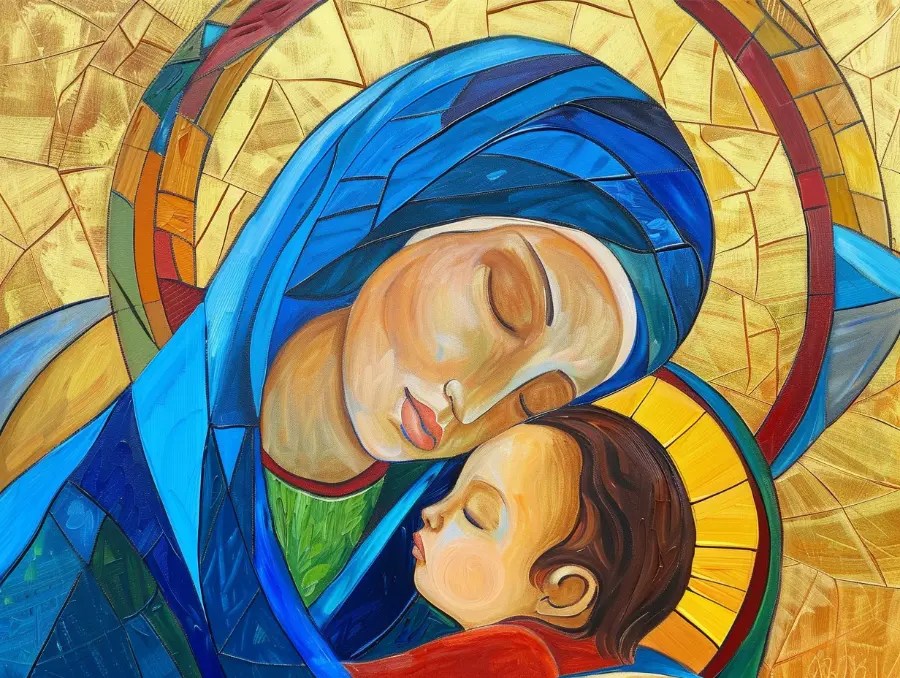
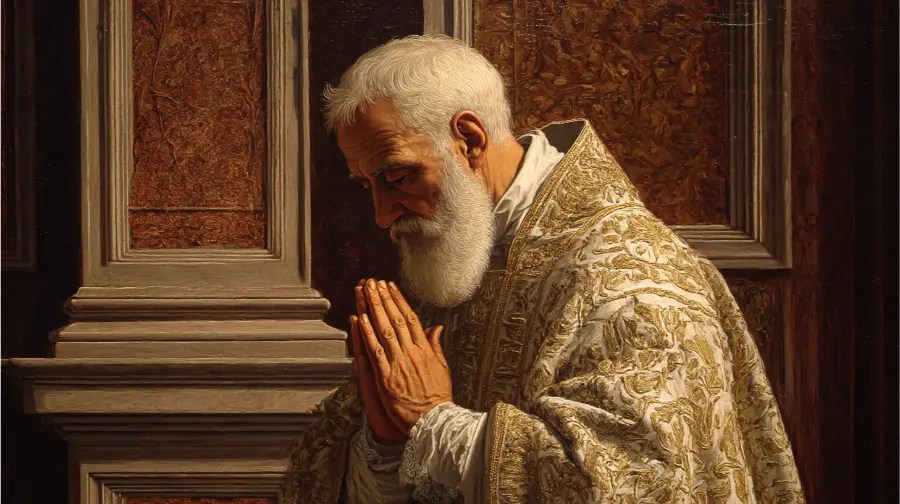
If you want to hear the whole Coptic faith in a single breath, listen to the priest near the end of the Liturgy of St. Basil. He kneels, lifts up the paten that holds the Holy Body, and says: “Amen. Amen. Amen. I believe, I believe, I believe and confess to the last breath; that this is the Life-giving Body that Your Only-Begotten Son, our Lord, God and Savior Jesus Christ took from our lady, the lady of us all, the holy Mother of God, Saint Mary. He made It One with His divinity without mingling, without confusion, and without alteration.” Communion is in those words, and Mary is in them, and so is the very mystery the bishops argued over at Chalcedon, how the eternal Son is one with the flesh he took from her. Our Eastern Orthodox brothers and sisters confess that same mystery at their own altars, in other words.
Coptic Orthodox and Eastern Orthodox side by side
| Question | Coptic Orthodox | Eastern Orthodox |
|---|---|---|
| Family | Oriental Orthodox: Coptic, Syrian, Armenian, Ethiopian, Eritrean and Indian churches | The Greek, Russian, Serbian, Romanian and other Byzantine churches |
| Head | The Pope of Alexandria, Pope Tawadros II, the 118th, since 2012 | Each church governs itself; the Ecumenical Patriarch of Constantinople leads among them |
| Ecumenical councils | Three: Nicaea, Constantinople, Ephesus | Seven, through Nicaea II in 787 |
| Christ | “The One Nature of God the Incarnate Logos,” united without mingling, confusion or alteration | One person “in two natures,” without confusion, change, division or separation |
| Baptism | Infants and adults, by immersion, for the forgiveness of sins; anointing with the Myron follows | Infants and adults, by immersion; chrismation and Communion follow |
| Communion | The bread and cup are truly Christ’s Body and Blood; for those baptized and chrismated in the Coptic Orthodox faith who confess and fast | The true Body and Blood of Christ; given to members of the church |
| Salvation | By Christ’s blood and God’s grace, received through faith and the sacraments; repentance and good works are conditions; it can be lost | Theosis, a share in God’s life; God’s gift, received through faith and the sacraments |
| Mary | Theotokos, ever-virgin, intercessor; born with original sin, free of personal sin; no Immaculate Conception | Theotokos and ever-virgin; free of personal sin; no Immaculate Conception |
| Authority | Scripture with Holy Tradition: the fathers, councils, canons and rites | Scripture within Holy Tradition, where the Bible holds first place |
| With each other | Not in full communion; baptism accepted under pastoral agreements; a Greek Orthodox Christian is chrismated before receiving Communion in a Coptic church | Not in full communion; the 1990 statement asks both families to lift the old anathemas |

Who are the Copts?
The name Copt comes from the Greek Aigyptos, Egyptian, and when the Arabs came in the seventh century they called the Egyptians qibt, so that, as the Coptic Orthodox Diocese of Los Angeles explains, one Arabic word came to mean both Egyptians and Christians. The church’s own history puts St. Mark’s coming to Alexandria at about 43 AD, and his death there in 68, when he was dragged through the streets of the city during the Feast of the Resurrection. Its bishop has been called Pope since the first half of the third century, and the line has never been broken. Pope Tawadros II, the 118th, was chosen on 4 November 2012, his sixtieth birthday, and enthroned two weeks later, on 18 November.
Egypt gave the whole church Athanasius and Antony. Athanasius, the twentieth Pope of Alexandria, went to Nicaea as the deacon of Pope Alexander, and his exiles came to seventeen and a half years of his papacy. Out in the desert St. Antony became the father of monks, and in 318, at Tabennisi, St. Pachomius founded the first monastery where monks lived in community. Copts also hold dear the flight of the Holy Family, when Joseph “took the young child and his mother by night, and departed into Egypt” (Matthew 2:14). The Los Angeles diocese reads that journey as the fulfilment of Isaiah’s word, “In that day shall there be an altar to the Lord in the midst of the land of Egypt” (Isaiah 19:19).
A word about names, because they cross. The Coptic Church belongs to the family of churches that did not accept Chalcedon, which its official site lists as the Coptic, Syrian, Armenian, Indian Syriac, Ethiopian and Eritrean churches. English speakers usually call them the Oriental Orthodox. Copts themselves sometimes say “Eastern Orthodox” for their own family and “Greek” or “Byzantine” Orthodox for the churches of Constantinople, Greece and Russia. On this page, Eastern Orthodox means the Greek, Russian and other churches that accept Chalcedon.

Why did the Coptic and Eastern Orthodox churches separate?
The story starts twenty years before Chalcedon. At Ephesus in 431, Pope Cyril of Alexandria led the bishops against Nestorius, who would not call Mary the Mother of God, and Nestorius was excommunicated. Then in 451 a council of 630 bishops, the largest of all seven, met at Chalcedon, near Constantinople. It confessed that Christ is “one and the same Son,” born of Mary, “the Mother of God according to his manhood,” and that he is to be confessed, in the Orthodox Church in America’s translation, “in two natures, without mixture and without change, without separation and without division.” The same council deposed Dioscorus, the Pope of Alexandria. Its letter to him gave as the reasons “your disregard of the divine canons, and of your disobedience to this holy and ecumenical synod,” and his not coming when he was called three times. Dioscorus was sent into exile at Gangra, and he died there in 454.
Each church remembers those years its own way, and the Coptic Church says that it “refused to adopt the decisions and teachings of the Council of Chalcedon,” that it rejected the Tome of Pope Leo of Rome, and that for about 190 years, from 451 until the Arabs came to Egypt in 641, it suffered persecution from the Chalcedonian side. Pope Shenouda III, the 117th Pope of Alexandria, wrote that “the Nestorian roots extended to influence the council of Chalcedon.” The Eastern Orthodox tell it the other way round. For the Orthodox Church in America, Chalcedon was defending St. Cyril’s own teaching on the union of the two natures in Christ, and “the Chalcedonian Definition is fully in accord with the thought of Saint Cyril,” who by his “one nature” meant one hypostasis, one person.
Those who held to Chalcedon called the Copts Monophysites, believers in one nature, and Pope Shenouda answered that the name made it sound “as though we believed in one nature of Christ and denied the other nature.” Copts condemn the man who did teach something like that, the monk Eutyches, who said Christ’s humanity was swallowed up in his divinity “as a drop of vinegar in the ocean.” Chalcedon condemned him, and the Coptic Church excommunicated him too. Copts call themselves miaphysite instead, and the Southern diocese explains that this means Christ is “perfect human and perfect divine and these two natures are united together without mingling, nor confusion, nor alteration in one nature; the nature of God incarnate.” Pope Shenouda put it that Christ “is God Himself, the Incarnate Logos. Who took to Himself a perfect manhood.” Set those words beside Chalcedon’s “without mixture and without change” and you can hear why the theologians of both families would one day say they meant the same thing. Both bow before the verse Pope Shenouda quoted, “without controversy great is the mystery of godliness: God was manifest in the flesh” (1 Timothy 3:16), and before John’s, “And the Word was made flesh, and dwelt among us” (John 1:14).
How do Copts baptize?
The Coptic Orthodox Church baptizes infants as well as adults, by immersion, and teaches that baptism is a new birth that washes away sins and is needed for salvation. Pope Shenouda rested it on the Lord’s own words, “He that believeth and is baptized shall be saved” (Mark 16:16), and on Paul’s: “we are buried with him by baptism into death: that like as Christ was raised up from the dead by the glory of the Father, even so we also should walk in newness of life” (Romans 6:4). If baptism is a burial, he reasoned, it has to be done like one: “The action of burying cannot be achieved except by immersion.” And because a person dies with Christ only once, “baptism is performed only once.”
Why baptize babies? Pope Shenouda’s answer begins, “We are concerned about the eternal life of children.” He pointed to the whole households baptized in Acts, the jailer’s at Philippi and Lydia’s, which must, he argued, have had children in them, and he likened a child baptized on the faith of its parents to an Israelite boy circumcised on the eighth day. So a Coptic baby is immersed in the font and then anointed with the Myron, the holy oil by which “the Holy Spirit dwells in us.” Protestants and Catholics who become Coptic are baptized again; of Protestant baptism the Southern diocese says, “This baptism is not accepted in our Coptic Orthodox Church.” The Eastern Orthodox baptize babies too, by immersion in the name of the Father, the Son and the Holy Spirit, and chrismation and Communion follow.
What do Copts believe about Communion?
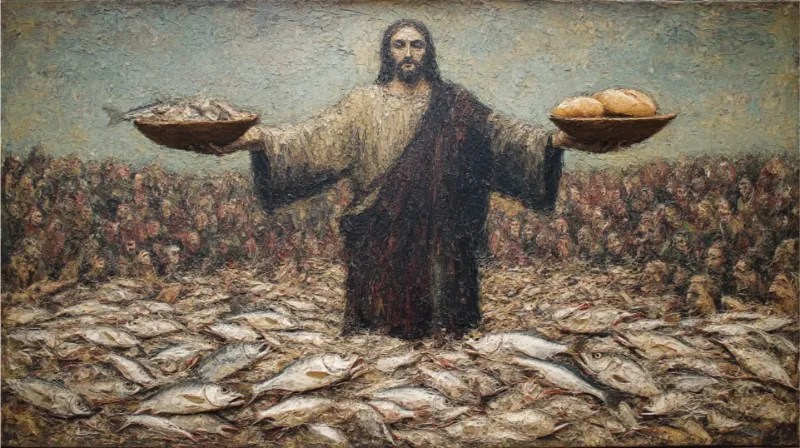
Coptic Orthodox Christians believe that the bread and wine of the Eucharist truly become the Body and Blood of Christ, and they leave the manner of it a mystery. The Southern diocese says, “The bread is truly His Body, and that which is in the cup is truly His Blood. However, one does not know to be able to explain how they have become so. It is a mystery.” Copts do not use the Catholic word transubstantiation, “believing that it is a mystery beyond comprehension or description,” and they take the Lord at his word: “the bread that I will give is my flesh, which I will give for the life of the world” (John 6:51). The bread is leavened, and everyone who comes to the chalice receives both the Body and the Blood.
Communion in a Coptic church is closed, and receiving it, the Southern diocese explains, is “not just a matter of being Coptic, but being in full agreement with our doctrine.” A Copt who comes to receive has been baptized by immersion and anointed with the Myron, goes to confession regularly, and has fasted for at least nine hours beforehand. Copts do not receive in Catholic churches either, or in any church whose faith they do not share. The Coptic teaching sets no fixed rule on how often to receive. The Eastern Orthodox share the same faith at the altar, that the Eucharist is “His true Body and Blood mystically present in the bread and wine,” and they give it to the members of their own church.
How is a person saved, and can salvation be lost?
The Coptic Orthodox Church teaches that a person is saved by Christ’s blood and God’s grace, received through faith, baptism and the other sacraments, with repentance and good works as conditions that cannot be left out, and that salvation can be lost by a life without repentance. The Southern diocese writes it out as a sum, “God’s Grace + Faith + the Holy Sacraments + Repentance + Good Deeds = Salvation,” and adds, “we are not saved by good works (because we are saved by the blood of the Lord); but we cannot be saved without good works.” It gives the man born blind as the picture. It was Christ who healed him, and the water of the pool did not, and still he had to go and wash, for the washing, the diocese says, “was a condition for his healing.”
Baptism opens that life, and the same answer warns that “one can still lose his eternal life by not living a life of repentance and mercy.” Where Christ promises that no one will snatch his sheep out of his hand, the diocese reads the promise together with the verse before it: “Those who continue to hear Christ’s voice, and to follow Him, shall never perish.” To someone who feared never being sure of salvation, it answered that the warnings are there to keep us watchful and never to take away our hope: “As long as you are a child of God striving to follow His commandments and walking in His path you should have inner peace enjoying His love.” The Eastern Orthodox more often speak of salvation as theosis, a share in the life of God, and Fr. John Breck, writing for the Orthodox Church in America, says that “the possibility and initiative lie wholly in the hands of God,” and he goes on to say that the gift comes to us through faith and through the Church’s worship, its sacraments and its service.
What do Copts believe about the Virgin Mary?
The Coptic Orthodox Church honours the Virgin Mary as the Theotokos, the Mother of God, who remained a virgin all her life, and it asks her prayers, though it does not accept the Catholic doctrine of the Immaculate Conception. Pope Shenouda gave the church’s reasons for venerating her: the Holy Spirit came upon her, “she is the mother of God,” “she is of perpetual virginity,” the Bible testifies of her, and the Lord himself honoured her. Elizabeth said as much when Mary came to visit her, and greeted her as “the mother of my Lord” (Luke 1:43). Coptic worship is full of her. Pope Shenouda pointed to “the Church prayers asking for her intercession, in celebrating her many feasts and in consecrating one of our fasts in her name,” and among those feasts are her dormition, her assumption and her entry into Egypt with the Child.
Copts believe that Mary was born with original sin, and that she was “pure and holy all her life not having committed any personal sin,” always filled with the Holy Spirit. Mary herself sang, “my spirit has rejoiced in God my Savior,” and the Southern diocese answers the Immaculate Conception with those words. Yet in 1973 Pope Paul VI and Pope Shenouda III could say together, “We venerate the Virgin Mary, Mother of the True Light, and we confess that she is ever Virgin, the God-bearer. She intercedes for us.” The Eastern Orthodox also call her Theotokos and ever-virgin, and an answer on the Orthodox Church in America’s site puts it that Mary “could indeed have sinned, but chose not to.” Why Christians ask Mary’s prayers at all is explained in why Catholics pray to Mary.

Where does Coptic teaching come from?
The Coptic Orthodox Church takes its teaching from Holy Scripture together with Holy Tradition, which holds the writings of the apostles and fathers, the canons and rites of the church, and the first three ecumenical councils. Pope Shenouda defined Tradition as “every teaching, other than the words of the Holy Bible, that was entrusted to us, by the Apostles and the Fathers,” teachings that, he said, “in no way contradict it.” Into it go “the writings of the Apostles and Fathers of the Church, the decisions of the holy councils, the Church Canons and regulations, the Church rituals and the oral Tradition.” He reminded his readers that in the first years of the Church, for about twenty years before any gospel or epistle was written, the whole faith was handed on by word of mouth.
Copts keep three councils, the ones that gave us the Nicene Creed and defended Mary’s title against Nestorius, and their Holy Synod of bishops rules for the church, as it did in 1986 on agreements with other churches. The Eastern Orthodox read the Bible within the same kind of living Tradition, with the Bible in the first place, and they count seven councils.
Are the Copts Catholic?
The Coptic Orthodox Church is not Catholic and is not in communion with Rome, and the Southern diocese names the Catholic teachings it does not share: “the Filioque, the Immaculate Conception, the Infallibility of the Pope, the Purgatory.” Such doctrines, the diocese says, “were not the belief of the early Church nor are they based on the writings of the early fathers.” There is also a Coptic Catholic Church, whose liturgy, as the Midlands diocese puts it, is “very similar to the Coptic Orthodox except for the Creed,” and whose members are under the Pope of Rome.
All the same, in 1973 Paul VI and Shenouda III confessed together that in Christ “His divinity is united with His humanity in a real, perfect union without mingling, without commixtion, without confusion, without alteration, without division, without separation,” and that “His divinity did not separate from His humanity for an instant, not for the twinkling of an eye.” Those are nearly the words the Coptic priest says over the Holy Body near the end of the liturgy.
Do Coptic and Eastern Orthodox Christians believe the same thing today?
The theologians of both families say they do, and they first said it in June 1989, when a joint commission of the two met at the Anba Bishoy Monastery, in the Wadi El-Natroun of Egypt. It found its common ground in St. Cyril himself: in his formula, and in his saying that “it is sufficient for the confession of our true and irreproachable faith to say and to confess that the Holy Virgin is Theotokos.” Then it wrote, for both sides at once, “Those among us who speak of two natures in Christ, do not thereby deny their inseparable, indivisible union; those among us who speak of one united divine-human nature in Christ do not thereby deny the continuing dynamic presence in Christ of the divine and the human, without change, without confusion.”
When the commission met again at Chambésy, near Geneva, in September 1990, it went further. “The Orthodox agree that the Oriental Orthodox will continue to maintain their traditional Cyrillian terminology,” it wrote, and “The Oriental Orthodox agree that the Orthodox are justified in their use of the two-natures formula.” Both families “accept the first three Ecumenical Councils, which form our common heritage,” and the Oriental Orthodox agreed that the veneration of icons taught by the seventh council matches their own ancient practice. Last of all, the commission asked each church to lift “all anathemas and condemnations” against the other’s councils and fathers.
On 21 June 1986, ruling on its theological agreements with other churches, the Coptic Holy Synod decided that “the agreement becomes official when the holy councils of these Churches approve it.” After the agreement on Christ, the church’s official site says, came pastoral agreements on accepting each other’s baptism and marriages with some of the Greek Orthodox churches, while “The issues of councils and saints are yet to be resolved.” So the two families do not yet share the chalice. In the words of the Coptic Diocese of the Southern United States, “Although the Coptic and the Greek Orthodox Churches have agreed to accept each other’s baptism, they still are not yet in full communion,” and a baptized Greek Orthodox Christian “has to receive the Mystery of Chrismation in the Coptic Orthodox Church” before receiving Communion there. The Greek, Russian and other Eastern churches are described more fully in how the Orthodox and Catholic churches differ.
The 1990 statement opens by saying what its recommendations are for: steps toward the communion of the two families of churches in Jesus Christ our Lord, who prayed “that they all may be one” (John 17:21).
Related reading
- Lutheran and Eastern Orthodox beliefs compared: Scripture, salvation and Communion
- Baptist and Eastern Orthodox beliefs compared
- Christianity in Ethiopia, home of a sister Oriental Orthodox church
- Orthodox Christianity in facts and figures


Leave a Reply