
 English
 Chinese
 Dutch
 Arabic
 Spanish
 Portuguese
 Russian
 French
 Italian
 German
 Japanese
2323 is not in the Bible, and it could not be. The system that would let a number like that refer to anything in Scripture was invented more than a thousand years after the last book was written.
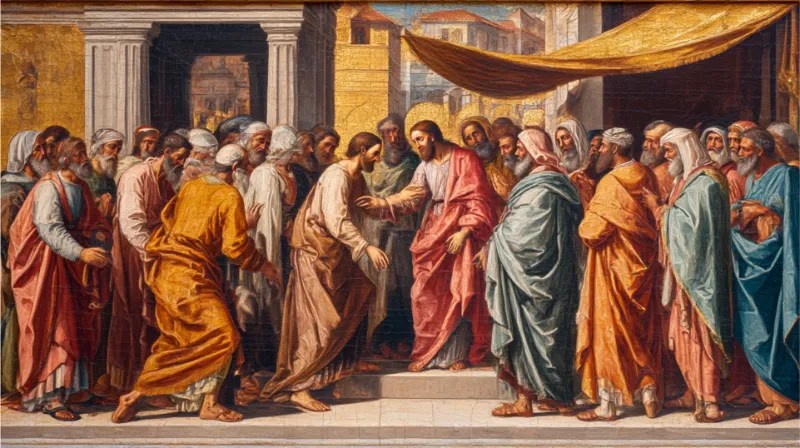
Chapter and verse are medieval
The biblical writers did not use chapter numbers or verse numbers. Neither did the church for its first twelve centuries. A letter of Paul was a letter; a scroll of Isaiah was a scroll.
The chapter divisions we use are generally credited to Stephen Langton, Archbishop of Canterbury, working in Paris in the early thirteenth century, around 1227.
Verse numbers came later still, and came from printing. Robert Estienne — the Paris printer known as Stephanus — added them to his Greek New Testament of 1551 and to a complete Bible in 1555. The story that he did the numbering on horseback between Paris and Lyon is told by his son and may well be true.
So a reference like 23:23 is a finding aid, roughly four hundred years old, added to help readers locate a line. It is a library index, not part of the text.
Which means a four-digit number has nothing in Scripture to refer to.
Where the idea comes from instead
Repeating digits are the language of modern numerology — “angel numbers,” a framework that reached wide circulation through self-help publishing and then through social media.
It is worth saying clearly that this is not a Christian system with a biblical basis, whatever the pages attaching Bible verses to it suggest. Scripture’s own position is short:
Do not practise divination or seek omens. (Leviticus 19:26)
The objection is not that God is silent. It is that reading messages off the world’s noise makes us the interpreter of our own signs, and then obliges us to obey what we have just decided.
What Scripture does with numbers
A few carry meaning, and the text shows you which by using them again and again. Seven runs through the creation account, the festivals and Revelation. Forty marks periods of testing. Twelve counts the tribes and then, deliberately, the apostles. Three appears at the resurrection.
Everything else counts things — and some of it resists every interpretation anyone has offered. The 153 fish in John 21:11. The 276 people aboard Paul’s ship in Acts 27:37. Augustine tried the first; so have many since; none persuades.
Those uninterpretable figures are quietly among the more convincing details in the New Testament. Myth does not count the fish.
If you keep seeing 23:23
The clock is the usual culprit, and there is a plain explanation that is not a dismissal. Once a figure has been noticed it gets noticed again, while the hundreds of other times we glanced at a clock went unrecorded. That is how attention works.
Underneath it there is usually something real: a decision being put off, an anniversary, a worry that surfaces when the house is quiet and the clock is the only thing to look at.
That is worth saying directly rather than through a number.
Do not be anxious about anything, but in every situation, by prayer and petition, with thanksgiving, present your requests to God. (Philippians 4:6)
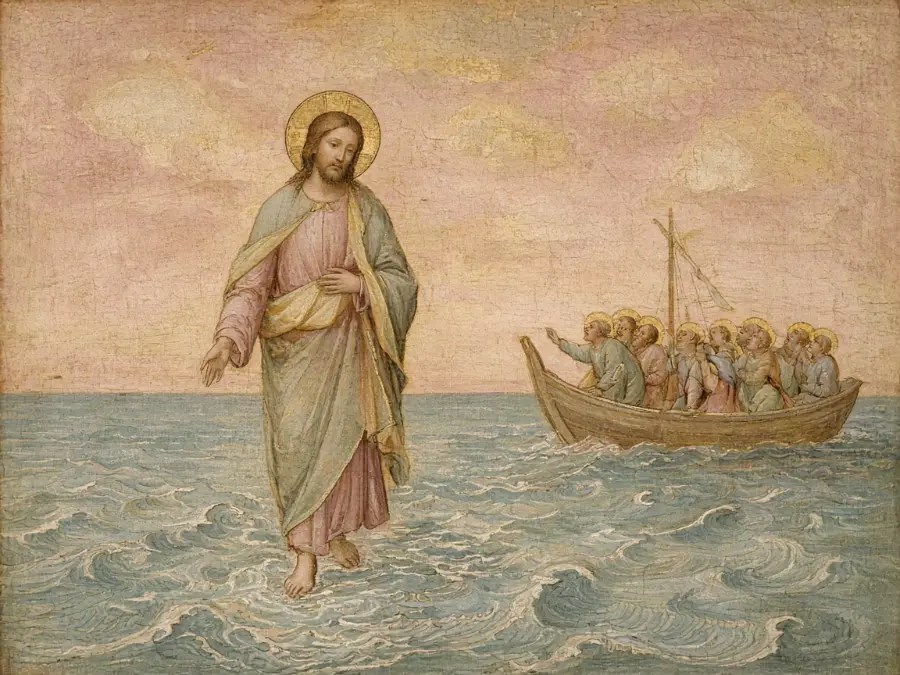
Two verses at 23:23, since you may be looking for them
They exist, and reading them is more useful than counting them.
Woe to you, teachers of the law and Pharisees, you hypocrites! You give a tenth of your spices — mint, dill and cumin. But you have neglected the more important matters of the law — justice, mercy and faithfulness. (Matthew 23:23)
“Am I only a God nearby,” declares the Lord, “and not a God far away?” (Jeremiah 23:23)
Neither was placed there by design. Both repay the visit anyway.
Frequently asked
Does 2323 appear in the Bible?
No. Four-digit numbers of that kind have nothing in Scripture to refer to, because chapter and verse numbering was added long after the text was written.
When were chapters and verses added?
Chapters around 1227, credited to Stephen Langton. Verse numbers by the printer Robert Estienne, in his Greek New Testament of 1551 and a complete Bible in 1555.
Are angel numbers biblical?
No. The framework is modern and has no basis in Scripture, which forbids seeking omens (Leviticus 19:26).
Which numbers do carry meaning in the Bible?
Chiefly seven, forty, twelve and three, and in each case the meaning is built by the text’s own repeated use rather than assigned from outside.
More from this seriesBiblical NumerologySee all 53 articles

Leave a Reply