
 English
  Chinese
  Dutch
Dutch  Arabic
  Spanish
  Portuguese
  Russian
  French
  Italian
  German
  Japanese
 414 does not appear in the Bible. If it reached you as 4:14, there is a verse at that reference which has probably done more work in more difficult rooms than almost any other sentence in the Old Testament.
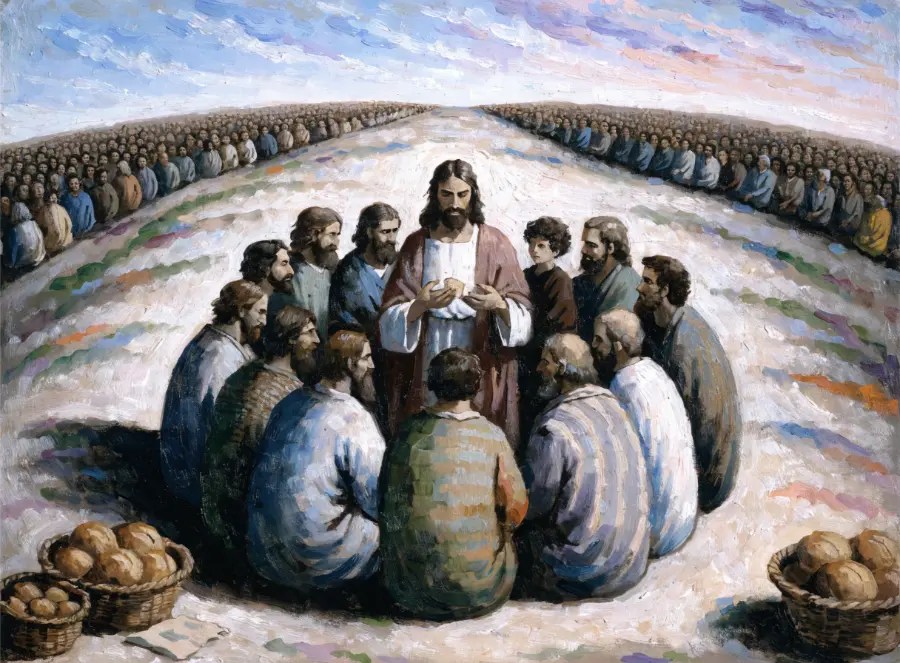
Esther 4:14
For if you remain silent at this time, relief and deliverance for the Jews will arise from another place, but you and your father’s family will perish. And who knows but that you have come to your royal position for such a time as this?
It is not a compliment. Read the first half again.
Mordecai is telling Esther that the rescue will happen with or without her, and that her silence will not protect her. The famous clause — for such a time as this — arrives after a warning, and it is a question rather than a statement.
Who knows. He does not claim to.
What she does with it
Her reply is the sentence that matters more: she asks for three days of fasting, says she will go to the king unsummoned, and finishes: And if I perish, I perish. (Esther 4:16)
That is not confidence. It is a decision made without knowing the outcome, which is the only kind that costs anything.
It is also worth knowing that the book of Esther never mentions God. Not once, in ten chapters. The rescue happens through a sleepless night, a court record read aloud, and a woman deciding to risk it.
Some readers have found that absence a problem. Others have found it the point.
The other 4:14s
Therefore, since we have a great high priest who has ascended into heaven, Jesus the Son of God, let us hold firmly to the faith we profess. (Hebrews 4:14)
The verses after it are the reason it is quoted: a high priest who is able to sympathise with our weaknesses, having been tempted in every way, as we are.
And the one at the well: but whoever drinks the water I give them will never thirst. Indeed, the water I give them will become in them a spring of water welling up to eternal life. (John 4:14)
Said to a woman who had come to draw water in the middle of the day, which is when people go if they are avoiding the other women who go in the morning.
Why a three-digit number cannot be biblical
The biblical writers used no chapter or verse numbers, and the church used none for its first twelve centuries. Chapter divisions are generally credited to Stephen Langton, around 1227. Verse numbers came from a printing house: Robert Estienne added them to his Greek New Testament in 1551 and to a complete Bible in 1555.
A reference is a finding aid roughly four hundred years old — the Bible’s index, not its content.
What Scripture says about looking for signs
Do not practise divination or seek omens. (Leviticus 19:26)
The objection is not that God has gone quiet. It is that reading messages off the world’s noise makes us the interpreters of our own signs, and then binds us to the reading.
If the number has been appearing, the cause is usually attention: once noticed, it is noticed again.
And underneath there is generally something specific, which can be said directly: Do not be anxious about anything, but in every situation, by prayer and petition, with thanksgiving, present your requests to God. (Philippians 4:6)
The better use of the moment
Esther 4:14 is worth having, but not as a sign that a moment has arrived.
What it offers is harder and steadier: the rescue does not depend on us, silence is not safety, and nobody gets to know in advance whether this is the time. Mordecai did not know. He said so.
Frequently asked
Does 414 appear in the Bible?
No. Three-digit numbers of that kind have nothing in Scripture to refer to, because chapter and verse numbering was added long after the text was written.
What is Esther 4:14?
Mordecai telling Esther that deliverance will come from somewhere else if she stays silent, that silence will not save her, and asking who knows whether she came to her position for such a time as this.
Is “for such a time as this” a promise?
No. It is a question, and it follows a warning. Mordecai says “who knows” because he does not.
Does the book of Esther mention God?
No. Not once in ten chapters. The rescue turns on a sleepless night, a court record and a decision.
When were chapters and verses added?
Chapters around 1227, credited to Stephen Langton. Verse numbers by the printer Robert Estienne, in 1551 and 1555.


Leave a Reply