
 English
 Chinese
 Dutch
 Arabic
 Spanish
 Portuguese
 Russian
 French
 Italian
 German
 Japanese
515 does not appear in the Bible and carries no biblical meaning. It has a famous prophecy attached to it — but the prophecy is Dante’s, not Scripture’s, and that is a better story than the one most pages tell.
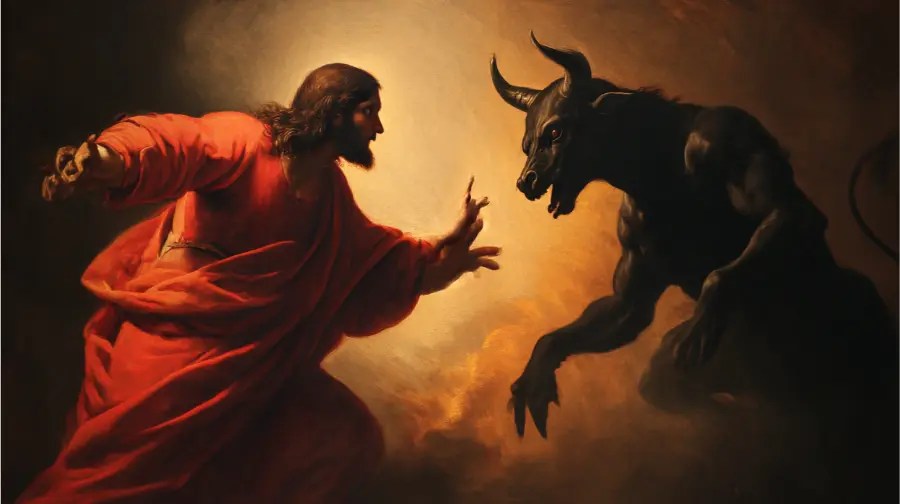
Dante’s 515
At the end of the Purgatorio, Beatrice delivers a prophecy about a coming deliverer who will destroy a corrupt power. She does not name him. She says: un cinquecento diece e cinque — a five hundred, ten and five (Purgatorio XXXIII).
Five hundred, ten and five in Roman numerals is DXV. Rearranged, the letters spell DVX — dux, leader.
Dante’s readers have argued about who he meant for seven hundred years. An emperor, a reforming pope, someone he expected imminently and who never came. The riddle has never been solved and probably was not meant to be solved quickly.
It is a good piece of writing. It is not a piece of the Bible, and it belongs to a fourteenth-century Italian poem rather than to Scripture.
What Scripture does with numbers it hides
There is exactly one place where the Bible does something comparable, and it goes out of its way to flag it.
This calls for wisdom. Let the person who has insight calculate the number of the beast, for it is the number of a man. That number is 666. (Revelation 13:18)
Note what has to happen for this to be a puzzle at all: the text says so. It announces that a calculation is required. No other number in Scripture comes with that instruction.
It is also worth knowing that some early manuscripts read 616 rather than 666, which is exactly the sort of variation you would expect if the number encoded a name being transliterated differently in different places.
One instruction, once, clearly marked. That is the whole of the Bible’s cryptography.

Which numbers do carry meaning
A handful, and the text shows you which by using them repeatedly and commenting on them. Seven runs through creation, the festivals and Revelation. Forty marks periods of testing. Twelve counts the tribes and then, deliberately, the apostles. Three appears at the resurrection.
Everything else counts things — and a great deal of it resists interpretation entirely. The 153 fish of John 21:11. The 276 people aboard the ship in Acts 27:37. Those resist every explanation offered, and their resistance is what makes them read like records.
If 515 keeps appearing
The usual cause is attention. Once a figure has been noticed it gets noticed again, and the hundreds of other numbers that went past unremarked were never counted.
Scripture’s counsel is short: Do not practise divination or seek omens. (Leviticus 19:26). The concern is not that God has gone quiet. It is that reading messages off the world’s noise makes us the interpreter, and then binds us to our own interpretation.
Underneath a recurring number there is usually something specific — a date, a decision, a worry with a shape. That can be said plainly.
Do not be anxious about anything, but in every situation, by prayer and petition, with thanksgiving, present your requests to God. (Philippians 4:6)
Frequently asked
Does 515 appear in the Bible?
No. It occurs nowhere and Scripture assigns it no meaning.
What is the 515 prophecy?
It is from Dante’s Purgatorio XXXIII, where Beatrice foretells a deliverer as “a five hundred, ten and five” — DXV, which rearranges to DVX, leader. It is a fourteenth-century Italian poem, not Scripture.
Does the Bible ever encode numbers?
Once, and it says so: Revelation 13:18 tells the reader to calculate the number of the beast. Some early manuscripts read 616 rather than 666.
Which numbers do carry meaning in Scripture?
Chiefly seven, forty, twelve and three, and in each case the meaning is built by the text’s own repeated use rather than assigned from a chart.
More from this seriesBiblical NumerologySee all 53 articles

Leave a Reply