
 English
 Chinese
 Dutch
 Arabic
 Spanish
 Portuguese
 Russian
 French
 Italian
 German
 Japanese
There is no single number, because the total depends on what counts as a prophecy. Popular lists say over 300, 351 or 456, and each counts in its own way; the 456 is not a list of prophecies Jesus fulfilled. In the King James Version, Matthew’s Gospel alone says fourteen times that something happened as the prophets had written.
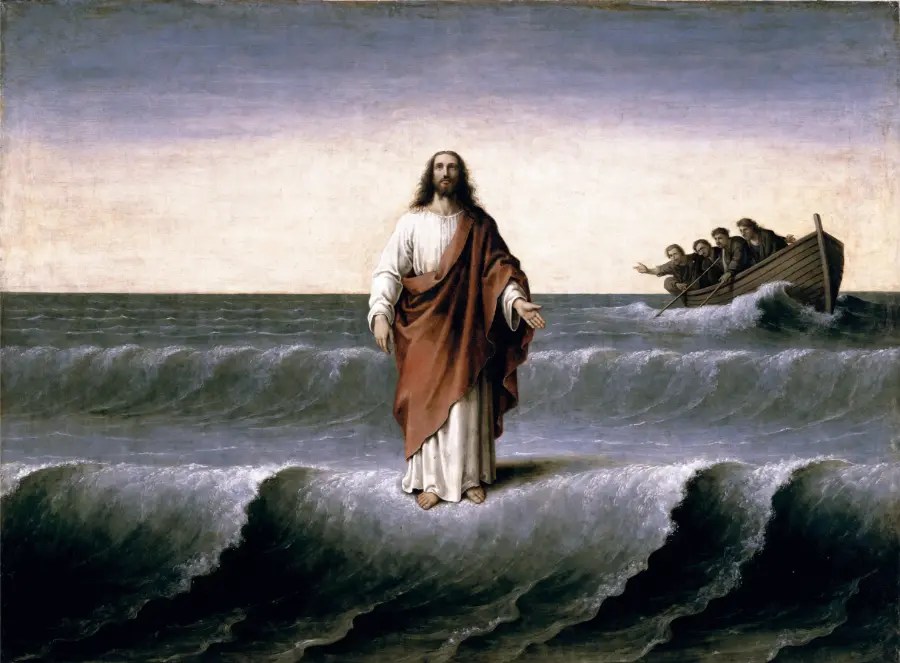
Jesus himself never gave a total, but he did go through them. On the day of the resurrection he joined two disciples on the road to Emmaus, a village they reached toward evening, and they did not yet recognise him. On the way, “beginning at Moses and all the prophets, he expounded unto them in all the scriptures the things concerning himself” (Luke 24:27). Later, back in Jerusalem, he told the eleven that “all things must be fulfilled, which were written in the law of Moses, and in the prophets, and in the psalms, concerning me” (Luke 24:44). Moses, the prophets, the psalms: the whole of the Old Testament, read with him at the centre. The numbers people give are attempts to write down what he showed them on that road.
Where do the numbers 300, 351 and 456 come from?
Each comes from a real source, and each counts something different:
| Number | Where it comes from | What is counted |
|---|---|---|
| Over 300 | “Bible students” cited by Peter Stoner, Science Speaks (first published 1944); Josh and Sean McDowell (2012) | Prophecies of Christ’s first coming; the McDowells’ “60 major” ones plus “about 270 additional ramifications” |
| 351 | Chart edited by Mario Seiglie, United Church of God (2025) | Separate details, often several from one verse |
| 456 | Alfred Edersheim, The Life and Times of Jesus the Messiah (1883) | Old Testament passages that ancient rabbis applied to the Messiah |
| 1,817 | J. Barton Payne, Encyclopedia of Biblical Prophecy (1973) | Every prediction in the Bible, about anyone |
Peter Stoner, a professor of science, did not count the “over 300” himself. He passed it on in Science Speaks, a book first published in 1944: “Our Bible students claim that there are more than three hundred prophecies dealing with Christ’s first advent.” In 2012 Josh and Sean McDowell reach about the same total another way: “60 major Old Testament prophecies (with about 270 additional ramifications) fulfilled in one person named Jesus.”
The 351 comes from a chart that gives each item a line. It opens with Genesis 3:15 three times, once for the seed of the woman, once for the bruised head and once for the bruised heel, and it gives Isaiah 9:6 eight lines: the child born, the son given, Wonderful, Counsellor and the rest. By our count its 351 entries come from about 257 Old Testament references.
The 456 is a different kind of list altogether. In The Life and Times of Jesus the Messiah (1883), the Bible scholar Alfred Edersheim gathered “the passages in the Old Testament applied to the Messiah or to Messianic times in the most ancient Jewish writings”: 75 from the Law, 243 from the Prophets and 138 from the Writings. It shows how widely the rabbis themselves looked for the Messiah in Scripture. It does not claim that Jesus fulfilled all 456.
Why don’t the counts agree?
Because Scripture speaks of Christ in more than one way, and every list has to decide which ways to count.
Some prophecies are plain predictions. When Herod asked where the Christ would be born, the scribes did not need to guess: “In Bethlehem of Judaea: for thus it is written by the prophet” (Matthew 2:5), and they quoted Micah 5:2. More on that verse is in why Jesus was born in Bethlehem.
Others are patterns, where an event in Israel’s story foreshadows Christ. Hosea wrote of the exodus, “When Israel was a child, then I loved him, and called my son out of Egypt” (Hosea 11:1). Matthew sees the same words come true when the child Jesus returns from Egypt: “that it might be fulfilled which was spoken of the Lord by the prophet, saying, Out of Egypt have I called my son” (Matthew 2:15). A list that counts only predictions leaves Hosea out. A list that counts patterns puts it in, along with the Passover lamb, whose bones were not to be broken, and many more.
Then there is the question of how finely to cut. One verse can carry one prophecy or eight. The Second Vatican Council put the Catholic Church’s way of reading in one sentence: God “wisely arranged that the New Testament be hidden in the Old and the Old be made manifest in the New.” On that view the whole Old Testament leans toward Christ, and no count will ever be complete.
Here is a count anyone can check. In the King James Version, Matthew uses the word “fulfilled” sixteen times. Fourteen of them point back to what the prophets or the Scriptures had said, from the virgin birth (Matthew 1:22) to the thirty pieces of silver (Matthew 27:9). One of the fourteen is missing from most modern Bibles. At the crucifixion the King James text adds “that it might be fulfilled which was spoken by the prophet” (Matthew 27:35), and the New International Version and the English Standard Version leave that clause out, so a count made in those Bibles comes out differently.
Which prophecies did Jesus fulfill?
The Gospels themselves point to these, among many others. Each line gives the prophecy first, then the place where the New Testament says it came true:
- Born of a virgin: “Behold, a virgin shall conceive, and bear a son, and shall call his name Immanuel” (Isaiah 7:14; Matthew 1:22–23). Isaiah’s other birth prophecies are in which Isaiah verses foretell Jesus’ birth.
- Born in Bethlehem (Micah 5:2; Matthew 2:4–6).
- Called out of Egypt (Hosea 11:1; Matthew 2:15).
- Anointed to preach good tidings to the poor: in the synagogue at Nazareth Jesus read Isaiah 61:1–2 and said, “This day is this scripture fulfilled in your ears” (Luke 4:16–21).
- Coming to Jerusalem “lowly, and riding upon an ass” (Zechariah 9:9; Matthew 21:4–5).
- Valued at “thirty pieces of silver” (Zechariah 11:12–13; Matthew 27:9–10). Matthew introduces the words as “spoken by Jeremy the prophet”, that is Jeremiah, though the thirty pieces of silver appear in Zechariah. The story is told in what Judas was paid.
- His garments divided by lot: “They part my garments among them, and cast lots upon my vesture” (Psalm 22:18; John 19:23–24).
- Not a bone broken: “He keepeth all his bones: not one of them is broken” (Psalm 34:20; John 19:36).
- Pierced: “they shall look upon me whom they have pierced” (Zechariah 12:10; John 19:37).
- Led like a lamb to the slaughter: “he is brought as a lamb to the slaughter, and as a sheep before her shearers is dumb, so he openeth not his mouth” (Isaiah 53:7). An Ethiopian official was reading this passage when he asked Philip whom the prophet meant, and Philip “began at the same scripture, and preached unto him Jesus” (Acts 8:32–35).
Peter gathered them all into one sentence on the day he healed a lame man at the temple: “those things, which God before had shewed by the mouth of all his prophets, that Christ should suffer, he hath so fulfilled” (Acts 3:18).
What are the odds of one man fulfilling these prophecies?
The best-known answer is Peter Stoner’s. He took eight prophecies, among them Bethlehem, the donkey, the thirty pieces of silver and the pierced hands and feet, asked classes of college students, “more than 600 students” in all, to estimate how likely each was to come true of any man by chance, and multiplied the estimates. His result was one chance in 1017, a 1 followed by seventeen zeros. With forty-eight such prophecies he reached one in 10157.
The numbers are only as firm as the estimates, and Stoner said so himself: “If the reader does not agree with the estimates given, he may make his own estimates and then carry them through to their logical conclusions.” He meant the sum to show how unlikely it is for so many separate threads to meet in one life by chance. Two objections follow from his own method: the estimates are guesses, as he allowed, and the fulfilments are reported by the same Gospels that claim them. The disciples on the road came to their answer another way. For them the threads had been woven on purpose.
How do Jewish readers understand these prophecies?
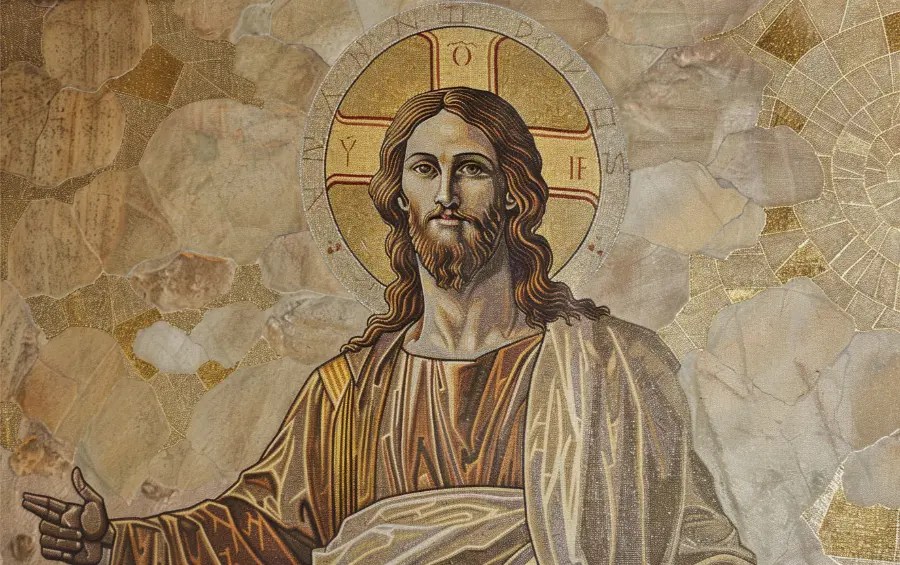
Jewish tradition reads many of the same passages, and often reads them differently. The medieval commentator Rashi, for example, takes the servant of Isaiah 52 and 53 to be the people of Israel. On “Behold My servant shall prosper,” he writes: “Behold, at the end of days, My servant, Jacob, [i.e.,] the righteous among him, shall prosper.”
Maimonides, the great Jewish teacher of the twelfth century, set out what the Messiah must do. If a king from the house of David “builds the Temple in its place, and gathers the dispersed of Israel, he is definitely the Mashiach.” By that measure Judaism does not recognise Jesus as the Messiah: the temple is not rebuilt and the exiles are not all gathered.
Christians answer that the prophets spoke of two comings. Peter speaks of what Christ has already fulfilled, and the Letter to the Hebrews of what is still to come: “unto them that look for him shall he appear the second time without sin unto salvation” (Hebrews 9:28). The prophets themselves, Peter writes, searched “what, or what manner of time the Spirit of Christ which was in them did signify, when it testified beforehand the sufferings of Christ, and the glory that should follow” (1 Peter 1:11). The sufferings came first. The glory is still ahead.
How many prophecies are in the Bible?
J. Barton Payne’s Encyclopedia of Biblical Prophecy, first published in 1973, lists “1,817 entries covering all the Biblical predictions in both the Old and New Testaments” and discusses “8,352 predictive verses.” The King James Bible has 31,102 verses, so on Payne’s count about 27 percent of Scripture looks ahead. His encyclopedia marks each prediction as fulfilled in the past, being fulfilled now or still to come. Among those still to come, the one every Christian waits for is the one Hebrews names, Christ’s return.
The word itself is far rarer. “Prophecy” and “prophecies” together appear only 23 times in the King James Bible. Most of the promises are never called prophecies at all. They are simply spoken, and then kept.
Paul put it more simply than any count: “For all the promises of God in him are yea, and in him Amen” (2 Corinthians 1:20). The two disciples on the road to Emmaus did not come away with a number either. They came away with a fire. “Did not our heart burn within us, while he talked with us by the way, and while he opened to us the scriptures?” (Luke 24:32).
Related reading
- Why was Jesus born in Bethlehem? Micah’s prophecy and David’s town
- Which Isaiah verses foretell Jesus’ birth? 7:14, 9:6 and 11:1
- What was Judas paid? 30 pieces of silver and what they were worth
- Why is Jesus called Christ? It means “anointed,” the Greek word for Messiah
- Why is Jesus called the Lion of Judah?


Leave a Reply