
 English
 Chinese
 Dutch
 Arabic
 Spanish
 Portuguese
 Russian
 French
 Italian
 German
 Japanese
Christianity and Islam both teach that there is one God, and both trace their faith back to Abraham. Both honor Jesus as the Messiah, born of the Virgin Mary, and they part over who he is. Christians believe Jesus is the Son of God, crucified and risen. Muslims believe he was a prophet, and that Muhammad was the last.
Christians and Muslims share a great many words: God, prophet, Messiah, Mary, angels, judgment. Again and again, though, those words lead us back to one question, the one Jesus put to his own disciples: “But whom say ye that I am?” (Matthew 16:15, KJV).
Christianity and Islam compared
| Topic | Christianity | Islam |
|---|---|---|
| Began | First century AD, after Jesus’ crucifixion under Pontius Pilate | 610 AD, Muhammad’s first revelation; Muslims call it the faith of all prophets |
| God | One God in three persons: Father, Son and Holy Spirit | One God, with no partner and no son (tawhid) |
| Jesus | Son of God, God made man, Savior | Isa, a prophet and the Messiah, born of a virgin; not divine |
| The cross | Jesus died for sins and rose on the third day | He was not crucified or killed; God raised him to Himself (Qur’an 4:157–158) |
| Muhammad | Not accepted as a prophet | God’s messenger and the last prophet, the “seal” of the prophets |
| Scripture | The Bible: Old and New Testaments | The Qur’an; the Torah and Gospel honored as earlier revelations |
| Salvation | By God’s grace, through faith in Christ | Faith and good deeds, weighed on the Day of Judgment, with hope in God’s mercy |
| Worship | Sunday; baptism and the Lord’s Supper | Five daily prayers; congregational prayer on Friday |
| Core duties | Love of God and neighbor; prayer, Scripture, the sacraments or ordinances | The Five Pillars: testimony, prayer, charity, the Ramadan fast, pilgrimage to Mecca |
| Followers (2020) | 2.3 billion, 28.8% of the world | 2.0 billion, 25.6% of the world |
Is Islam older than Christianity?
By the historical calendar, Christianity is the older faith by about six hundred years. Jesus was crucified in Jerusalem on the order of Pontius Pilate, who governed Judaea from 26 to 36 AD, and the church grew from the Jewish disciples who proclaimed that he had risen. Muhammad was born in Mecca around 570, received his first revelation in 610, and moved with his followers to Medina in 622, the year of the hijra (“emigration”) that begins the Muslim calendar. He died in 632.
Muslims answer the question another way, because in Islamic teaching Islam did not begin in the seventh century. The Arabic word carries the meanings of submission, surrender and peace, and it is in that sense that the Qur’an calls Abraham a Muslim: “Abraham was neither a Jew nor a Christian, but he was one inclining toward truth, a Muslim [submitting to Allah]” (3:67). Here and below we quote the Qur’an in the Saheeh International translation. Another verse says God ordained for Muhammad’s followers the religion “He enjoined upon Noah” and “upon Abraham and Moses and Jesus” (42:13). The Yaqeen Institute, an American Muslim research center, describes Islam as “the original religion of Adam, Abraham, Moses, and Jesus.” So a Muslim can say, without contradicting the dates, that the faith is older than both the church and the Qur’an.

Who founded Christianity and Islam?
Christians name Jesus Christ, and the church began with the people he called, who preached after his death that he had risen.
Muslims do not call Muhammad the founder of Islam, even though outsiders often do. The Yaqeen Institute puts it this way: “While Muhammad ﷺ is often described as the ‘founder of Islam,’ Islam did not begin with his prophethood. It is more accurate to say he was sent to restore the core messages of previous prophets.” The Qur’an calls him “the Messenger of Allah and seal [i.e., last] of the prophets” (33:40). Muslims believe God revealed his word to Muhammad through the angel Gabriel, in Arabic, beginning with the command “Recite in the name of your Lord who created” (96:1). These revelations were collected as the Qur’an, a word that means “recitation.”
What Christianity and Islam have in common
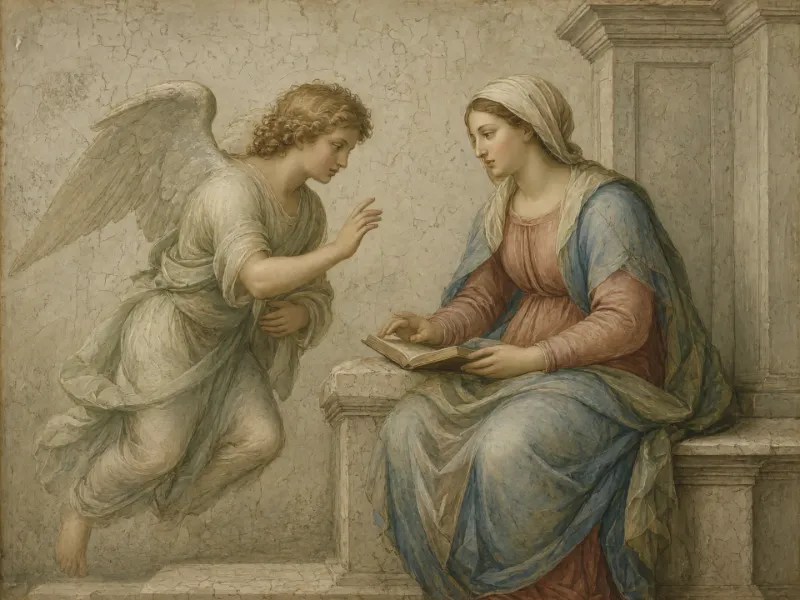
Both teach that one God created the world and speaks to people through prophets, and both honor Abraham, Moses and the prophets of Israel. Both believe in angels, and the Gospel of Luke and the Qur’an each describe the announcement to Mary that she would bear Jesus. Both teach that Jesus was born of a virgin without a human father and that he is the Messiah, and both expect the resurrection of the dead and a Day of Judgment. Christians and Muslims alike pray, give to the poor and fast.
The Catholic Church listed much of this at the Second Vatican Council in 1965. Its declaration Nostra Aetate says that Muslims “adore the one God, living and subsisting in Himself; merciful and all-powerful, the Creator of heaven and earth,” that “though they do not acknowledge Jesus as God, they revere Him as a prophet,” and that “they also honor Mary, His virgin Mother.” In 2007 a letter from Muslim scholars, published through the Royal Aal al-Bayt Institute in Jordan and titled A Common Word Between Us and You, named the common ground as “love of the One God, and love of the neighbour.” It quotes the two commandments Jesus gives in Mark 12 and pairs them with Qur’an 3:64, the call to “come to a word that is equitable between us and you,” quoted in full further down. In the English Standard Version, Mark reads:
‘Hear, O Israel: The Lord our God, the Lord is one. And you shall love the Lord your God with all your heart and with all your soul and with all your mind and with all your strength.’ The second is this: ‘You shall love your neighbor as yourself.’ There is no other commandment greater than these. (Mark 12:29–31)
Are Christianity and Islam the same religion?
They share a great deal of vocabulary and a family of prophets, but they are not the same religion, because they give different answers to the questions that each treats as central: who Jesus is, whether he died on the cross, and whether God is one in three persons.
One God: the Trinity and tawhid
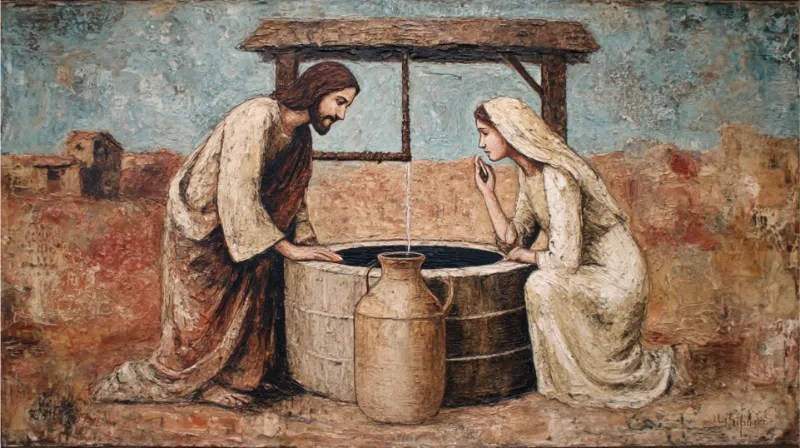
Both faiths confess one God, and each believes the other has misunderstood him.
Christians believe the one God is Father, Son and Holy Spirit. The Nicene Creed begins “We believe in one God” and confesses Jesus as “the only Son of God, eternally begotten of the Father, God from God, Light from Light, true God from true God, begotten, not made, of one Being with the Father,” and says of the Holy Spirit, “With the Father and the Son he is worshiped and glorified.” Jesus sent his apostles out “baptizing them in the name of the Father and of the Son and of the Holy Spirit” (Matthew 28:19). Christians hold that this is one God, not three; our article on what the Bible says about the Trinity sets out the biblical case.
Islam’s central teaching is tawhid, the absolute oneness of God. A short chapter of the Qur’an sums it up: “He is Allah, [who is] One, Allah, the Eternal Refuge. He neither begets nor is born, Nor is there to Him any equivalent” (112:1–4). The Qur’an addresses Christians directly: “do not say, ‘Three’; desist – it is better for you. Indeed, Allah is but one God. Exalted is He above having a son” (4:171). To Muslims, calling Jesus God or God’s Son associates a partner with God, which the Qur’an asks Christians and Jews to join Muslims in refusing (3:64).
“Allah” is the Arabic word for God. The Yaqeen Institute points out that it is “also the term for ‘God’ used by non-Muslim Arabic speakers such as Arab Christians.”
Do Christians and Muslims worship the same God?
Christians give different answers. The Catholic Church teaches that Muslims, “professing to hold the faith of Abraham, along with us adore the one and merciful God, who on the last day will judge mankind” (Lumen Gentium 16), while some evangelicals, such as the Southern Baptist theologian Albert Mohler, answer no. In December 2015, after a professor at an evangelical college said that Christians and Muslims worship the same God, Mohler replied: “Christians worship the triune God, Father, Son, and Holy Spirit, and no other god.” For him the issue came down to a question about Jesus, “Can anyone truly worship the Father while rejecting the Son?” and he answered it from the New Testament: “To deny the Son is to deny the Father.”
Jesus in the Gospels and in the Qur’an
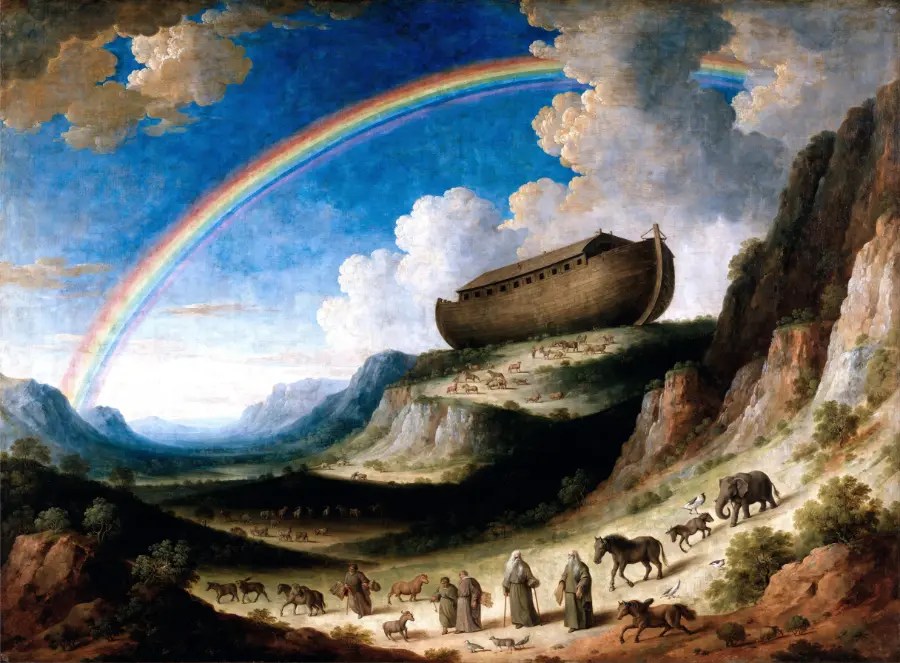
The Qur’an calls him Isa, “the Messiah, Jesus, the son of Mary.” Mary asks the angels, “My Lord, how will I have a child when no man has touched me?” and is told that God “creates what He wills” (3:47). The angels tell her that he “will speak to the people in the cradle” (3:46), and God later gives him the Gospel (5:46). The Qur’an calls him “a messenger of Allah and His word which He directed to Mary and a soul [created at a command] from Him” (4:171). It is just as clear that he is a created servant: “the example of Jesus to Allah is like that of Adam. He created him from dust” (3:59). In one passage Jesus speaks of “a messenger to come after me, whose name is Ahmad” (61:6), which Muslims read as a prophecy of Muhammad.
The Gospel of John calls Jesus the Word too, and means something different by it: “In the beginning was the Word, and the Word was with God, and the Word was God” and “the Word became flesh and dwelt among us” (John 1:1, 14). For Christians the Word is God the Son, who became man without ceasing to be God.
Was Jesus crucified?
Christians answer yes, in the words Paul had received and passed on “as of first importance”: “that Christ died for our sins in accordance with the Scriptures, that he was buried, that he was raised on the third day in accordance with the Scriptures” (1 Corinthians 15:3–4). Without the cross and the empty tomb, we say, there is no Christian faith (see why the resurrection is crucial to Christianity).
Muslims answer no, from the Qur’an, which says of those who claimed to have killed him: “they did not kill him, nor did they crucify him; but [another] was made to resemble him to them” (4:157), and “Allah raised him to Himself” (4:158). The Yaqeen Institute states the Muslim belief plainly: “No, Muslims do not believe that Jesus was crucified or killed.” It adds that “Islam teaches that Jesus was miraculously saved from crucifixion and ascended to the heavens where he remains alive,” and that Muslims believe Jesus “will return to Earth shortly before the Day of Judgment.”
The Bible and the Qur’an
Christians receive the Bible, the Old and New Testaments, as the word of God. Muslims receive the Qur’an as the word of God revealed to Muhammad in Arabic, and it is the source of Muslim faith and practice.
Islam also honors earlier books. The Qur’an says God gave Jesus “the Gospel, in which was guidance and light” (5:46), and belief in God’s revealed books is one of Islam’s six articles of faith. Muslims do not believe that the Bible Christians read today preserves those books in their original form. The Yaqeen Institute describes Muhammad’s mission as restoring the core messages of earlier prophets “and that of the original, uncorrupted scriptures revealed by God.”
How each faith understands salvation
Christians teach that people are saved by God’s grace, received through faith in Jesus. “For by grace you have been saved through faith. And this is not your own doing; it is the gift of God, not a result of works, so that no one may boast” (Ephesians 2:8–9). Churches describe faith, baptism and good works differently, but they agree that salvation comes through Christ. The Baptist Faith and Message states it bluntly: “There is no salvation apart from personal faith in Jesus Christ as Lord.” The Catholic Church teaches that Christ is “the one Mediator and the unique way of salvation,” and also that those who “through no fault of their own do not know the Gospel of Christ or His Church, yet sincerely seek God” can be saved (Lumen Gentium 14, 16).
In Islam, faith has six articles. A well-known hadith tells how the angel Gabriel asked Muhammad about faith, and he answered: “That you affirm your faith in Allah, in His angels, in His Books, in His Apostles, in the Day of Judgment, and you affirm your faith in the Divine Decree about good and evil” (Sahih Muslim 8). On that day every deed counts: “whoever does an atom’s weight of good will see it, And whoever does an atom’s weight of evil will see it” (99:7–8). God’s mercy stands beside his justice: “do not despair of the mercy of Allah. Indeed, Allah forgives all sins” (39:53).

Prayer, fasting and pilgrimage
Muhammad summed up Islam’s practice in five pillars: “To testify that none has the right to be worshipped but Allah and Muhammad is Allah’s Messenger,” prayer, obligatory charity (zakat), pilgrimage to Mecca (hajj) and the fast of Ramadan (Sahih al-Bukhari 8). Muslims pray five times a day facing the Ka’aba in Mecca, gather for congregational prayer on Friday (Qur’an 62:9), and during Ramadan healthy adults fast from before sunrise to sunset. The hajj is required once in a lifetime of every Muslim who is “physically and financially able.”
Christians gather on Sunday, which the Catholic Catechism calls “the day on which the paschal mystery is celebrated,” the day of Christ’s death and resurrection. Christian practice centers on prayer, Scripture, baptism and the Lord’s Supper, which many churches call sacraments and Baptists call “the two ordinances of Christ.”
What does Islam say about Christians?
The Qur’an calls Jews and Christians “People of the Scripture” and speaks to them with both correction and warmth. It rejects the central Christian beliefs about Jesus: “They have certainly disbelieved who say, ‘Allah is the third of three’” (5:73), and the same is said of those who call God the Messiah (5:72). Qur’an 2:62 promises a reward to Jews and Christians “who believed in Allah and the Last Day and did righteousness.” The Saheeh International translators read that promise as applying to people who lived before Muhammad, and mark their reading with a bracket: “[before Prophet Muhammad].” Another verse, 3:85, says that “whoever desires other than Islam as religion – never will it be accepted from him.”
The same book tells Muslims: “you will find the nearest of them in affection to the believers those who say, ‘We are Christians.’ That is because among them are priests and monks and because they are not arrogant” (5:82). It asks Muslims to argue with them only “in a way that is best” and to say, “our God and your God is one” (29:46). It allows Muslims to eat the food of the People of the Scripture and permits a Muslim man to marry “chaste women from among those who were given the Scripture” (5:5). And it invites them: “come to a word that is equitable between us and you – that we will not worship except Allah and not associate anything with Him” (3:64).
Both books call their readers to the one God, and still the two faiths part where they began, over Jesus and the question he asked. We who are Christians answer it as Simon Peter did: “Thou art the Christ, the Son of the living God” (Matthew 16:16, KJV).
Related reading
- Judaism vs Christianity
- What Does the Bible Say About the Holy Trinity?
- Is Jesus the Son of God, or God?
- Why the Resurrection Is Crucial to Christianity
- What Is the Abrahamic Covenant?


Leave a Reply